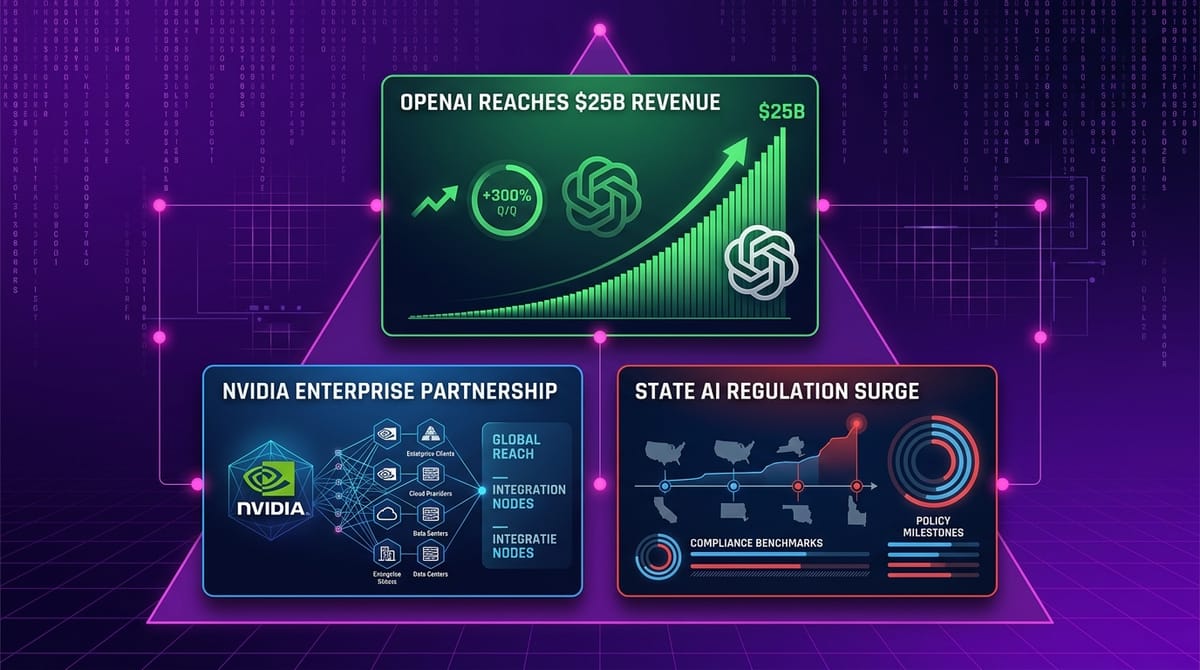
GenAI Daily - April 3, 2026: OpenAI Reaches $25B Revenue, NVIDIA Enterprise Partnership, State AI Regulation Surge
Top Stories
OpenAI Revenue Soars to $25B as IPO Speculation Intensifies
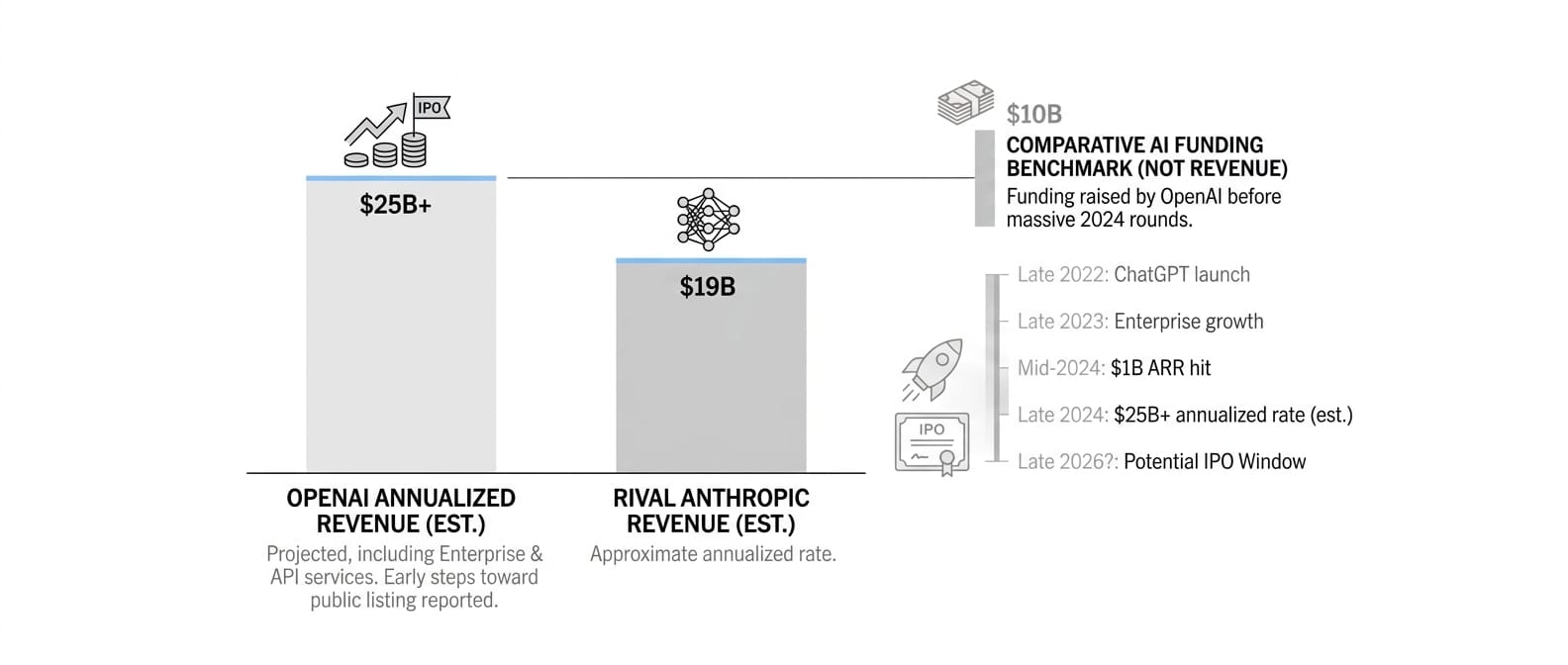
OpenAI has surpassed $25 billion in annualized revenue and is reportedly taking early steps toward a public listing, potentially as soon as late 2026.
Rival Anthropic is approaching $19 billion in annualized revenue.
The figures signal that the market for advanced AI models has rapidly become one of the fastest-growing sectors in the technology industry, attracting significant investor interest and intensifying competition among leading labs.
Why it matters: The revenue milestone validates the commercial viability of foundational AI models and sets the stage for what could be the largest tech IPO since Meta, fundamentally reshaping enterprise AI procurement dynamics.
NVIDIA Agent Toolkit Powers Enterprise AI Wave
The Nvidia CEO unveiled the Agent Toolkit, an open-source platform for building autonomous AI agents, and then rattled off the names of the companies that will use it: Adobe, Salesforce, SAP, ServiceNow, Siemens, CrowdStrike, Atlassian, Cadence, Synopsys, IQVIA, Palantir, Box, Cohesity, Dassault Systèmes, Red Hat, Cisco and Amdocs.
For Salesforce, it means Agentforce agents that can draw from both cloud and on-premises data through a single Slack interface. For Adobe, it means creative AI pipelines that span image, video, 3D and document intelligence. For SAP, it means agents woven into the transactional fabric of global commerce.
Why it matters: This represents the largest enterprise software collaboration in AI history, giving NVIDIA strategic control over the agent platform layer while accelerating enterprise adoption across major software vendors.
IFS Disrupts Enterprise AI Pricing with Asset-Based Model
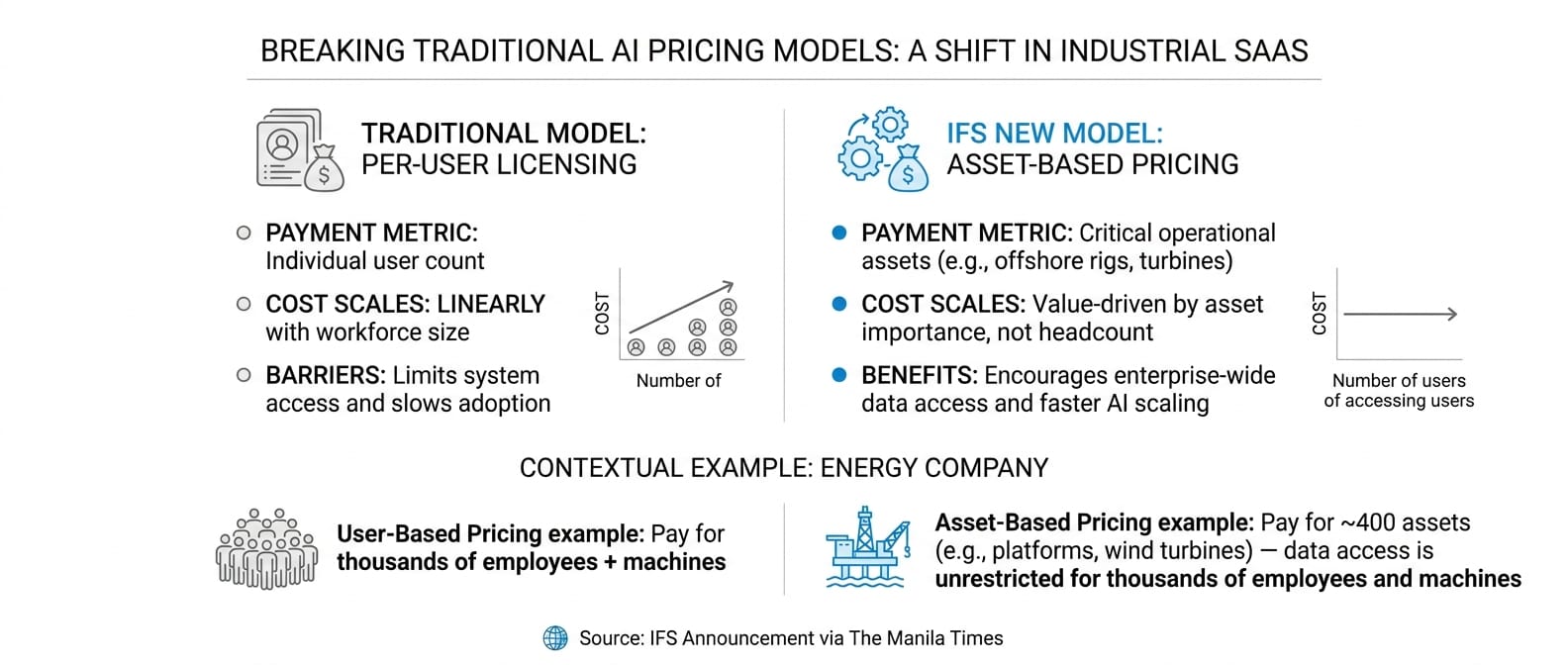
IFS, the leading provider of Industrial AI software, today announced a new pricing model that fundamentally changes how enterprise AI is bought and deployed.
By moving away from user-based licensing to a model grounded in operational reality, IFS is enabling customers to pay by assets, rather than users. For example, for an energy company managing 400 offshore assets pays based on those 400 assets rather than the 12,000 people and machines that need to access the data.
Why it matters: This pricing innovation removes barriers to AI adoption across industrial enterprises and signals a potential industry shift away from traditional per-seat licensing models toward usage-based pricing.
Key Developments
Cisco Unveils Zero Trust Architecture for AI Agents
Cisco unveiled a new Zero Trust architecture specifically designed to secure autonomous AI agents and multi-agent systems, featuring real-time policy enforcement and anomaly detection.
As AI agents increasingly act independently across networks, traditional perimeter defenses are insufficient. Cisco's framework addresses this emerging attack surface and provides enterprises with tools to govern AI-driven automation securely.
Impact: Addresses the critical security gap as organizations deploy autonomous AI systems, establishing early standards for multi-agent security frameworks.
Google Launches Gemini 3.1 Flash-Lite for Cost-Efficient AI
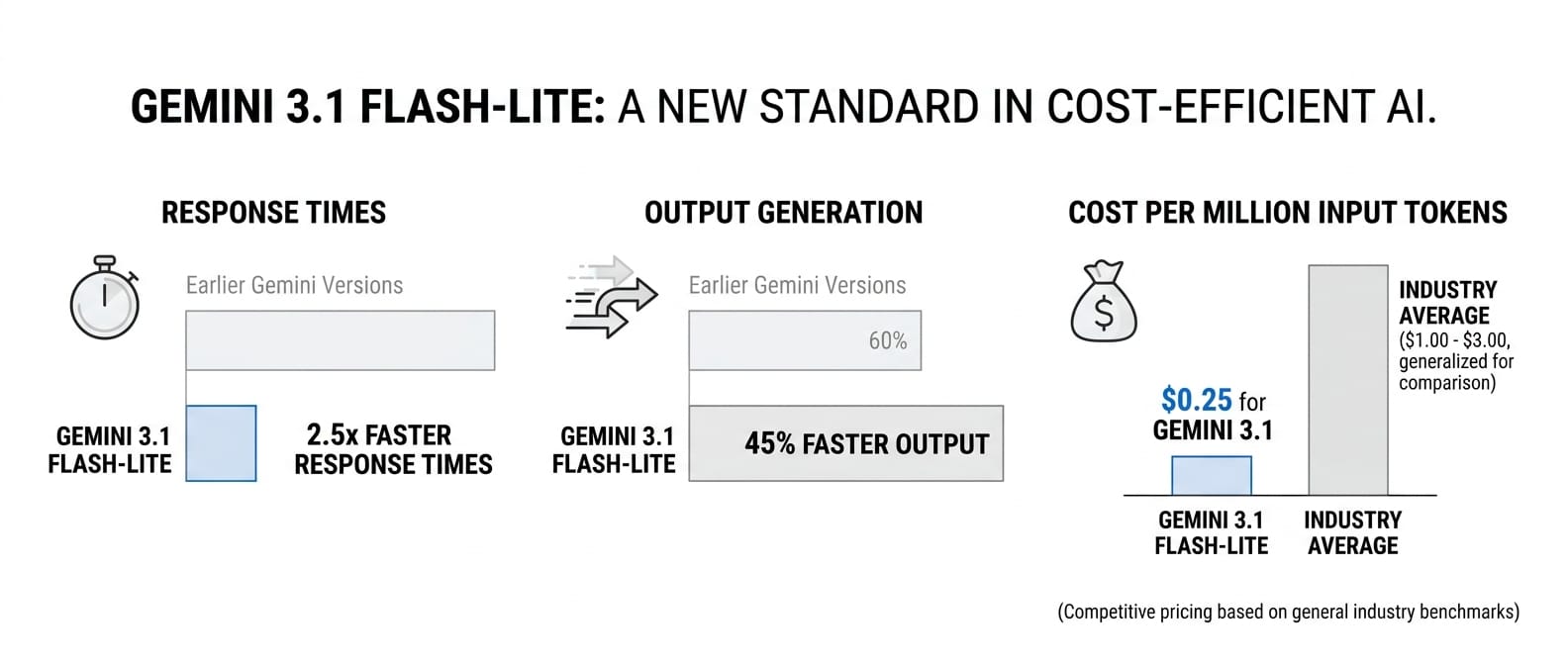
Google introduced Gemini 3.1 Flash-Lite, a new efficiency-focused model delivering 2.5× faster response times and 45% faster output generation compared to earlier Gemini versions, priced at just $0.25 per million input tokens.
The release reflects a growing industry shift toward making powerful AI more affordable for startups and enterprises alike, intensifying the cost-efficiency race among leading AI providers.
Impact: Dramatically reduces AI deployment costs for smaller enterprises, democratizing access to frontier-level capabilities and pressuring competitors to follow suit.
Trend Micro Study Reveals AI Governance Crisis
The new global study of 3,700 business and IT decision makers found that 67% have felt pressured to approve AI despite security concerns, with one in seven describing those concerns as "extreme" but overridden to keep pace with competitors and internal demand.
Only around a third (38%) of organizations have comprehensive AI policies in place, with many still drafting them, and 41% cite unclear regulation or compliance standards as a barrier.
Impact: Exposes the dangerous gap between AI deployment speed and governance maturity, highlighting the urgent need for structured risk management frameworks.
State AI Legislation Accelerates Across 35+ States
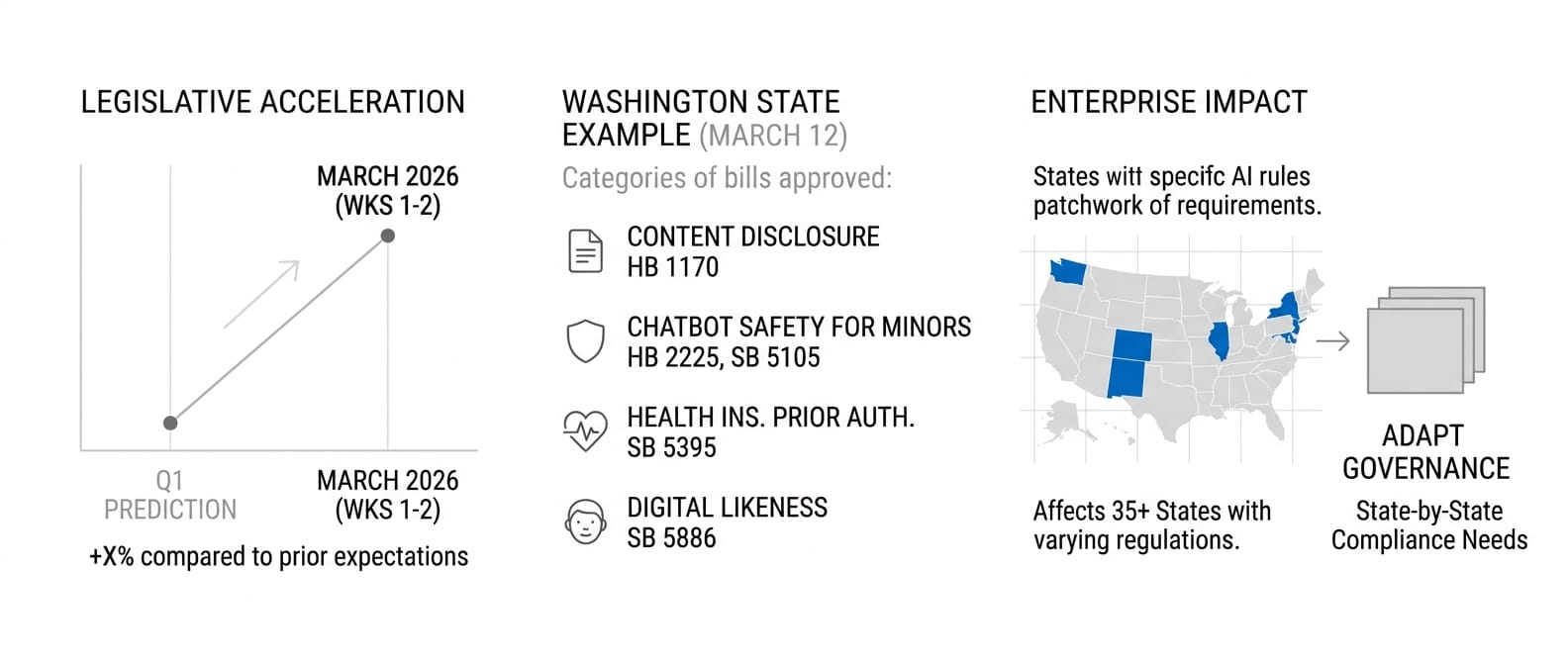
The first two weeks of March 2026 produced more enacted state AI legislation than most observers expected for the entire quarter. Washington's legislature adjourned on March 12 after giving final approval to five AI-related bills, including HB 1170 (AI content disclosure), HB 2225 (chatbot safety for minors), SB 5395 (AI in health insurance prior authorization), SB 5105 (AI deepfakes and minors), and SB 5886 (digital likeness protections).
Impact: Creates a complex patchwork of compliance requirements that will force enterprises to adapt governance frameworks state-by-state, significantly increasing operational complexity.
Product Launches
Egnyte Content Cloud AI Safeguards
Egnyte has announced two major additions to the Egnyte Content Cloud: AI Safeguards, which give organizations granular control over how AI interacts with sensitive content, and an AI Assistant that acts as a built-in collaborator across Egnyte workspaces. AI Safeguards enables IT and compliance teams to define which users, groups, file locations, and file properties can be processed by AI.
SAP AI Developer Challenge April 2026
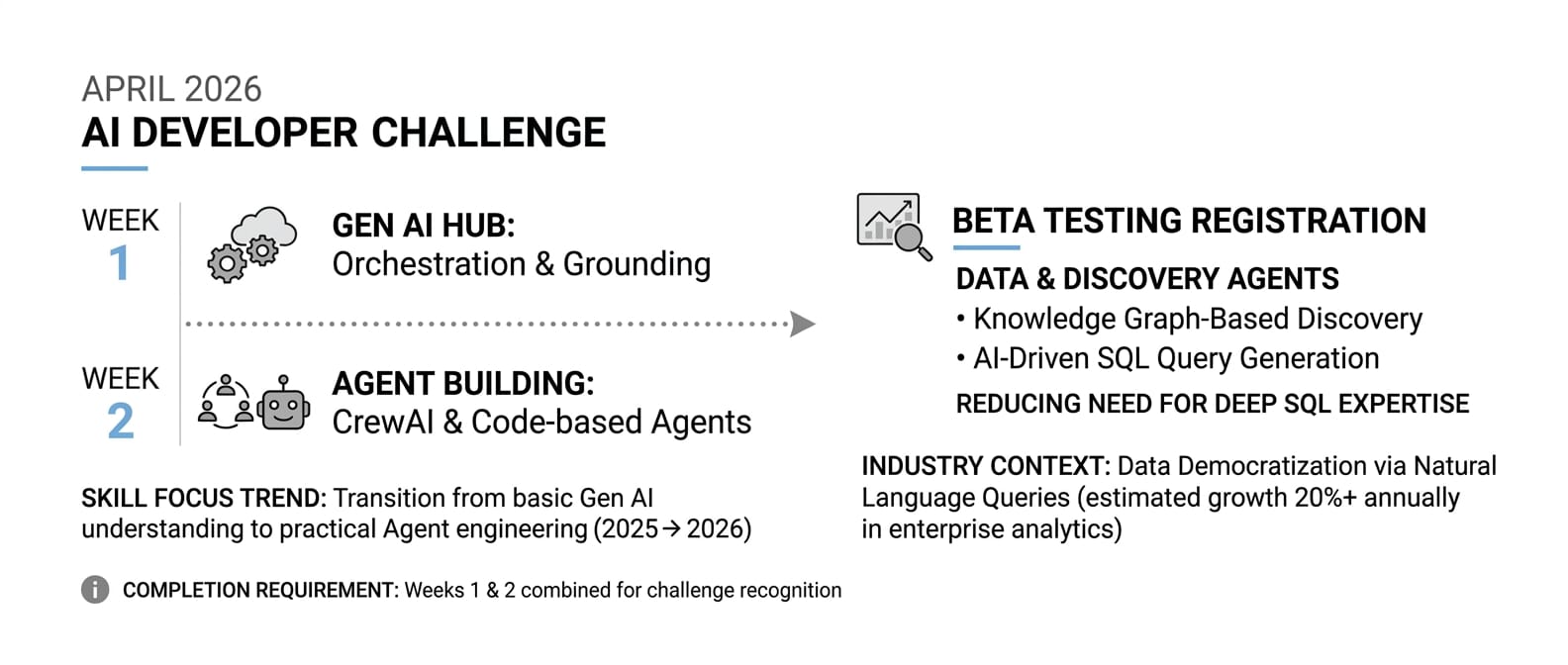
In the first week, you will learn how to use the orchestration service and the grounding module all in Gen AI Hub on SAP AI Core. In the second week you will learn how to build a code based agent using CrewAI and Generative AI hub.
Registration for the beta testing of the data and discovery agent procedures in SAP Hana Cloud has started. This agent procedures combined knowledge graph based discovery with AI driven query generation, reducing the need for deep SQL expertise when working with complex data models.
MaintainX Report Builder AI
Our highlight was the launch of Report Builder AI, the most powerful reporting update we've delivered yet - you can now build custom reports using natural language, no spreadsheets or exports required.
We also launched Root Cause Analysis, bringing structured failure analysis directly into the maintenance workflow.
Funding & Deals
Valar Atomics Raises $450M for AI Data Center Nuclear Power
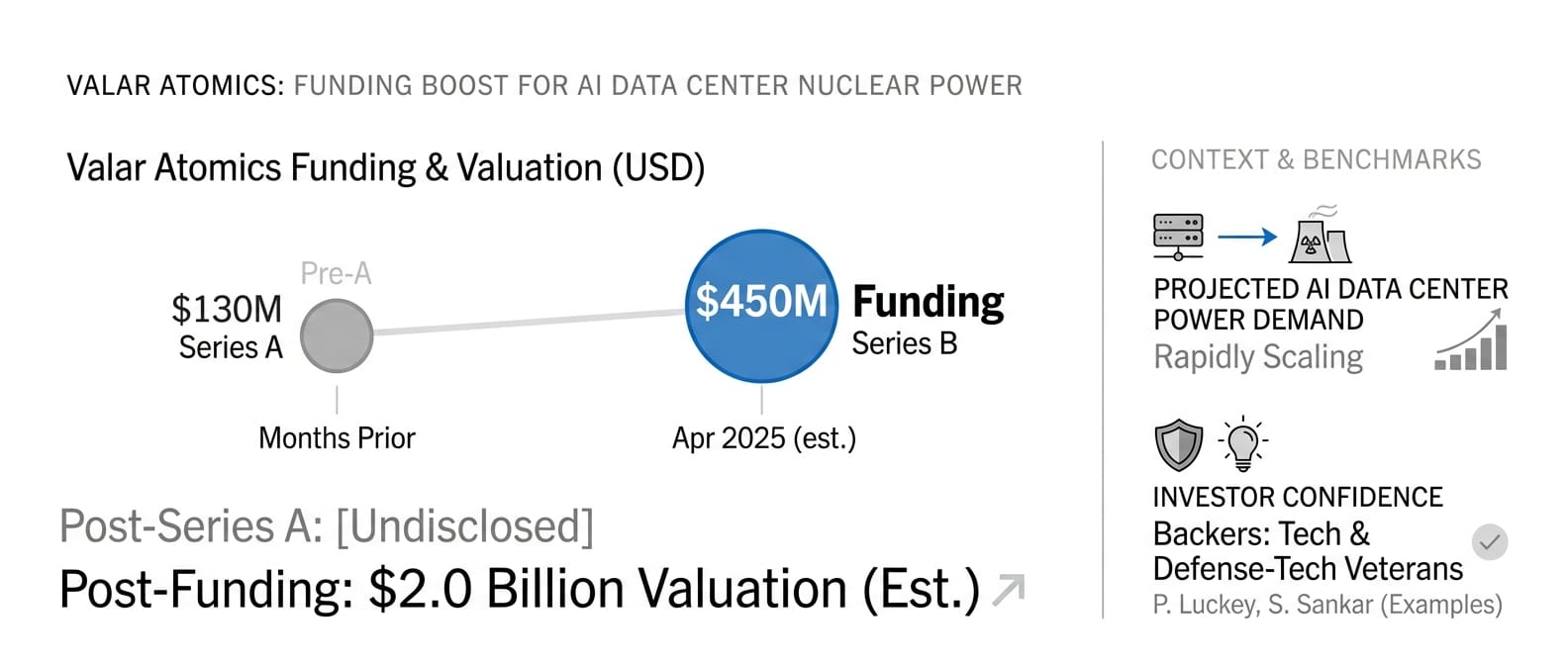
Valar's "gigasites" design - campuses hosting hundreds of gas-cooled reactors - promises dense, carbon-free power tailored to compute-heavy customers. The funding comes just months after a $130M Series A, boosting Valar's valuation to $2.0 billion.
Backers include defense-tech veterans like Palmer Luckey and Palantir CTO Shyam Sankar, underlining confidence in Valar's nuclear approach to a looming energy crunch.
Led by defense and tech investors.
Sycamore Raises $65M Seed for Enterprise AI Agents
This month, headlines have been dominated by Sycamore, a startup focused on enterprise AI agents, raising a significant $65 million seed round led by Coatue and Lightspeed. Investors were impressed by Sycamore's unique approach of combining decades of seasoned experience with cutting-edge AI tech.
Led by Coatue and Lightspeed.
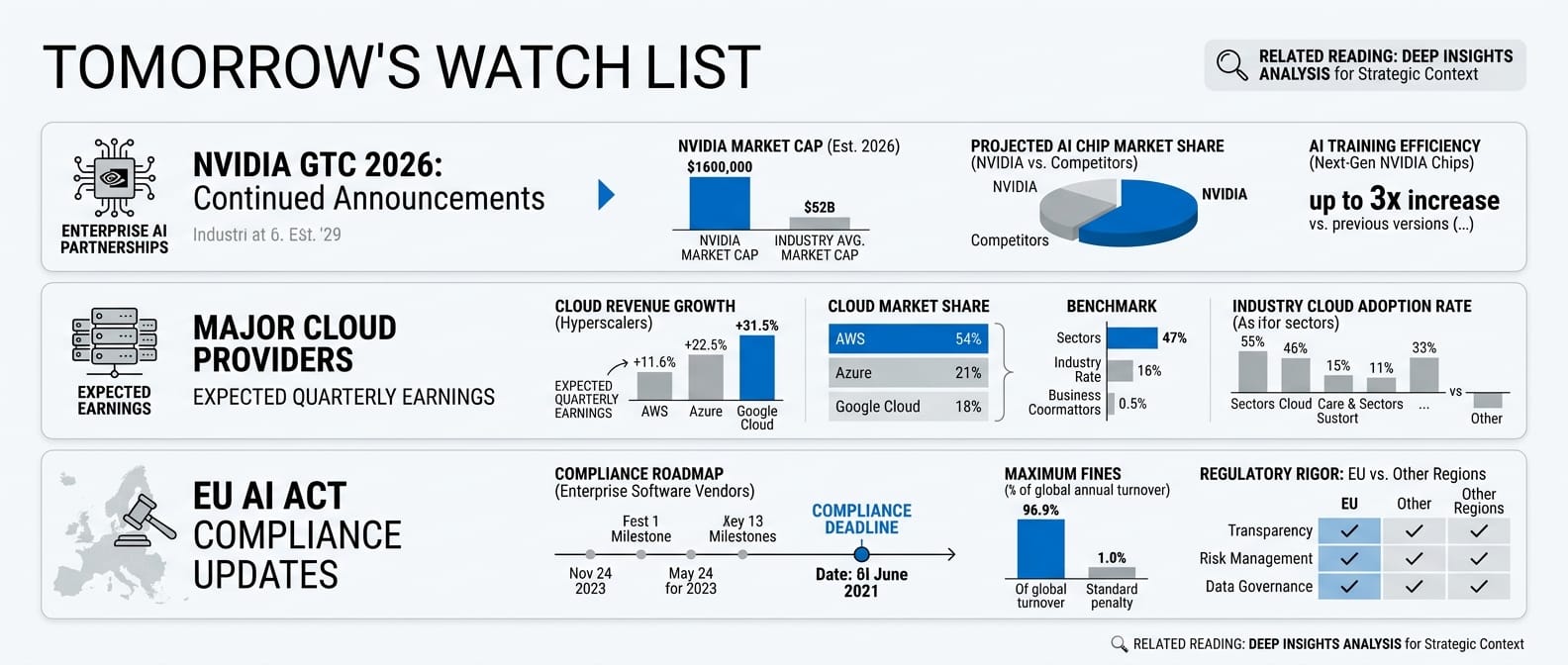
Tomorrow's Watch List
- NVIDIA GTC 2026 continued announcements on enterprise AI partnerships
- Expected quarterly earnings from major cloud providers
- EU AI Act compliance deadline updates for enterprise software vendors
*Related reading: Check out this week's [Deep Insights analysis] for strategic context on these developments.