GenAI Daily - April 4, 2026: Google's TurboQuant Memory Breakthrough, Salesforce Transforms Slack, Microsoft Launches AI Models
Top Stories
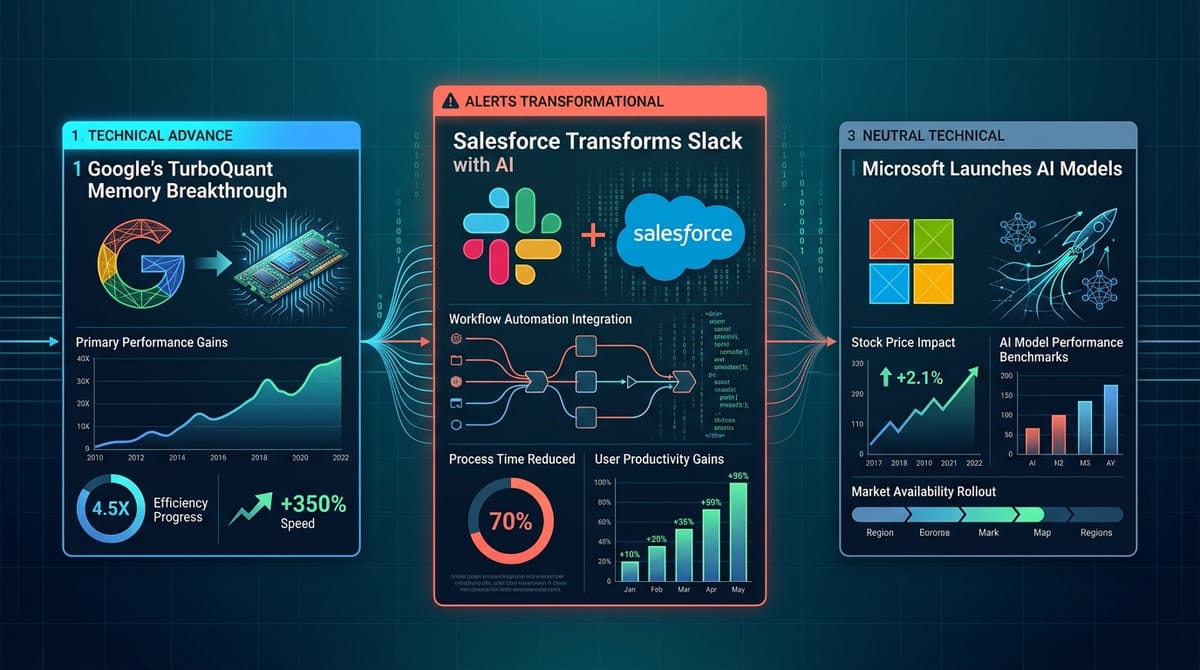
Google Unveils TurboQuant Algorithm for Radical AI Memory Efficiency
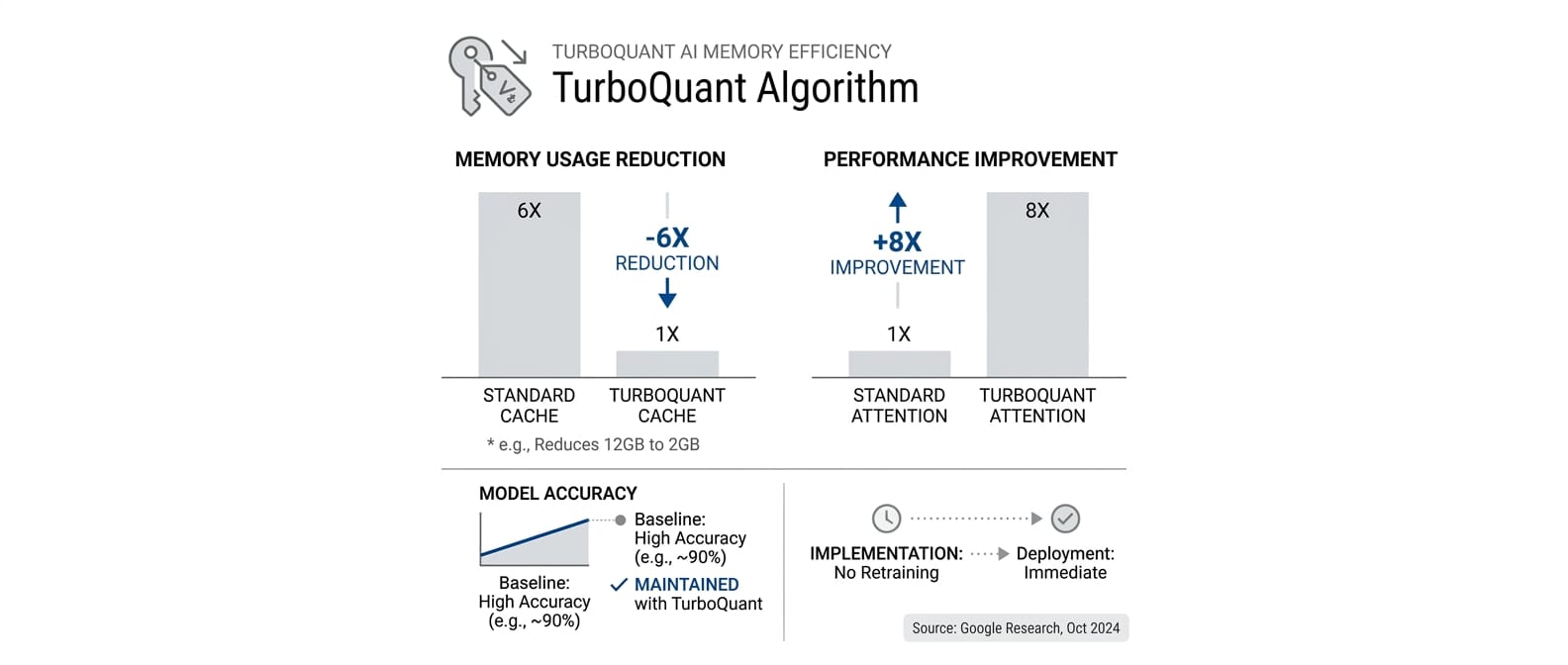
Google Research released TurboQuant, a compression algorithm that reduces AI memory usage by 6x and delivers 8x performance improvements in attention computation. The algorithm quantizes the key-value cache to just 3 bits without requiring training or fine-tuning while maintaining model accuracy. Unlike many AI breakthroughs that require costly retraining or specialized datasets, TurboQuant is training-free and data-oblivious, allowing organizations to apply it to existing models immediately.
TurboQuant resolves the memory overhead paradox through a two-stage mathematical approach: PolarQuant converts vectors into polar coordinates with predictable angle distributions, eliminating expensive normalization constants, while Quantized Johnson-Lindenstrauss handles residual errors.
Why it matters: This breakthrough could dramatically reduce AI serving costs and enable powerful models to run on consumer hardware, potentially reshaping how companies budget for AI infrastructure.
Salesforce Overhauls Slack with 30 AI Features, Transforms Messaging into Enterprise Hub
Salesforce announced an updated version of Slack with 30 new AI features, centering on a significant upgrade to Slackbot that includes reusable AI-skills allowing users to define specific tasks that can be applied across various contexts. Slackbot now functions as an MCP (Model Context Protocol) client, connecting to external services including Agentforce, Salesforce's AI agent development platform.
The platform introduces Meeting Intelligence that listens to calls on Zoom, Google Meet, or Slack Huddles, summarizing decisions and creating action items that can be logged directly into CRM systems. Slack now features a native CRM built into the chat interface, with Slackbot automatically identifying deals and updating contact records.
Why it matters: This positions Slack as an AI-first platform competing directly with Microsoft Teams in the $50B+ collaboration market, showing how enterprise software is evolving from communication tools to intelligent work orchestration systems.
Microsoft Launches Three Foundational AI Models to Compete with OpenAI
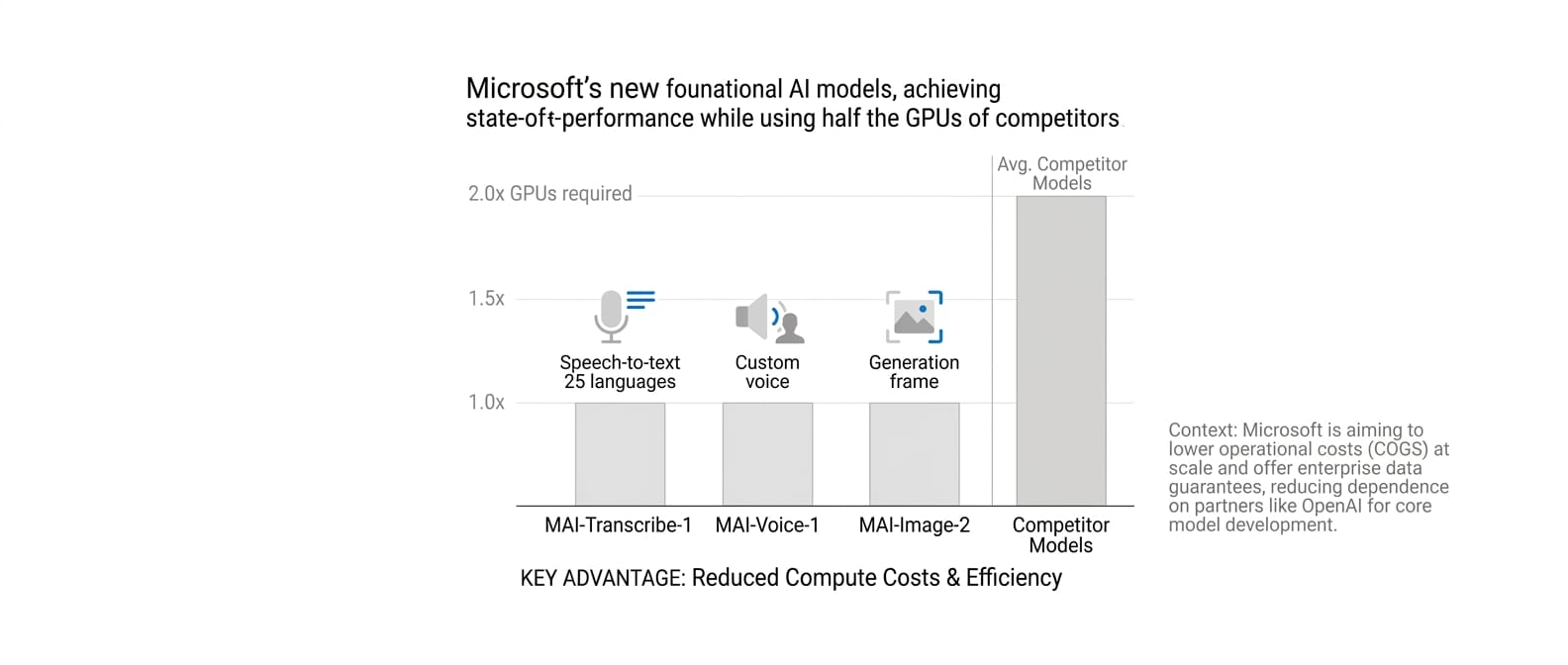
Microsoft launched three foundational AI models built entirely in-house - MAI-Transcribe-1, MAI-Voice-1, and MAI-Image-2 - marking the most concrete evidence yet that the software giant intends to compete directly with OpenAI and Google on model development. The models enable Microsoft to deliver COGS efficiencies necessary to serve AI workloads at immense scale.
MAI-Transcribe-1 transcribes speech across 25 languages 2.5 times faster than Azure Fast, MAI-Voice-1 generates 60 seconds of audio in one second with custom voice capabilities, while MAI-Image-2 offers advanced image generation. The company claims these models achieve state-of-the-art performance while using half the GPUs of competitors and maintaining clean data lineage for enterprise customers.
Why it matters: This signals Microsoft's push toward AI independence from OpenAI while positioning itself to offer enterprise customers lower-cost alternatives with better data provenance guarantees.
Key Developments
MIT Study Reveals Gig Economy Training Humanoid Robots at Scale
Micro1, a US company based in Palo Alto, has hired thousands of contract workers in over 50 countries to record themselves doing household chores, with videos used to train humanoid robots from companies like Tesla, Figure AI, and Agility Robotics. Workers are vetted by an AI agent named Zara and submit weekly videos following specific instructions, with content reviewed by both AI and human annotators.
Investors poured over $6 billion into humanoid robots in 2025, making at-home data recording a booming gig economy worldwide, with companies like Scale AI, Encord, and DoorDash recruiting their own armies of data recorders.
Impact: This reveals the massive human labor required behind AI robotics development and raises questions about privacy, consent, and economic inequality in AI data collection.
Runway Launches $10M Fund and Builders Program for AI Video Startups
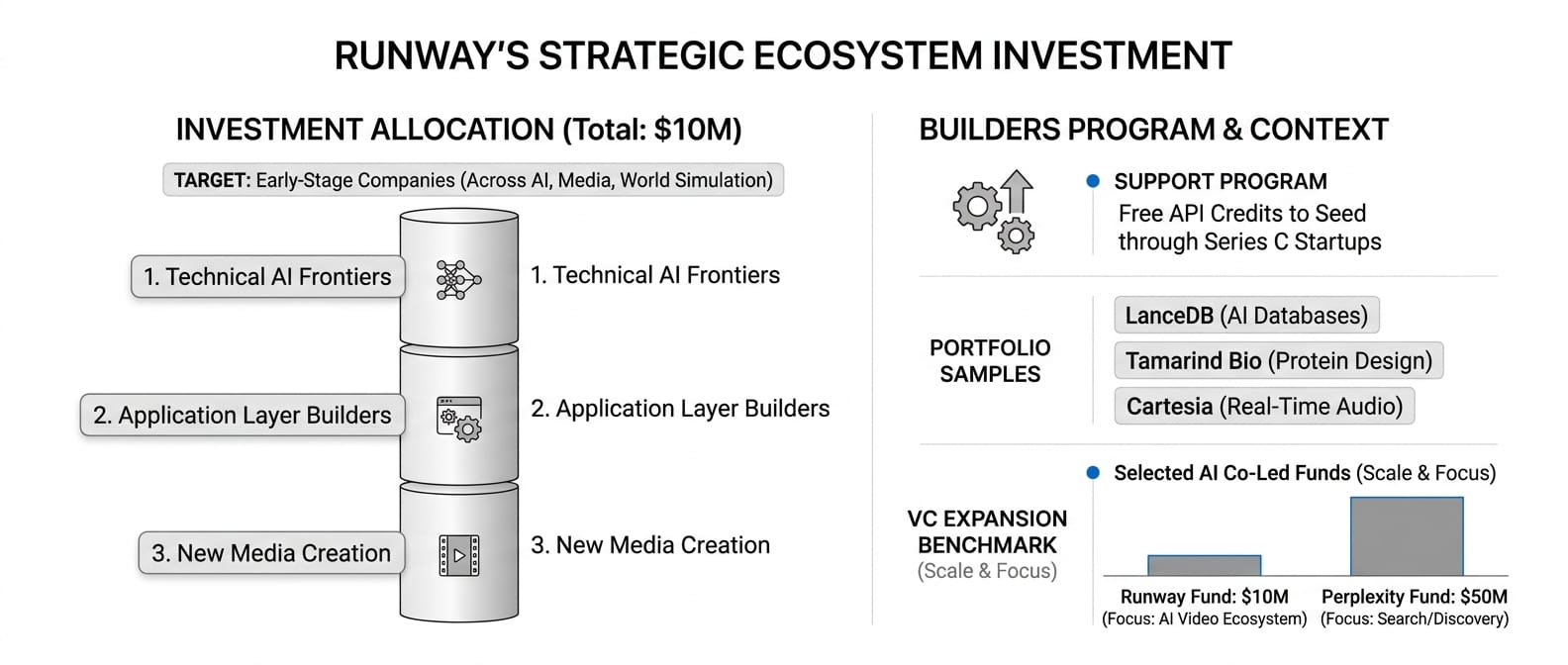
Runway launched a $10 million venture fund to invest in early-stage companies building across AI, media, and world simulation, alongside a Builders program offering free API credits to seed through Series C startups. Portfolio companies include LanceDB for AI databases, Tamarind Bio for protein design, and Cartesia for real-time audio generation.
The fund targets three buckets: technical teams pushing AI frontiers, builders creating application layers on foundation models, and companies experimenting with new media creation and storytelling.
Impact: This shows AI companies expanding into venture capital to build ecosystems around their platforms, similar to OpenAI's Startup Fund and Perplexity's $50M fund.
IBM Partners with Arm for Dual-Architecture Enterprise AI Computing
IBM announced a strategic collaboration with Arm to develop dual-architecture hardware for AI and data-intensive workloads, combining IBM's system design expertise with Arm's ecosystem to bring AI from experimentation into everyday enterprise use. The collaboration explores expanded virtualization technologies allowing Arm-based software to operate within IBM's enterprise platforms while meeting reliability, security, and operational requirements.
Industry analysts describe this as "a meaningful step toward broadening how enterprises deploy and scale modern workloads" with implications that "will take time to unfold" but reflect "deeper investment in long-term platform innovation".
Impact: This partnership could expand software choice and improve system performance while maintaining enterprise-grade reliability, potentially reshaping how organizations approach AI infrastructure decisions.
Product Launches
Retell AI Named to Enterprise Tech 30 List
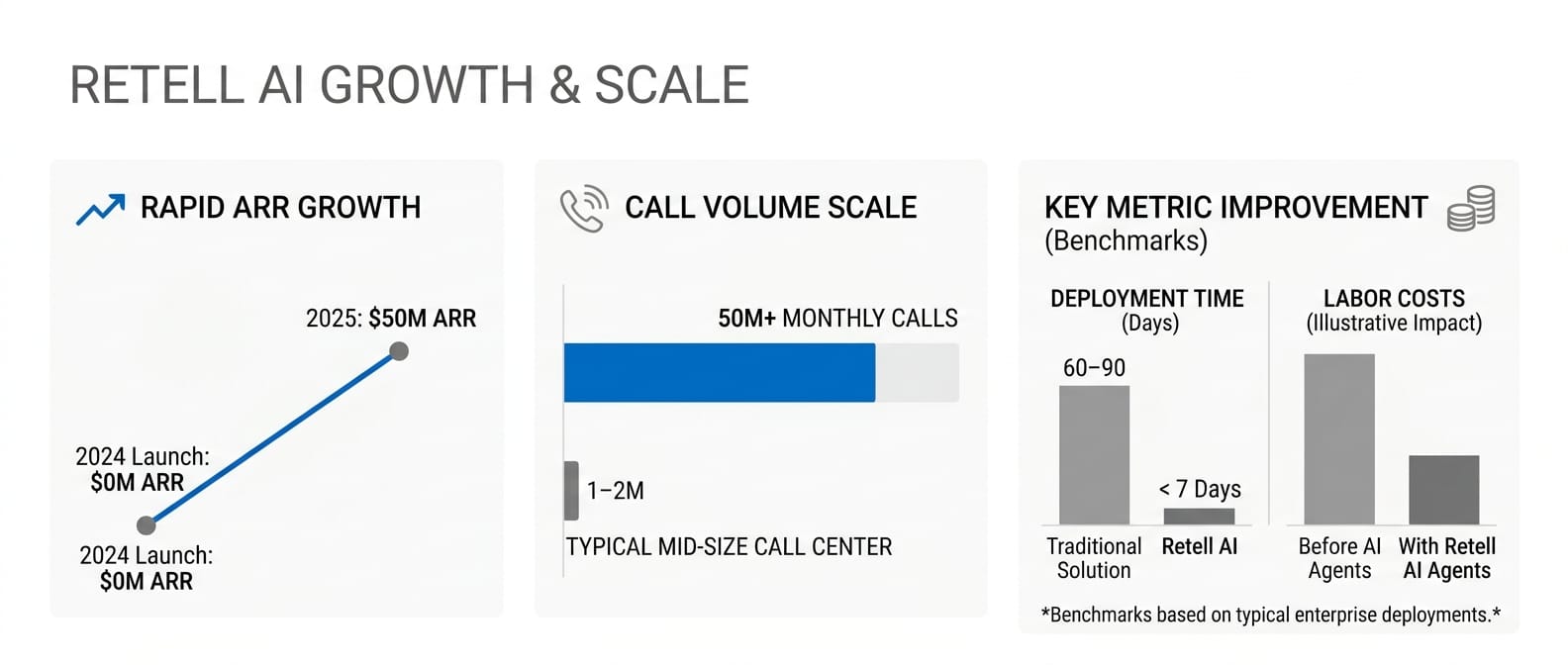
Retell AI, which launched in 2024 and grew to $50M ARR in 2025, now powers 50M+ real-time AI phone calls monthly for clients. The platform allows enterprises to build, test and deploy voice AI agents in just a few days, reducing labor costs and improving first-call resolution.
Fujitsu Application Transform
Fujitsu launched Application Transform, an AI tool that reads old computer code and writes design documents 97% faster than manual processes, improving document quality by 60% and being 95% more thorough than regular AI tools.
OpenAI Updates Enterprise Apps
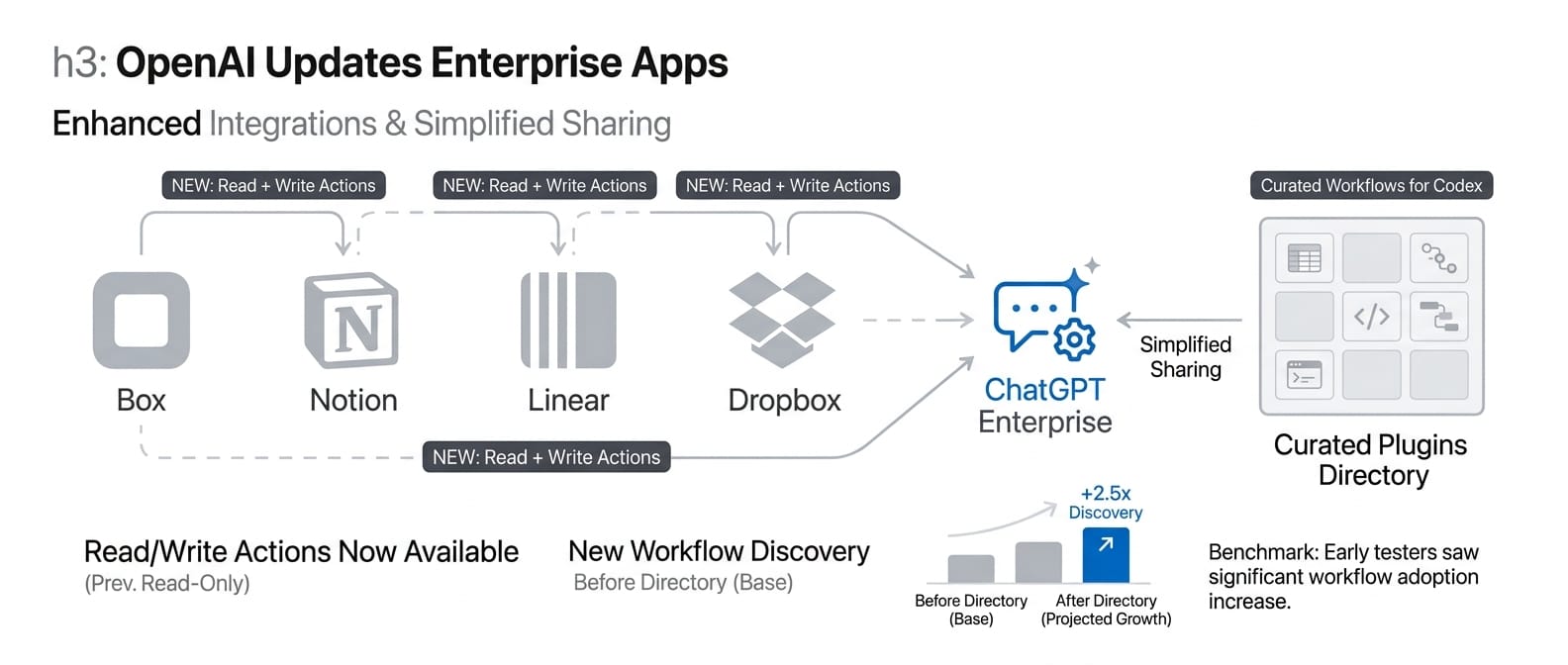
OpenAI rolled out updated Box, Notion, Linear, and Dropbox apps in ChatGPT Enterprise and Edu, adding new actions including write capabilities and bringing the latest app experience for workspace admins to enable. ChatGPT Enterprise now includes a curated plugins directory for packaged Codex workflows, making it easier to share setups across projects or teams.
Funding & Deals
Rebellions Raises $400M Pre-IPO Round
South Korean fabless AI chip startup Rebellions raised $400 million at a $2.3B valuation in a pre-IPO round led by Mirae Asset Financial Group and Korea National Growth Fund, following expansion plans across Asia, Middle East, and US markets. The company designs AI chips for inference while outsourcing fabrication, and announced RebelRack and RebelPOD AI infrastructure platforms for large-scale AI deployment.
OpenAI Closes Record $122B Funding Round
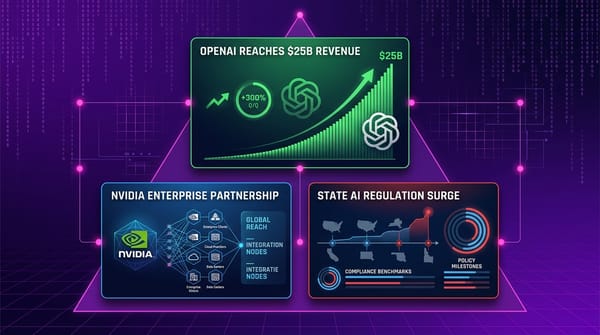
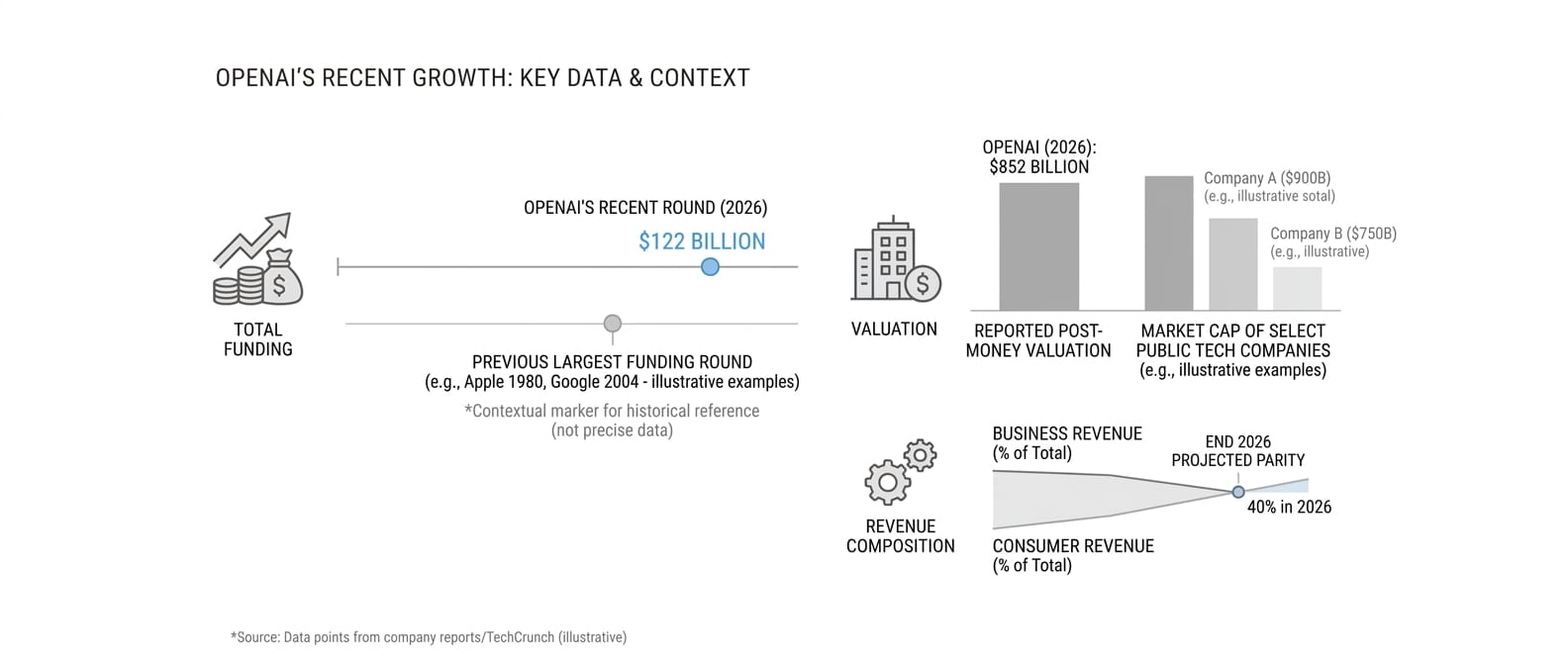
OpenAI closed a $122 billion funding round at an $852 billion valuation, co-led by SoftBank and Andreessen Horowitz, with participation from Amazon, Nvidia, and Microsoft, including $3 billion from individual investors via bank channels. The company claims business revenue now makes up 40% of total revenue and is "on track to reach parity with consumer by end of 2026," building its public market narrative ahead of a reportedly upcoming IPO.
Tomorrow's Watch List
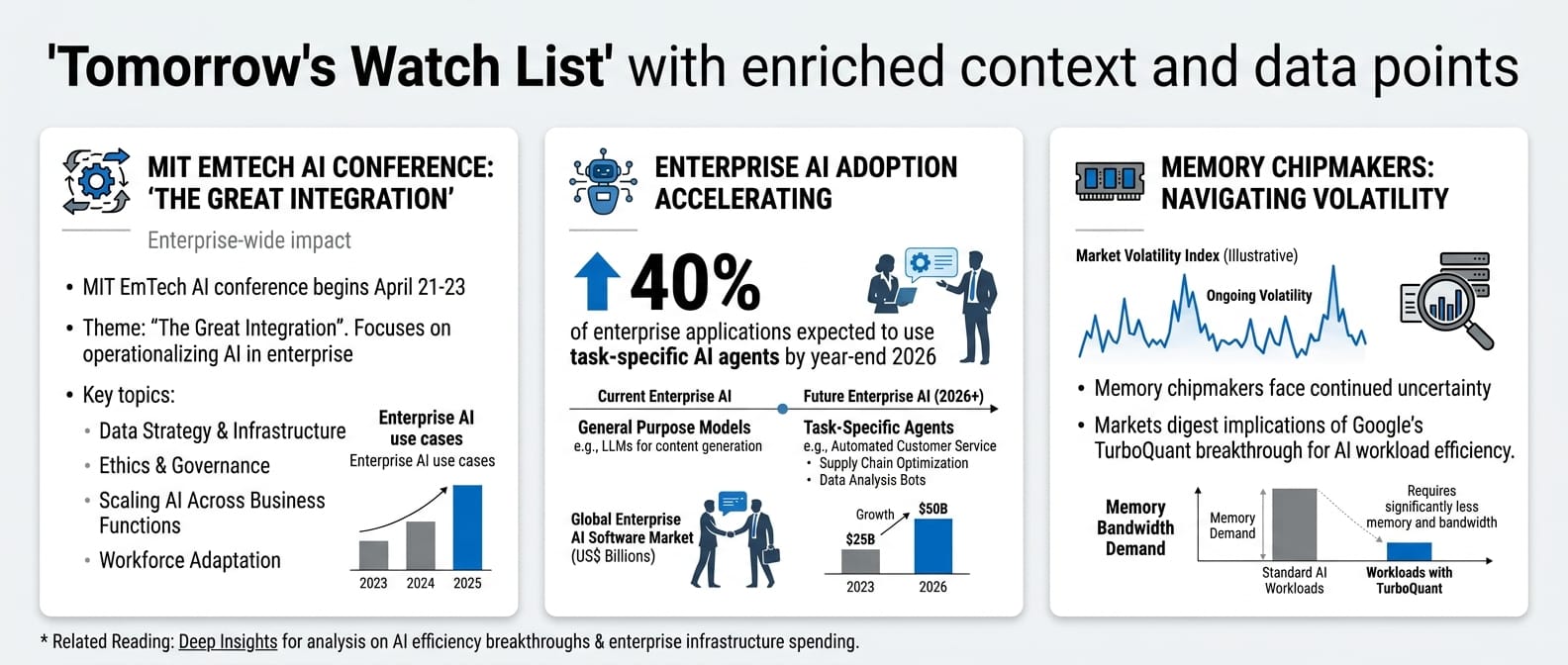
- MIT EmTech AI conference kicks off April 21-23 with theme "The Great Integration" focusing on operationalizing AI for enterprise-wide impact
- Enterprise AI adoption continues accelerating with 40% of applications expected to use task-specific AI agents by year-end 2026
- Memory chipmakers face continued volatility as markets digest implications of Google's TurboQuant breakthrough
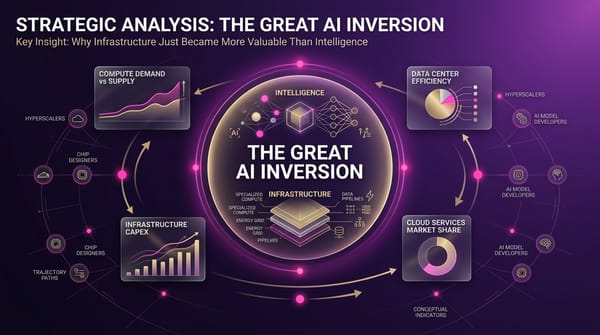
*Related reading: Check out this week's Deep Insights analysis for strategic context on AI efficiency breakthroughs and their impact on enterprise infrastructure spending.