GenAI Daily - February 4, 2026: Waabi's Record $750M Funding, AI Safety Report Release, Enterprise Reality Check
Top Story
Waabi secured the largest funding round in Canadian history with a $750 million Series C round co-led by Khosla Ventures and G2 Venture Partners, plus up to $250 million more from Uber tied to robotaxi deployment milestones. The Toronto-based autonomous driving company, founded in 2021, is pioneering what CEO Raquel Urtasun calls "Physical AI" - a unified AI platform that can power both autonomous trucks and robotaxis with the same underlying model.
Waabi's platform combines a verifiable end-to-end AI model capable of reasoning alongside an advanced neural simulator, enabling a shared brain across both autonomous trucks and robotaxis where the same AI model powers both applications.
The company has exclusively partnered with Uber to deploy 25,000 or more Waabi Driver-powered robotaxis over time on Uber's platform, representing what may be the largest autonomous vehicle deployment deal in history.
Why it matters: Waabi's approach could solve autonomous vehicle scaling challenges by leveraging shared learning between truck and passenger vehicle applications, while the massive Uber partnership provides a clear path to commercial robotaxi deployment.
Key Developments
International AI Safety Report 2026 Published
The second International AI Safety Report was published in February 2026 as a comprehensive review of latest scientific research on general-purpose AI systems capabilities and risks, developed through collaboration across countries, organizations, civil society and industry partners.
As host of the 2026 India AI Impact Summit, India has a key role in shaping global AI safety efforts, with the report intended to help policymakers, researchers, industry and civil society shape national strategies.
Impact: Provides critical policy framework for enterprise AI governance as regulatory expectations solidify globally.
Enterprise AI Hits Pragmatic Reality
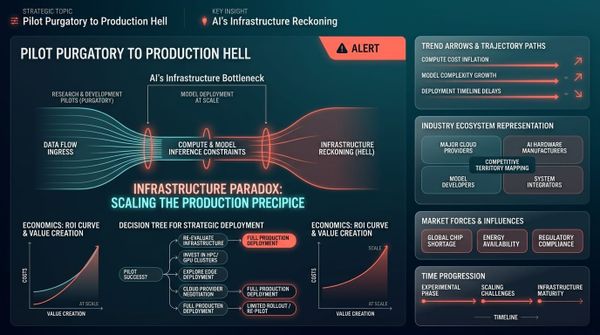
If 2025 was the year AI got a vibe check, 2026 will be the year the tech gets practical, with focus shifting away from building ever-larger language models toward the harder work of making AI usable through deploying smaller models where they fit, embedding intelligence into physical devices, and designing systems that integrate cleanly into human workflows.
Large language models are great at generalizing knowledge, but the next wave of enterprise AI adoption will be driven by smaller, more agile language models that can be fine-tuned for domain-specific solutions, with fine-tuned SLMs expected to become a staple for mature AI enterprises in 2026.
Impact: Signals major shift in enterprise AI strategy from general-purpose models to specialized, cost-effective solutions.
US Government Using AI for Content Creation
The US Department of Homeland Security is using AI video generators from Google and Adobe to make content that it shares with the public, as immigration agencies have flooded social media with content to support President Trump's mass deportation agenda.
AI tools to generate and edit content are getting more advanced, easier to operate, and cheaper to run, but we're entering a world where influence survives exposure, doubt is easily weaponized, and establishing the truth does not serve as a reset button.
Impact: Raises critical questions about AI-generated content transparency in government communications and enterprise implications.
Product Launches
- Genstore AI Commerce Platform:
Launched full-stack AI e-commerce platform that uses autonomous AI to build and operate online stores, with a coordinated AI Agent Team handling design, product sourcing, marketing and analytics - Enables rapid e-commerce deployment with AI automation (GlobeNewswire)
- OpenAI Prism:
A LaTeX-native workspace for scientists, marking OpenAI's push into scientific productivity tools - Targets academic and research workflow automation (Wikipedia)
- Google Project Genie:
Google's AI world model turns text prompts into playable interactive digital worlds, now available to AI Ultra subscribers, with video game stocks tumbling on the news - Disrupts traditional game development with AI-generated interactive content (Google Blog)
Funding & Deals
- Waabi - $750M Series C:
Toronto-based autonomous vehicle company developing Physical AI platform for trucks and robotaxis, with largest fundraise in Canadian history - Led by Khosla Ventures and G2 Venture Partners (CNBC)
- Rain - $250M Series C:
Crypto-payments startup led by Iconiq Capital, catapulting the New York company to a $1.95 billion valuation and bringing total funding to about $338 million - Building stablecoin infrastructure for digital payments (TechStartups)
- Aerofugia - $136M (¥1 billion):
Chengdu-based eVTOL aircraft startup closed largest funding round in China's low-altitude transport sector in 2026, funding critical sprint phase from prototype to commercial product with airworthiness certification focus - Targeting urban air mobility commercialization (TechStartups)
Tomorrow's Watch List
- India AI Impact Summit featuring the International AI Safety Report
- Enterprise AI agent deployment metrics as companies transition from pilots
- Physical AI infrastructure investments following Waabi's validation round
Related reading: Check out this week's [Deep Insights analysis] for strategic context on the enterprise AI pragmatism shift and autonomous vehicle scaling strategies.