GenAI Daily - March 30, 2026: OpenAI Shuts Down Sora, Google Launches Deep Think API, Enterprise Voice AI Heats Up
Top Stories
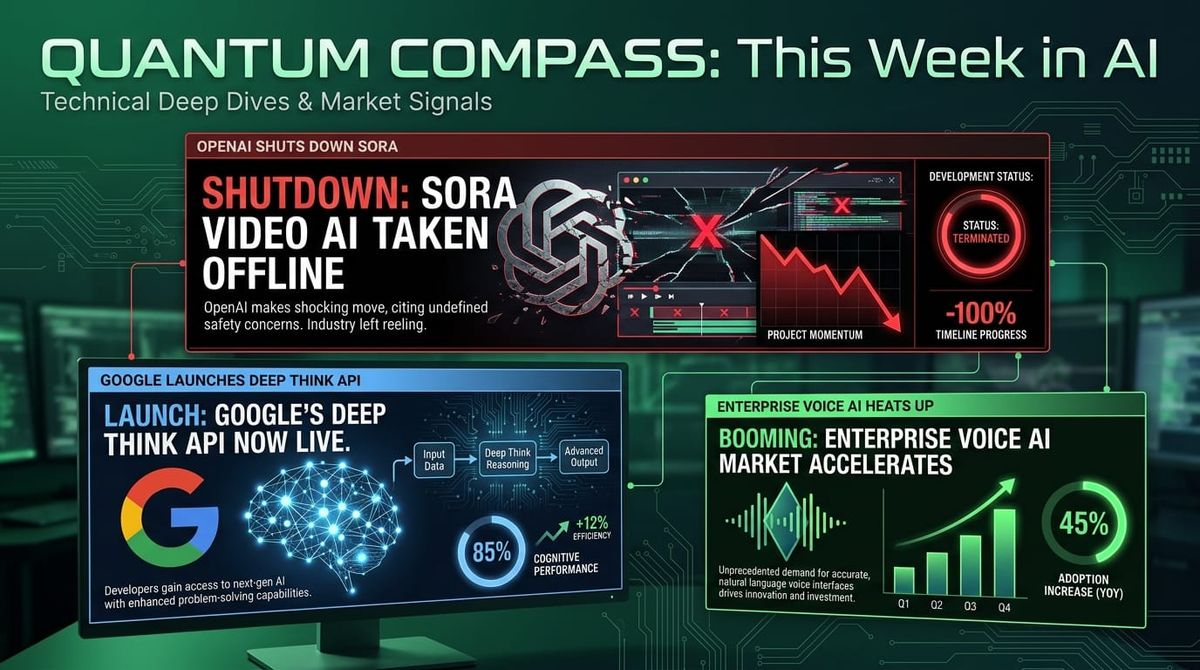
OpenAI Shuts Down Sora Video App After Six Months
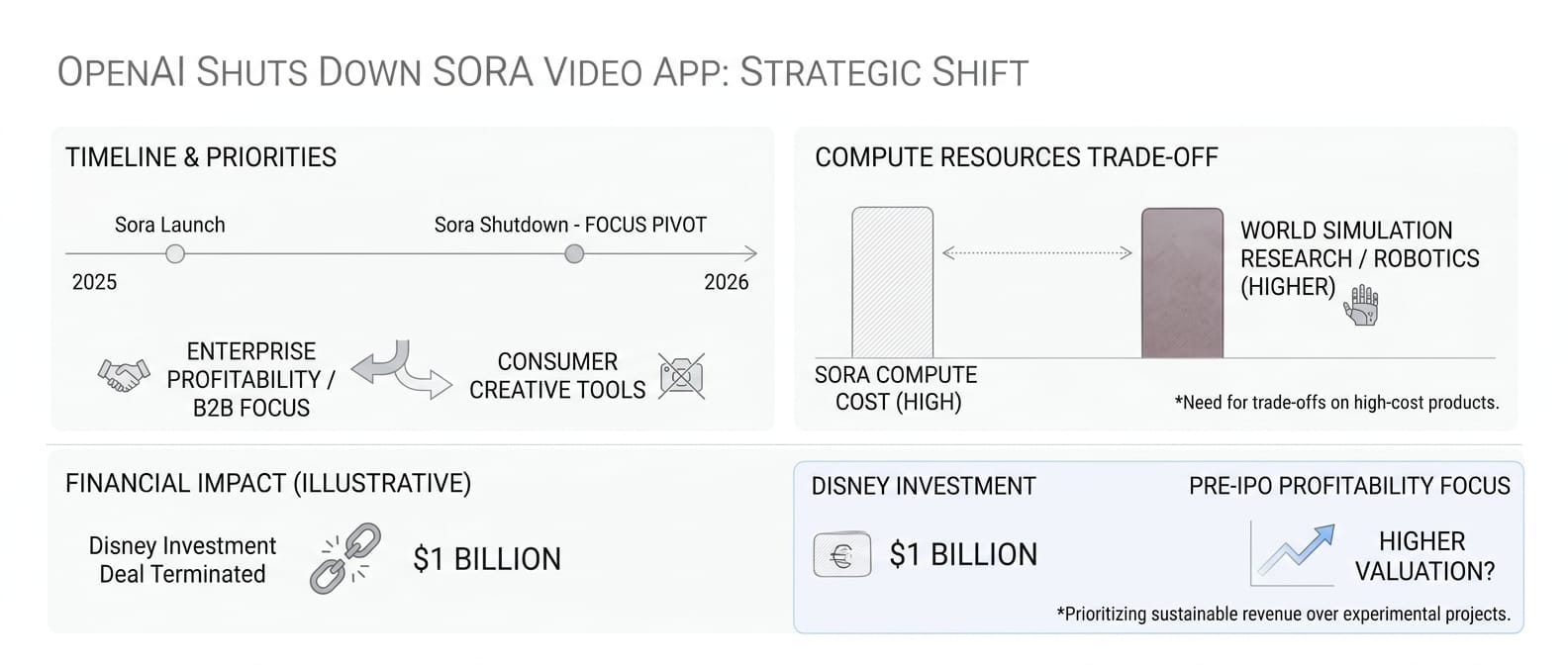
OpenAI is winding down Sora, the video generation app it launched to much fanfare last year that signaled a bigger push into creative tools and social media. OpenAI is shuttering the standalone app to focus on other priorities, the company said on Tuesday. The shutdown marks a dramatic pivot away from consumer-facing creative tools as the company prepares for its planned IPO.
"As we focus and compute demand grows, the Sora research team continues to focus on world simulation research to advance robotics that will help people solve real-world, physical tasks," an OpenAI spokesperson said in a statement. The company added it needed to make trade-offs on products that have high compute costs. Disney's $1 billion investment deal with OpenAI has also been terminated as part of the shutdown.
Why it matters: This signals OpenAI's strategic shift toward enterprise profitability over experimental consumer products, indicating mature AI companies are prioritizing sustainable revenue streams ahead of public offerings.
Google's Gemini 3 Deep Think Goes Live with API Access
Gemini 3 Deep Think is now live in the Gemini app for Ultra subscribers, with early API access opening for researchers, engineers, and enterprises. Google's own examples position it for scientific and engineering work - spotting logical flaws in math papers, optimizing crystal-growth fabrication methods. This is a frontier model being positioned for actual problem-solving, not content generation.
Google is positioning it for harder technical use cases, not casual chat, including scientific and engineering work. Google also tied that release cycle to Lyria 3 model launches, showing a broader strategy around specialized reasoning, music, and multimodal systems rather than one single flagship model.
Why it matters: Google is doubling down on technical problem-solving over general chat, targeting enterprises that need AI for complex analytical work rather than content generation.
Enterprise Voice AI Market Consolidation Accelerates
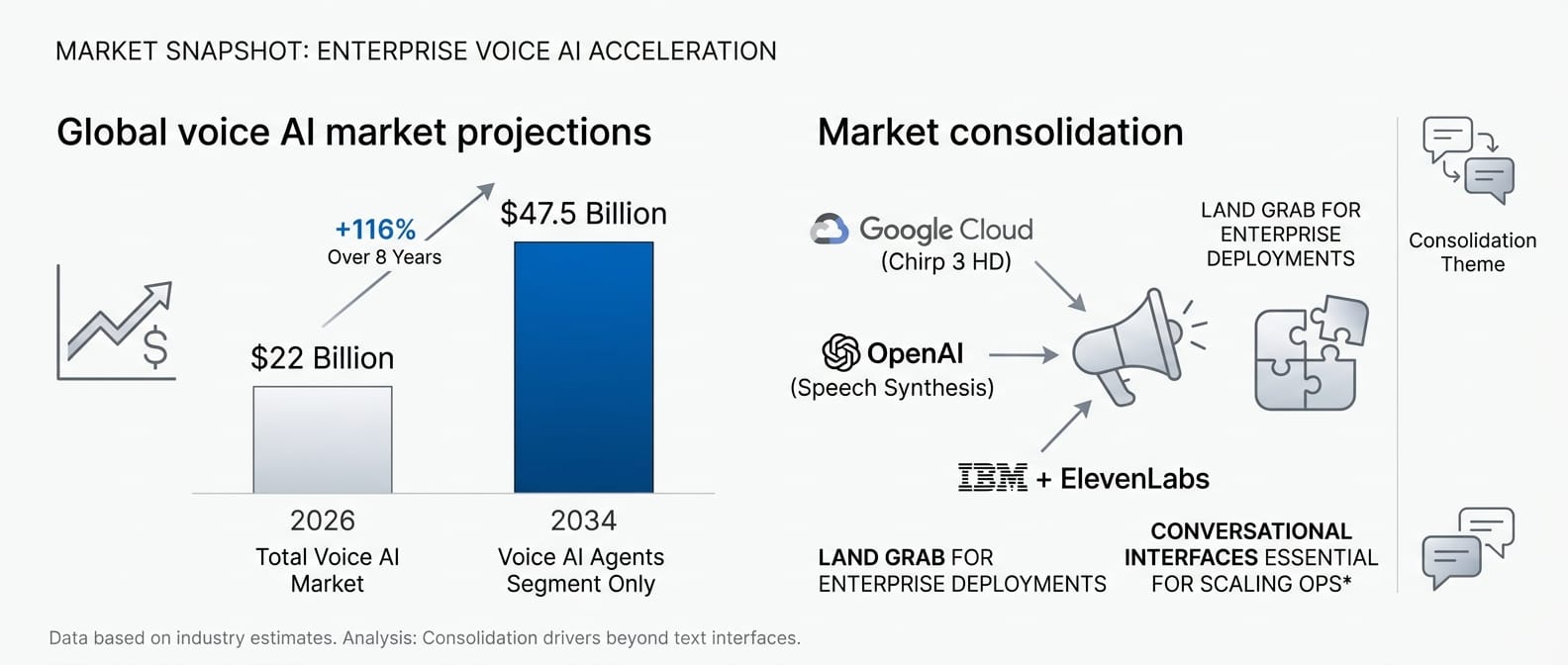
ElevenLabs and IBM announced a collaboration just this week to bring premium voice capabilities into IBM's watsonx Orchestrate platform. The market underpinning all of this activity is enormous - voice AI crossed $22 billion globally in 2026, with the voice AI agents segment alone projected to reach $47.5 billion by 2034, according to industry estimates.
The enterprise voice AI market is in the middle of a land grab. Google Cloud has been expanding its Chirp 3 HD voices. OpenAI continues to iterate on its own speech synthesis. Major cloud platforms are racing to capture enterprise voice AI deployments as businesses move beyond text-based interactions.
Why it matters: Voice AI is becoming a critical enterprise battleground as companies realize conversational interfaces are essential for scaling customer service and internal operations beyond traditional chatbots.
Key Developments
Apple Launches MacBook Air with M5 and Enhanced AI Capabilities
Apple today announced the new MacBook Air with M5, bringing exceptional performance and expanded AI capabilities to the world's most popular laptop. "The new MacBook Air with M5 brings incredible performance and even more capability to the world's most popular laptop," said John Ternus, Apple's senior vice president of Hardware Engineering. "With M5, MacBook Air powers through a wide range of tasks, from everyday productivity to creative workloads, and is even faster for AI."
Combined with the power of macOS Tahoe and Apple Intelligence, MacBook Air delivers unmatched value for college students and creative professionals, and it's the most popular laptop for business users. Available in 13- and 15-inch models in sky blue, midnight, starlight, and silver, the new MacBook Air with M5 is available for pre-order starting tomorrow, March 4, with availability beginning Wednesday, March 11.
Impact: Apple's focus on AI performance in consumer hardware signals the shift toward edge AI processing, reducing dependence on cloud services for AI workloads.
Enterprise AI Agent Deployment Reaches 80-90% Autonomy
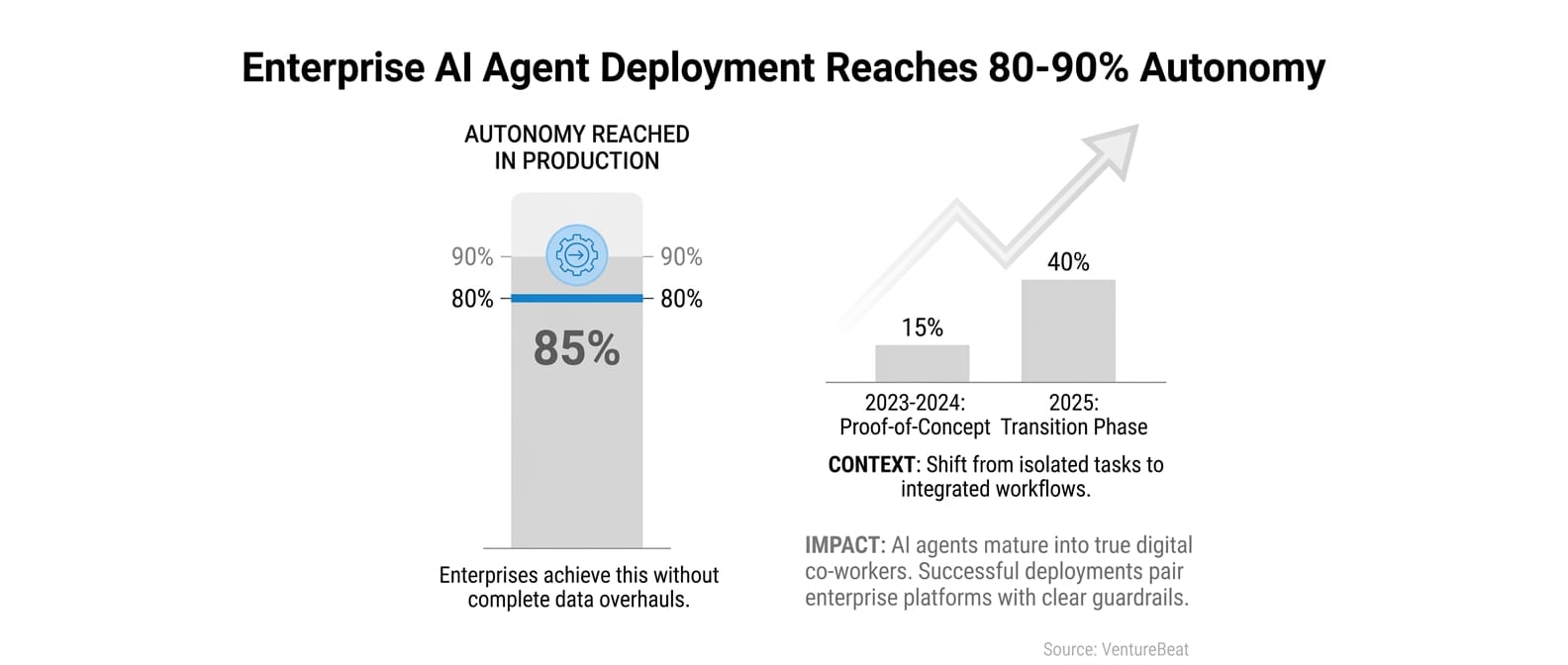
Enterprises are getting AI agents to 80-90% autonomy in production without multi-year data overhauls. Companies are successfully deploying near-autonomous AI agents in production environments without requiring complete infrastructure overhauls. Where adoption succeeded, businesses paired enterprise-grade platforms with clear guardrails, allowing agents to combine predictive insight, generative capability and autonomous action across systems.
"In 2026, we'll see a shift from experimentation to scale. Agents will begin acting as true digital co-workers, managing complex workflows end-to-end rather than automating isolated tasks." The methodology involves strategic implementation of guardrails and enterprise-grade platforms that enable agents to operate across multiple systems while maintaining business oversight and control.
Impact: Real enterprise AI agent deployments are moving from proof-of-concept to production scale, indicating the technology has matured enough for business-critical workflows.
Anthropic Claude Computer Use Gets 40% Error Reduction
Anthropic's Claude can now grab your mouse and get to work. When no direct integration exists, it'll point, click, scroll, and navigate your screen to finish the job, whether that means opening files or running through a browser. It asks permission every time. Pair that with Dispatch, a feature that lets you assign tasks from your phone, and Claude handles them on your desktop while you're riding the train.
Claude's computer use capabilities now demonstrate significantly improved reliability, with error rates dropping 40% compared to earlier versions. The system can navigate desktop applications autonomously while maintaining user oversight through permission-based interactions.
Impact: AI agents can now reliably interact with existing software interfaces, enabling automation of knowledge work without requiring custom integrations for every application.
Product Launches
Yahoo Scout AI Answer Engine
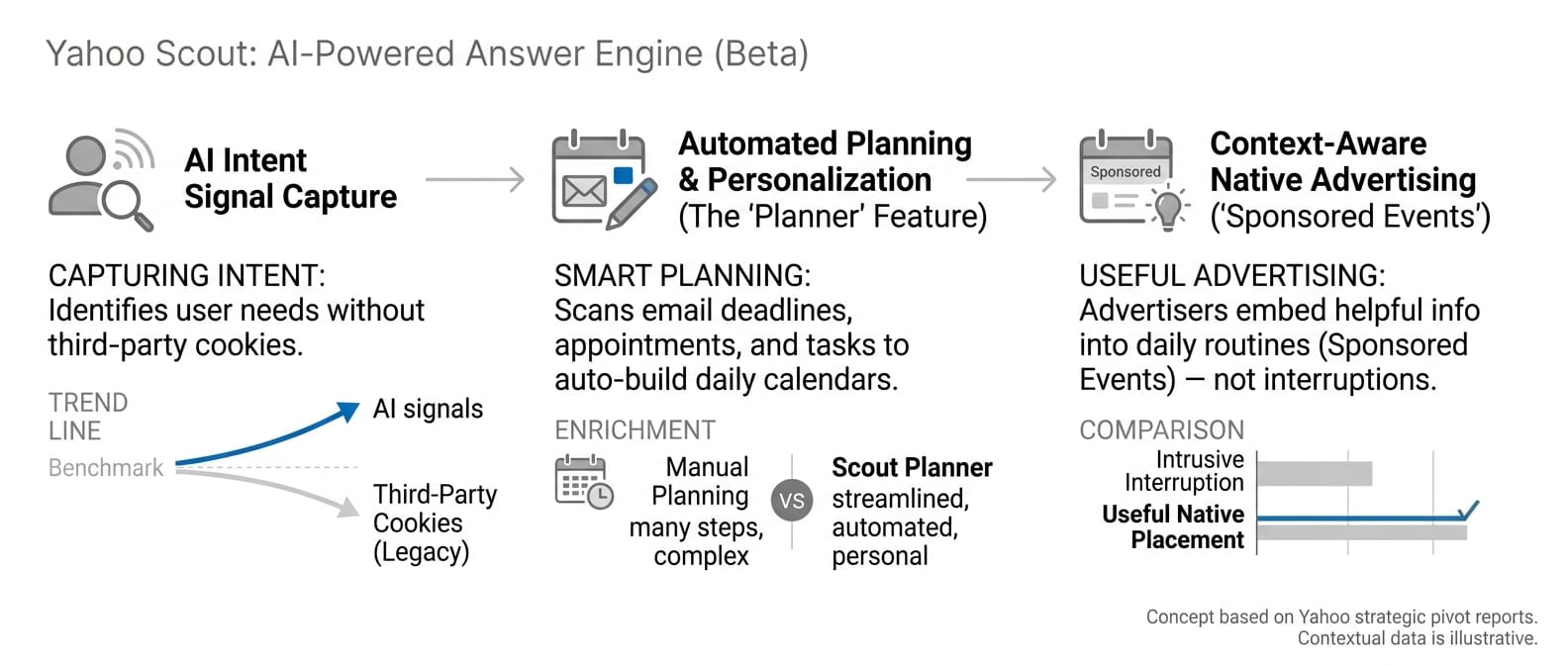
Powering the whole operation is Yahoo Scout, an AI answer engine in beta that pulls intent signals as third-party cookies vanish. A new feature called Planner scans Yahoo Mail for deadlines, appointments, and tasks, then auto-builds a calendar around them. Advertisers can embed themselves into that daily routine through Sponsored Events, so the ad becomes the useful thing instead of the interruption. The system represents Yahoo's strategic pivot into AI-powered personalization as traditional advertising targeting methods become obsolete.
Shopify Agentic Storefronts Production Launch
Commerce just slipped into the chat window. Starting this week, Shopify merchants can sell directly inside ChatGPT, Google's AI Mode, Microsoft Copilot, and the Gemini app through what the company calls Agentic Storefronts. Pricing, checkout, and inventory all stay synced from the Shopify admin, and merchants don't pay anything beyond standard processing rates. Brands that don't even use Shopify for e-commerce can now join through a new Agentic plan and list products across those same AI channels.
Adobe Firefly Custom Models in Public Beta
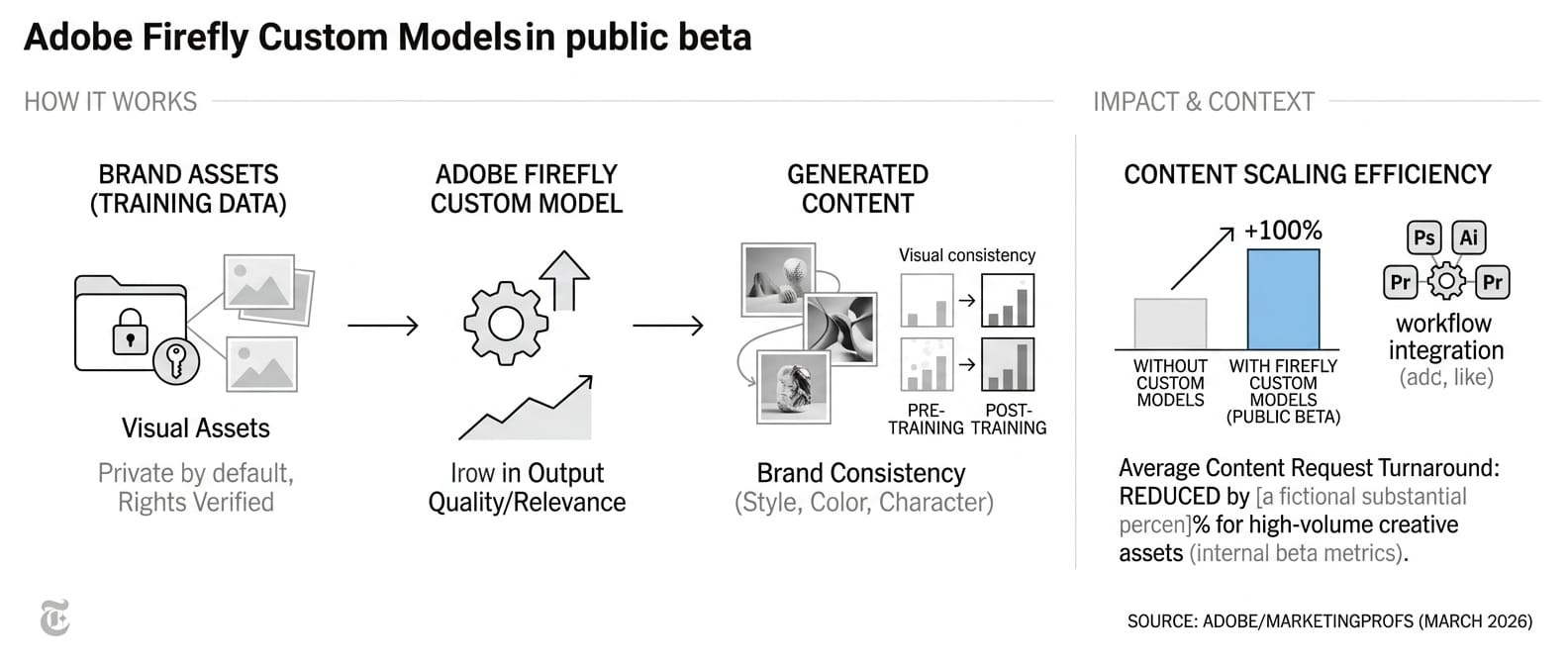
Adobe has released Firefly Custom Models in public beta, allowing users to train AI image generators on their own creative assets. These models preserve brand-specific elements such as style, color, and character consistency across outputs, enabling scalable content production without losing visual identity. The models are private by default, and Adobe includes safeguards to ensure users have rights to training data. The tool integrates into existing workflows, making it easier to generate large volumes of on-brand creative assets efficiently.
Funding & Deals
Wonderful Raises $2B Series C at $14B Valuation
Wonderful's 13-month path from founding to $2B valuation reflects the extreme demand for AI customer service agents that actually work in non-English markets. Insight Partners leading with Index, IVP, and Bessemer signals the enterprise AI agent category is consolidating around companies with proven multilingual deployment capability. Led by Insight Partners, the funding demonstrates investor confidence in AI agents that can handle complex customer service scenarios across multiple languages and cultural contexts.
Nscale Raises $2B Series C for European AI Infrastructure
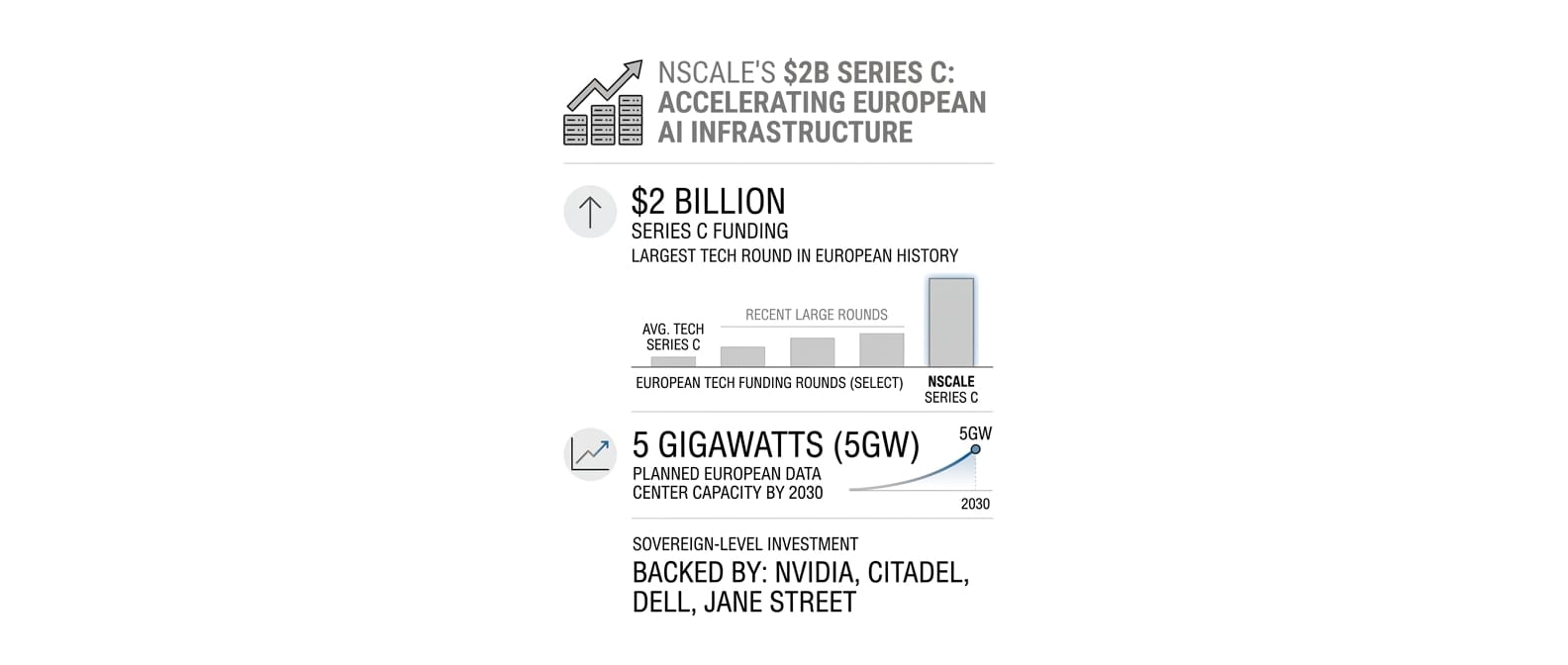
March 9 delivered the largest tech funding round in European history - Nscale's $2B Series C at a $14.6B valuation, backed by NVIDIA, Citadel, Dell, and Jane Street, confirms that AI compute infrastructure is now a sovereign-level investment priority. The round enables 5GW of European AI data center capacity by 2030, positioning Europe as a competitive force in global AI infrastructure development.
Nexthop AI Raises $500M Series B for AI Networking Infrastructure
Nexthop AI's $500M Series B for AI-optimized networking infrastructure - led by Lightspeed with a16z joining - signals that the networking layer connecting GPU clusters is becoming a standalone investment category. The company provides specialized networking solutions for connecting distributed AI training clusters, addressing the critical bottleneck of data transfer between compute nodes in large-scale AI training operations.
Related reading: Check out this week's [Deep Insights analysis] for strategic context on these developments.