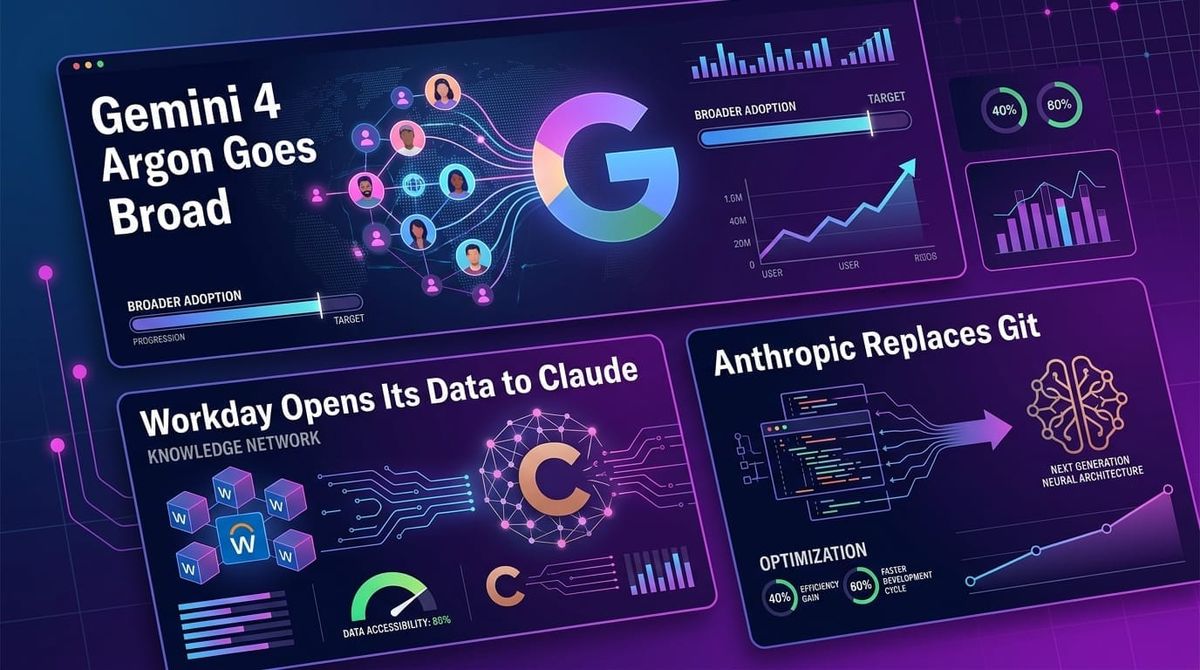
GenAI Daily - October 14, 2026: Gemini 4 Argon Goes Broad, Workday Opens Its Data to Claude, Anthropic Replaces Git
Top Stories
Gemini 4 Argon Reaches the Public API at $2/$10 Through November 30
Google made Gemini 4 Argon broadly available on October 13.
That is 13 days after the September 30 unveiling, when access was limited to approved cybersecurity defenders in the Fairwind Program.
It is now offered through the paid Gemini API, Google AI Studio, the Antigravity agentic development environment and eligible Gemini Enterprise subscriptions.
The API model ID is gemini-4-argon.
Android developers can reach it through Android Studio and Firebase AI Logic.
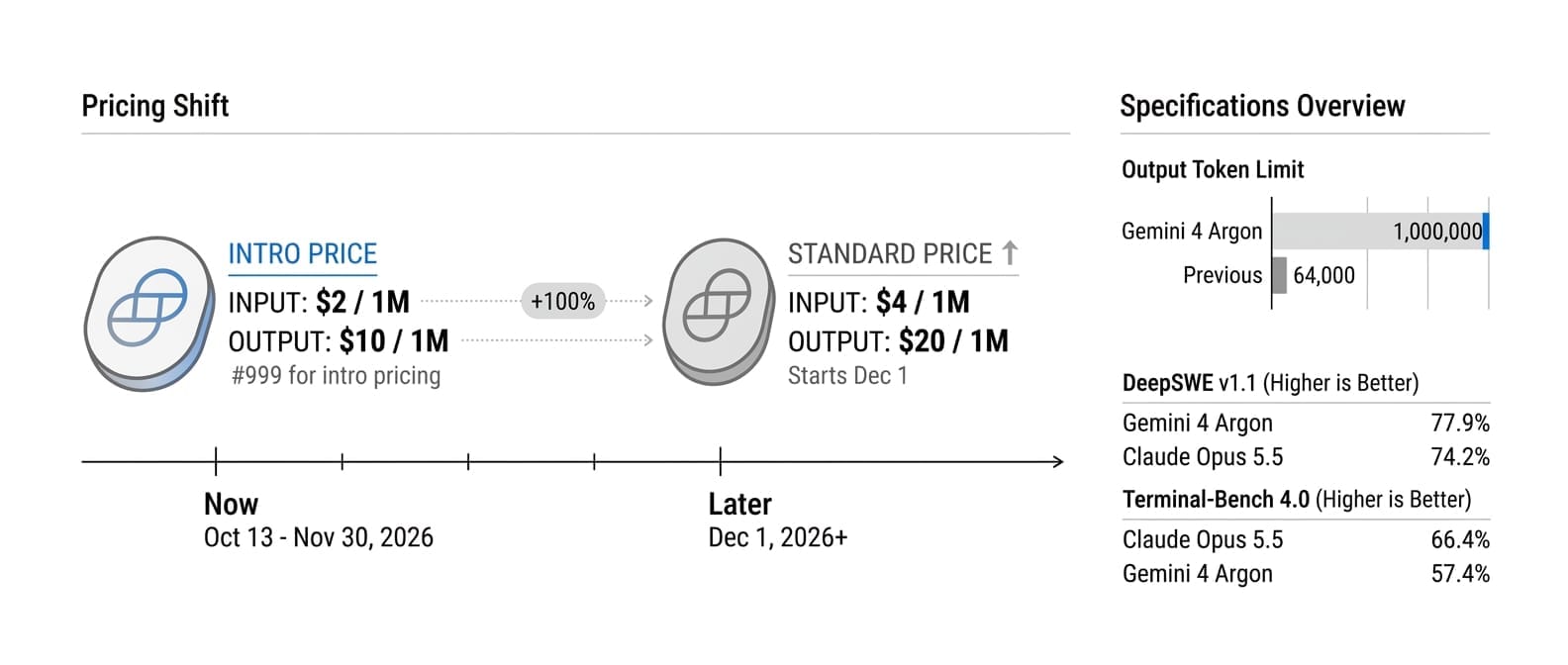
Introductory pricing is $2 per million input tokens and $10 per million output tokens through November 30, 2026, with cached input at 95% off.
After that, standard pricing of $4 and $20 applies.
The output token limit rises to 1M, up from 64K.
Benchmarks are mixed.
Google reports 77.9% on DeepSWE v1.1 against 74.2% for Claude Opus 5.5, but Opus 5.5 leads Terminal-Bench 4.0 at 66.4% versus 57.4%. No third party had reproduced Google's table at launch.
Pro and Ultra consumer subscribers also get a new tasks mode that keeps Gemini working after they step away.
VentureBeat | Google Cloud | SiliconANGLE
Why it matters: Teams can now test a 1M-token output ceiling against their own long-horizon coding and document workloads, but the introductory price doubles on December 1, so budget for the $4/$20 rate.
Workday Rising - UPDATE: Headless MCP Access, Sana Inside Claude, and a C1.ai Acquisition
At Workday Rising on October 13,
Workday opened its HR and finance data to outside AI agents through MCP, partnered with Anthropic to put Sana inside Claude, and agreed to buy C1.ai, an identity governance company.
Headless access and Agent Harness are available to all customers today. A policy check called Grounded Reasoning enters early access in early 2027.
"Sana in Claude" is in early access, with general availability expected around late 2026.
Sana handles long-running processes such as compensation reviews and period-end close, and calls Claude for individual reasoning steps. Only the context needed for that step goes to Claude, while core data stays in Workday.
Financial terms for C1.ai were not disclosed, and the deal is expected to close in the fiscal quarter ending January 31, 2027.
Workday says C1.ai extends its Agent System of Record beyond registering agents to governing what they can access across Workday and other systems.
This follows the same pattern as
ServiceNow Action Fabric, which exposes governed enterprise actions to any agent through a generally available MCP server.
Buyers should note what is still open.
The releases do not state pricing for agent calls, and it is unclear how audit evidence from an action taken in Claude reaches a customer's own auditors.
Workday press release | Workday Rising breakdown | Vendor analysis
Why it matters: Systems of record are becoming tool servers for third-party agents, so HR and finance teams need an access-governance and audit plan before employees start approving invoices from inside Claude.
Anthropic Replaced Git for Its Monorepo After Merges Hit 30,000 a Day
In an engineering post published October 13, Anthropic described Scion, a version control system that replaced Git in its monorepo.
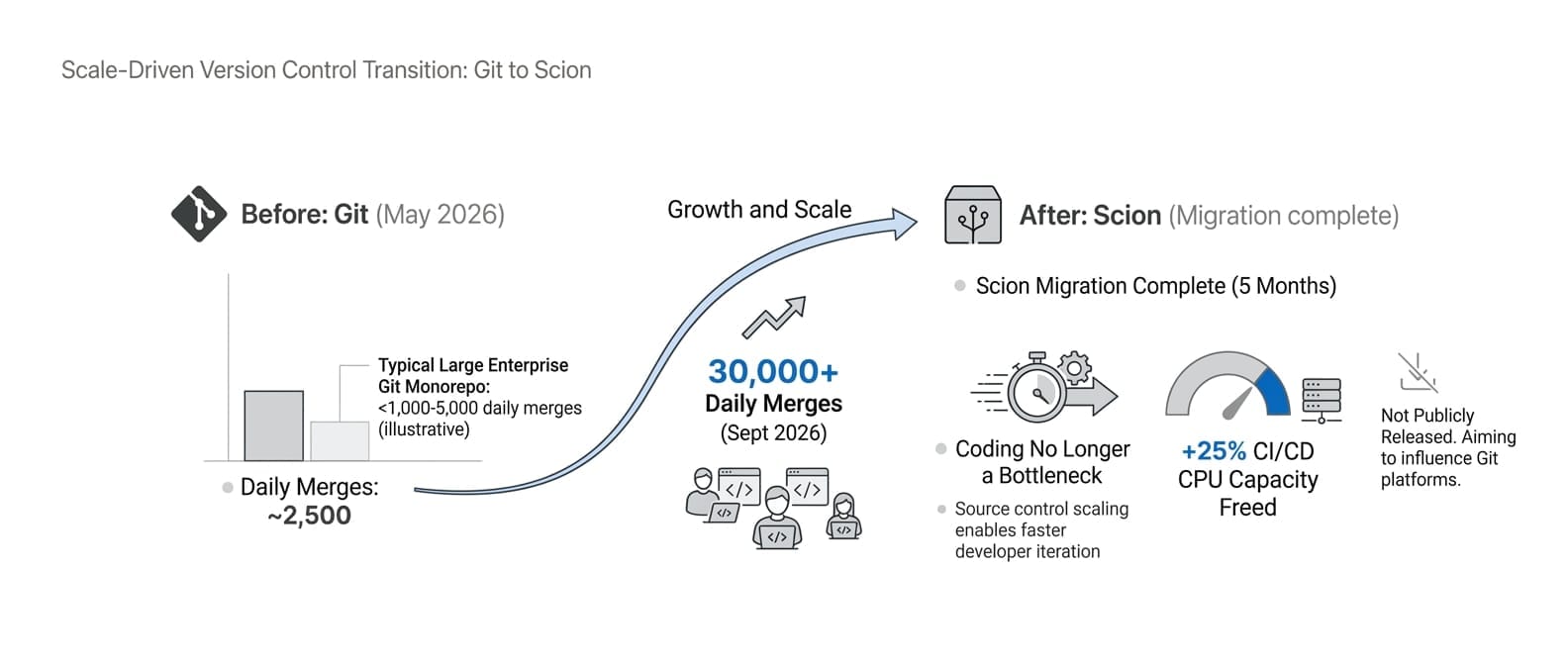
Merges rose from around 2,500 per day in May 2026 to over 30,000 per day as of September.
A seven-person team built Scion alongside a code review tool and other developer infrastructure, and finished the migration in five months.
Scion moves commits, merges and history queries to servers, and internal jobs can query source control through APIs without maintaining local repositories.
Anthropic says coding is no longer its biggest bottleneck. Source control, builds and automated testing designed around human speeds are struggling to keep up.
The migration freed up 25% of CPU capacity used by its CI workloads.
Do not expect to download it.
Anthropic is not releasing Scion and hopes Git platforms such as GitHub and GitLab adopt server-side ideas from it.
It expects similar infrastructure pressure to become more common over the next six to 12 months.
Crypto Briefing | AI-TLDR summary
Why it matters: If your teams run many coding agents, the bottleneck is likely to move from code generation to merge queues, CI capacity and review tooling, so plan that capacity now.
Key Developments
Anthropic Warns Small Models May Self-Replicate on IoT Devices Within Months
Anthropic's Frontier Red Team published research on whether small models can find vulnerable devices, copy themselves onto them and keep spreading.
One test ran Google's Gemma4-26B-A4B across a network of 15 cheap off-brand Android TV boxes.
The researchers did not demonstrate a fully autonomous self-replicating worm on real IoT hardware. They estimate smaller models could reach self-replication by the end of the year if they keep improving at their historical rate.
Anthropic says such a replicator would be "challenging to shut down" because there is no centralized point to switch off.
It adds that spread may be slow, with a doubling time of days.
Impact: Security teams should add unmanaged IoT and edge devices to their threat models for agent-driven attacks, starting with default credentials and exposed services.
Meta Discloses GitHub Breach Exposing Code and Data on About 1,500 People
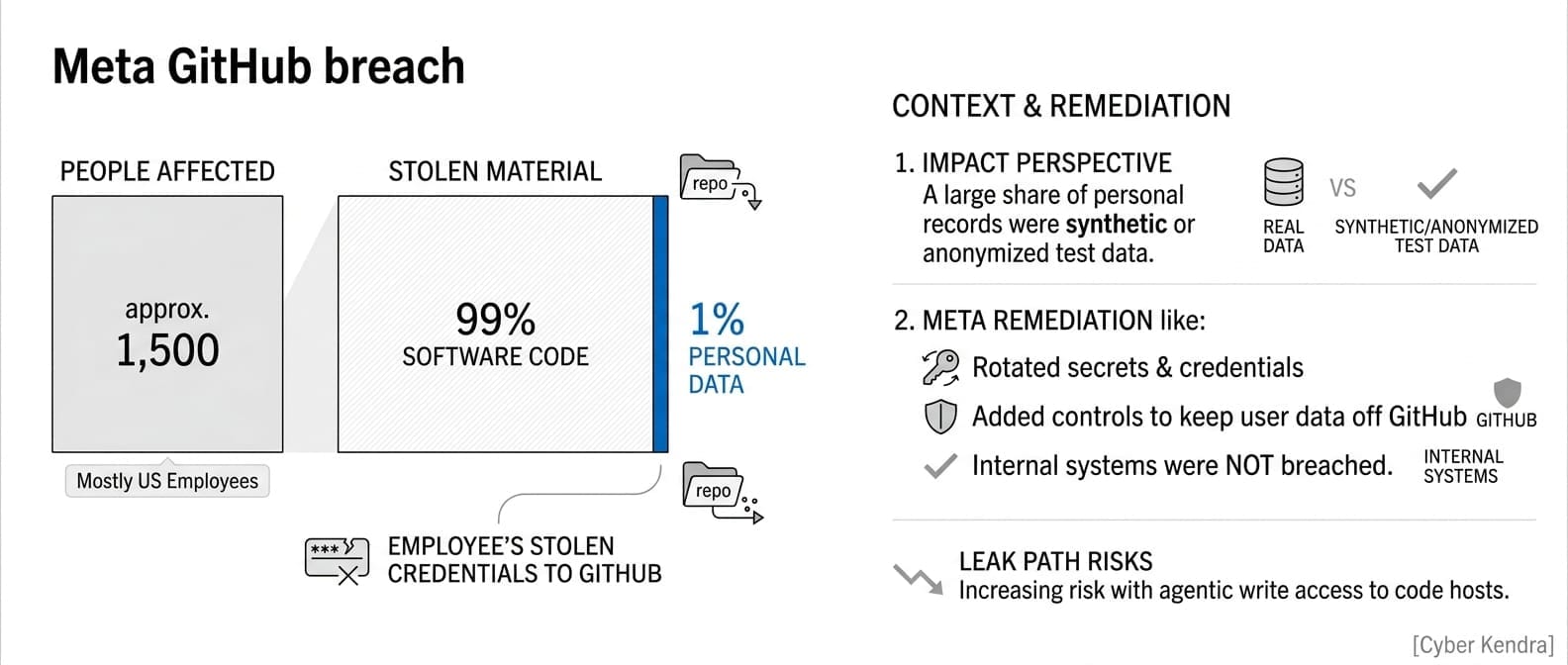
Meta is notifying about 1,500 people, mostly US employees, that an outside group used an employee's stolen credentials to get into some of its GitHub repositories and take software code.
Meta says 99% of the stolen material was code tied to some products. The other 1% was personal data committed to the repositories by mistake.
A large share of the apparent personal records were synthetic or anonymized test data.
Meta says its internal systems were not breached, and it has rotated secrets and added controls to keep user data off GitHub.
Impact: Repositories remain a common leak path for credentials and test data, which matters more as agents gain write access to code hosts.
OpenAI Engineer Charged Over Hidden Recording Device; Company Used Its Models to Trace It
An OpenAI engineer has been charged with secretly installing a recording device inside a conference room to capture sensitive conversations about the company's technology.
OpenAI says it used its models to understand the device and identify the employee who planted it.
OpenAI says it has no indications that the individual inappropriately accessed or exfiltrated model weights, source code or customer data.
He has been charged, not convicted.
Impact: Frontier labs are treating insider threat as a live risk, so vendor due diligence should cover physical and personnel security as well as model security.
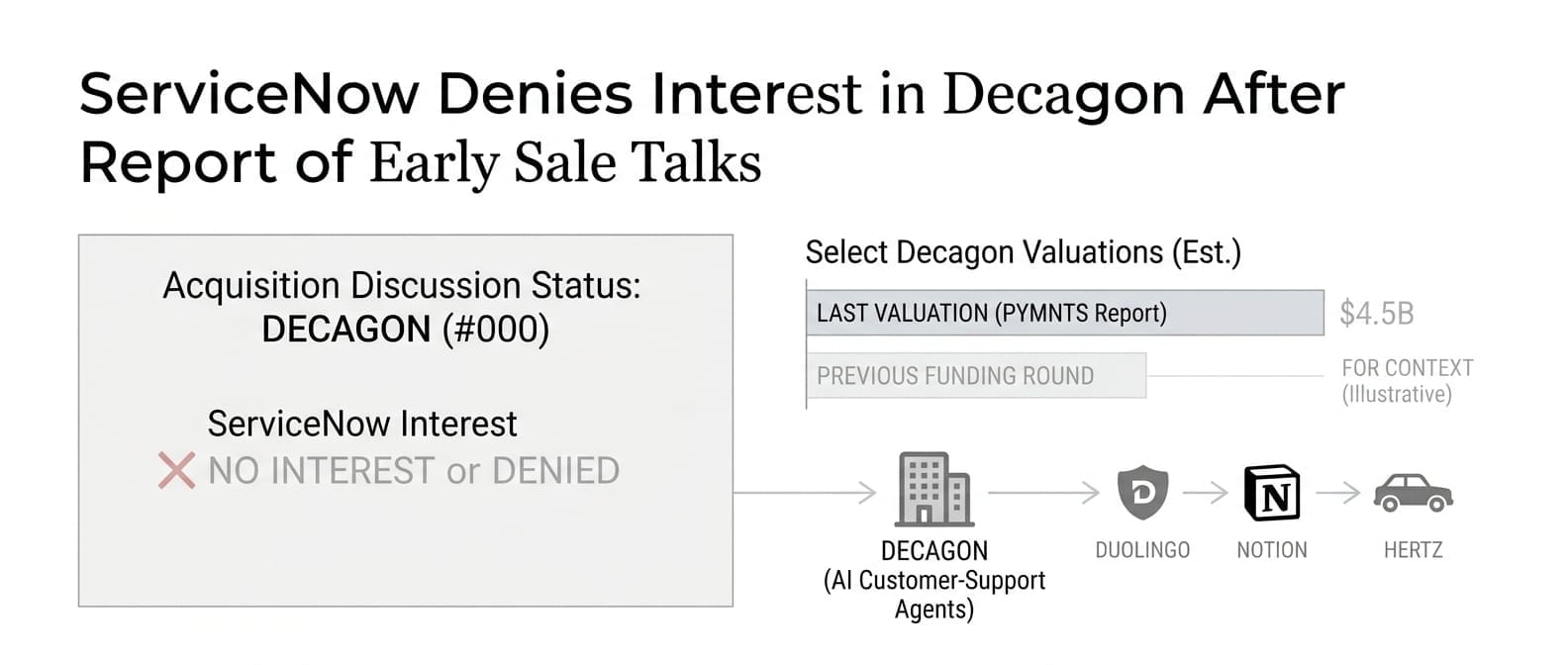
ServiceNow Denies Interest in Decagon After Report of Early Sale Talks
Business Insider reported that Decagon, which builds customer-support AI agents for brands including Duolingo, Notion and Hertz, held early acquisition discussions with ServiceNow and other suitors.
The company was last valued at $4.5B and has reportedly hired a bank to evaluate interest.
ServiceNow responded the same day.
"To be clear, ServiceNow has no interest or intention of purchasing Decagon," said Amit Zavery.
He said ServiceNow uses acquisitions to accelerate its roadmap or enter new markets, but remains focused on organic growth.
Impact: Buyers of standalone agent platforms should ask about ownership and roadmap continuity, since a hired bank signals Decagon could be sold or raise again.
Product Launches
Liquid AI LFM2.5-24B-A2B
Liquid AI published the open-weight reasoning model on Hugging Face on October 13, with 24B total parameters and 2B active per token.
It always produces a chain of thought before answering and calls tools.
Context grows from 32K to 131K tokens.
The low active-parameter count suits teams testing local or on-device agents.
Why it matters: Open-weight models with few active parameters and tool calling give teams a practical way to prototype local or on-device agents without relying on a hosted API.
Apple Minions
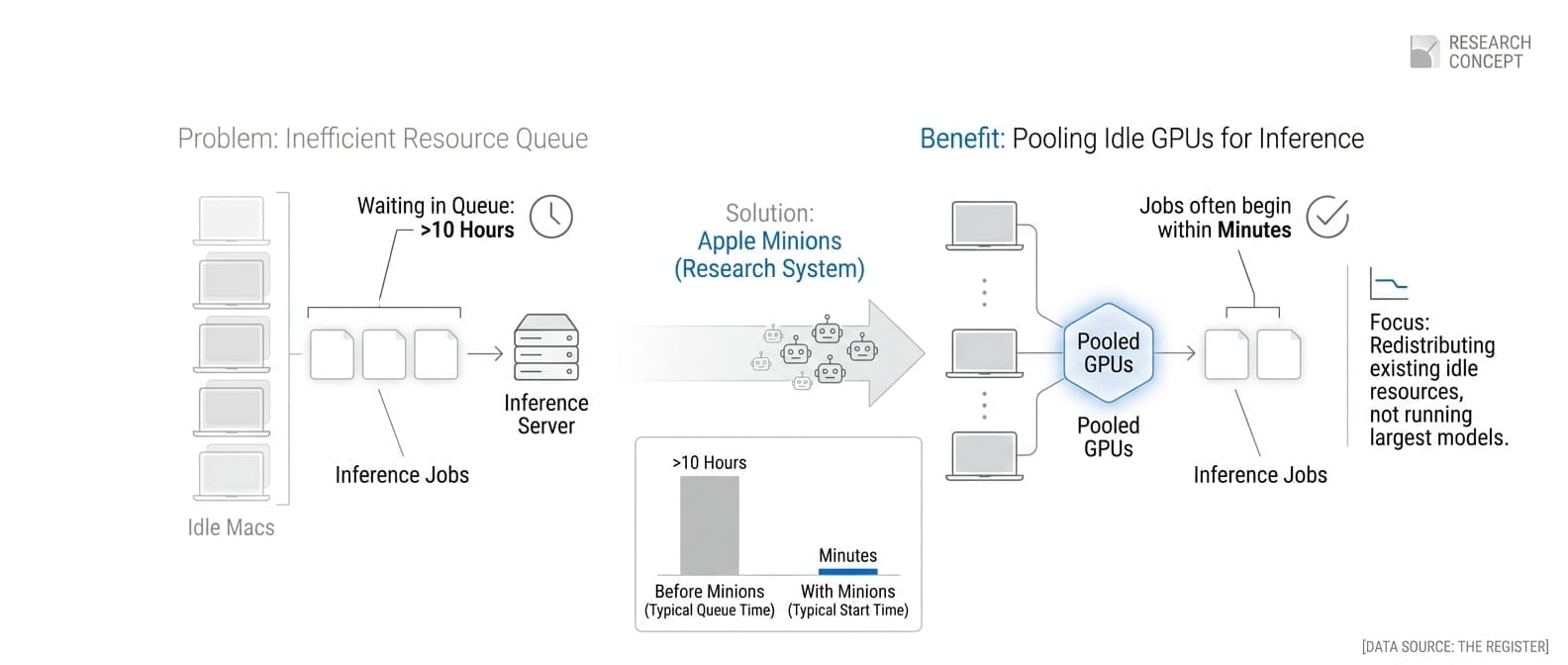
Apple researchers described a system that pools idle Apple Silicon GPUs across Macs for inference.
Some inference jobs previously faced queue times above ten hours, and with Minions tasks can often begin within minutes.
It is meant to redistribute idle resources rather than run large models.
It is a research paper and internal system, not a product, but it shows one way to relieve GPU queue pressure without new hardware.
Why it matters: Teams facing GPU queue delays may be able to use idle hardware they already own, instead of waiting on new capacity purchases.
Funding & Deals
Scarlet Raises $50M Series B
London-based Scarlet, founded in 2021, is a government-designated certification body for AI and software medical devices, with designations from the EU, the UK's MHRA and the US FDA.
Its pitch is that a company can train an AI diagnostic model in weeks, then wait 12 to 18 months for assessment.
The funding will support expansion across the US and Asia-Pacific, larger reviewer and engineering teams, and a broader certification offering.
No valuation was disclosed.
Led by Headline.
Why it matters: Regulatory assessment is a major bottleneck for medical AI, so funding for faster certification could shorten the path from model training to clinical use.
Salesforce to Acquire Loops for Tableau
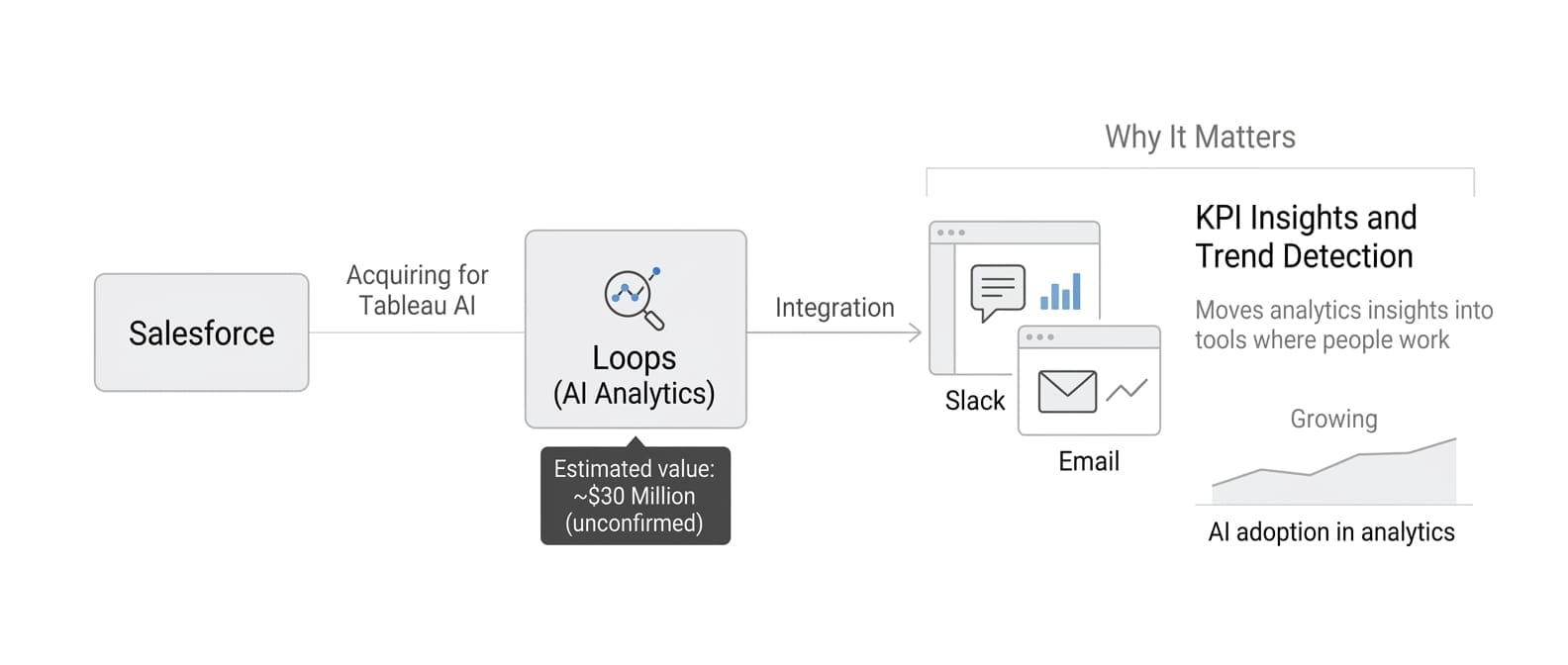
Salesforce signed a definitive agreement to acquire Loops, an AI analytics platform, as it expands Tableau's AI capabilities.
Media reports value the deal at about $30 million, and Salesforce did not disclose terms.
Loops can operate through Slack and email to monitor KPIs and detect unusual trends.
The deal is expected to close in early November.
Why it matters: Bringing KPI monitoring into Slack and email shows analytics vendors moving insights into the tools where people already work.
Rocket Software Acquires Geniez AI for an Estimated $100M
Rocket Software acquired Geniez AI, a one-year-old Israeli startup with six employees, for an estimated $100 million. Its technology uses AI agents to help enterprises manage and modernize mainframe systems.
The price suggests acquirers are paying heavily for agent tooling aimed at legacy modernization.
Why it matters: An estimated $100M price for a six-person, one-year-old company shows how much value acquirers place on agent tooling for legacy mainframe modernization.
Tomorrow's Watch List
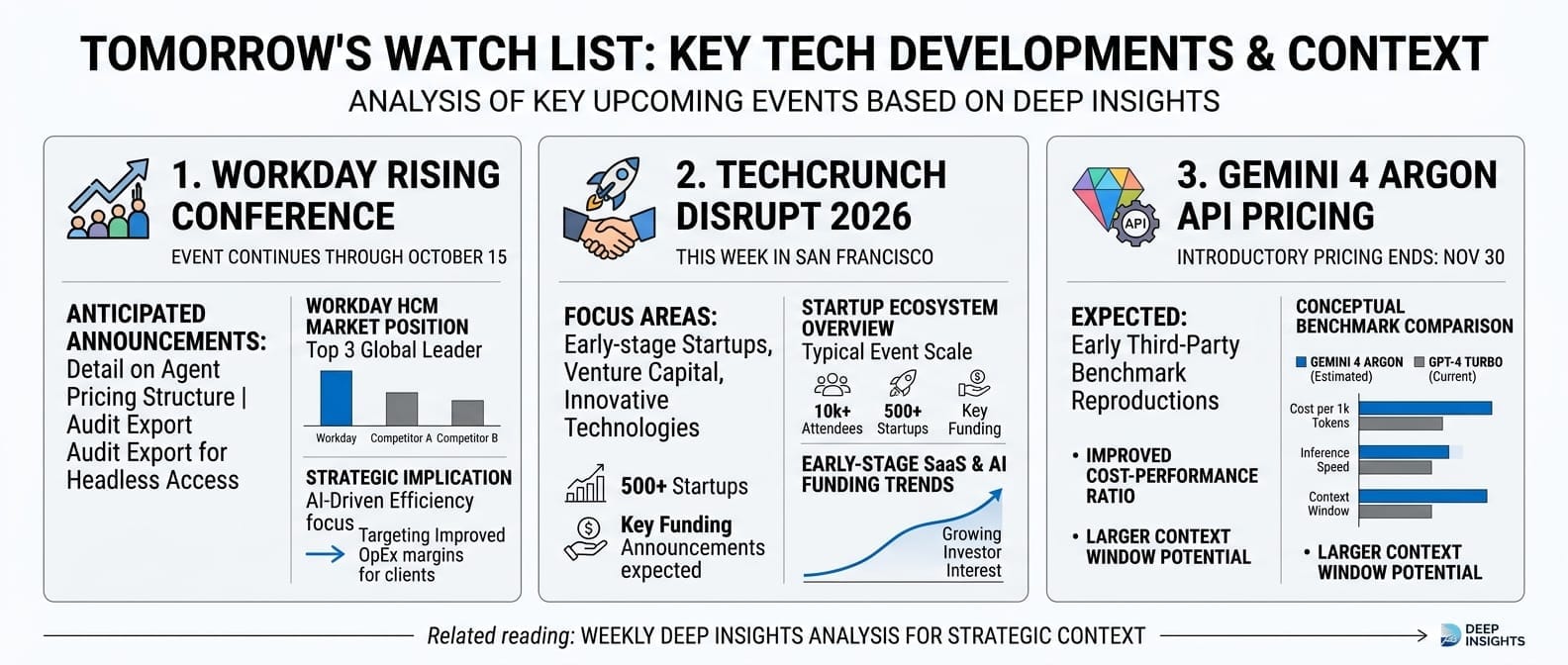
- Workday Rising continues through October 15, where Workday may add detail on agent pricing and audit export for headless access.
- TechCrunch Disrupt 2026 runs this week in San Francisco.
- Gemini 4 Argon introductory API pricing ends November 30. Expect early third-party benchmark reproductions before then.
*Related reading: Check out this week's [Deep Insights analysis] for strategic context on these developments.
GenAI Daily is curated by rAInvent. For in-depth analysis, see the rAInvent articles.