GenAI Daily - October 27, 2026: Anthropic's Public S-1, GPT-6.1 Terra Halves Mid-Tier Pricing, Salesforce Moves to Meter Agents

Top Stories
Anthropic S-1 Goes Public - UPDATE
Anthropic publicly filed its S-1 on Monday, ahead of an IPO planned for later this fall under the ticker "ANT."
The draft had already surfaced the headline revenue numbers. The public filing adds compute detail.
Anthropic has committed to between $542 billion and $567 billion in future compute and infrastructure spending.
It is the largest single customer of SpaceX's AI division and has agreed to spend $3.1 billion per month on compute from it.
Anthropic says its own data center build-out will be a growing share of compute investment. It will also let the company backfill short-term compute agreements with its own cheaper capacity during demand peaks.
The risk disclosures matter for anyone building on Claude.
Anthropic warns that failing to secure or allocate enough compute could leave it behind the frontier, and says it has underestimated its compute needs in the past.
The risk factors section runs 94 pages.
Neoclouds like CoreWeave and Nebius lost over 30% of their value in October as data center credit risk rose.
That is the market Anthropic's IPO is landing in.
Why it matters: Capacity, not demand, is the constraint Anthropic itself names, so teams with Claude-dependent production workloads should keep a tested fallback model and watch for rate-limit or pricing changes as it builds out its own infrastructure.
OpenAI Ships GPT-6.1 Terra at Half the Price
OpenAI released GPT-6.1 Terra on Monday, an upgrade to its middle model tier, saying it costs developers 50% less than GPT-5.6 Terra and handles computer tasks faster and more accurately.
It is available to Plus, Pro, Enterprise and Edu users in ChatGPT Work and Codex, and through the API as gpt-6.1-terra.
Artificial Analysis lists pricing at $1 input and $5 output per million tokens, with cached input at $0.05 versus $0.20 per million tokens.
Independent numbers back up the efficiency claim.
At max effort, Terra gains 6 points on the Artificial Analysis Intelligence Index over GPT-5.6 Terra, at $0.40 per task versus $1.40.
On the new Coding Agent Index v2.0 it scores 48, six points below GPT-6.1 Sol and 17 above GPT-6 Luna.
On accuracy, Artificial Analysis reports Terra guesses 38% of the time when it does not know an answer, down from an 88% hallucination rate for GPT-5.6 Terra.
OpenAI's own figures show the error rate on error-inducing prompts at low reasoning effort falling from 53.6% to 16.7%.
OpenAI also says Terra finishes tasks more than three times faster on average than GPT-6 Astra and GPT-6.1 Sol.
Artificial Analysis | BleepingComputer
Why it matters: Terra gives teams running computer-use and coding agents a cheaper tier that closes much of the gap to Sol, so it is worth re-benchmarking agent workloads that currently default to the larger models.
Salesforce Readies Registration and Metering for External Agents
Salesforce plans to require customers to register external AI agents that use its APIs or Model Context Protocol (MCP) servers.
Agentic Identity itself launches in November 2026.
The Winter '27 release, available since October 12, includes API Catalog features customers can use to register agents.
Once an agent is registered, every successful call it makes into Salesforce counts as a Headless Platform Interaction and draws down Flex Credits.
The price is still unknown.
The Flex Credits rate card lists the HPI multiplier as TBA, usage is not currently metered, and Salesforce says customers get 30 days notice before billing.
Flex Credits list at $500 per 100,000.
Sandboxes, scratch orgs and Developer Edition are excluded.
This follows a pattern.
ServiceNow's Action Fabric meters external agents, and SAP, ServiceNow and Workday are all drawing lines around customer data inside their platforms.
Crypto Briefing | Vantage Point
Why it matters: Teams running third-party agents against Salesforce data should inventory those agents and MCP clients now, split agent identities from integration users, and baseline per-workflow call volumes before the multiplier is published.
Key Developments
Nvidia Floats $2,000 Per GPU Per Year for Agent Software
At GTC Berlin on October 22, Jensen Huang said software licensing "will become increasingly a major part" of Nvidia's business, citing about $2,000 per GPU per year as an example for the software that runs agents on AI factories.
That stack centers on the OpenShell sandboxing runtime and Nvidia Sentry, which runs on BlueField-4 DPUs and can quarantine agents that cross security boundaries.
This is not a formal price.
The products covered, availability, and the relationship to existing contracts have not been made clear.
AI Enterprise is already listed at $4,500 per GPU for a one-year subscription.
Impact: Teams planning self-hosted agent infrastructure should treat agent containment as a likely recurring per-GPU line item and ask Nvidia partners how it will relate to existing AI Enterprise entitlements.
Microsoft Offers Buyouts to About 60,000 Employees
Microsoft confirmed it is offering buyouts to around 60,000 employees, its latest effort to cut costs and rework its workforce for the AI age.
Employees must decide in early December, and those who accept leave on December 31.
Bloomberg reports Xbox, Windows, Copilot and Finance are participating, while data center, sales and marketing staff are excluded.
The offer sits alongside heavy infrastructure spending.
Microsoft said in July that September-quarter capital expenditures should exceed $50 billion.
The buyout lets Microsoft reduce headcount without mass layoffs.
Impact: Copilot is among the divisions included, so buyers with roadmap dependencies on Microsoft's AI products should ask account teams about staffing continuity and support commitments.
TechCrunch's AI Graveyard Shows Platform Bundling Killing Point Products
TechCrunch published a running list of AI products and startups that shut down or pivoted.
It includes OpenAI's Sora, shut down in March 2026, and the ChatGPT Atlas browser, discontinued August 9.
Relay, a five-year-old Zapier alternative, closed in August once OpenAI, Google and others built similar automation into their own tools.
The list cites S&P Global Market Intelligence estimating about 42% of AI initiatives are ultimately abandoned by their corporate parents.
AI Brief summary of the TechCrunch list
Impact: When evaluating narrow AI automation vendors, check whether the capability is already shipping inside a model provider or platform you pay for, and negotiate exit and data-portability terms accordingly.
Product Launches
SAP Q3 2026 AI Release Highlights
SAP's Q3 release adds new agents across its Business AI Platform.
The four new sales agents include a Lead Enrichment Agent and a Lead Qualification Agent that categorizes prospects as qualified, nurtured, or disqualified.
The data management assistant adds a set of transition data quality agents covering scope, evaluation, prioritization, validation and automated resolution.
SAP's Customer Experience Q3 release brings AI assistants across sales, service, marketing and commerce under its Autonomous CX vision.
The data quality agents are the most relevant item for teams planning ERP migrations.
Why it matters: The new agents show SAP embedding AI directly into its business applications, and the data quality agents in particular give teams planning ERP migrations a concrete tool to evaluate.
Nvidia Nemotron 3.5 Bolt E4B
Nvidia released an open small language model for fast conversational agents that targets voice assistants and interactive characters running locally on RTX, Jetson and Spark hardware.
It is post-trained from Google's Gemma 4 E4B using reinforcement learning only, with 8B total and 4B effective parameters and a 64K context.
On an RTX 5070, Bolt with the DFlash drafter reached 272.6 tokens per second.
The larger 74B-A9B Bolt model shipped October 15 under the OpenMDW License v1.1, which is not Apache or MIT, so teams should review its terms before shipping.
Why it matters: A small open model that runs locally at high token speeds gives teams building voice and interactive agents an on-device option, provided the license terms fit their use.
Funding & Deals
Blackwall Raises $100M Series C
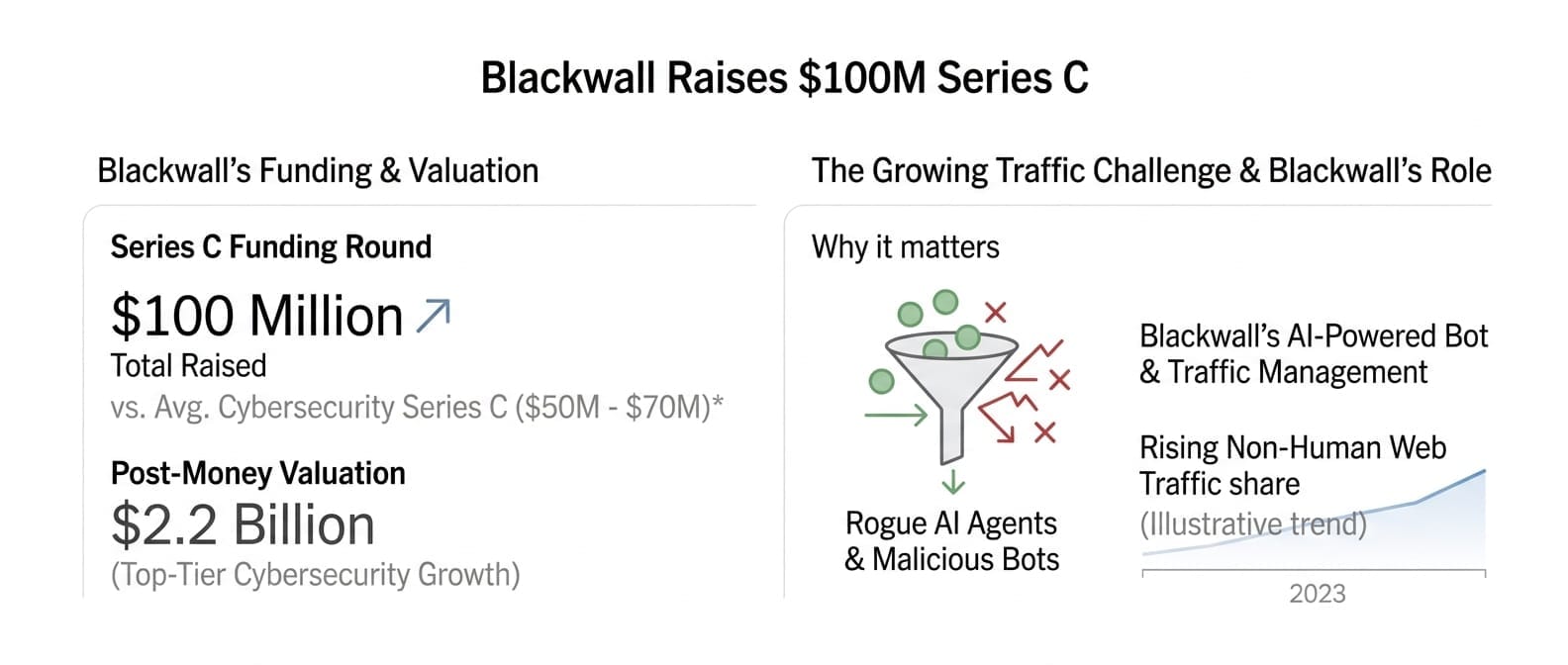
Blackwall, based in Estonia and valued at $2.2 billion, sells web traffic management tools to hosting providers, managed service firms and cloud companies.
Its tools help them manage bot traffic, including rogue AI agents, using digital fingerprinting and proprietary AI models to tell legitimate visitors, authorized AI agents and malicious bots apart.
The company says its model can reduce unwanted traffic before it reaches provider servers, potentially lowering infrastructure costs.
Led by AVP.
Why it matters: As AI agents become a larger share of web traffic, providers need ways to separate authorized agents from malicious bots, and this round signals investor appetite for that capability.
Tractian Raises $130M Series D
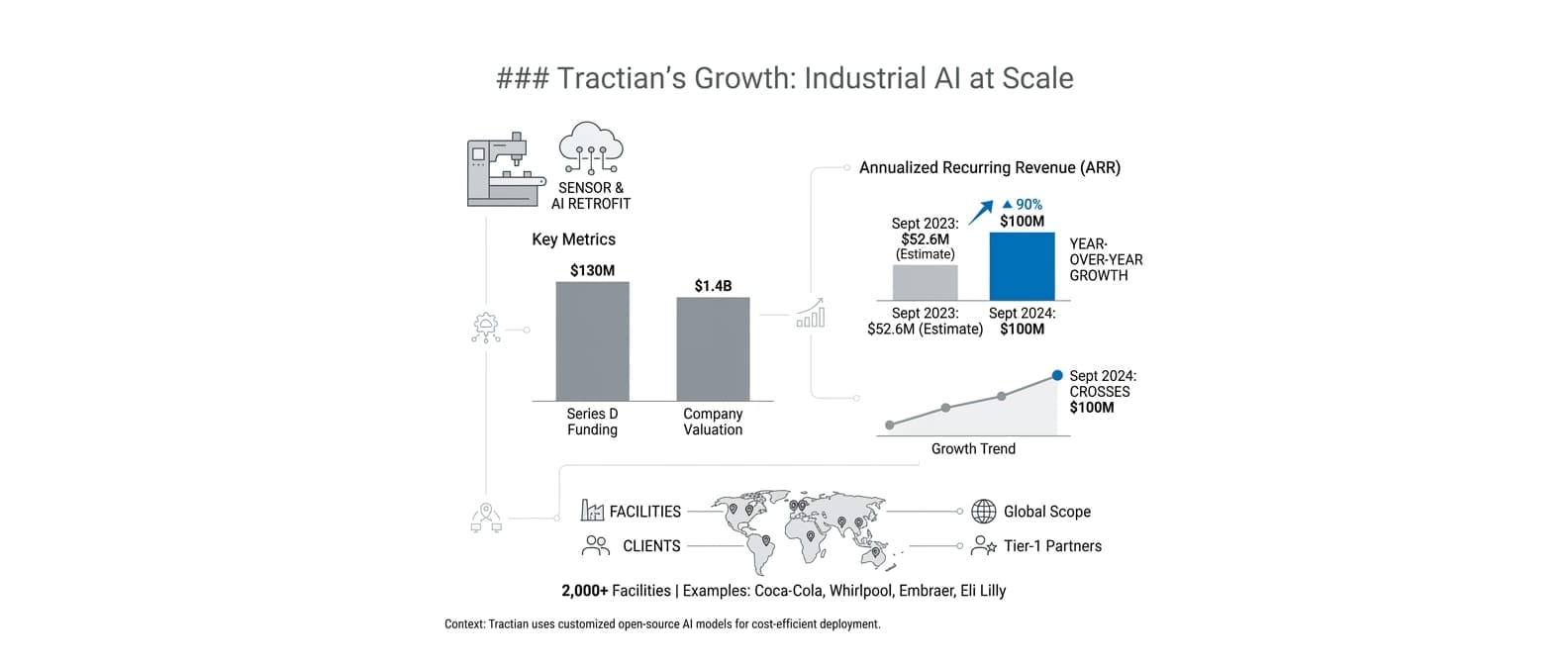
Tractian, based in Atlanta and valued at $1.4 billion, retrofits industrial machines with sensors and sells AI software to monitor and predict equipment failures.
Annualized recurring revenue crossed $100 million in September, growing 90% year over year.
Its technology runs in more than 2,000 facilities, including those of Coca-Cola, Whirlpool, Embraer and Eli Lilly.
It customizes open-source models, including Nvidia's Nemotron, to analyze the physical data its sensors collect.
Led by Sapphire Ventures.
Why it matters: Tractian's growth shows industrial AI built on physical sensor data is reaching meaningful scale, and its use of open-source models points to a cost-conscious approach to deployment.
Tomorrow's Watch List
- Anthropic's IPO process: the S-1 is public and the listing is planned for later this fall, so watch for pricing terms and roadshow details.
- Salesforce Agentic Identity: targeted for November, with a 30-day notice period before any Flex Credit billing for agent calls begins.
- Federal Reserve: the October meeting began Tuesday, October 27, and could move AI-heavy stocks after Monday's rebound.
Related reading: Check out this week's [Deep Insights analysis] for strategic context on these developments.
GenAI Daily is curated by rAInvent. For in-depth analysis, see the rAInvent articles.


