The $100 Billion AI Panic: Why Record Funding Signals Desperation, Not Strength
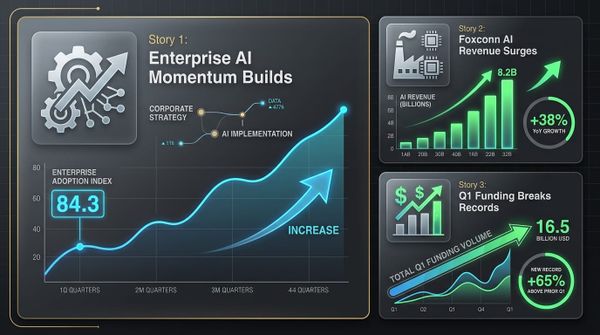
The AI industry just witnessed the most expensive week in venture capital history. OpenAI grabbed $60 billion. Waymo raised $16 billion. xAI closed $20 billion. Waabi secured $750 million. The headlines scream "validation" and "market confidence."
Here's what they're really screaming: panic.
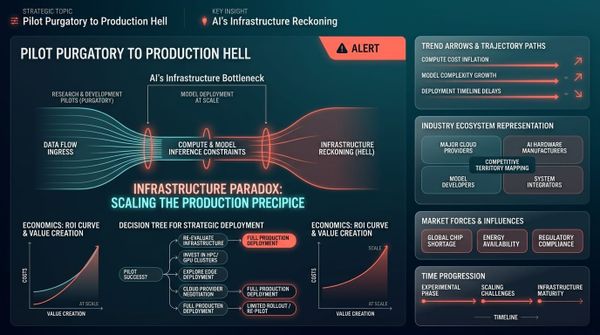
These aren't victory laps. They're last-chance grabs for oxygen before the market demands something Silicon Valley hasn't seen in the AI era: actual profits. When companies raise at $830 billion valuations while admitting they won't be profitable until 2030, when Microsoft's stock tanks despite beating every metric, when 70% of software providers admit AI features are destroying their margins — that's not confidence. That's the sound of an industry realizing it's about to hit a wall.
The "show me the money" era has arrived, and the biggest names in AI are raising record amounts because they know the party's almost over. These funding rounds aren't building moats. They're building lifeboats.
The Story
The Setup
For two years, the AI narrative was bulletproof: build first, monetize later. VCs threw money at anything with "AI" in the pitch deck. Enterprise buyers funded endless pilots. Stock prices soared on capability demonstrations rather than revenue growth. The assumption was simple: superior AI would eventually translate to superior profits.
The Shift
January 2026 shattered that assumption. Microsoft reported stellar earnings — $81 billion in quarterly revenue, beating every expectation — yet saw its stock crater 10% as investors fixated on Azure's growth rate decelerating from 40% to 39%. That 1% deceleration erased $300 billion in market value overnight.
The market's message was clear: in the AI era, "good enough" isn't good enough. You either accelerate or you die.
Now look at the funding patterns. OpenAI is chasing $60 billion not from strength, but from necessity. The company burns through $5 billion annually while targeting profitability in 2030. That's not a business model; that's a prayer wrapped in a PowerPoint. Waymo raised $16 billion after three years of serving just 400,000 rides per week across six cities. At that scale, they're paying roughly $2,000 per active user just in funding costs.
The Pattern
This mirrors exactly what happened to the dot-com era in late 1999. Record valuations, massive funding rounds, and a collective realization that "eyeballs don't pay the bills." The difference? In 1999, companies needed to figure out e-commerce. In 2026, they need to figure out how to make AI profitable while compute costs explode.
The winners in this shakeout won't be the companies with the biggest war chests. They'll be the ones who crack the profitability code first. Look at who's actually making money: specialized players like WitnessAI (500% ARR growth), focused on narrow but defensible problems. Meanwhile, the generalists are burning billions trying to be everything to everyone.
The Stakes
Here's the uncomfortable truth: most of these mega-funded AI companies have 18-24 months to prove sustainable unit economics, or they become cautionary tales. The market has shifted from rewarding growth to demanding profitability, and that shift just accelerated by three years.
Companies that don't adapt will face the "Twitter problem" — great technology, massive user bases, and fundamentally broken business models. The $100+ billion in funding this week isn't buying more runway; it's buying time to find a business model that works before the music stops.
What This Means For You
For CTOs
Stop evaluating vendors based on capability demos and start demanding transparent unit economics. By Q2, require any AI vendor to show clear paths to profitability within 24 months. Those who can't will either pivot dramatically or disappear. Prioritize vendors with sustainable cost structures over those burning venture capital to subsidize your AI experiments.
Shift budget allocation immediately: 60% to proven AI applications with measurable ROI, 40% to experimental workloads. The era of unlimited AI experimentation budgets just ended. Start building internal competencies around smaller, specialized models instead of betting everything on general-purpose LLMs that drain compute budgets.
For AI Product Leaders
The product strategy playbook just flipped. Instead of building horizontal AI platforms, focus obsessively on vertical solutions with clear value propositions. Meta's $2 billion Manus acquisition isn't about general AI — it's about owning specific automated workflows that generate measurable business value.
Implement usage-based pricing models now, before customers expect unlimited AI features for flat subscription fees. Companies like Salesforce and Adobe are already making this transition. If you wait until Q3, you'll be negotiating pricing changes from a position of weakness rather than strength.
For Engineering Leaders
Immediately audit your AI infrastructure costs and model deployment efficiency. Microsoft's Maia 200 launch signals that cloud providers are shifting from subsidizing AI workloads to charging true costs. Build multi-cloud strategies focused on compute arbitrage, not vendor relationships.
Invest in smaller, specialized models over large general-purpose ones. Falcon H1R's 7B parameter model outperforming 32B+ models isn't an anomaly — it's the future. Teams that master efficient model deployment will have sustainable competitive advantages as infrastructure costs normalize.
What We're Watching
By Q2 2026, expect OpenAI to announce significant pricing increases across its API tiers as venture funding pressure intensifies. If Microsoft's Azure AI pricing doesn't increase by March, they're subsidizing competitors at their own expense.
Watch for consolidation accelerating in the agent space. Companies like Anthropic and Meta will start acquiring specialized AI companies not for talent, but for proven revenue models. The MCP protocol standardization is creating infrastructure for this M&A wave.
If Waymo can't demonstrate profitable unit economics in its next earnings call, autonomous vehicle valuations will collapse across the board. Their $126 billion valuation assumes successful global expansion — but the math only works if ride costs approach conventional taxi pricing.
The first major AI unicorn bankruptcy will happen before year-end. Likely candidates: companies with high burn rates, horizontal platforms, and no clear monetization timeline. This will trigger the broader "AI winter" discussion.
Enterprise software companies will split into two camps by Q3: those who've cracked AI monetization and those still burning cash on AI features. The valuation gap between these groups will become insurmountable.
The Bottom Line
Mark January 29, 2026 as the inflection point when AI shifted from a growth story to a profitability reckoning. These record funding rounds aren't signs of strength — they're last-ditch efforts to build sustainable businesses before venture capital tightens. The companies that survive the next 18 months won't be those with the biggest war chests, but those who prove AI can generate profits, not just demos.
The AI industry just learned what every other tech sector discovered eventually: great technology without great economics is just expensive research. The race is no longer about who builds the smartest AI. It's about who builds the most profitable AI. And that race just got a lot more interesting.