The Case for Multi-Agent Discussion Panels
Why Your AI Demos Fail in Production: The Case for Multi-Agent Discussion Panels
TL;DR
- Multi-agent AI systems that mimic real team dynamics can solve complex enterprise problems that single-model approaches can't handle
- A four-role architecture with Researcher, Expert, Critic, and Moderator creates reproducible, auditable decision-making workflows
- LangGraph's graph-based design enables the conditional logic and iterative loops that make these systems practical for production use
The Demo-to-Production Gap
Every CTO has seen the same pattern play out. An AI demo dazzles the room with its ability to answer questions or generate content. Then the team tries to apply it to an actual business problem, like conducting market analysis or planning a technical audit, and the whole thing falls apart. The model hallucinates. It misses obvious risks. It produces outputs that look polished but crumble under scrutiny.
The gap between demo and production isn't about model capability. It's about workflow design. Real business decisions don't happen in a single prompt-response cycle. They emerge from structured discussion where different perspectives challenge and refine each other. A new approach using multi-agent discussion panels attempts to replicate this dynamic, and the early results suggest it might actually work.
Architecture That Mirrors Human Teams
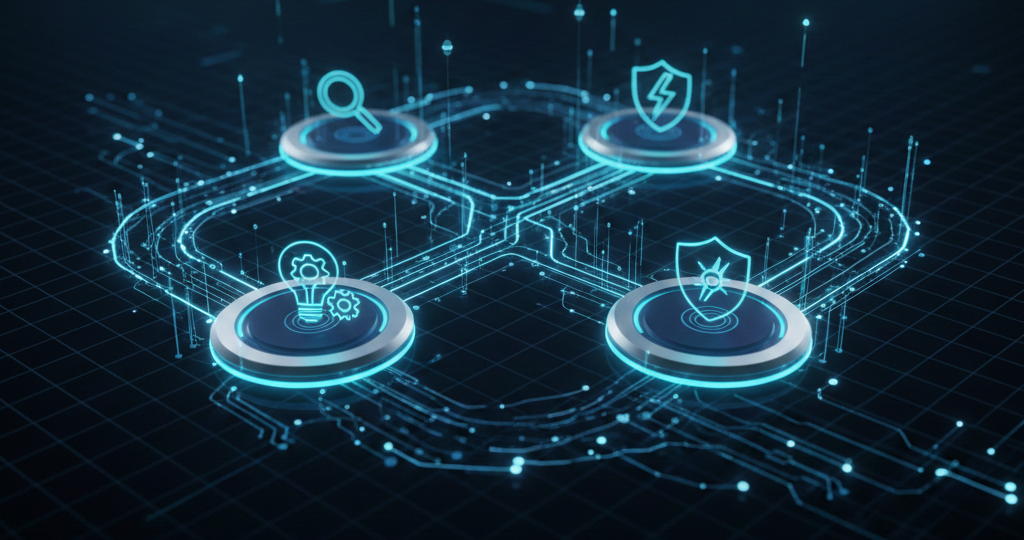
The architecture mirrors how effective human teams operate. Four specialized AI agents take on distinct roles: a Researcher who gathers facts using web search tools, an Expert who synthesizes that information into recommendations, a Critic who identifies gaps and risks, and a Moderator who manages the discussion flow and determines when the group has reached a satisfactory conclusion.
What makes this different from simply chaining prompts together is the control flow. LangGraph, the framework underlying this approach, models the interaction as a directed graph with conditions, loops, and branching logic. The Moderator doesn't just summarize at the end. It actively decides at each step whether to continue iterating, whether to send the Researcher back for more data, or whether the Expert's proposal has survived the Critic's scrutiny well enough to finalize.
This iterative structure is crucial. In a traditional single-agent setup, you get one shot at the answer. Here, the system can recognize when it doesn't have enough information and go get more. The Critic's questions force the Expert to defend its reasoning, which surfaces weak spots before they become production failures. The whole process generates an audit trail showing exactly how the conclusion was reached.
Practical Applications for Enterprise Workflows
The immediate application is any task that requires research and synthesis. Market analysis, technical audits, project planning, specification writing - these all follow the same pattern. You need to gather information, propose a direction, stress-test it against potential problems, and iterate until you have something defensible. Running this through a multi-agent panel produces outputs that are more thorough and more explainable than what you get from a single model.
The longer-term implication is about standardization. Once you build this architecture for one use case, you can reuse it for dozens of others by swapping the discussion topic and adjusting the role definitions. Your team stops reinventing the wheel for every AI project. You develop institutional knowledge about what works, and new applications deploy faster because they're built on proven patterns.
Performance Characteristics
The panel uses four distinct agents, each with a specialized system prompt and, in the Researcher's case, access to external tools like Tavily for web search. The graph structure allows for multiple iteration cycles before reaching a conclusion. In practice, complex topics might go through three or four rounds of research-propose-critique before the Moderator decides the output is ready.
Compared to single-agent approaches, this architecture trades speed for quality. A simple question might take 30 seconds instead of 5. But for high-stakes decisions where getting it wrong costs real money, that tradeoff makes sense. The audit trail alone can save hours of back-and-forth when stakeholders ask how a recommendation was derived.
Implementation Roadmap
For your AI/ML lead: Review your current AI implementations and identify one workflow that involves research and synthesis - something like competitive analysis or vendor evaluation. Assess whether it's producing outputs that hold up under scrutiny. Target: 2-hour assessment, findings to you by Wednesday.
For your platform architect: Pull down the LangGraph documentation and the reference implementation linked below. Evaluate whether your current infrastructure can support the stateful, iterative execution this architecture requires. Target: Half-day spike, technical feasibility report by end of week.
For yourself: Pick one upcoming decision that would benefit from structured analysis - a technology choice, a market entry question, a build-vs-buy evaluation. Use it as a pilot project to test whether multi-agent panels produce better outcomes than your current process. Target: Identify the pilot by Friday, kick off the experiment within two weeks.
The Competitive Advantage
Multi-agent systems aren't magic, and they're not appropriate for everything. If you need fast, simple answers, a single well-tuned model will serve you better. But for the class of problems where you currently convene a meeting of smart people to hash things out, this architecture offers something genuinely useful: a way to capture that collaborative dynamic in a reproducible, scalable system.
The real value isn't in any individual output. It's in the organizational capability you build. Teams that master this pattern will move faster on complex decisions because they won't be starting from scratch every time. They'll have a framework that encodes their best practices for structured thinking. That's the kind of competitive advantage that compounds over time.
Originally reported by Towards AI