The Great Enterprise Rebuild: Why Renting AI Infrastructure Just Became a Death Sentence
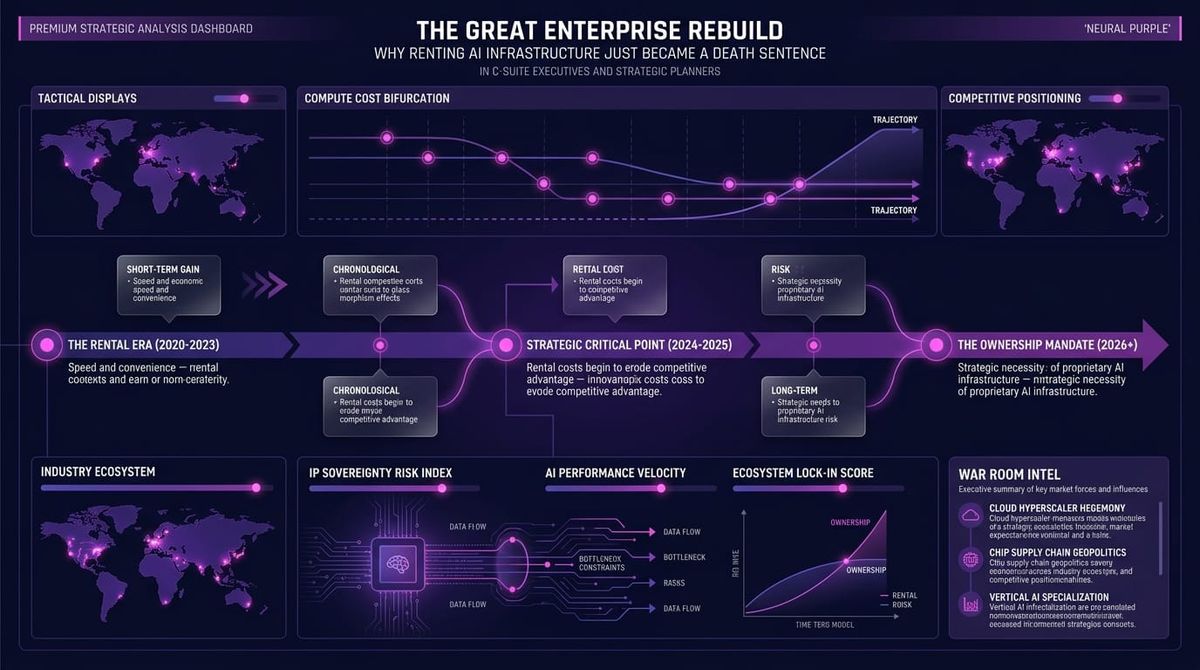
The AI infrastructure war isn't about better models anymore. It's about who owns the foundational layer of the next economy. While most companies debate pilot programs and proof-of-concepts, a handful of players just placed trillion-dollar bets on owning the entire stack.
Tesla dropped $25 billion on chip manufacturing. Oracle is raising $50 billion while cutting 30,000 jobs. Eli Lilly built a $1 billion supercomputer. Meanwhile, NVIDIA locked up 17 enterprise software giants for its Agent Toolkit, creating the first standardized platform for autonomous business operations.
This isn't gradual AI adoption. It's the complete reconstruction of enterprise infrastructure around intelligence-first architecture. The companies making these moves aren't just buying better technology — they're building economic moats that will be impossible to cross within 18 months.
The Story
The Setup
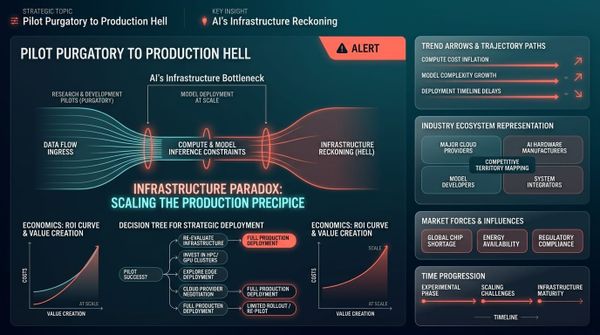
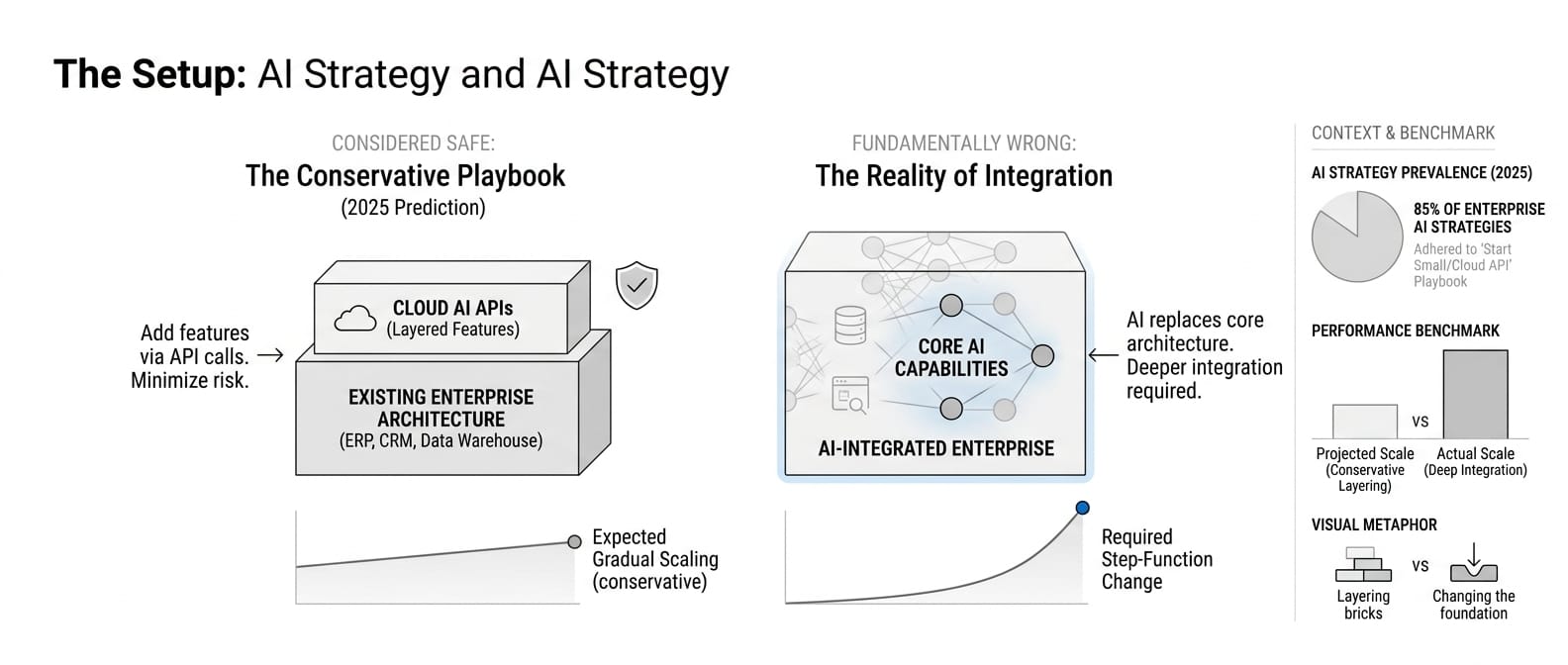
Every enterprise AI strategy deck in 2025 preached the same gospel: "Start small. Run pilots. Scale gradually. Use cloud APIs to minimize risk." The playbook was sensible, conservative, and completely wrong.
The assumption was that AI would layer onto existing enterprise architecture like previous technology waves. You'd keep your ERP, your CRM, your data warehouse, and just add AI features through API calls to OpenAI or Anthropic.
The Shift
March 2026 shattered that narrative completely. In one week, we witnessed the largest infrastructure investments in corporate history — not for incremental improvements, but for total system replacement.
Tesla announced Terafab, targeting 70% of TSMC's global output from a single facility. Oracle planned to raise $50 billion while simultaneously cutting 18% of its workforce. Eli Lilly's LillyPod supercomputer contains more computational power than 7 million Cray supercomputers.
But here's what the headlines missed: none of these are technology investments. They're infrastructure independence declarations. These companies are rejecting the "AI as a service" model entirely.
The Pattern
This follows the exact playbook from cloud computing's winner-take-all phase. Amazon didn't win by having the best virtualization technology — they won by owning the entire stack and making competitors into customers.
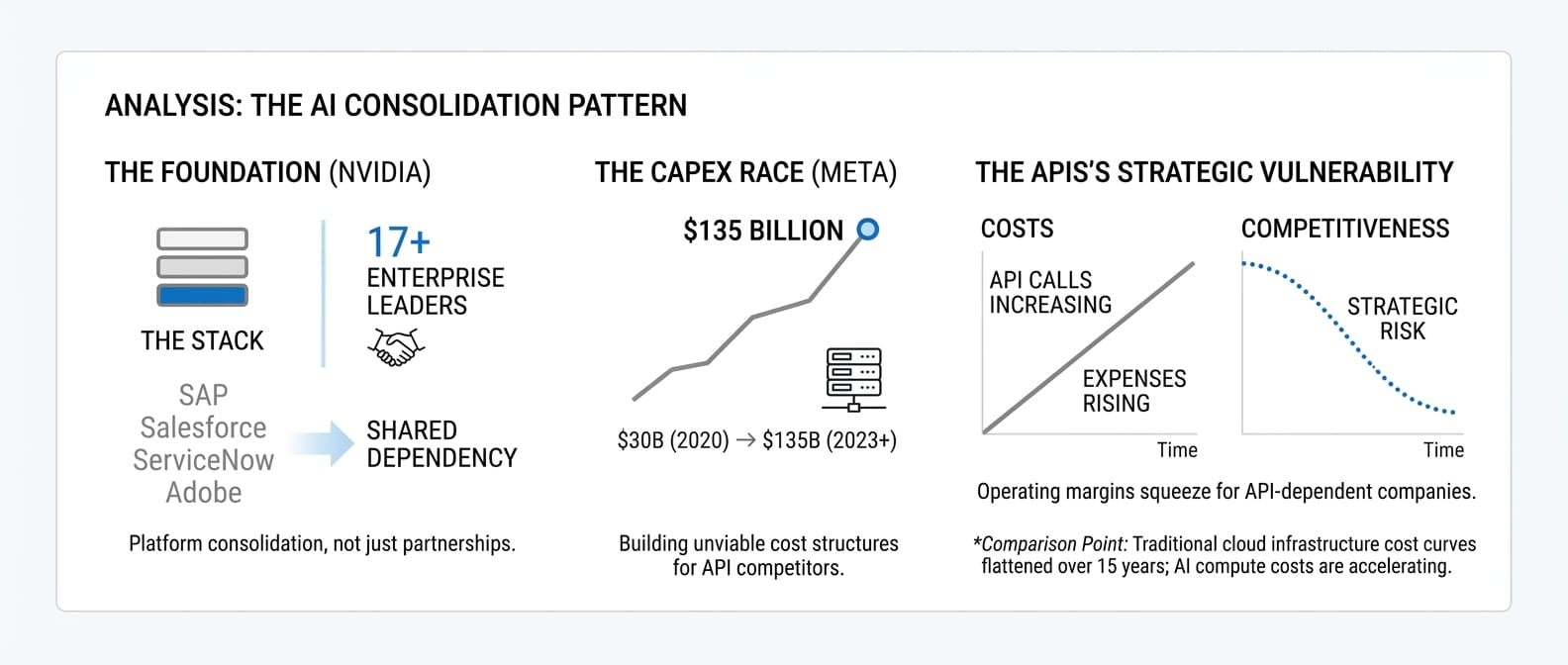
Now we're seeing the AI equivalent. NVIDIA's Agent Toolkit signing 17 enterprise software leaders isn't a partnership announcement. It's platform consolidation. Salesforce, SAP, ServiceNow, and Adobe are all building their next-generation products on NVIDIA's foundation, creating shared dependency.
Meanwhile, companies stuck in "pilot purgatory" are about to discover their API costs aren't just expenses — they're strategic vulnerabilities. When Meta cuts 15,000 employees while spending $135 billion on AI infrastructure, they're not optimizing operations. They're building a cost structure that makes API-dependent competitors unviable.
The Stakes
By Q3 2026, the enterprise software landscape will split into two categories: Infrastructure Owners and Infrastructure Renters. The gap between them won't be gradual — it will be exponential.
Infrastructure Owners control their AI costs, customize their capabilities, and capture all the value from productivity gains. Infrastructure Renters pay increasing API costs, accept generic capabilities, and send their productivity gains upstream as vendor revenue.
The math is brutal. A Fortune 500 company spending $50 million annually on AI APIs could build equivalent owned infrastructure for $200 million. That breakeven hits in four years — but the strategic advantage starts immediately.
What This Means For You
For CTOs
Stop treating AI as an application layer. It's becoming the foundational compute layer, like electricity or networking. Your Q2 2026 architecture review needs to answer one question: what would it cost to own versus rent every AI capability your company uses?
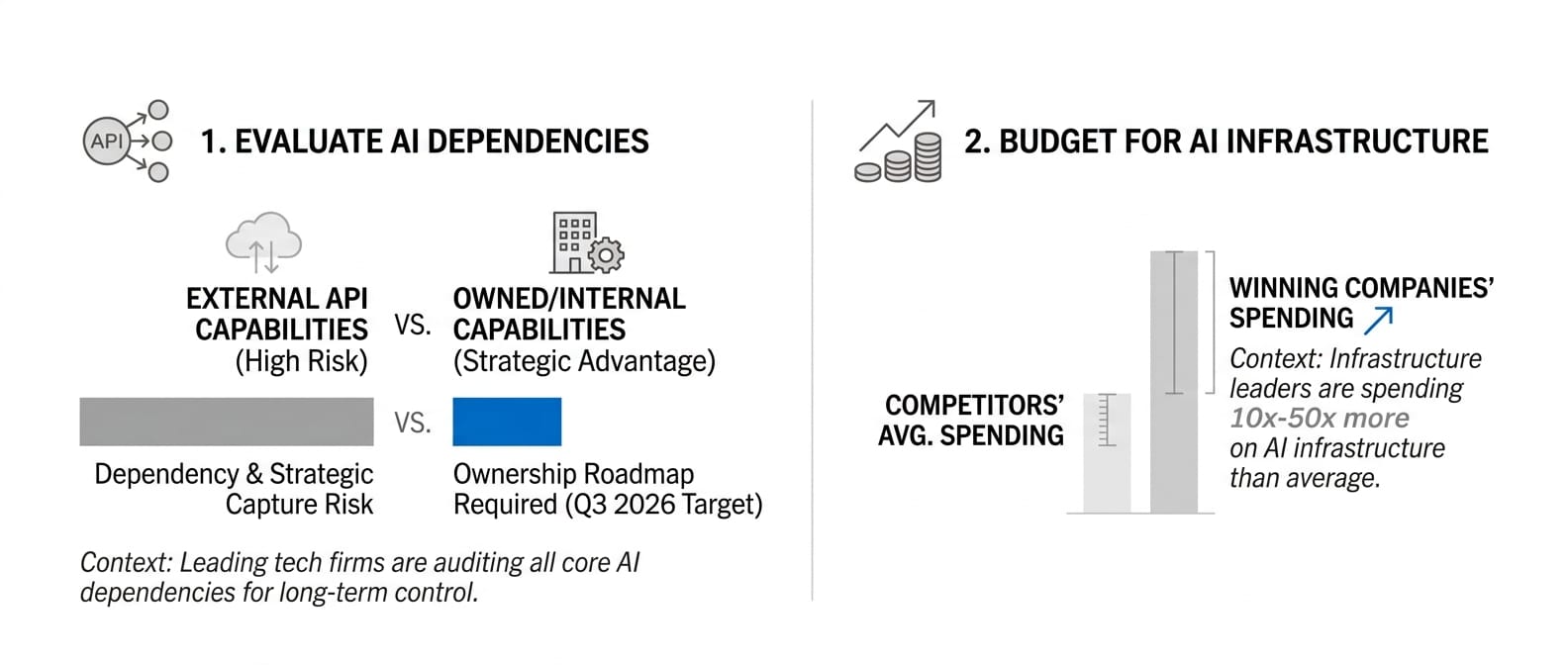
Audit your API dependencies now. Every AI feature running on external APIs represents potential strategic capture. If a capability is core to your business value, you need an ownership roadmap by July.
Budget for infrastructure independence. The companies winning this transition are spending 10-50x more on AI infrastructure than their competitors. Half-measures guarantee irrelevance.
For AI Product Leaders
Vertical specialization beats horizontal generalization. Eli Lilly's LillyPod isn't trying to be GPT-5 — it's designed specifically for molecular discovery. The winning AI products will be purpose-built, not general-purpose.
Platform thinking trumps feature thinking. Snowflake's Project SnowWork isn't adding AI features to their data platform — they're making their data platform into an AI operating system. What platform could your AI capabilities become?
Governance is the new moat. ServiceNow's AI Gateway isn't just a security tool — it's positioning them as the control layer for enterprise AI agents. The companies that solve AI governance will capture the entire enterprise AI stack.
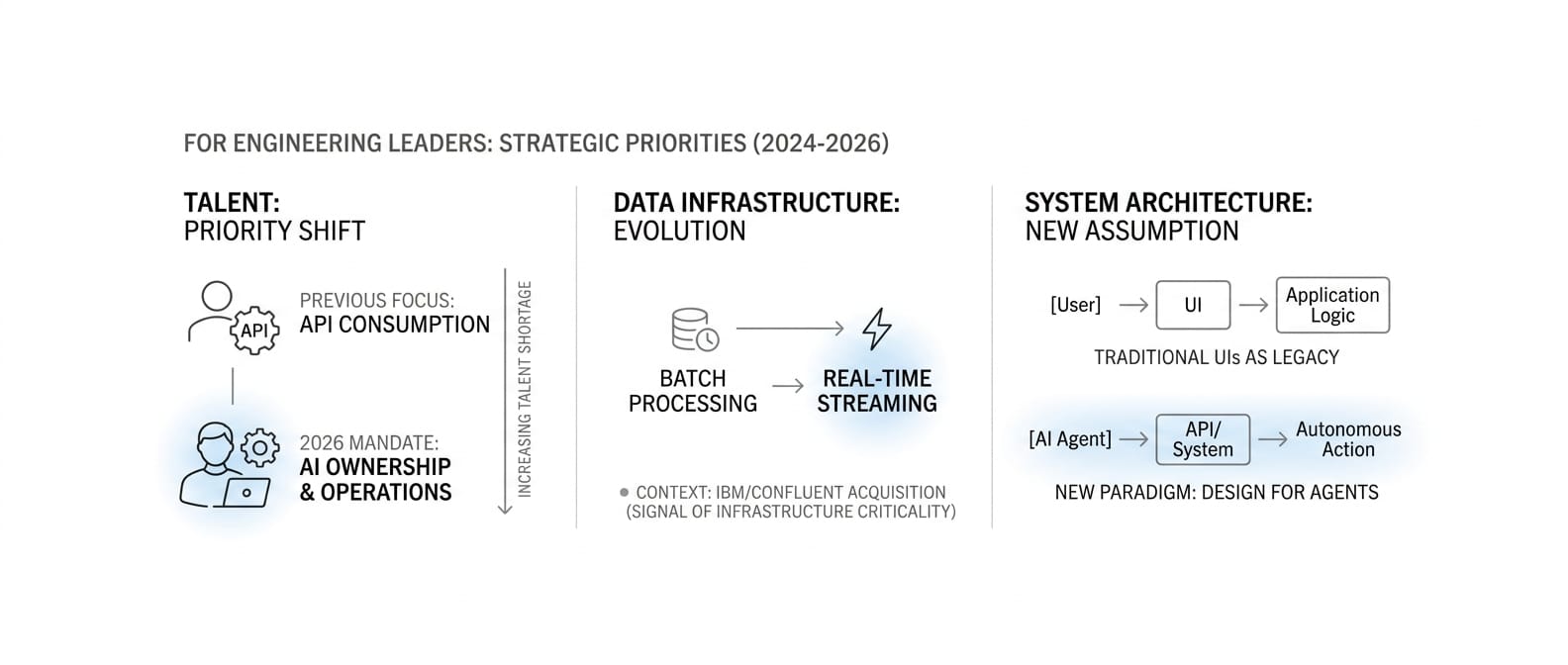
For Engineering Leaders
Hire for ownership, not consumption. Your 2026 hiring plan should prioritize engineers who can build and operate AI infrastructure, not just integrate APIs. The talent shortage is about to get much worse.
Start your data infrastructure overhaul immediately. Real-time data streaming just became critical infrastructure. IBM's Confluent acquisition signals that traditional batch processing can't support autonomous AI operations.
Design for agents, not applications. Every system you build should assume AI agents will interact with it autonomously. Traditional UIs are becoming legacy interfaces.
What We're Watching
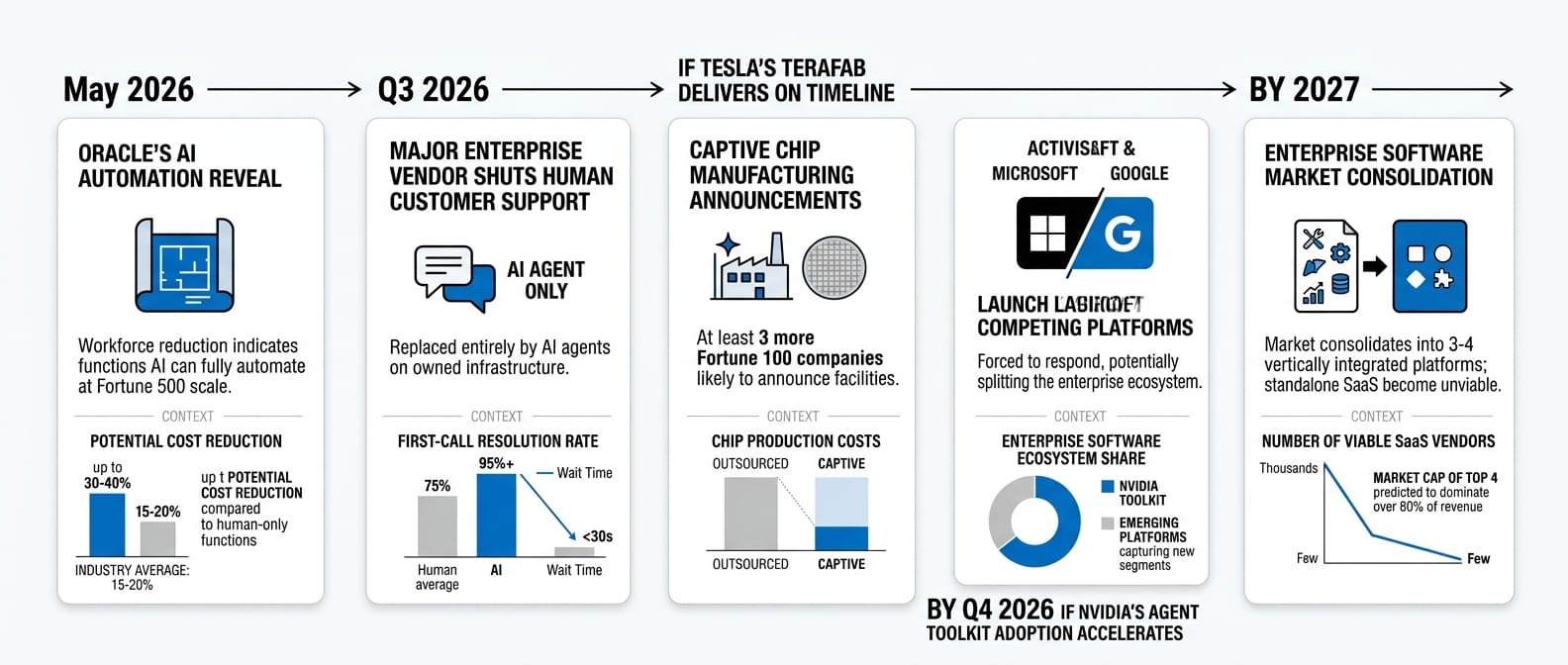
By May 2026: Oracle's workforce reduction will reveal which enterprise functions AI can fully automate at Fortune 500 scale — creating a blueprint others will copy.
By Q3 2026: The first major enterprise software vendor will announce they're shutting down their human customer support entirely, replaced by AI agents trained on their owned infrastructure.
If Tesla's Terafab delivers on timeline: Expect at least three more Fortune 100 companies to announce similar captive chip manufacturing facilities before year-end.
If NVIDIA's Agent Toolkit adoption accelerates: Microsoft and Google will be forced to launch competing platforms by Q4 2026, potentially splitting the enterprise software ecosystem.
By 2027: The enterprise software market will consolidate into 3-4 vertically integrated platforms, with standalone SaaS tools becoming economically unviable.
The Bottom Line
March 2026 will be remembered as the month enterprise AI shifted from "nice to have" to "own or die." The companies placing infrastructure bets today are building the economic foundations of the 2030s. Everyone else is about to become a customer.
The great enterprise rebuild isn't coming — it's here. The only question is whether you're building the new infrastructure or paying rent to those who are. Choose quickly. The ownership window closes fast, and it doesn't reopen.