GenAI Daily - April 22, 2026: Apple's CEO Transition, OpenAI's Cost-Per-Click Ads Launch, SoundHound Acquires LivePerson
Top Stories
Apple Names John Ternus as CEO to Replace Tim Cook
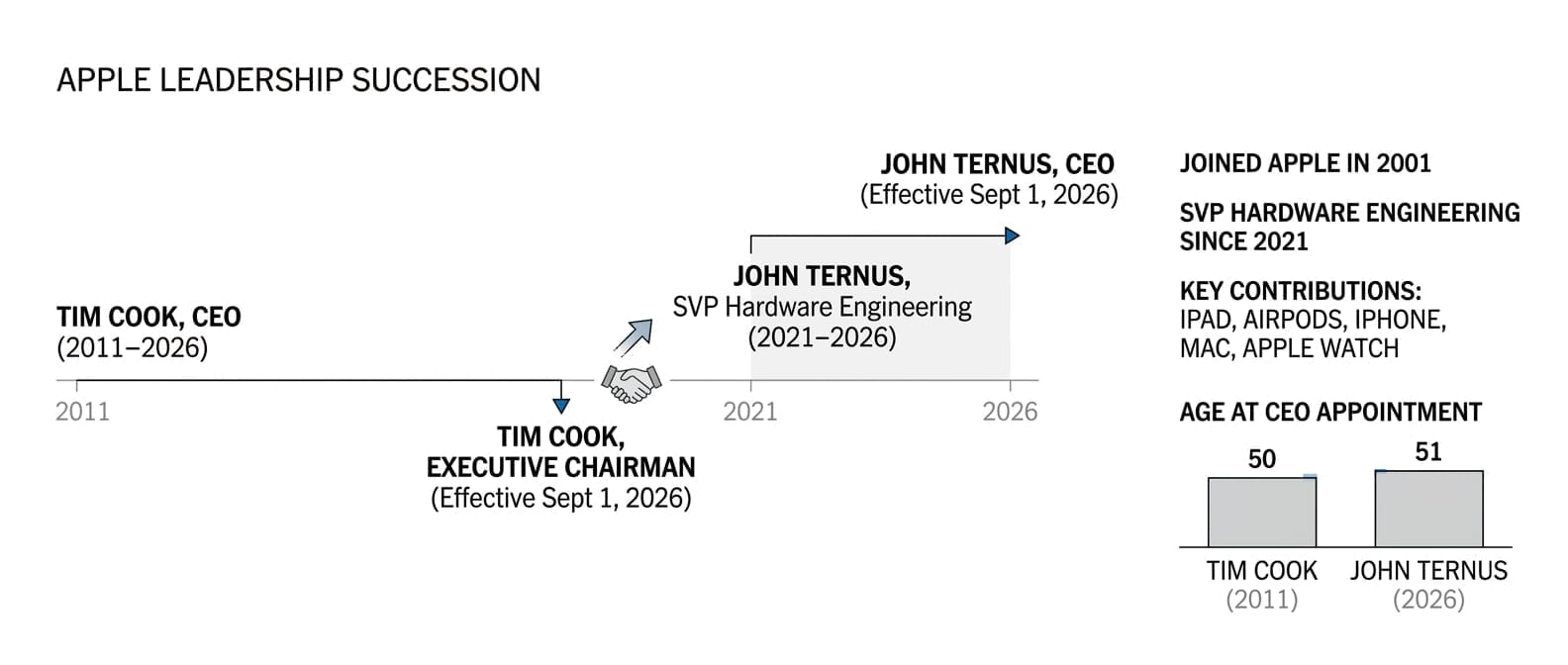
Apple announced that Tim Cook will become executive chairman of the board while John Ternus, senior vice president of Hardware Engineering, will become Apple's next chief executive officer effective September 1, 2026.
The transition, approved unanimously by the board, follows a thoughtful, long-term succession planning process, with Cook continuing as CEO through the summer to ensure a smooth transition.
Ternus, who turns 51, has spent almost his entire career at Apple since joining the product design team in 2001. He was promoted to vice president of hardware engineering in 2013 and to senior vice president in 2021, making him the youngest member of Apple's executive team.
Ternus has been instrumental in developing the iPad, AirPods, iPhone, Mac, and Apple Watch, including advances that made AirPods function as over-the-counter hearing aids.
Why it matters: This marks Apple's first CEO transition in 15 years and positions a hardware engineering veteran to lead the company's AI strategy as it competes with Google, Microsoft, and emerging platforms.
OpenAI Launches Cost-Per-Click Advertising Model in ChatGPT
OpenAI has begun offering cost-per-click advertising campaigns in ChatGPT, confirmed by screenshots of the company's ad manager, allowing advertisers to set bids between $3 and $5 per click.
This expands beyond the CPM-based ads introduced in February, with OpenAI targeting $2.4 billion in ad revenue for 2026 and $11 billion for 2027.
CPC ads give marketers the option to pay when users actually click rather than for impressions, while CPMs have already dropped from $60 at launch to as low as $25 in some cases over 10 weeks.
The ads pilot alone has surpassed $100 million in annualized revenue within its first two months.
Why it matters: This shift from impression-based to performance-based advertising signals OpenAI's move toward proven digital advertising models and provides clearer ROI measurement for enterprise advertisers.
SoundHound AI Acquires LivePerson for $250 Million
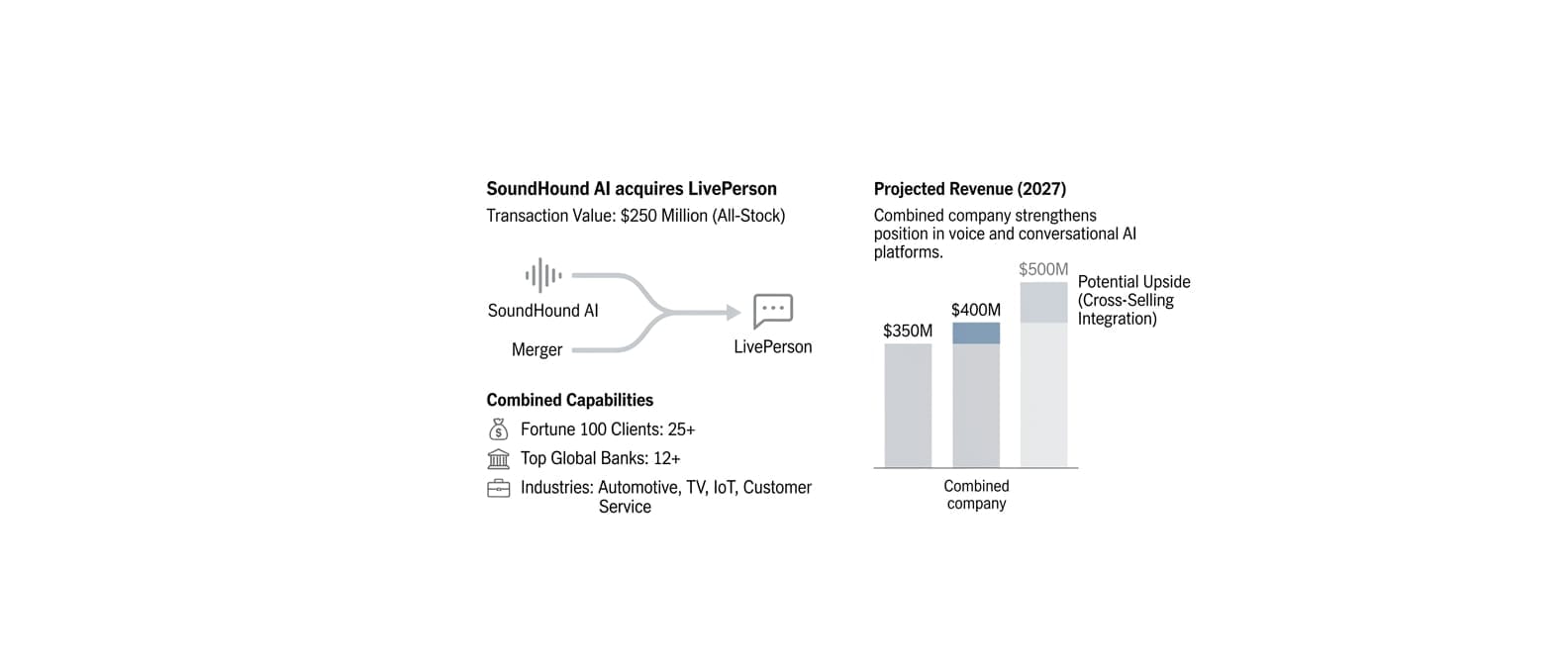
SoundHound AI acquired conversational AI peer LivePerson and its Conversational Cloud for roughly $250 million in an all-stock deal, forming a powerhouse serving 25 of the Fortune 100 and 12 of the top 15 global banks.
Management believes the combined company will generate between $350 million and $400 million in revenue in 2027, potentially reaching $500 million as the firms integrate through cross-selling.
While the all-equity deal will be dilutive to shareholders, SoundHound's balance sheet is projected to remain debt-free. The combination strengthens SoundHound's position in voice AI for automotive, TV, IoT, and customer service industries.
Why it matters: This consolidation creates a major conversational AI platform with enterprise scale, potentially challenging established players in customer service automation and voice-driven business applications.
Key Developments
Anthropic Implements Identity Verification to Block Adversary Access
Anthropic started requiring government-issued photo IDs and selfies from some users to prevent access from US adversaries like China, Russia, and North Korea.
The "ID filter" targets four categories: usage policy offenders, unsupported locations including mainland China and Russia, terms of service violators, and under-18 users.
Chinese users without passports appear to be excluded since passports are the only Chinese government ID the system recognizes, potentially locking out millions who lack passport access.
The system relies on third-party provider Persona to process verification data, with Anthropic stating it does not store ID images directly.
Impact: This makes Claude the first major AI chatbot to require identity verification, potentially giving competitive advantage to OpenAI and Google while raising privacy concerns for international users.
fal Launches Enterprise API for OpenAI's GPT Image 2.0
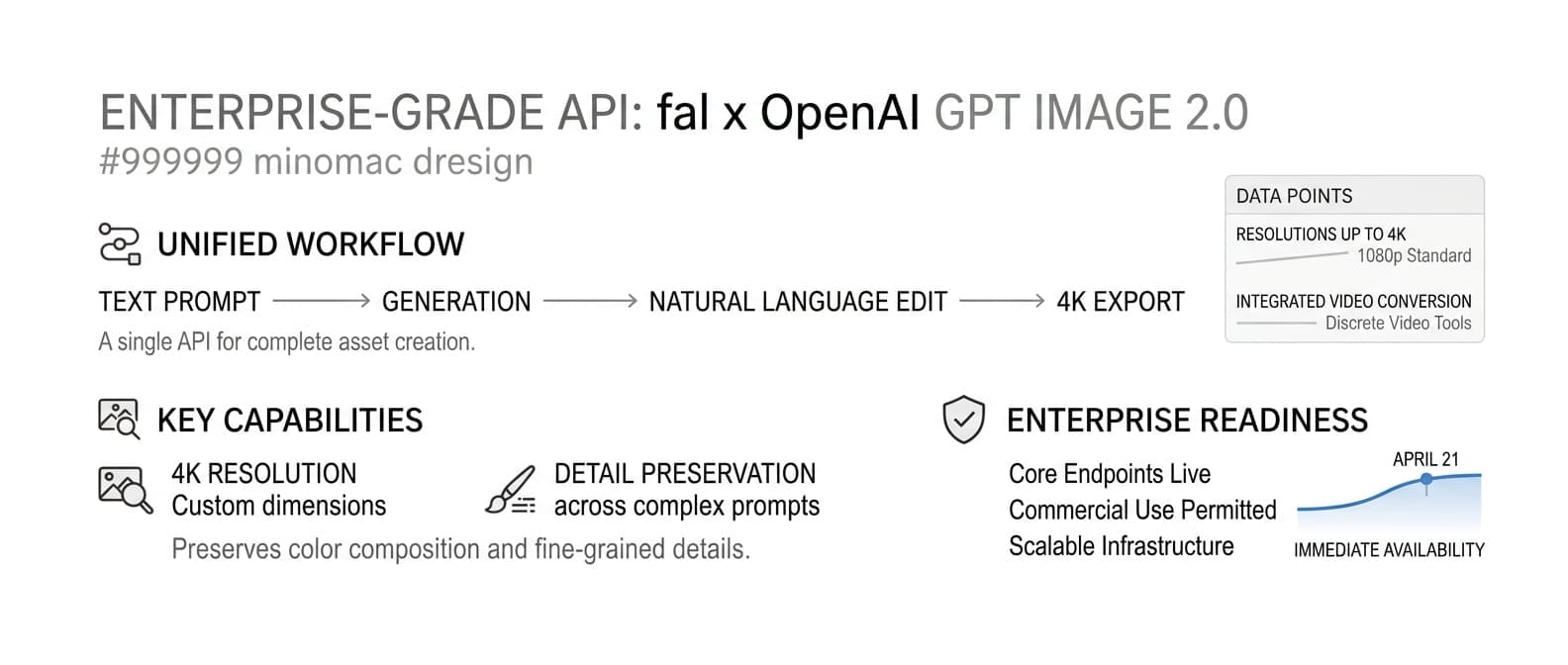
On April 21, fal announced general availability of OpenAI's next-generation image model GPT Image 2.0 via its platform, making it immediately available to developers and enterprises.
The service offers text-to-image generation, natural language editing, upscaling to higher resolutions, and video conversion through enterprise-grade infrastructure with both core endpoints live and commercial use permitted from day one.
This makes fal the only enterprise API where teams can go from a text prompt to a finished image, edited variant, high-resolution export, and video asset in a single integrated workflow.
The model preserves composition and fine-grained detail across complex prompts and supports flexible resolutions up to 4K with custom dimensions.
Impact: Provides enterprise teams immediate access to OpenAI's latest image generation capabilities through a unified workflow platform, potentially accelerating adoption of AI-driven visual content creation.
Vercel Security Incident Exposes AI Tool Vulnerabilities
Vercel experienced a security incident originating from a compromise of Context.ai, a third-party AI tool used by an employee, which allowed attackers to access the employee's Google Workspace account and some Vercel environments.
The investigation revealed the incident originated from a broader compromise of a small AI tool's OAuth app that potentially affected hundreds of users across many organizations.
Vercel assessed the attacker as highly sophisticated based on their operational velocity and detailed understanding of systems, and is working with Mandiant, cybersecurity firms, and law enforcement.
The company published OAuth App indicators of compromise to support the wider community's investigation.
Impact: Highlights security risks in AI tool supply chains and third-party OAuth integrations that could affect enterprise adoption of AI workplace tools.
Product Launches
Mozilla Thunderbolt Self-Hosted Enterprise AI Client
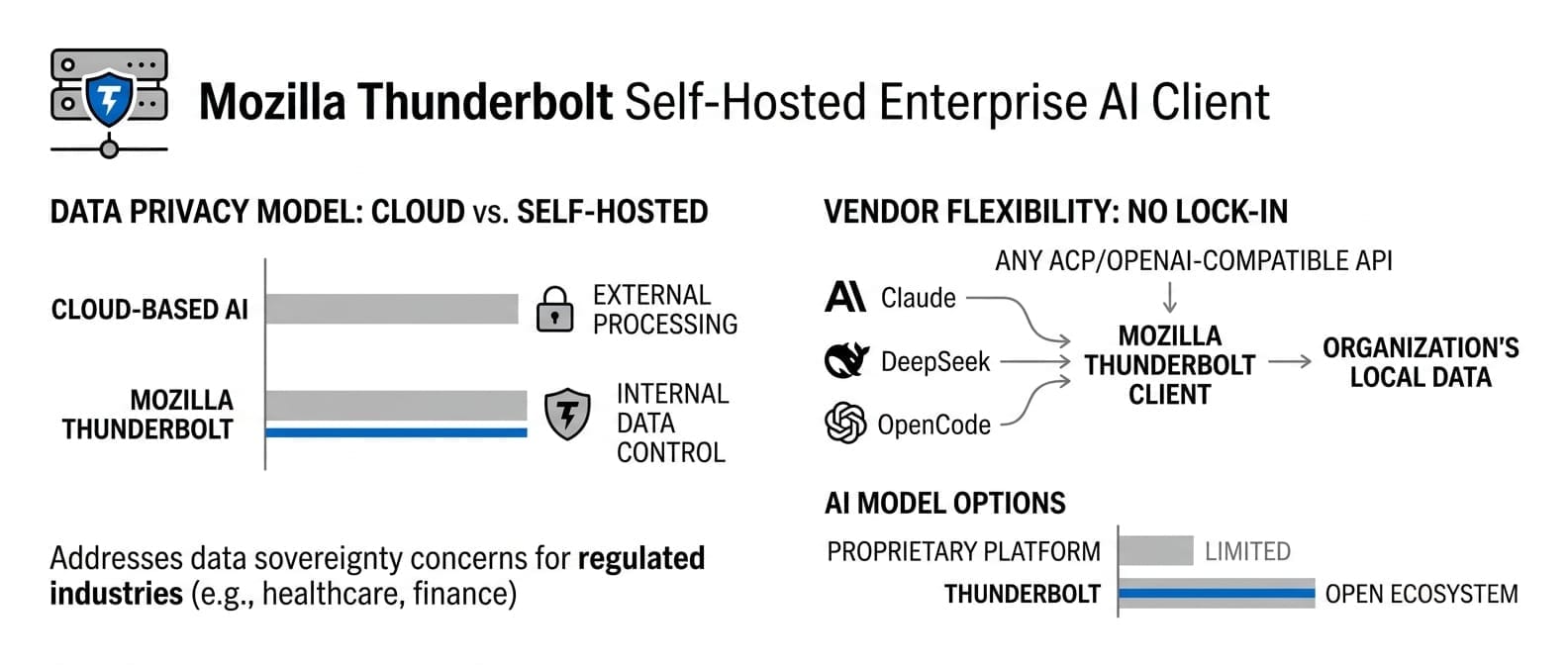
Mozilla announced Thunderbolt, a sovereign AI client for self-hosted enterprise infrastructures that supports connections to any ACP-compatible agent or OpenAI-compatible API, including Claude, Codex, OpenClaw, DeepSeek, and OpenCode.
The solution integrates with locally stored enterprise data through open protocols, utilizes an offline SQLite database as a local "source of truth," and provides optional end-to-end encryption with device-level access controls. The platform allows organizations to maintain full control over their AI interactions while leveraging multiple AI models without vendor lock-in, addressing growing enterprise concerns about data sovereignty and security compliance in AI deployments.
Why it matters: This addresses the critical enterprise need for AI tools that don't require sending sensitive data to external cloud services, potentially accelerating AI adoption in regulated industries like healthcare and finance.
ThinkingAI and MiniMax Agentic Engine Launch
At a press event on April 16, 2026, ThinkingAI introduced its 'Agentic Engine' and confirmed a strategic partnership with MiniMax, with the system continuously improving its performance through actual user interactions that provide data for model updates.
The launch reflects businesses transitioning from testing artificial intelligence to implementing it in operational processes. The Agentic Engine leverages reinforcement learning from human feedback to adapt to specific enterprise workflows, with MiniMax providing the underlying large language model infrastructure optimized for multi-step reasoning tasks and autonomous decision-making within defined business parameters.
Impact: Represents a shift toward AI systems that can handle complex, multi-step business processes autonomously, potentially transforming how enterprises approach workflow automation and decision-making.
EY Launches Enterprise-Scale Agentic AI for Auditing
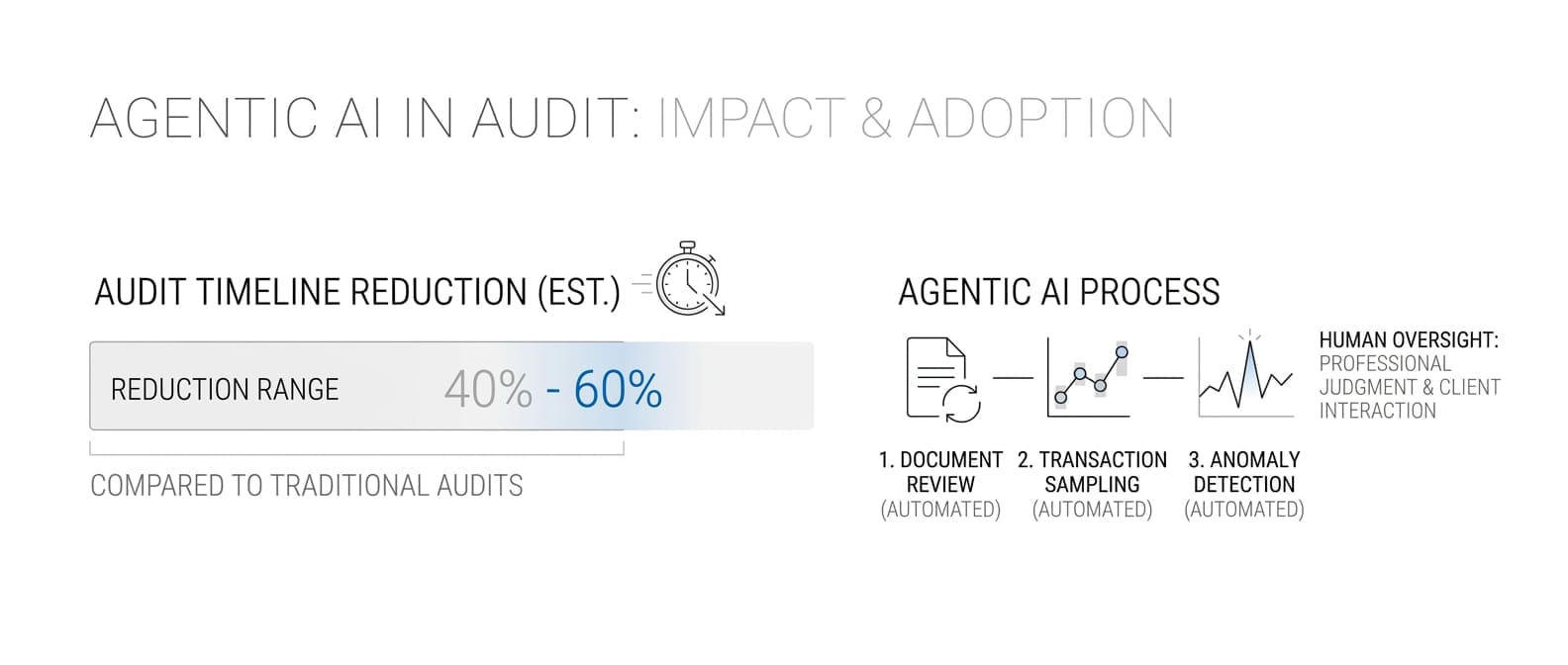
The EY organization announced the global roll-out of enterprise-scale agentic AI in Assurance, marking a fundamental shift toward AI-transformed audits as part of a multibillion-dollar commitment to audit quality, technology and people.
The human-led, AI-powered audit delivers greater value and deeper insight while providing updated audit methodology and frameworks to support assurance services for AI diagnostics, governance, and risk management. The system automates document review, transaction sampling, and anomaly detection while maintaining human oversight for professional judgment and client interaction, potentially reducing audit timelines by 40-60% while improving accuracy and consistency across global audit teams.
Why it matters: This represents the first large-scale deployment of autonomous AI agents in professional services, potentially setting new industry standards for audit efficiency and creating competitive pressure on other Big Four firms to accelerate their AI adoption.
Funding & Deals
Cursor AI Raising $2 Billion at $50+ Billion Valuation
AI startup Cursor is in talks to raise a $2 billion funding round at an over $50 billion valuation, with Andreessen Horowitz slated to co-lead the investment alongside Nvidia and Thrive Capital.
The round underscores venture capital enthusiasm for AI coding agents, though competitors like Google, Anthropic and OpenAI have since debuted similar tools.
Cursor previously closed a $2.3 billion funding round at a $29.3 billion valuation in November.
Tomorrow's Watch List
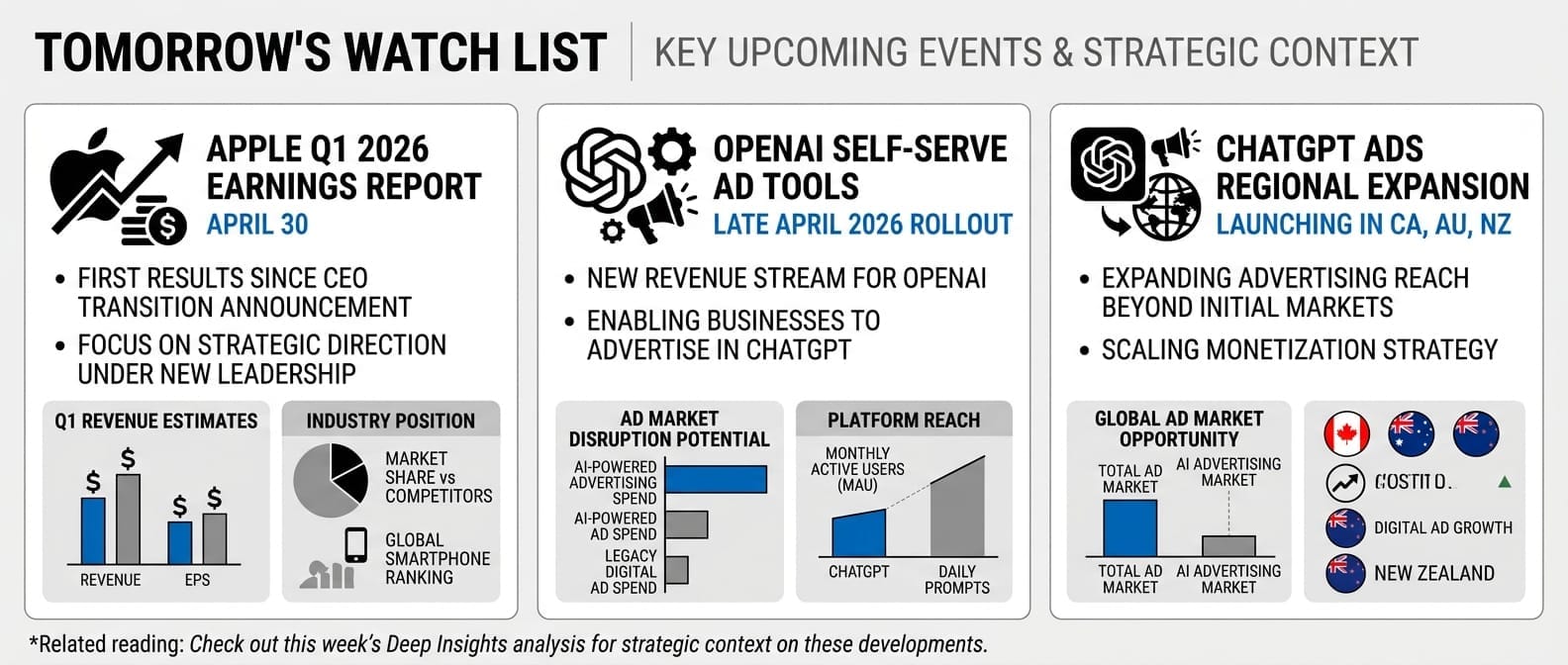
- Apple Q1 2026 earnings report on April 30 - first results since CEO transition announcement
- OpenAI's self-serve advertising tools rollout expected in late April 2026
- ChatGPT ads expansion to Canada, Australia, and New Zealand
*Related reading: Check out this week's [Deep Insights analysis] for strategic context on these developments.