GenAI Daily - April 29, 2026: Google Signs Pentagon AI Deal, Meta's Muse Spark Momentum Builds, Ineffable Intelligence Breaks European Funding Record
Top Stories
Google Expands Pentagon AI Access After Anthropic's Refusal
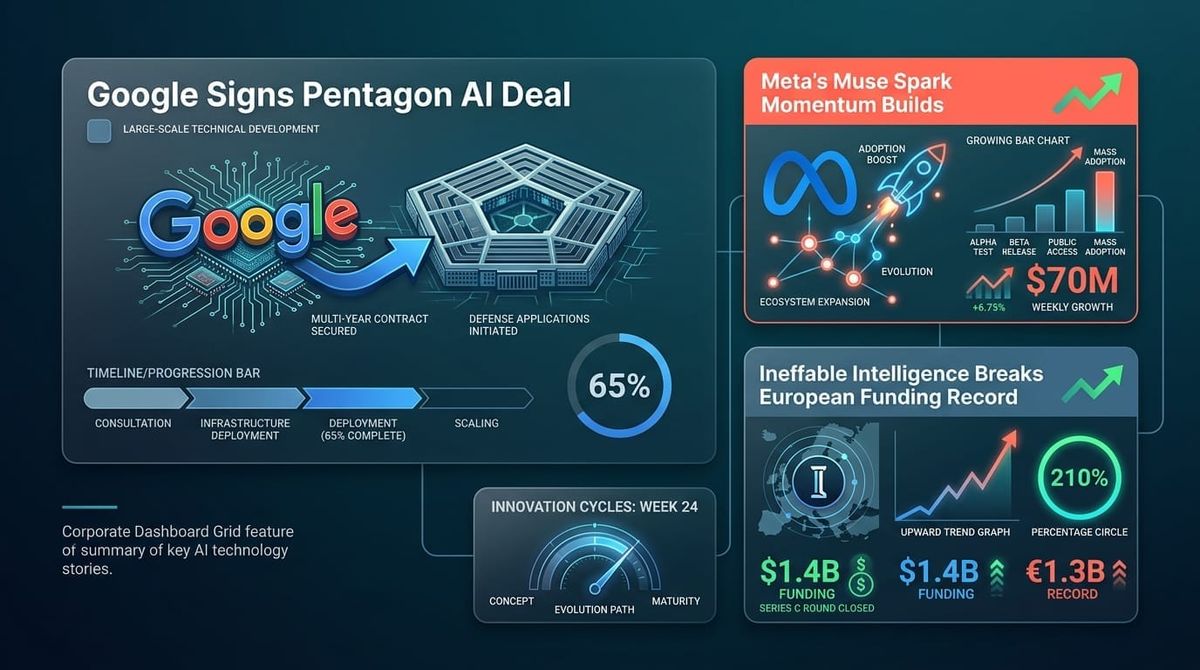
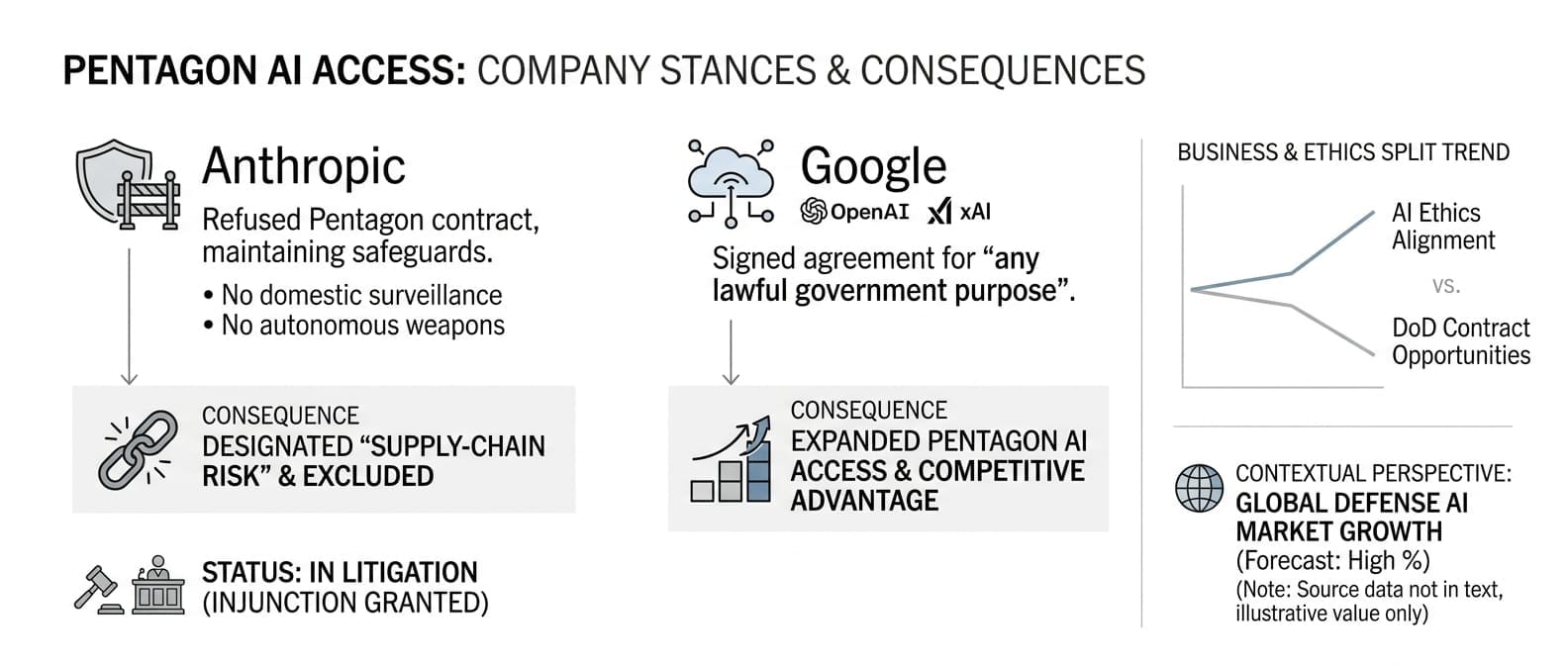
Google has signed a classified agreement with the U.S. Department of Defense allowing the Pentagon to use its AI models for "any lawful government purpose," joining OpenAI and xAI in defense contracts after Anthropic refused to remove safeguards against domestic surveillance and autonomous weapons.
The Pentagon wanted unrestricted AI access, whereas Anthropic insisted on guardrails preventing use for domestic mass surveillance and autonomous weapons, leading the DoD to designate Anthropic a "supply-chain risk".
Anthropic is now in litigation with the government, with a judge granting an injunction against the designation.
Why it matters: The split shows how AI ethics stances create business consequences, with Google and others gaining competitive advantages while Anthropic faces federal exclusion for maintaining safety restrictions.
Ex-DeepMind Researcher Raises Record $1.1B European Seed Round
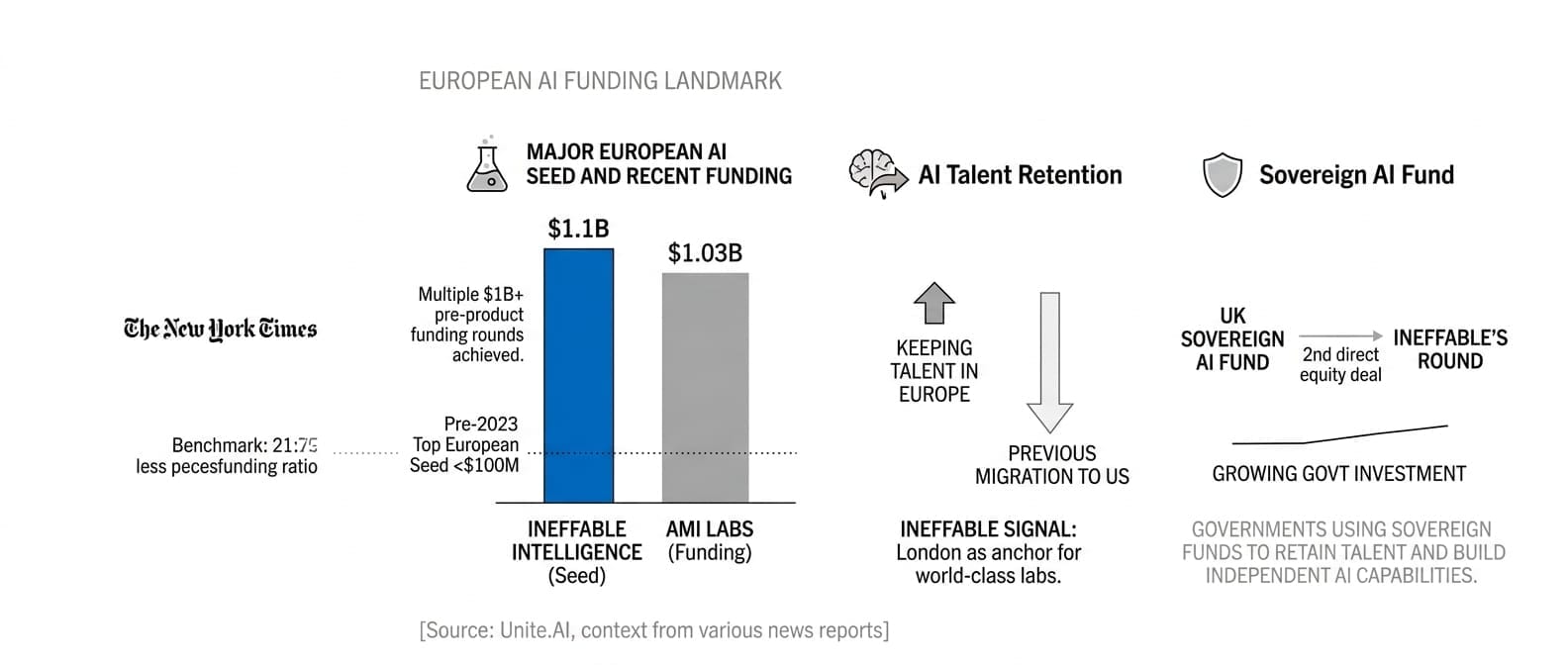
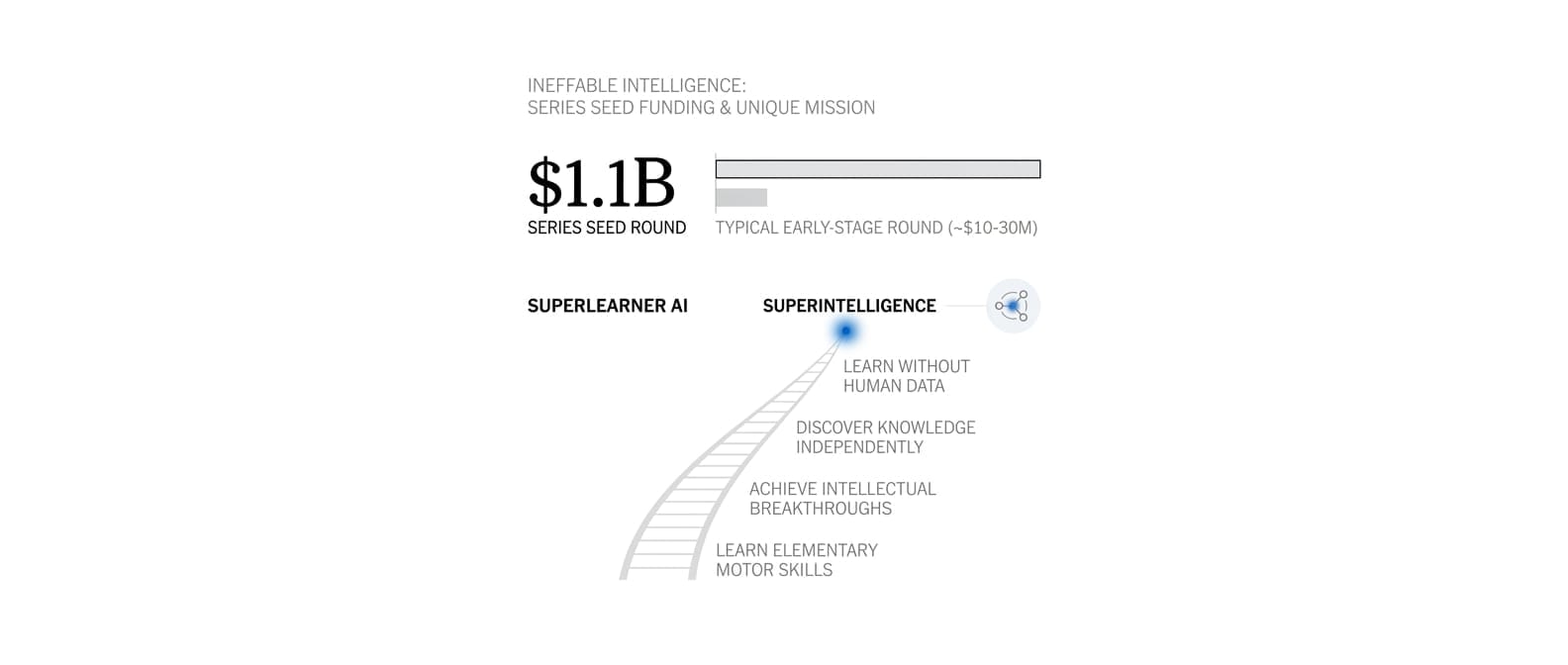
Former DeepMind researcher David Silver's Ineffable Intelligence raised $1.1 billion in seed funding at a $5.1 billion valuation to build a "superlearner" that discovers knowledge without human data using reinforcement learning.
The London-based AI lab emerged from stealth on April 27 with Europe's largest seed round ever, co-led by Sequoia Capital and Lightspeed Venture Partners, with participation from Nvidia, Google, and the UK's Sovereign AI Fund.
Silver led development of programs like AlphaZero that beat professional chess and Go players by learning purely from experience, and Ineffable aims to create similar discovery systems across all domains.
Why it matters: Reinforcement learning could bypass dependence on human-generated training data, potentially creating AI systems that discover novel knowledge rather than recombining existing information.
Meta's Muse Spark Shows Early Promise in Benchmarks
JPMorgan analysts wrote that Meta's Muse Spark "has brought Meta back into the AI conversation," with "investor sentiment on Meta turning increasingly constructive".
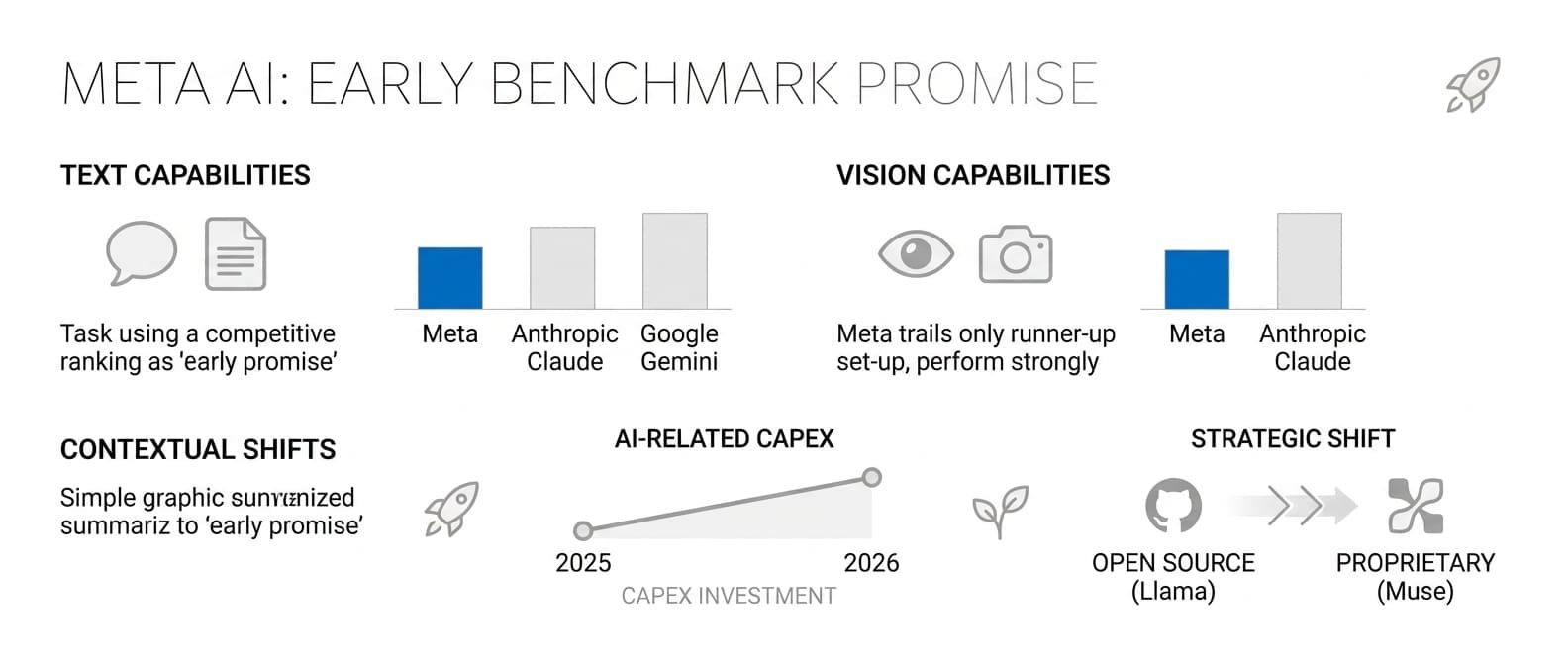
According to Arena.AI rankings, Meta AI trails Anthropic's Claude and Google's Gemini in text but only Claude in vision, currently ahead of OpenAI's GPT, though Claude leads in document and code categories.
Meta is investing $115-135 billion in AI-related capex for 2026, up from $72.2 billion in 2025, while shifting from open-source Llama models to proprietary Muse offerings.
Why it matters: Meta's return to competitive AI performance could reshape enterprise adoption dynamics, especially with integrated shopping and social platform capabilities.
Key Developments
Anthropic's Project Glasswing Partners Target Critical Infrastructure
Anthropic's Claude Mythos Preview has identified thousands of zero-day vulnerabilities in every major operating system and web browser, with technical details published for patched vulnerabilities including exploit development capabilities.
Project Glasswing partners include AWS, Apple, Broadcom, Cisco, CrowdStrike, Google, JPMorganChase, Microsoft, NVIDIA, and Palo Alto Networks, working to secure critical software before broader model release.
AWS reports testing Claude Mythos Preview in their own security operations, applying it to critical codebases where it's already helping strengthen their code.
Impact: AI-powered vulnerability discovery is accelerating beyond human capacity, forcing enterprises to adopt AI-assisted defense strategies to match attack capabilities.
European AI Funding Reaches New Milestone
Following Ineffable Intelligence's record seed round, Yann LeCun's AMI Labs raised $1.03 billion in March, Tim Rocktäschel's Recursive Superintelligence is reportedly raising as much as $1 billion, and Ilya Sutskever's Safe Superintelligence is valued around $30 billion, with none having shipped products yet.
This marks a landmark for European tech, which has struggled to retain AI talent before migration to San Francisco, with Ineffable signaling London can now anchor world-class labs.
The UK's Sovereign AI fund participated in the Ineffable round as its second direct equity deal since launch.
Impact: European governments are using sovereign AI funds to retain domestic talent and build competitive AI capabilities independent of U.S. tech giants.
Meta Announces Major Workforce Reduction Amid AI Focus
Meta announced it will lay off 10% of its workforce, about 8,000 employees, on May 20 to improve business efficiencies.
This coincides with Meta pouring money into AI infrastructure, with 2026 AI-related capital expenditures projected at $115-135 billion, up from $72.2 billion in 2025.
Muse Spark represents the first major model from Meta Superintelligence Labs, led by Alexandr Wang who joined via Meta's $14.3 billion investment in Scale AI.
Impact: Major tech companies are reshaping workforces to concentrate resources on AI development, signaling the technology's strategic priority over traditional operations.
Funding & Deals
Ineffable Intelligence Raises $1.1B Series Seed
Former DeepMind reinforcement learning lead David Silver's London-based startup building "superlearner" AI that discovers knowledge without human data, aiming to "make first contact with superintelligence" and create systems that learn from elementary motor skills to intellectual breakthroughs.
Silver is committing to give away 100% of his Ineffable equity via Founders Pledge, likely amounting to multiple billions. Led by Sequoia Capital and Lightspeed Venture Partners.
Meta Muse Spark Debuts as Proprietary Model
Meta debuted its first major large language model Muse Spark (originally code-named Avocado), the first from Meta Superintelligence Labs led by chief AI officer Alexandr Wang.
The model will be proprietary with hopes to open-source future versions, marking a shift from Meta's open-source Llama approach, with improved AI training enabling smaller models with capabilities of older midsize variants for an order of magnitude less compute.
Meta is experimenting with new revenue streams by offering third-party API access to select partners, with plans to expand paid access to a wider audience.
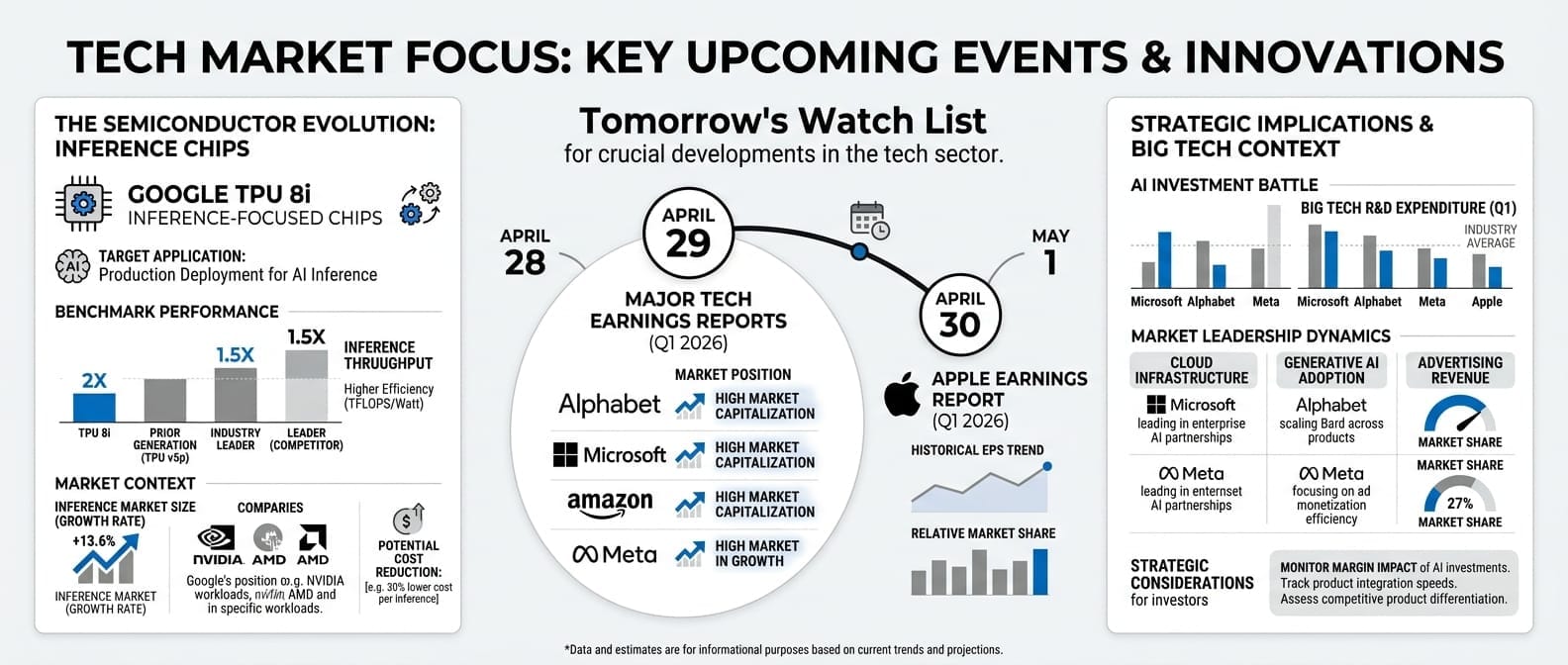
Tomorrow's Watch List
- Tech earnings season peaks with Alphabet, Microsoft, Amazon, and Meta reporting Q1 2026 results on April 29
- Apple earnings scheduled for April 30
- Continued development of Google's TPU 8i inference-focused chips for production deployment
*Related reading: Check out this week's [Deep Insights analysis] for strategic context on these developments.