GenAI Daily - May 7, 2026: OpenAI's Amazon Bedrock Launch, Sierra's $950M Mega-Round, AI Cybersecurity Crisis
Top Stories
OpenAI Launches GPT-5.5 on Amazon Bedrock with Enterprise Focus
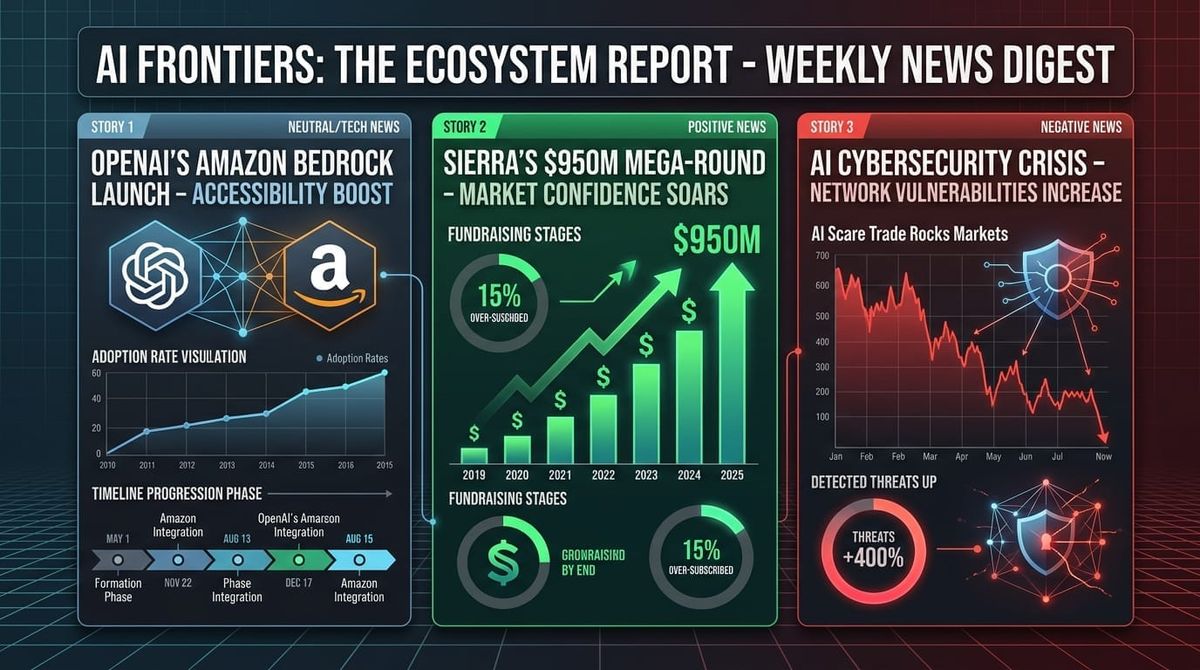
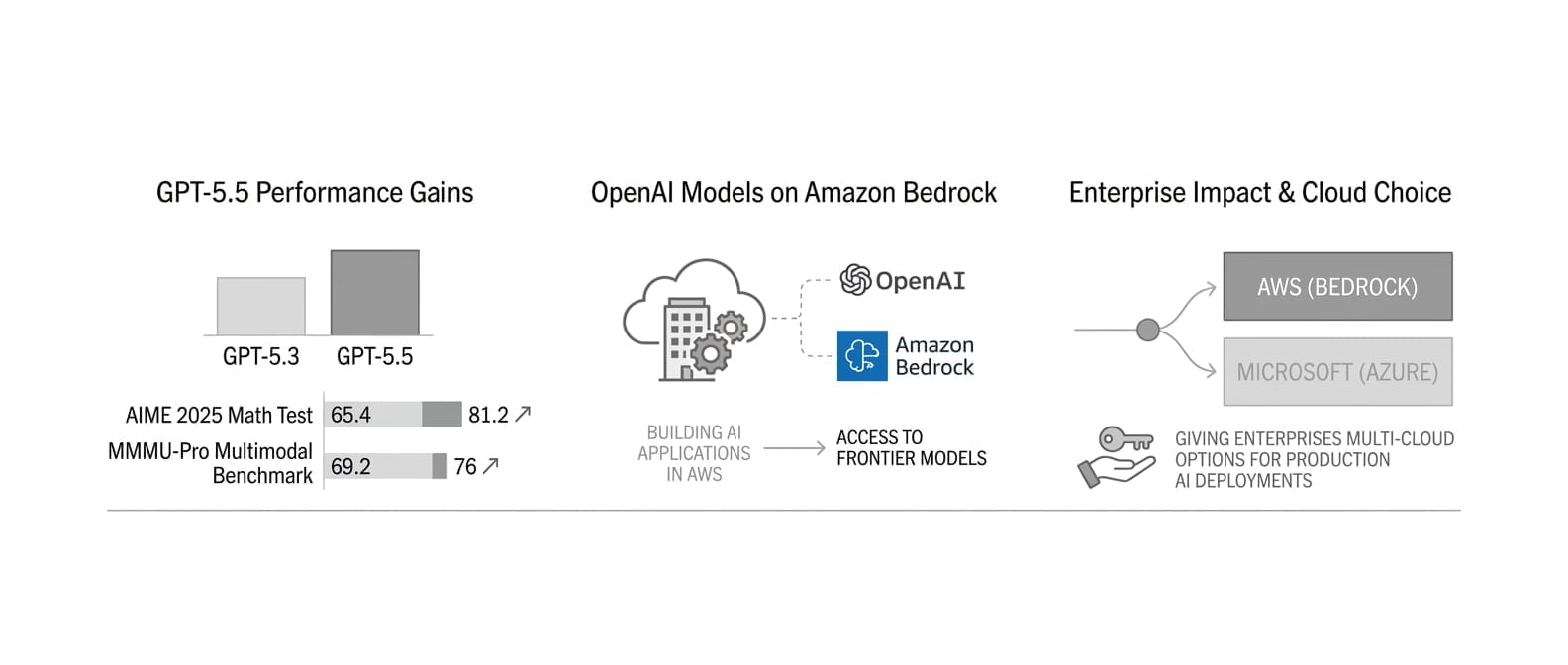
OpenAI launches GPT-5.5 and other frontier models on Amazon Bedrock, brings Codex to AWS, and adds Bedrock Managed Agents powered by OpenAI, giving enterprises new ways to build and deploy AI in trusted AWS environments with security, governance, and workflows they already use. For many companies, using AI at scale requires bringing the best models to the systems their teams already use. That's why we're launching OpenAI models, including our best frontier model GPT-5.5, on Amazon Bedrock. Customers can now build with OpenAI models in AWS, alongside the services, security controls, identity systems, and procurement processes they already rely on.
OpenAI released GPT-5.5 Instant on May 5 as the new default model for ChatGPT, replacing GPT-5.3 Instant. It builds on the broader GPT-5.5 release from last month, which boosted coding and knowledge work, scoring 81.2 on the AIME 2025 math test (up from 65.4) and 76 on the MMMU-Pro multimodal benchmark (up from 69.2). It rolls out first to Plus and Pro users on the web, with mobile support coming soon and expansion to the free, business, and enterprise tiers in the coming weeks.
Why it matters: This partnership breaks Microsoft's de facto exclusivity over OpenAI models and gives enterprises multi-cloud options for production AI deployments.
Sierra Raises $950M at $15.8B Valuation in AI Agent Mega-Round
Sierra announced its $950 million Series E Monday, led by Tiger Global and Google's GV, with participation from Benchmark, Sequoia, Greenoaks and others. It's the latest megaround in what has been a white-hot artificial intelligence space, and signals investors' appetite to try and pick new category winners.
Sierra builds intelligent agents to automate customer service. The platform uses large language models to handle customer inquiries and support tasks for Fortune 50 companies, with millions of customer interactions handled each month. The fresh capital will be used to scale Sierra's infrastructure (the startup hit ~$100 million ARR last year) and push its agentic AI closer to deployment across industries.
Why it matters: The round validates enterprise appetite for AI agents and positions Sierra to compete directly with Microsoft Copilot and Google's enterprise AI offerings.
Microsoft Launches Agent 365 with Cross-Platform Discovery
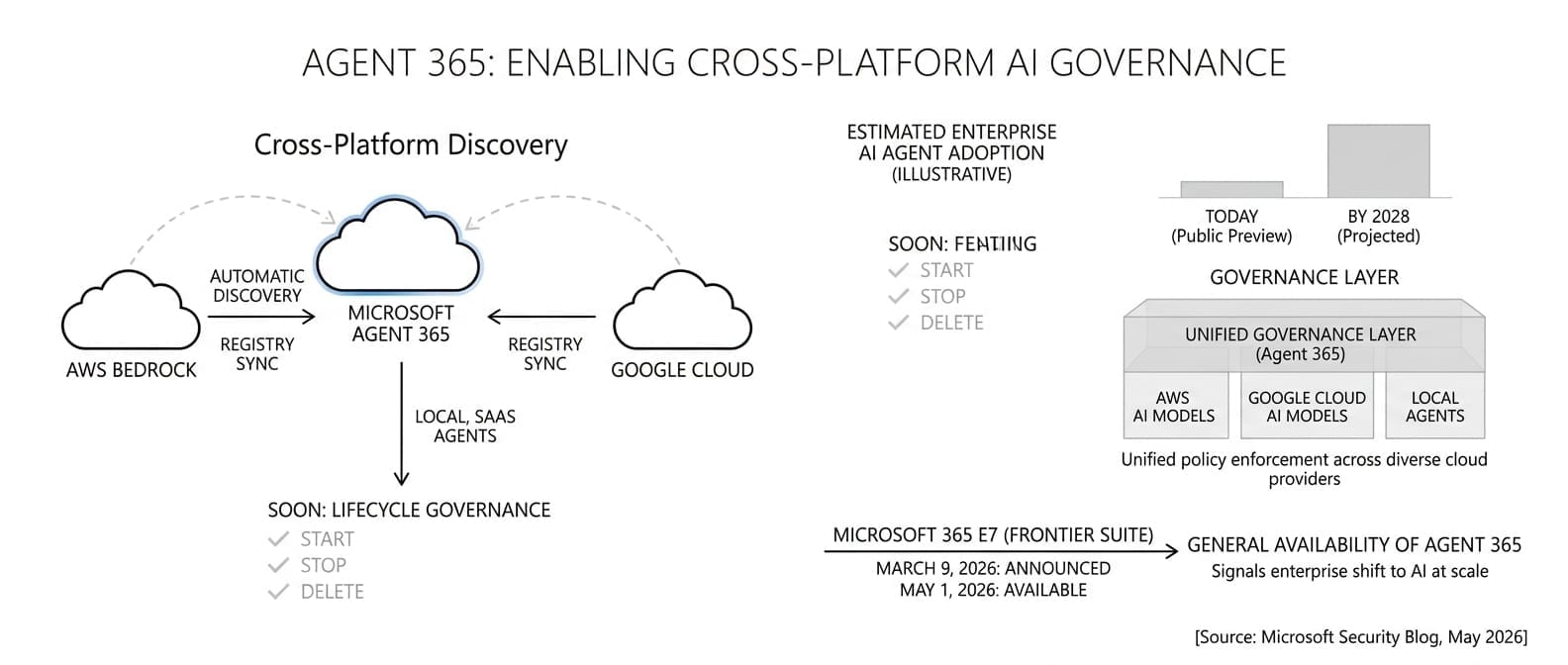
Today, we are excited to announce the public preview of Agent 365 registry sync with AWS Bedrock and Google Cloud connections, enabling IT teams to automatically discover, inventory, and, soon, perform basic lifecycle governance - for example, start, stop, delete agents - across these platforms. Agent 365 extends even further beyond Microsoft platforms to discover, observe, govern, and secure local, SaaS, and cloud agents across your agentic AI ecosystem.
On 9 March 2026, Microsoft announced a major shift in how organisations consume AI at scale: Microsoft 365 E7, also known as the Frontier Suite. Available from 1 May 2026, E7 isn't just another license tier; it's a clear signal of where enterprise technology is heading.
Why it matters: Microsoft is positioning itself as the governance layer for enterprise AI, regardless of which cloud provider hosts the models.
Key Developments
AI Cybersecurity Threats Reach Crisis Point
In fact, Mandiant's M-Trends 2026 report found that time-to-exploit has effectively gone negative - exploits are now routinely arriving before patches, with 28.3% of CVEs exploited within 24 hours of disclosure. Supercharging coding, however, has also supercharged offensive capabilities, and the environment in 2026 reflects these changes, with attacks occurring more frequently, with greater severity, and with greater impact. Unfortunately, based on data from 2025 and 2026, the arms race is favoring attackers.
Adversaries are increasingly moving beyond using AI for productivity gains and are now deploying AI-enabled malware directly in live operations. Early reporting suggests that modern agentic AI systems can operate autonomously for extended periods, effectively performing the work of entire teams of skilled operators. One notable example involved a Chinese-backed threat group that leveraged Anthropic's large language model (LLM), Claude's, agentic capabilities to orchestrate attacks, with AI agents carrying out 80-90% of each operation.
Impact: Enterprise security teams must now defend against AI-powered attacks that develop exploits faster than patches can be deployed.
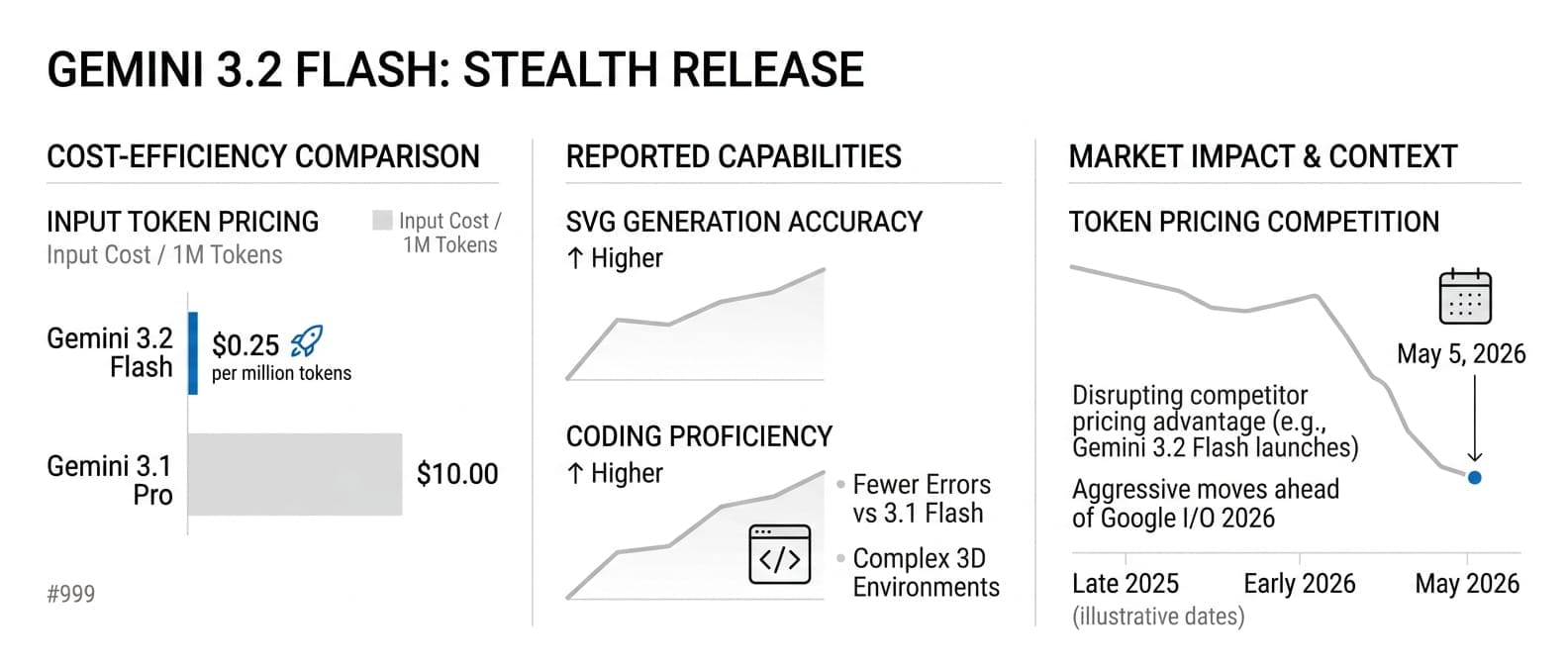
Google Quietly Releases Gemini 3.2 Flash in Stealth Mode
On May 5, 2026, Gemini 3.2 Flash quietly appeared inside the official iOS Gemini app and Google AI Studio - no press release, no keynote, no fanfare. Google didn't announce it. Users just found it. Priced at $0.25 per million input tokens and reportedly faster than Gemini 3.1 Pro, it may be the most important quiet drop Google has made in years.
SVG generation - greater accuracy and fewer errors vs Gemini 3 Flash · Coding proficiency - creation of interactive 3D environments previously unattainable with earlier models. If those Arena results hold up at general availability, this won't just be a cost-efficient alternative to 3.1 Pro - it may be the better model for certain workloads.
Impact: Google is making aggressive pricing moves ahead of I/O 2026, potentially disrupting OpenAI's pricing advantage in the developer market.
JPMorgan Chase Reclassifies AI as Core Infrastructure
JPMorgan Chase formally reclassified its AI investments from experimental R&D to core infrastructure, with a 2026 technology budget of approximately $19.8 billion and 2,000 staff dedicated to AI development. The bank is focusing on three areas: boosting internal productivity through AI agents, hardening cybersecurity defenses, and personalizing retail banking. AI is projected to generate $2.5 billion in annual value for the bank through efficiency gains and revenue growth, with models already scanning over $10 trillion in daily transactions.
Impact: Major financial institutions are moving AI from pilot programs to production systems, signaling broader enterprise adoption.
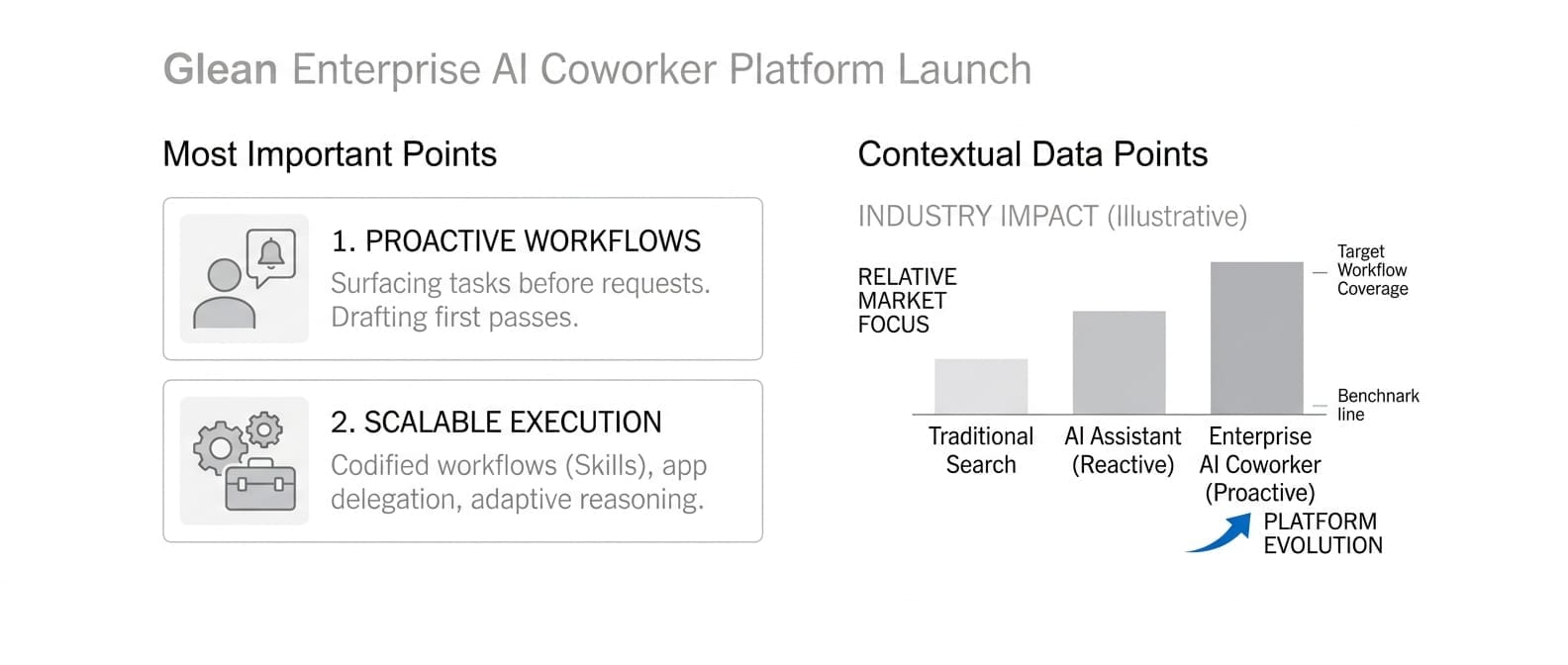
Glean Launches Enterprise AI Coworker Platform
Glean's core message is that enterprise AI should function as a proactive coworker, not just a reactive assistant - surfacing what needs attention before users ask, drafting first passes, and using personal and enterprise context to help people produce higher-value work. The launch emphasizes execution at scale: users can codify repeatable workflows with Skills, delegate multiple workstreams across enterprise apps with approval controls, and rely on Adaptive Reasoning to match the right level of intelligence and model selection to each task.
Impact: Enterprise search companies are evolving into AI workflow platforms, directly challenging Microsoft's Copilot strategy.
Product Launches
AWS WorkSpaces AI Agent Integration
Amazon Web Services introduced a preview feature that allows AI agents to access and operate WorkSpaces virtual desktops using assigned identities. AWS said unique identities make it easier to track agent behavior and separate human actions from machine actions. Instead of forcing companies to rebuild every workflow around APIs, agents may increasingly operate existing software the way human workers do.
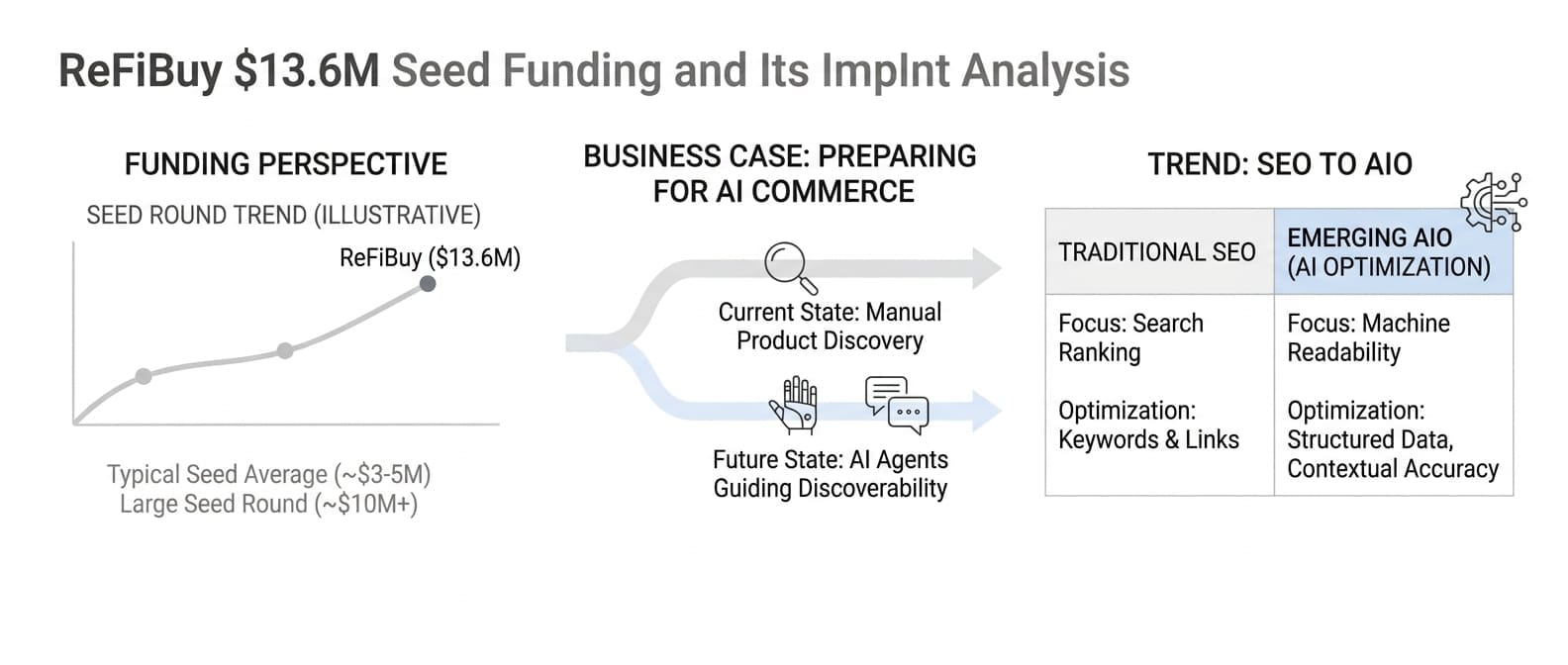
ReFiBuy Raises $13.6M for AI Shopping Optimization
Raleigh-based ReFiBuy raised $13.6 million in seed funding to help e-commerce companies make product data more visible to AI tools such as ChatGPT and Claude. The company wants brands to prepare for a shopping world where AI agents guide product discovery. The next layer may be AI optimization, where product pages, structured data, and brand information need to be machine-readable.
Funding & Deals
Parallel Web Systems Raises $100M at $2B Valuation
Parallel Web Systems, founded by former Twitter CEO Parag Agrawal, raised $100 million in a round led by Sequoia. Coverage from Parallel Web Systems funding coverage says total funding reached $230 million and the company serves AI agent search and research use cases.
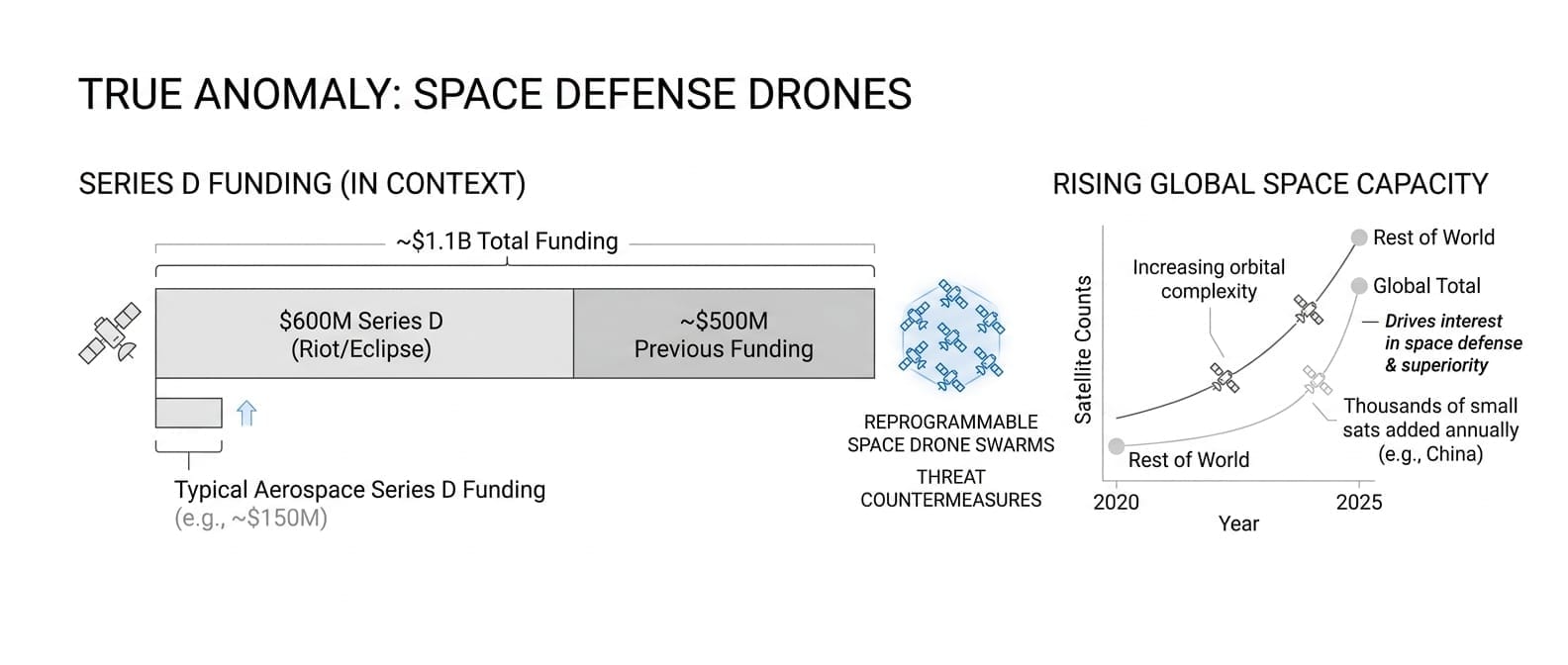
True Anomaly Closes $600M for Space Defense Drones
True Anomaly said it closed a $600 million Series D led by Riot Ventures and Eclipse, bringing total funding to about $1.1 billion. This huge round reflects rising global interest in space-based defense (China and others now have thousands of satellites), The Colorado aerospace startup builds small, flexible space drones and interceptors for missile defense. Aimed at "space superiority" and sponsored by U.S. defense agencies, its technology focuses on enabling rapid, reprogrammable satellite swarms to counter threats in orbit.
Panthalassa Raises $140M for Ocean-Based AI Computing
Panthalassa, a Pacific Northwest climate-tech startup, announced a $140 million Series B round led by Peter Thiel. Its technology pairs giant ocean buoys with onboard AI computing: wave power runs AI servers at sea, with data sent via low-Earth-orbit satellites. Panthalassa will use the new funds to finish a pilot manufacturing facility near Portland and begin producing its Ocean-3 pilot series (commercial deployments are planned by 2027). This funding is notable as one of the largest investments in wave-energy tech and reflects growing demand for innovative, off-grid compute solutions for climate-friendly data centers.
Tomorrow's Watch List
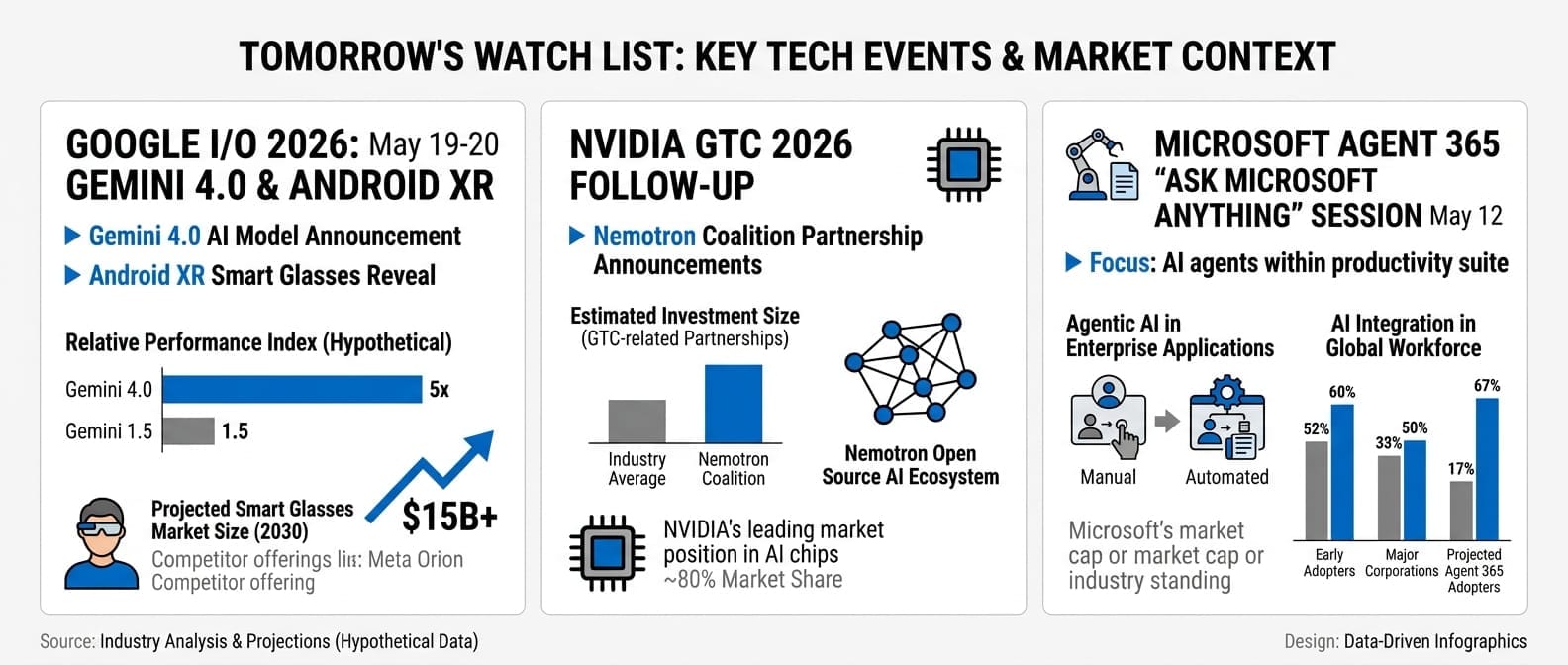
- Google I/O 2026 (May 19-20): Expected major Gemini 4.0 announcement and Android XR smart glasses reveal
- NVIDIA GTC 2026 follow-up: Watch for Nemotron Coalition partnership announcements
- Microsoft Agent 365 "Ask Microsoft Anything" session (May 12)
*Related reading: Check out this week's [Deep Insights analysis] for strategic context on these developments.