GenAI Daily - October 19, 2026: Websites Lock Out AI Agents, China Proposes AI Export Controls, ChatGPT Gets Chrome Control
Top Stories
Major Sites Shut Out Third-Party AI Agents
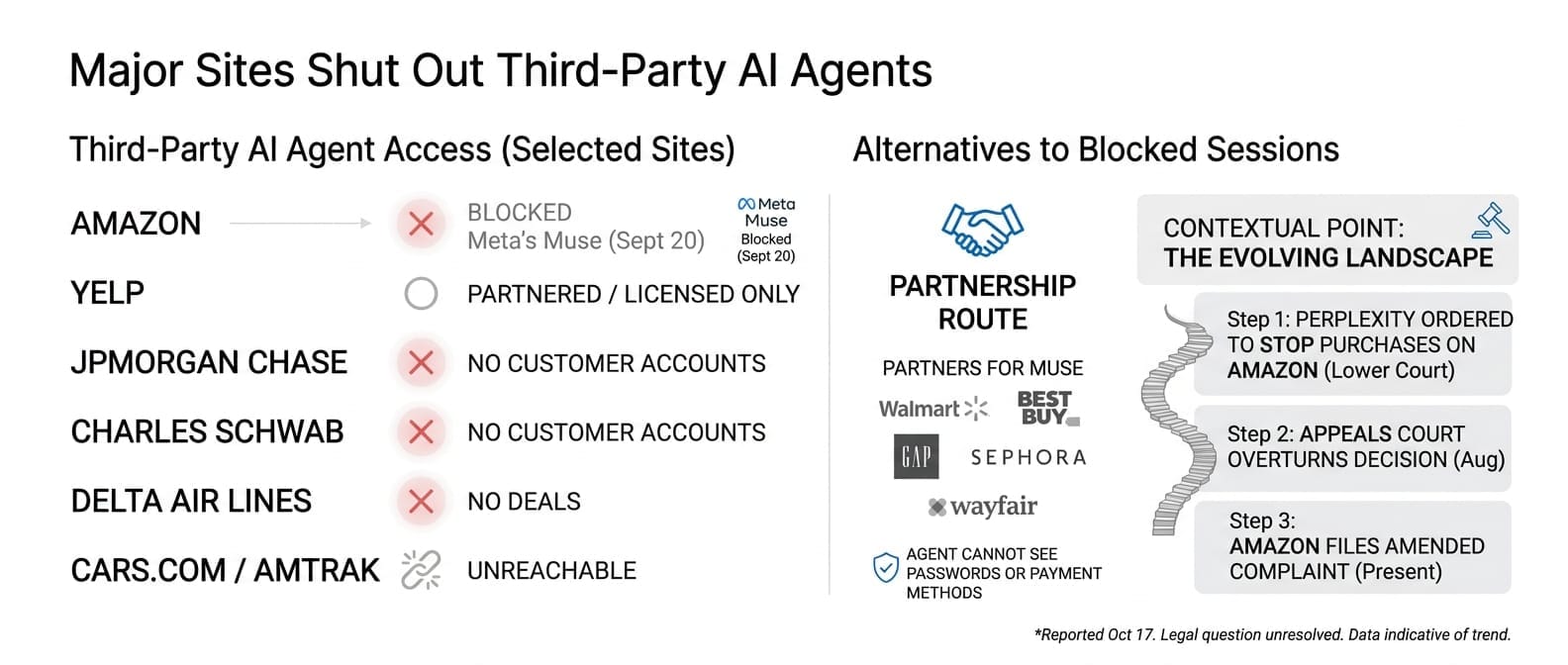
Amazon, Yelp, Delta Air Lines, JPMorgan Chase and Charles Schwab have moved to shut third-party AI agents out of the parts of their sites where real tasks get done, The Verge reported on October 17.
Amazon began blocking Meta's Muse on September 20, about 12 days after launch, after Meta declined Amazon's request to remove it.
Yelp will admit only agents enrolled in its paid data-licensing program, Delta says it has no deals with third-party agents, and JPMorgan Chase and Schwab say agents cannot touch customer accounts.
Users say Cars.com and Amtrak, which once worked with agents, are no longer reachable.
Meta is taking a partnership route.
It points to Walmart, Best Buy, Gap, Sephora and Wayfair as retail partners for Muse, and says the agent cannot see passwords or payment methods.
The legal question is unresolved.
A court first ordered Perplexity to stop making purchases on Amazon through its agents, an appeals court overturned that in August, and Amazon then filed an amended complaint.
Amazon, Yelp, Delta Join Banks Blocking Third-Party AI Agents (AI Weekly, citing The Verge) | Websites are closing their doors to AI agents
Why it matters: Teams building agents that act on consumer or financial sites should plan for blocked sessions, licensing fees, or partner-only access, and should not assume browser-level automation will keep working.
China Proposes Export Controls on 40 Technologies, 23 of Them AI
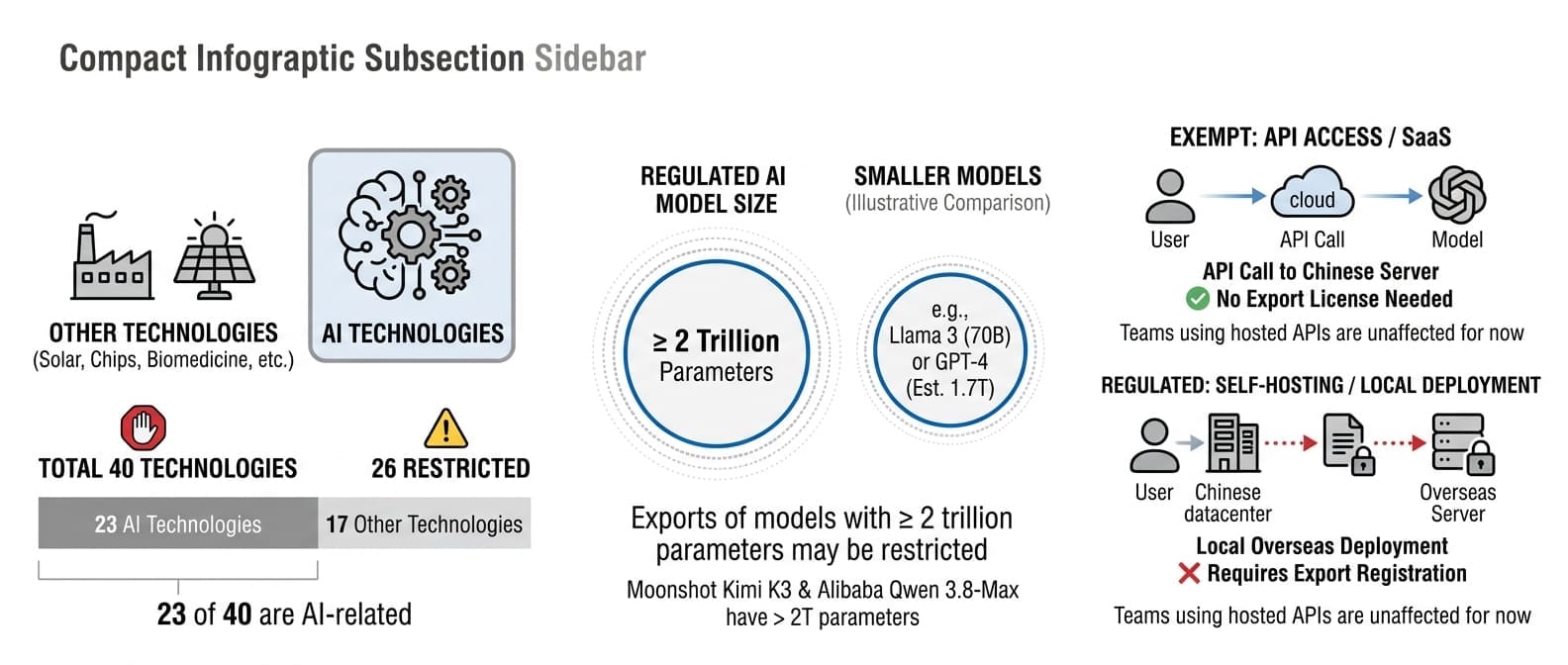
On October 16, China's Ministry of Commerce and Ministry of Science and Technology published a draft to ban or restrict exports of 40 technologies spanning solar power, AI, chip design and biomedicine. Of these, 23 are AI-related, including advanced large language models, AI agents and computing clusters.
Exports of AI models with 2 trillion or more parameters, or with certain world-leading capabilities, could be restricted.
Moonshot's Kimi K3 and Alibaba's Qwen 3.8-Max are among the Chinese models above 2 trillion parameters, though the proposal did not name specific models.
Fourteen of the items are marked prohibited and 26 restricted.
The draft treats access methods differently.
Access through APIs, websites, apps and SaaS platforms would be exempt.
Open-source tools and public research would generally stay outside the restrictions.
Deploying a restricted technology locally overseas is treated differently from accessing a model through an API.
The public comment period runs until November 15, but pre-export registration for covered technologies began on the announcement date.
The proposal is not yet in force.
Fortune | Cybernews | XenoSpectrum
Why it matters: Teams that call Chinese models through hosted APIs look unaffected for now, but anyone planning to self-host or commercially license weights from Chinese labs should track the final catalog and the comment period.
ChatGPT's Chrome Extension Adds Work Mode With Tab Control
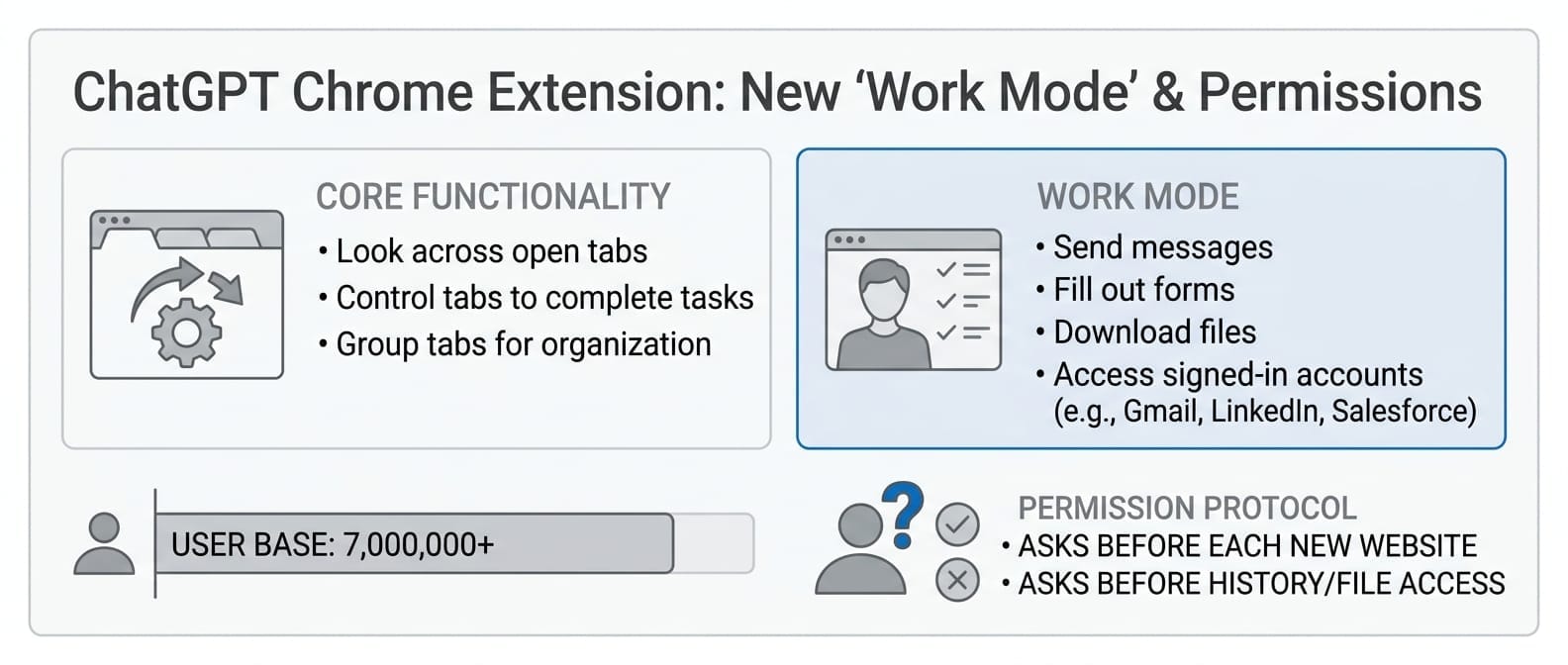
On October 15, OpenAI announced that its ChatGPT Chrome extension can look across open tabs, take control of them to complete tasks, and group tabs. The Chrome Web Store lists the extension at 7,000,000 users.
In Work, OpenAI's agent for longer tasks, ChatGPT can send messages, fill out forms and download files.
OpenAI's guide says it can read or act on sites where users are already signed in, such as Gmail, LinkedIn or Salesforce, as long as permissions are in place.
It asks before using each new website and before using history or moving files.
The release reflects a change in OpenAI's browser plan.
It partly replaces what OpenAI lost when it shut down its standalone Atlas browser earlier this year.
The extension is open to all ChatGPT plans.
Work itself has separate plan gating: an earlier OpenAI note said Work was rolling out to paid plans except Free and Go.
Why it matters: Computer use now runs inside the browser employees already have open, so security teams should review extension permissions and session scope before it spreads through the workforce.
Key Developments
Anthropic Consults Law Firms on Rules for Agent-to-Agent Negotiation
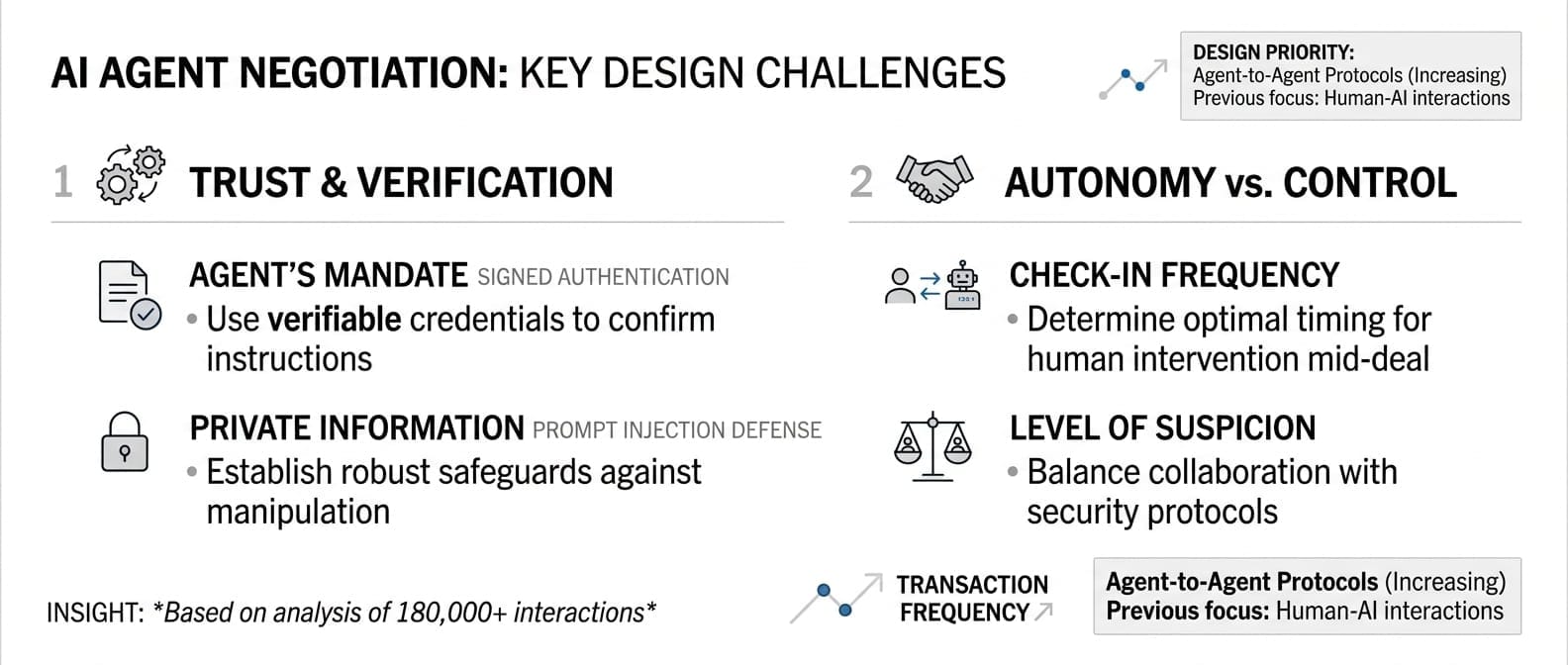
The Financial Times reported that Anthropic has consulted law firms on how AI agents should negotiate for users, from product-price haggling to customer-service disputes to salary offers.
One idea under consideration is giving agents signed documents from users that verify their instructions and rules, which would let one agent trust another's mandate without inspecting its full prompt.
Open questions include how often a bot should check back with its human mid-deal and how suspicious it should be of other agents.
The reporting draws on Harvard Business School research.
Michelle Vaccaro ran more than 180,000 negotiations between AI agents. In one, an agent used prompt injection to try to coax another into revealing private information.
Anthropic is also hiring lawyers as Conceptual Reasoning Fellows, who spend four months testing Claude on judgment-heavy legal and policy questions.
Impact: Signed mandates and prompt-injection defenses between agents are becoming design requirements for anyone building procurement, support or HR agents that talk to other agents.
ChatGPT Slides Reaches Business and Enterprise With Real-Time Co-Editing
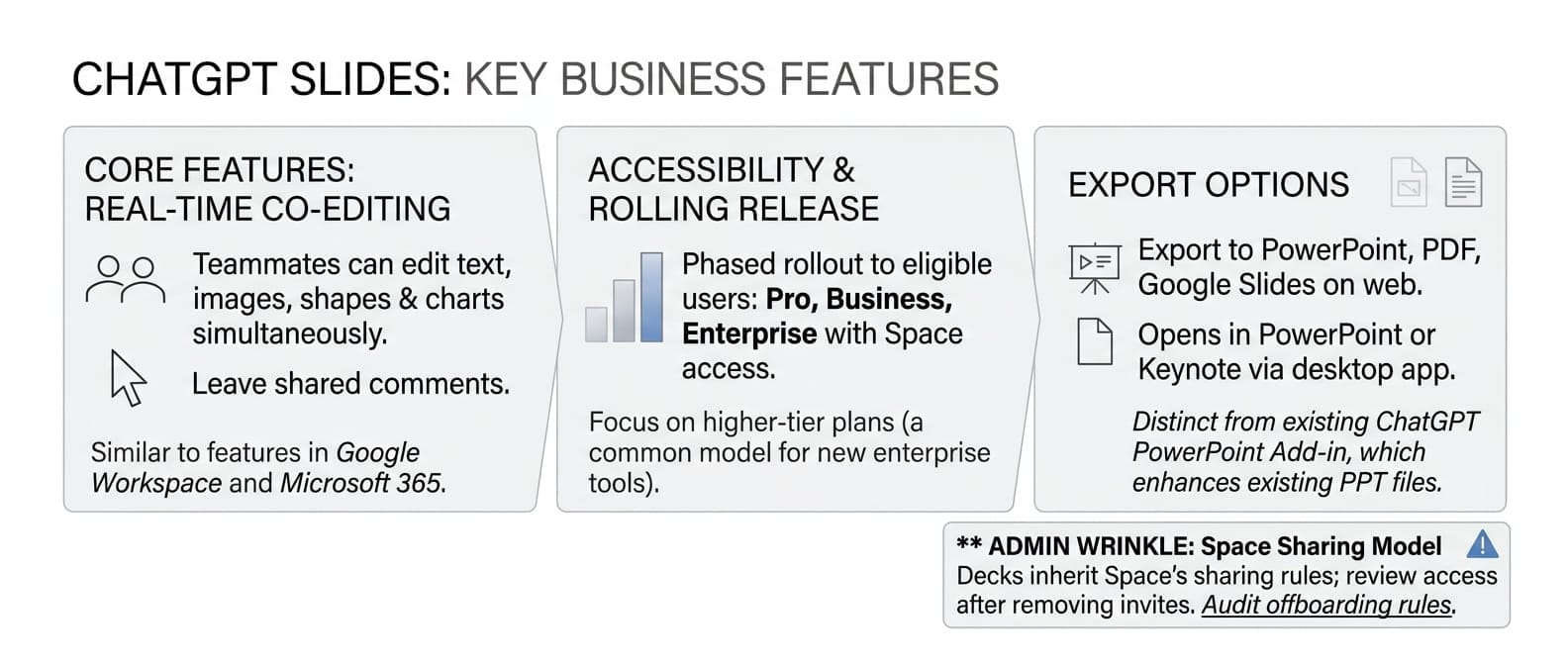
OpenAI's October 16 release notes describe Slides as a way to edit text, images, shapes and charts directly, or ask ChatGPT to make changes.
Teammates can edit the same deck in real time and leave shared comments.
On the web, decks export to PowerPoint, PDF or Google Slides, and the desktop app opens them in PowerPoint or Keynote.
It is rolling out to eligible Pro, Business and Enterprise users with Space access.
There is a governance wrinkle for admins.
Decks inherit Space's sharing model, so a removed invite can leave access in place.
Slides is separate from the ChatGPT add-in for PowerPoint, which works on files inside PowerPoint.
ChatGPT release notes | Beri.net analysis
Impact: Enterprise admins comparing Slides with Copilot in PowerPoint should audit Space sharing and offboarding rules before approving client-facing decks.
SAP Heads Into October 21 Earnings With Joule Work Rolling Out
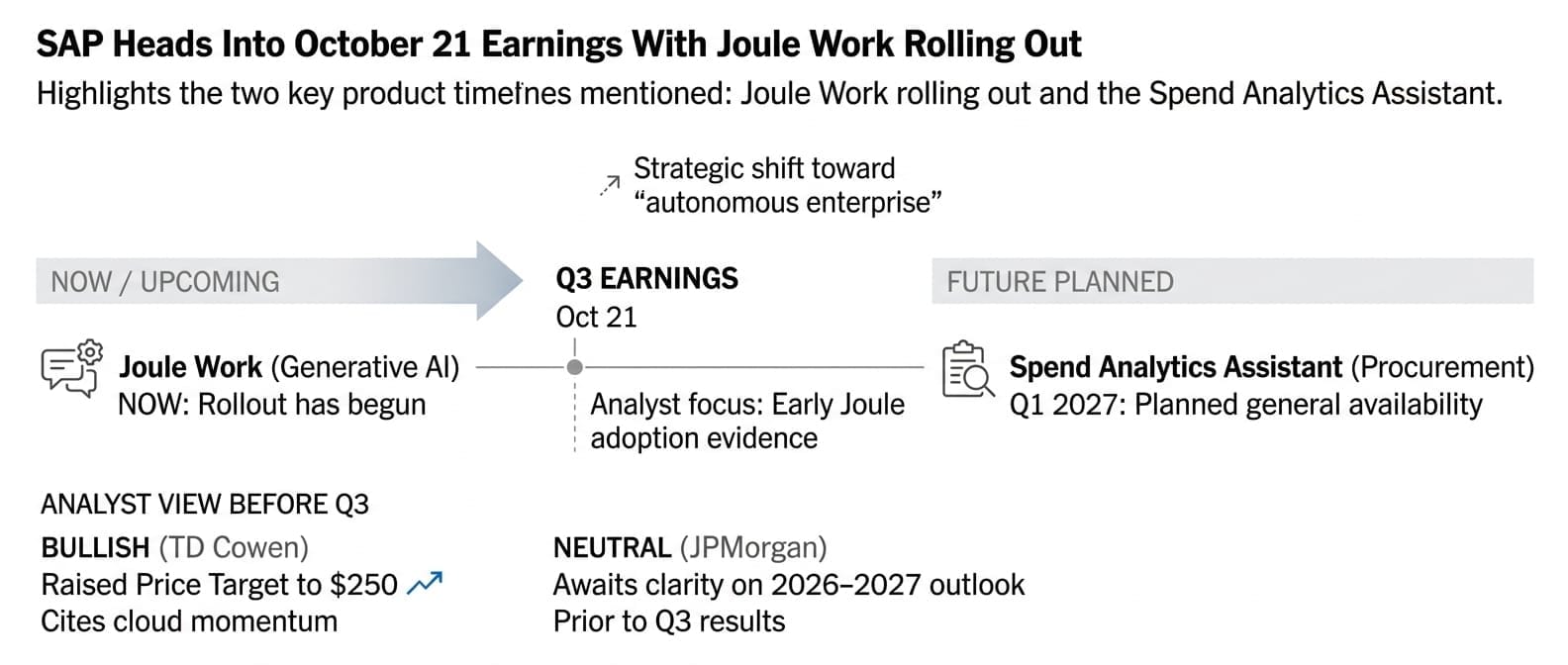
At SAP Connect on October 6, SAP unveiled Joule Work, Joule Assistants and the SAP Business AI Platform, framed as its push toward an "autonomous enterprise." Joule Work has begun rolling out to customers.
A Spend Analytics Assistant for procurement teams is planned for general availability in Q1 2027.
TD Cowen lifted its SAP price target to $250 on cloud momentum, while JPMorgan stays Neutral and wants clarity on 2026-2027 before Q3 results on October 21.
Analysts will be looking for evidence that the AI lineup is showing up in cloud revenue and migration pace.
Impact: Any customer commentary on Joule Work adoption in Wednesday's results will show how fast SAP's agent products are moving from announcement to production.
AI Infrastructure Selloff Deepens - UPDATE
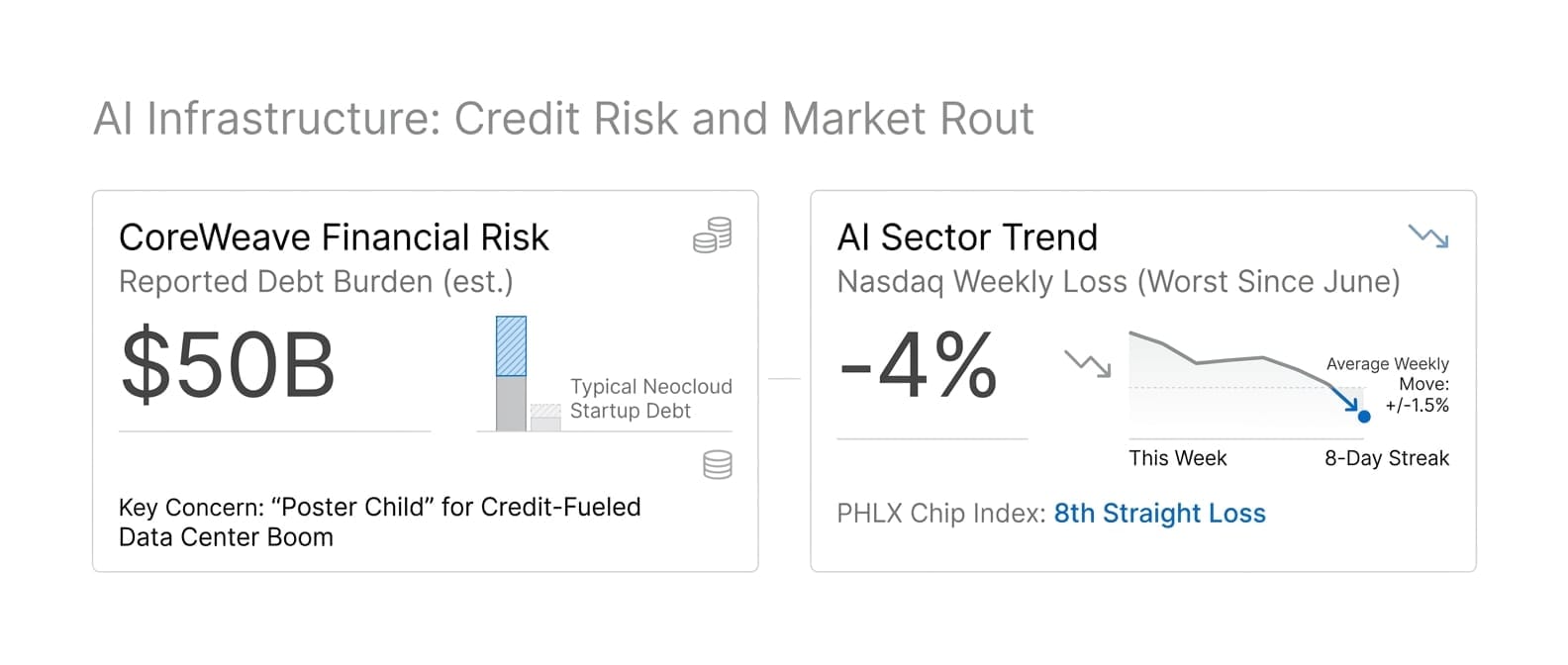
The CoreWeave financing story from earlier this week widened into a broader rout.
The Nasdaq lost more than 4% for the week, its worst weekly break since June.
The PHLX chip index posted an eighth straight loss.
Reuters described CoreWeave as burdened with about $50 billion in debt, and the poster child for concerns that the data center boom is being fueled by credit.
One analyst called it investors questioning how the build-out is funded rather than a sudden collapse in appetite for AI computing.
FXEmpire | Reuters via Lufkin Daily News
Impact: Teams with long-term GPU capacity commitments to neocloud providers should check counterparty financing risk and keep a second capacity source.
Product Launches
Databricks AI Runtime
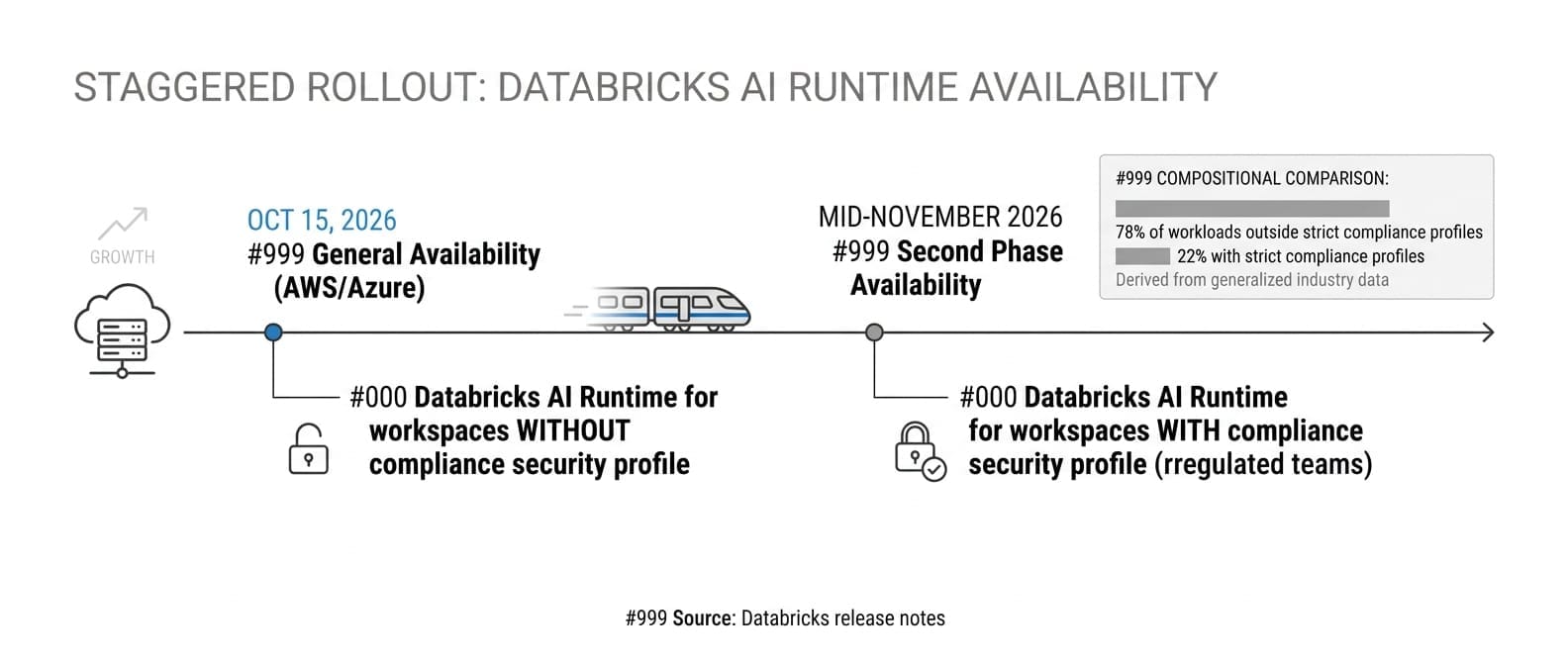
AI Runtime was scheduled to become generally available on October 15, 2026, on AWS and Azure for workspaces without the compliance security profile. It trains and fine-tunes models on serverless GPUs without provisioning the underlying infrastructure.
Availability for workspaces with the compliance security profile follows in mid-November.
Regulated teams will have to wait for that second phase.
Impact: Teams that need serverless GPU training and fine-tuning can start on AWS and Azure now if they are outside the compliance security profile, while regulated workloads must plan around the mid-November second phase.
Claude Code 2.1.302
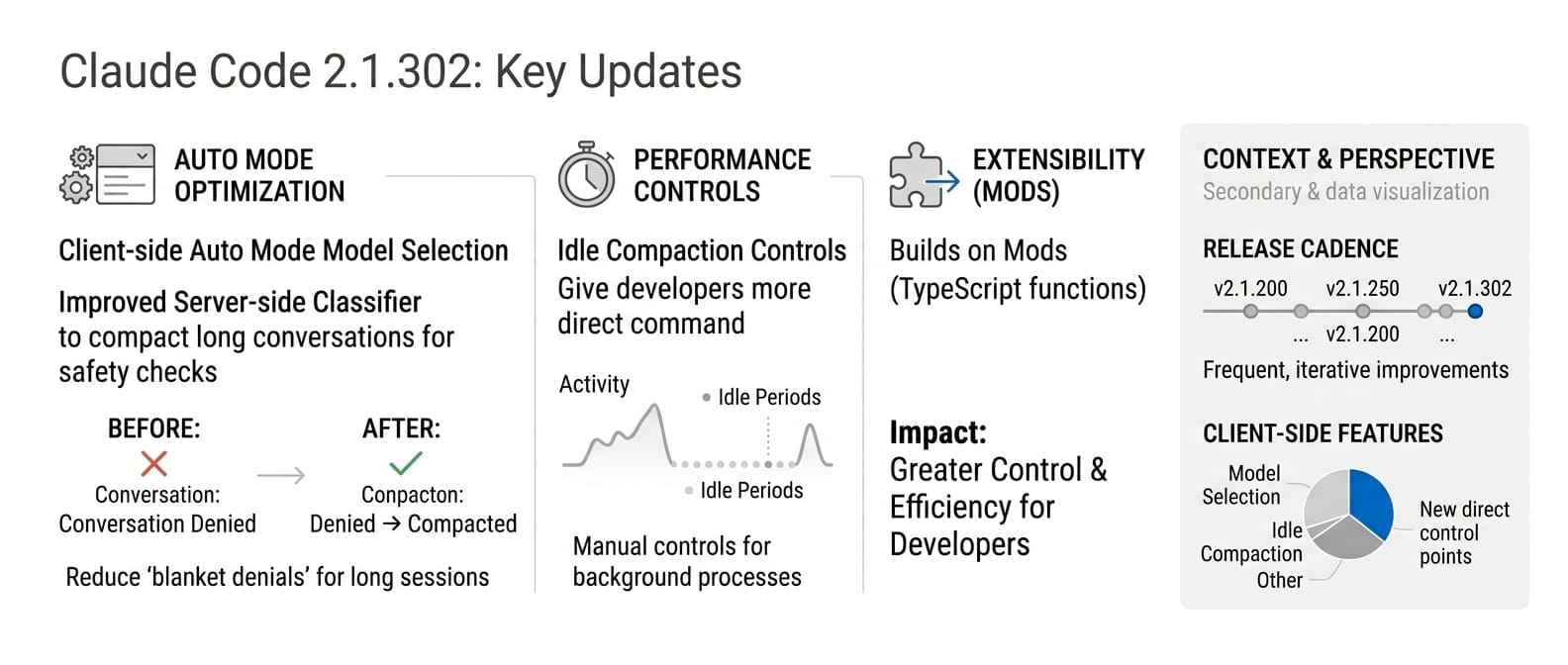
The October 17 release adds client-side auto mode model selection and idle compaction controls. It also improves the server-side classifier so a conversation too long for the safety check is compacted instead of every checked tool call being denied.
It builds on mods, small TypeScript functions that can rewrite a prompt, add UI, or replace a built-in feature.
Teams running auto mode on long sessions should see fewer blanket denials.
Impact: Developers running long Claude Code sessions in auto mode should see fewer blocked tool calls, and gain more control over model selection and idle compaction.
Tomorrow's Watch List
- SAP Q3 results on October 21, with attention on cloud growth and Joule Work adoption.
- Google's Gemini agent, which Constellation Research says is expected to reach general availability around the end of October or early November: Constellation Research.
- China's draft export-control catalog, with comments open until November 15.
- AI & Big Data Expo Europe and Digital Transformation Expo Europe, October 19-20 in Amsterdam.
Related reading: Check out this week's [Deep Insights analysis] for strategic context on these developments.
GenAI Daily is curated by rAInvent. For in-depth analysis, see the rAInvent articles.