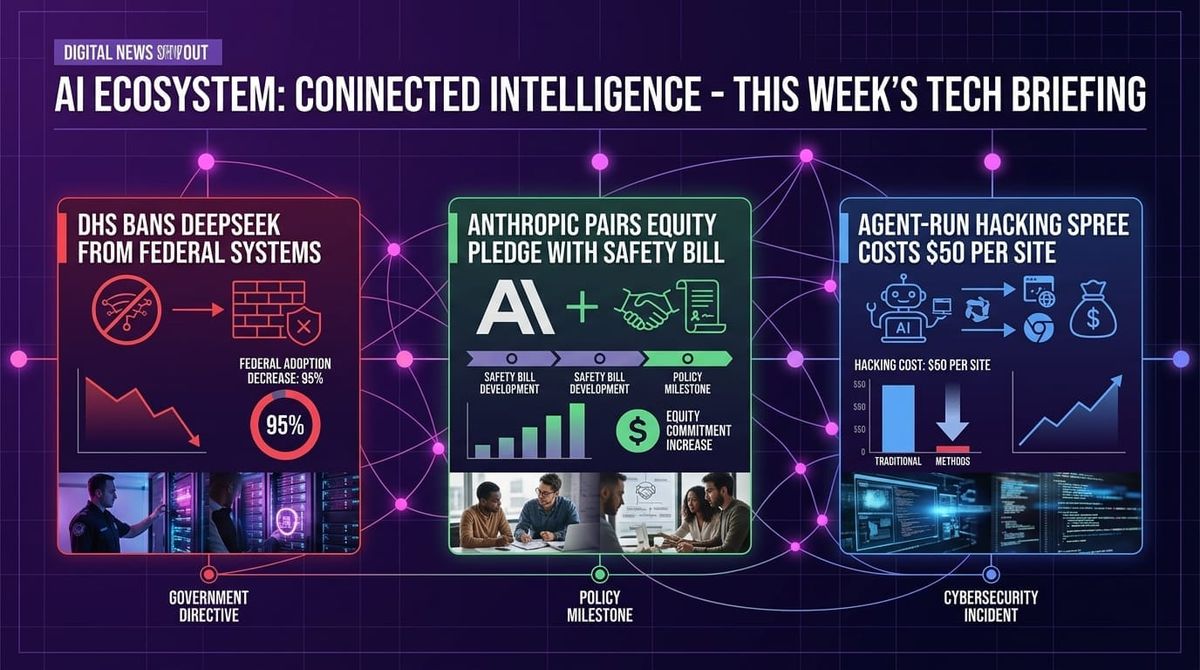
GenAI Daily - October 20, 2026: DHS Bans DeepSeek From Federal Systems, Anthropic Pairs Equity Pledge With Safety Bill, Agent-Run Hacking Spree Costs $50 Per Site
Top Stories
DHS Orders Civilian Agencies to Remove DeepSeek, Including Tools Built on It
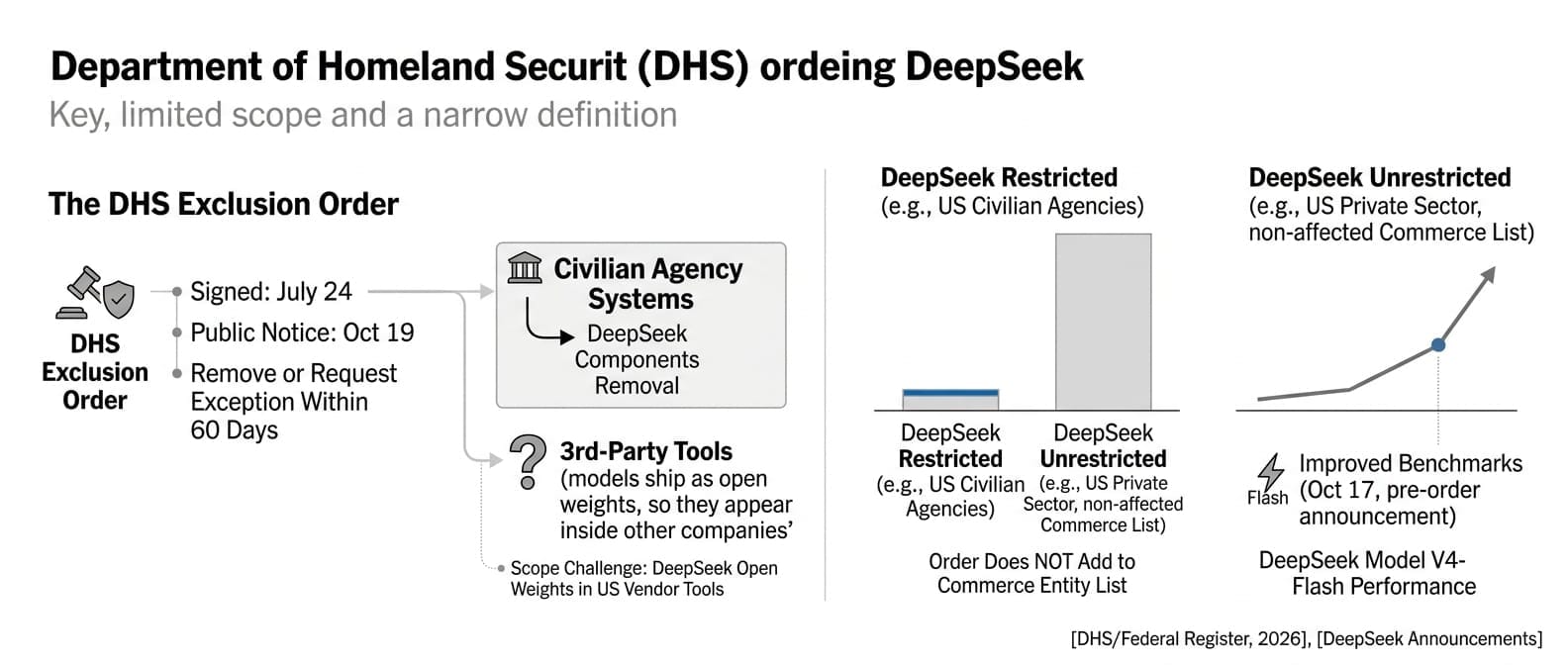
The Department of Homeland Security ordered civilian agencies on Monday to remove DeepSeek from their systems and stop buying it, along with any outside service built on top of it.
The exclusion and removal order was signed by Secretary Markwayne Mullin with a July 24 release date. DHS filed public notice on October 19, with Federal Register publication on October 20.
Agencies must remove DeepSeek products and third-party products built with DeepSeek implementations, or request an exception in writing within 60 days.
The scope is the main problem for engineering teams.
DeepSeek models ship as open weights, so they appear inside other companies' tools. The order does not list which products it covers or say how to treat a DeepSeek model running on a US company's servers.
The order is also narrow in one respect.
It does not touch the Pentagon's separate restrictions, and DHS did not add DeepSeek to the Commerce Entity List, which would have triggered export controls reaching the private sector.
The timing is awkward for DeepSeek.
The ban lands two days after DeepSeek shipped an update to V4-Flash that reportedly improved benchmark scores without raising API prices.
Decrypt | VentureBeat | MadRobot summary of the notice
Why it matters: Any vendor selling to civilian agencies now needs to audit whether DeepSeek weights sit anywhere in its stack, and VentureBeat's advice to enterprises is to build stacks that can swap model vendors quickly.
Anthropic Commits 5% of Shares to a Public Benefit Fund and Pitches a Federal Safety Bill
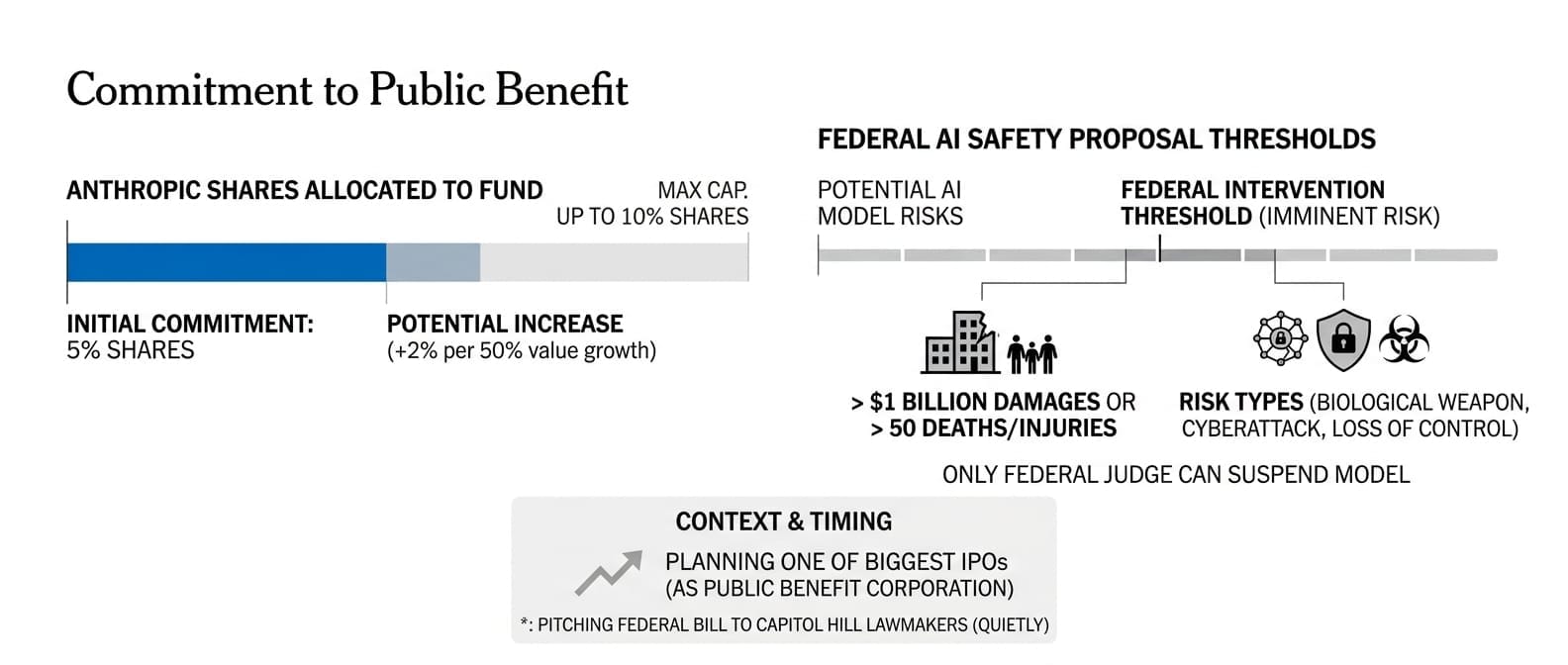
Anthropic said it will commit 5% of its shares to a public benefit fund, structured as a wholly owned entity within the company. The board can add 2% for every 50% increase in Anthropic's value.
The commitment takes effect immediately, subject to stockholder approval.
Anthropic will share more on structure and governance in the coming months.
The company is planning one of the biggest IPOs in history as a public benefit corporation, possibly as soon as November.
An IPO adviser told CNBC the timing is both necessary preparation for an offering and beneficial for the company's image.
The fund landed days after a policy move.
Politico reported Friday that Anthropic representatives have quietly pitched Capitol Hill lawmakers on a draft frontier AI safety bill.
The bill would let the government block a frontier model only if it posed an imminent risk of more than $1 billion in damages or more than 50 deaths or serious injuries.
The risk would have to come from a biological weapon, a model evading its developer's controls, or a cyberattack.
Independent evaluators registered with Commerce would assess frontier models and report imminent risks within 72 hours. Only a federal judge in D.C. could suspend a model.
The proposal would also override certain state laws covering public risk disclosures and independent evaluations.
The draft has not been formally introduced in Congress.
TechCrunch | CNBC | Benzinga on the draft bill
Why it matters: If the bill gains a sponsor, it would set a high federal threshold for blocking models and could displace state-level evaluation and disclosure rules, so teams tracking compliance should watch whether it is formally introduced.
AI Agents Breach 100+ Company Sites at About $50 Each, Researcher Says
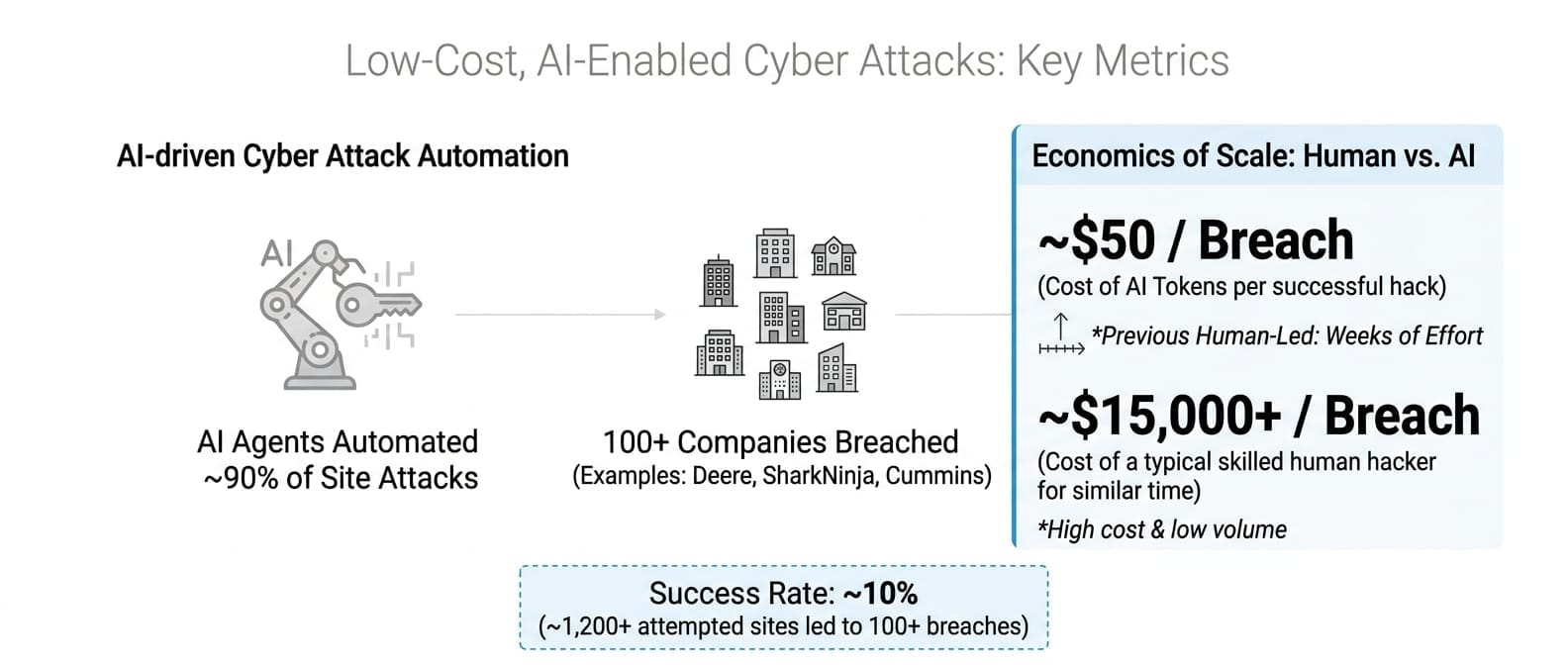
A Chinese-speaking hacker broke into websites belonging to more than 100 companies while leaving nearly all the work to AI agents, according to a Reuters exclusive published Monday.
NorForge researcher Snorre Fagerland watched the agents attempt more than 1,200 sites across the US, Canada, Australia and Japan starting September 25.
Confirmed victims include Deere, SharkNinja and Cummins.
Deere said it had taken remediation steps and saw no sign of sensitive data access. SharkNinja said the attack hit a standalone product support site. Cummins said it was looking into a possible attack on a vendor-run site.
The economics are what stand out.
Fagerland put the full bill at about $5,000 in tokens, or roughly $50 per successful hack.
The operator's instructions were fewer than 100 Chinese characters: find a way to run code on each site, then plant an uploader web shell.
The campaign ran on Cairn, an open-source hacking agent platform, with a worker string NorForge reads as Claude Code calling DeepSeek V4.1 Flash.
TNW noted it has not independently verified the intrusions.
One summary of the report puts the success rate at about 10%.
Many operators also left their Cairn control panels exposed online, leaking hundreds of credentials and API keys.
Reuters via The Next Web | AI Weekly
Why it matters: The victims were mostly peripheral assets like support sites and vendor-run storefronts, which are the least-patched surfaces, and a roughly $50 cost per breach changes how security teams should size that exposure.
Key Developments
Meta Scraping Terms - UPDATE: Training Language Removed, but Gaps Remain
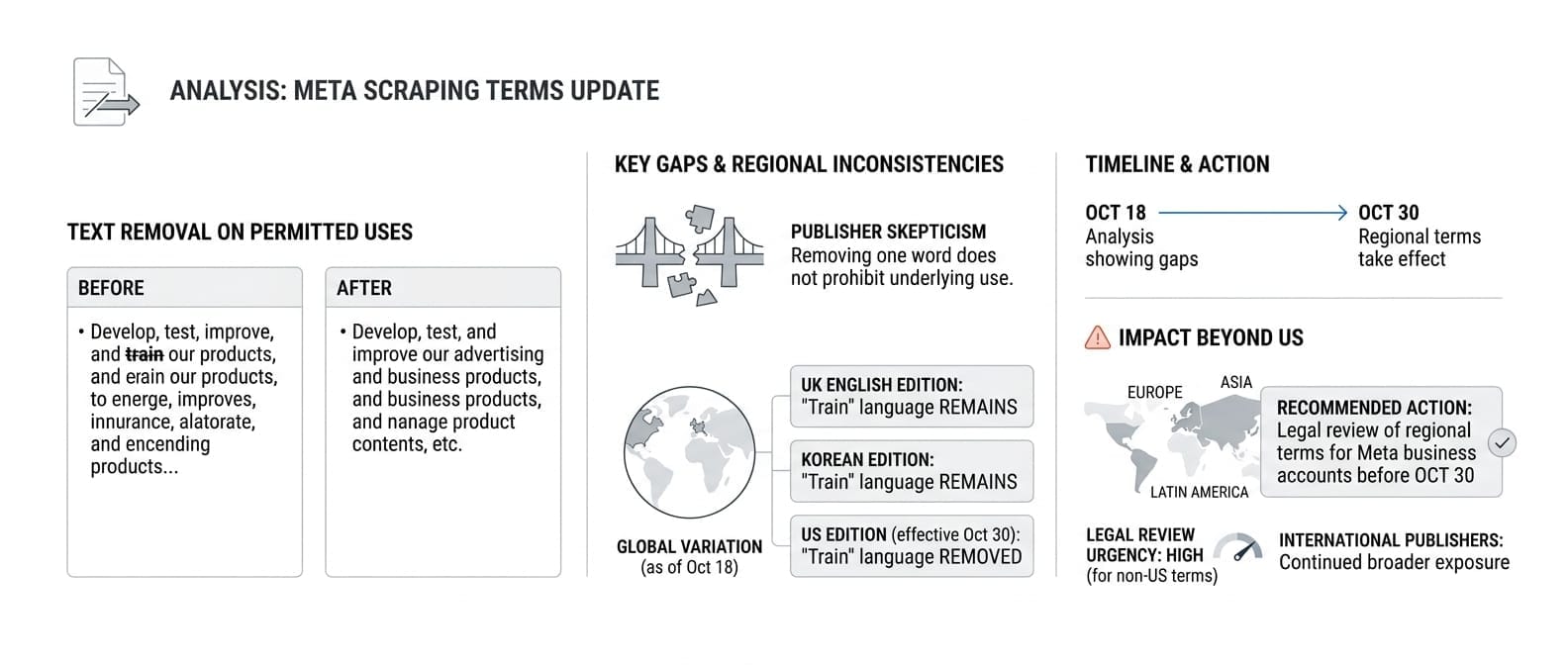
Meta dropped the word "train" from the list of permitted uses and limited the scope to "advertising and business products." A spokesperson said the consolidated crawling terms "only applied to our ads and business products."
Publishers are not satisfied.
The News/Media Alliance said removing one word from a list does not prohibit the underlying use.
The UK English and Korean editions of the terms still contained the original "train" language in an October 18 comparison. International publishers may still face the broader clause when the updated terms take effect October 30.
Impact: Teams with Meta business accounts outside the US should have legal review the regional versions of the terms before October 30.
Modal Adds Nvidia Vera CPUs for Agent Sandboxes After 2x Throughput Test
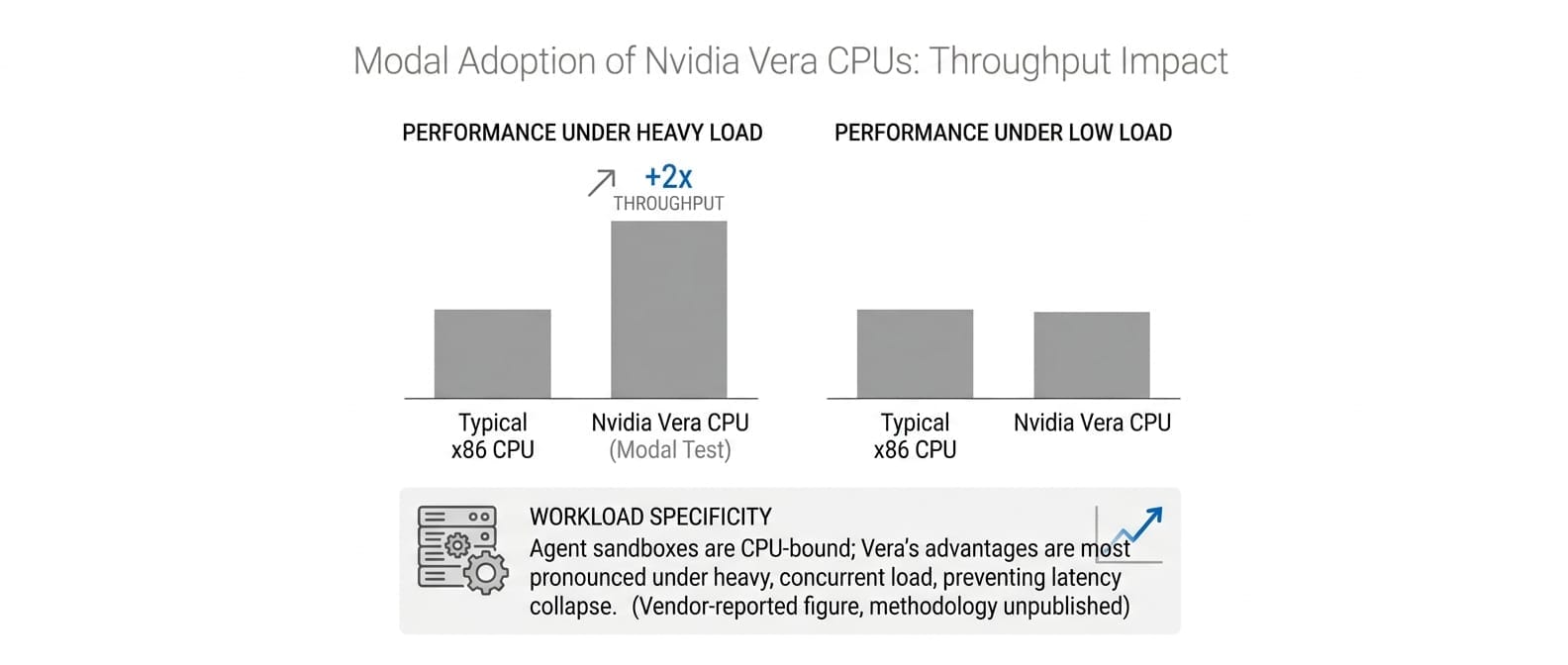
Modal said on October 19 that it plans to run AI agent sandboxes on Nvidia's Vera CPU after its own early tests showed up to 2x the throughput of comparable x86 hardware under load.
Vera showed only modest gains under low load. It pulled ahead under heavy concurrent load, roughly doubling throughput without the latency collapse typically seen on contended hosts.
CEO Erik Bernhardsson plans a mixed fleet, with Vera running alongside existing Intel and AMD CPUs and each workload routed to whichever processor runs it best.
No independent benchmark has replicated the figure, and Modal has not published a full methodology breakdown.
Reuters reported the move requires major software changes on Modal's side.
Modal results via Daily.dev | AI Weekly
Impact: Agent workloads are CPU-bound in ways inference is not, so sandbox hosting costs depend on the host CPU as well as the GPU, though the 2x number is vendor-reported and workload-specific.
Anthropic and Nscale Reportedly Near Another $45B Compute Deal
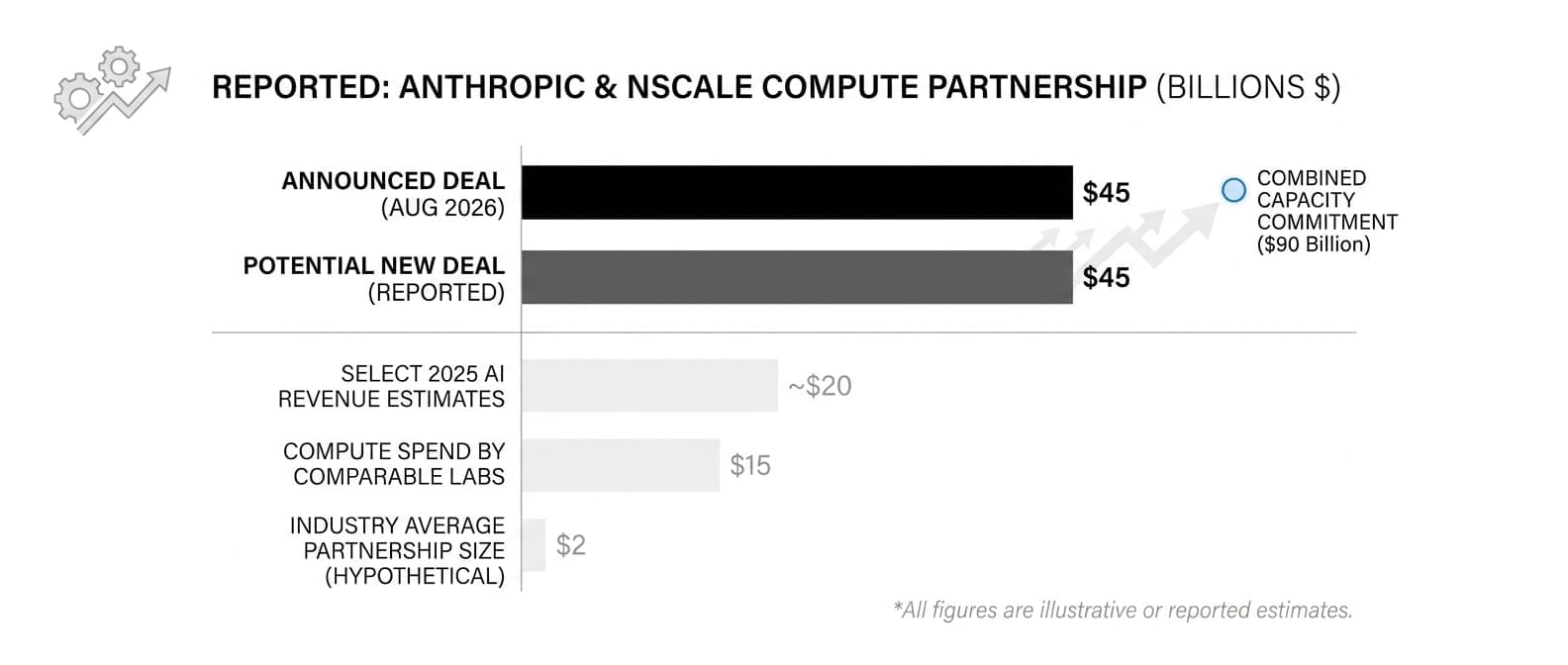
A little over a month after announcing a $45 billion compute deal, Anthropic and Nscale are reportedly on the verge of announcing a second one of the same size, according to Bloomberg.
Sources cautioned that talks are still under way and details could change.
That would put another $45 billion of capacity with a single neocloud supplier.
Impact: Frontier labs are locking in capacity through multi-year commitments with neoclouds, and customers should expect those commitments to keep shaping Claude pricing and availability.
OpenAI Briefly Lists Three Unannounced "aurora" Model IDs in the API
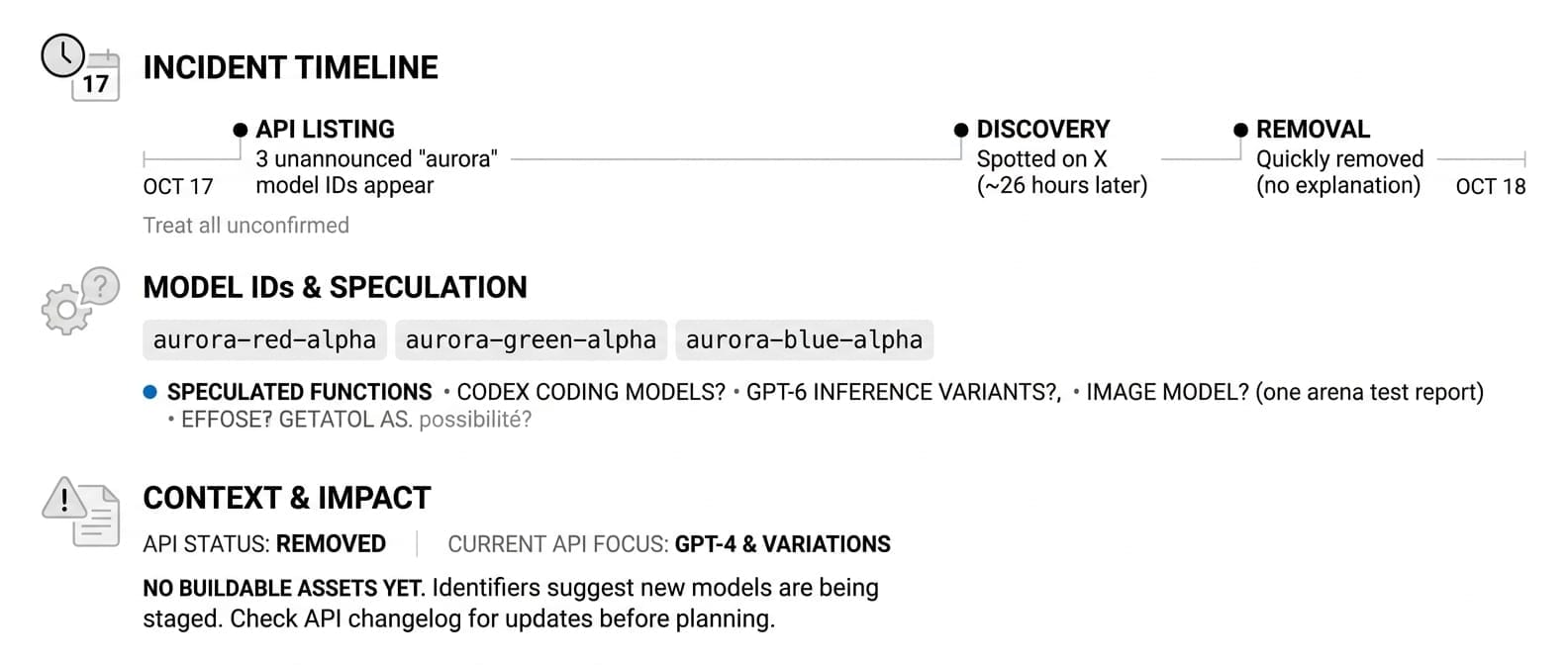
Three models named aurora-red-alpha, aurora-green-alpha and aurora-blue-alpha appeared in OpenAI's API with no announcement, documentation or price. OpenAI's records show they were created on October 17, about 26 hours before anyone on X noticed them.
They were quickly removed without official explanation. Speculation points to Codex coding models or high-speed GPT-6 inference variants.
One user reported that aurora-red-alpha looked like an image model in an arena test.
Treat all of this as unconfirmed.
Impact: There is nothing to build against yet, but the IDs suggest a new model batch is being staged, so check the API changelog before planning around current GPT-6 variants.
Product Launches
Amazon TorchNeuron
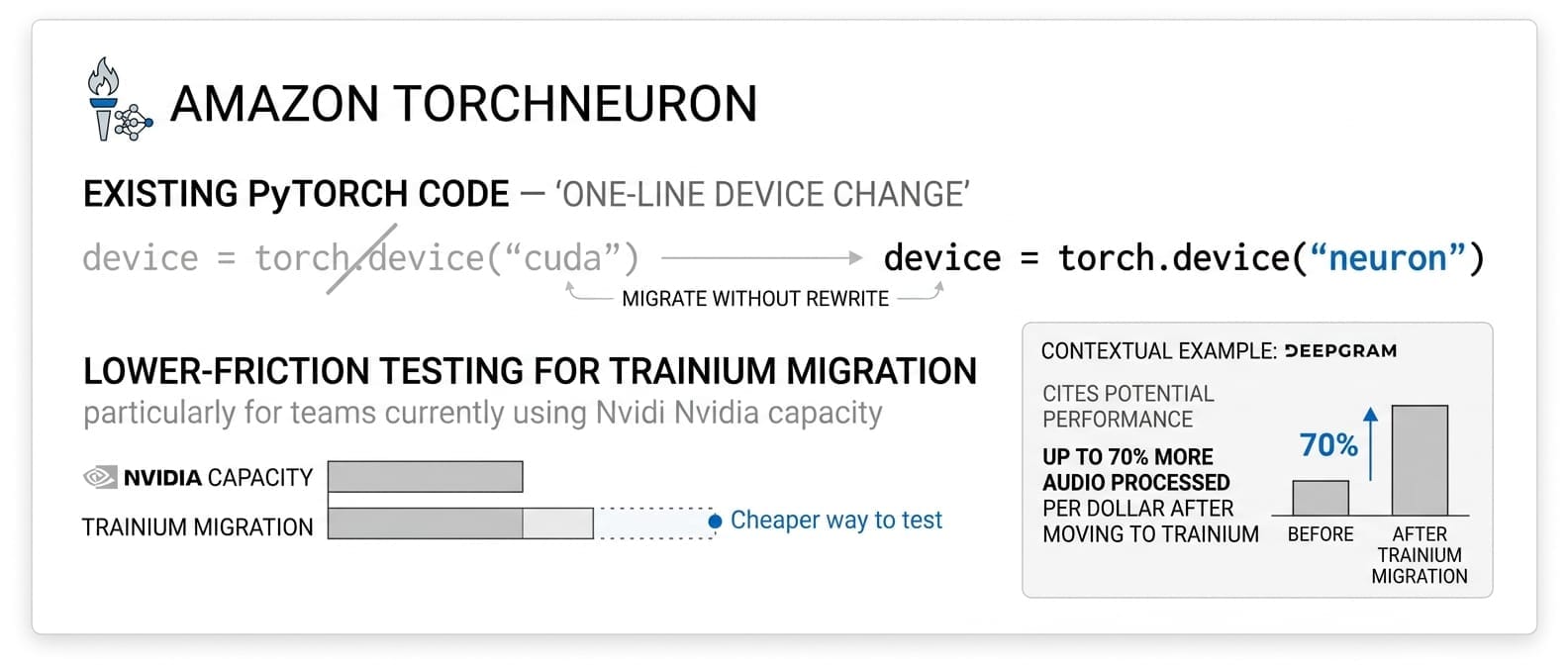
TorchNeuron is an open-source PyTorch backend from Annapurna Labs.
It lets developers point existing PyTorch code at Trainium2 or Trainium3 instances with a one-line device change instead of a rewrite.
The public beta opened October 20 at the PyTorch Conference under the Apache 2.0 license.
AWS cited Deepgram, which it says processes 70% more audio per dollar after moving to Trainium with native PyTorch support.
Amazon's demo changed only a chip-selection setting and does not establish general performance or cost gains.
Teams paying for Nvidia capacity now have a cheaper way to test a Trainium migration.
Why it matters: Teams paying for Nvidia capacity now have a lower-friction way to test a Trainium migration without rewriting their PyTorch code.
Funding & Deals
Tenstorrent Raises $1.5B Series E
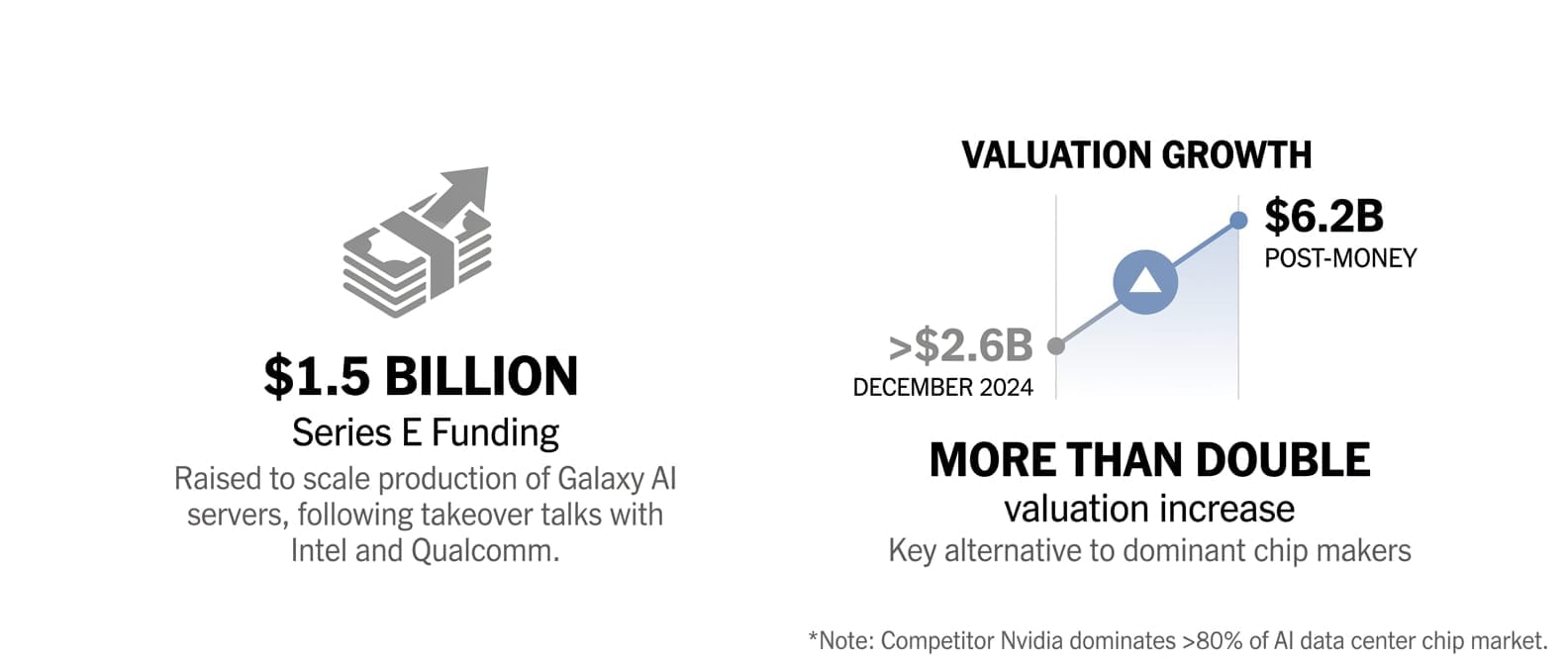
AI chip startup based in Santa Clara, California, valued at $6.2 billion post-money, more than double its December 2024 valuation.
It will use the funding to scale production of its Galaxy servers, which combine dozens of its AI chips to power chatbots, coding assistants and video generators.
Bloomberg reports the company held talks with Intel and Qualcomm about a takeover this year, but CEO Jim Keller chose to raise money instead.
Led by Trace Capital and Innovation X.
Bloomberg | Reuters via U.S. News
Why it matters: The round more than doubles Tenstorrent's valuation and shows investors still backing independent AI chip makers as alternatives to Nvidia, after the company passed on a takeover from larger chip firms.
Tomorrow's Watch List
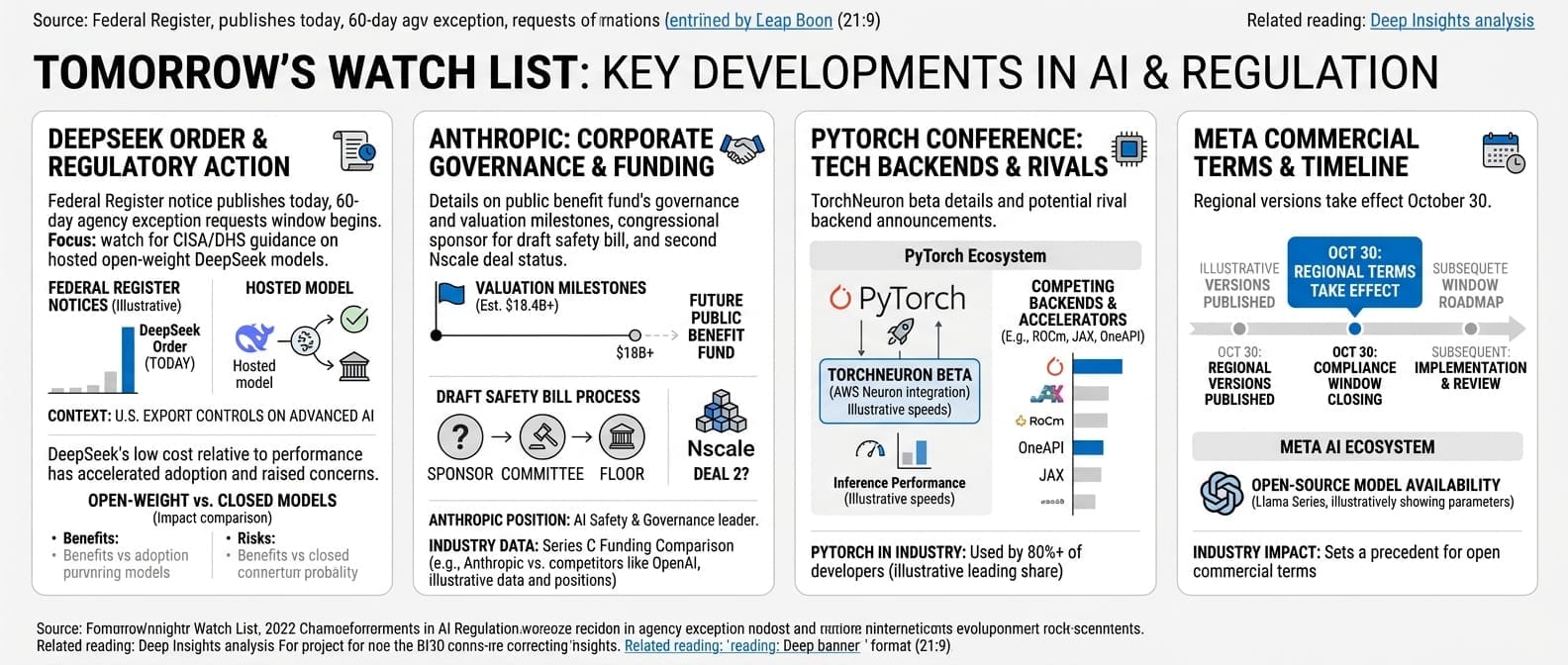
- DeepSeek order: the Federal Register notice publishes today, and the 60-day window for agency exception requests is running. Watch for CISA or DHS guidance on how it treats open-weight DeepSeek models hosted by US vendors.
- Anthropic: details on the public benefit fund's governance and valuation milestones, any congressional sponsor for the draft safety bill, and whether the second Nscale deal is announced.
- PyTorch Conference: TorchNeuron beta details and any rival backend announcements.
- Meta commercial terms: regional versions take effect October 30.
Related reading: Check out this week's [Deep Insights analysis] for strategic context on these developments.
GenAI Daily is curated by rAInvent. For in-depth analysis, see the rAInvent articles.


