GenAI Daily - April 28, 2026: OpenAI-Microsoft Partnership Shift, Enterprise AI Orchestration Scales, Major Workforce Restructuring Continues
Top Stories
OpenAI Breaks Exclusive Microsoft Cloud Pact, Opens Multi-Cloud Strategy
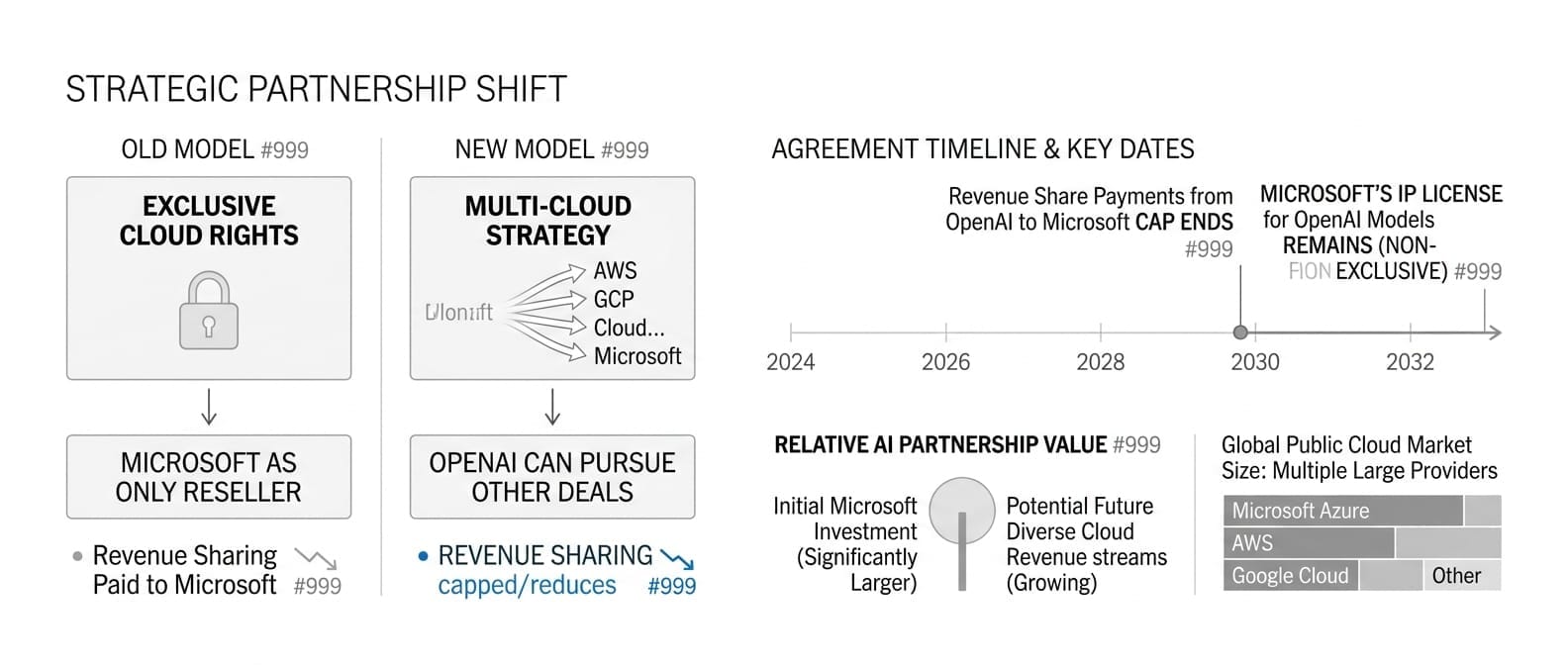
Microsoft Corp. and OpenAI have agreed to drop the software giant's exclusive right to sell the startup's AI models, opening the door for the ChatGPT maker to pursue deals with cloud-computing rivals like Amazon.com Inc. In exchange for ending that exclusivity - which helped boost Microsoft's cloud sales in the early years of the AI boom - the world's largest software maker will no longer pay a revenue share on OpenAI products it resells on its cloud.
As part of the new agreement, the companies said revenue share payments from OpenAI to Microsoft will be "subject to a total cap," but they will continue through 2030, "independent of OpenAI's technology progress." Microsoft will continue to have a license to OpenAI's intellectual property on AI models through 2032, although the license will no longer be exclusive, the two companies said.
Why it matters: This strategic shift enables OpenAI to serve enterprise customers across any cloud infrastructure while Microsoft reduces its revenue-sharing obligations, signaling both companies' push toward independence as the AI market matures.
Tech Industry Faces Unprecedented AI-Driven Workforce Restructuring
As of this week, over 92,000 tech workers have been laid off so far in 2026, according to Layoffs.fyi, bringing the total to almost 900,000 since 2020 "This represents a fundamental structural shift rather than a temporary market correction," said Anthony Tuggle, an executive coach and leadership expert who previously worked in AI. "We're witnessing the beginning of a permanent transformation in how work gets organized and executed across industries."
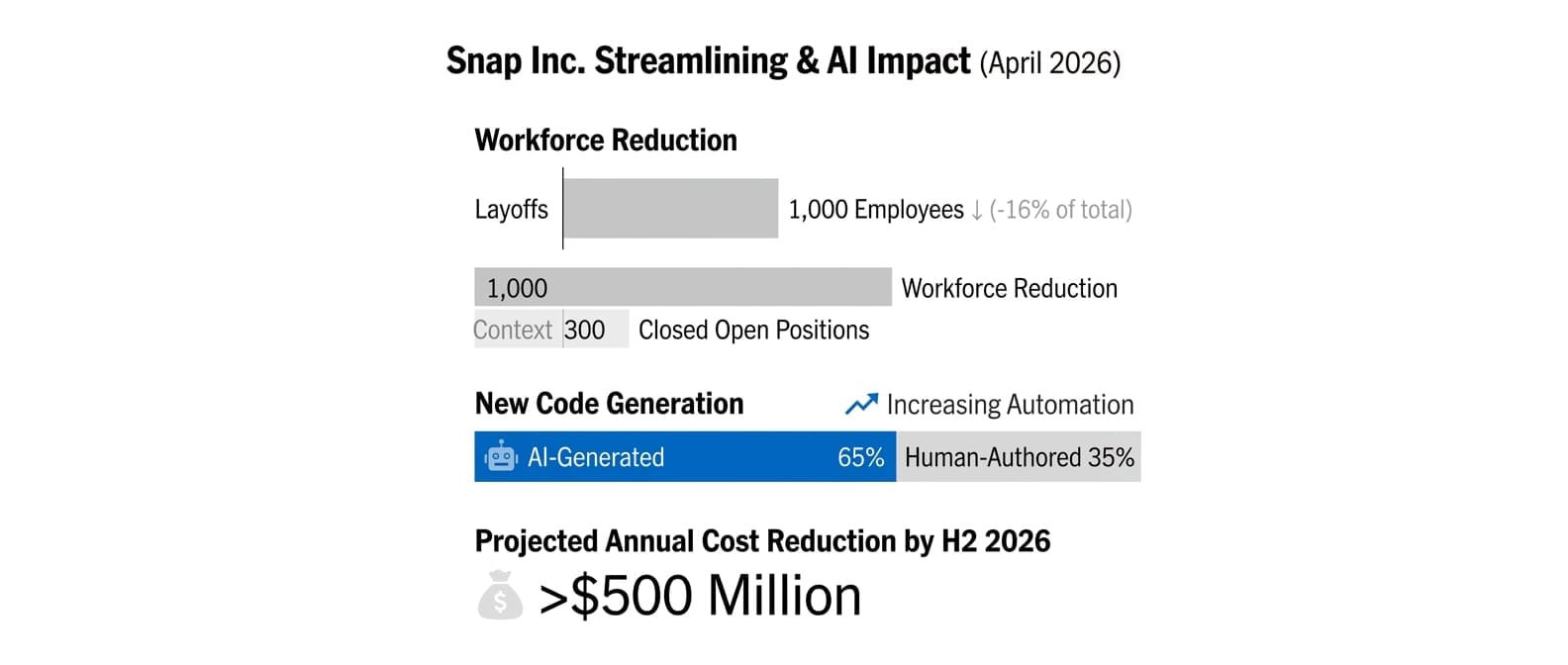
AI generates 65% of its code. Snap explained that advancements in AI are helping it streamline operations and function with smaller teams as AI generates over 65% of new code, while the company assigns more critical work to focused teams and AI agents.
Why it matters: The scale and speed of AI-driven workforce changes across major tech companies suggests enterprises must prepare for fundamental shifts in team structure and skill requirements rather than incremental automation.
Snap's 1,000-Person Layoff Highlights AI Code Generation Impact
Snap rose after announcing plans to lay off around 16% of its workforce. CEO Evan Spiegel said in a letter to staff that the reduction would affect around 1,000 members of staff and that at least 300 open positions would be closed.
AI generates 65% of its code. Snap explained that advancements in AI are helping it streamline operations and function with smaller teams as AI generates over 65% of new code, while the company assigns more critical work to focused teams and AI agents.
Spiegel said that the layoffs would reduce the company's annualized cost base by more than $500 million by the second half of 2026.
Why it matters: When a social media company reports 65% AI-generated code alongside significant workforce reductions, it demonstrates how quickly AI development tools are reshaping engineering teams across the industry.
Key Developments
OpenAI Launches ChatGPT for Clinicians with Healthcare AI Tools
We're introducing ChatGPT for Clinicians, a version of ChatGPT designed to support clinical tasks like documentation and medical research so clinicians can focus on delivering high-quality patient care. We're making it free for any verified physician, NP, PA, or pharmacist, starting in the U.S.
We found that GPT-5.4 in the ChatGPT for Clinicians workspace outperforms base GPT-5.4, all other OpenAI and external models, and human physicians.
Impact: This targeted healthcare deployment demonstrates how frontier AI companies are creating specialized professional tools rather than generic applications, potentially accelerating AI adoption in regulated industries.
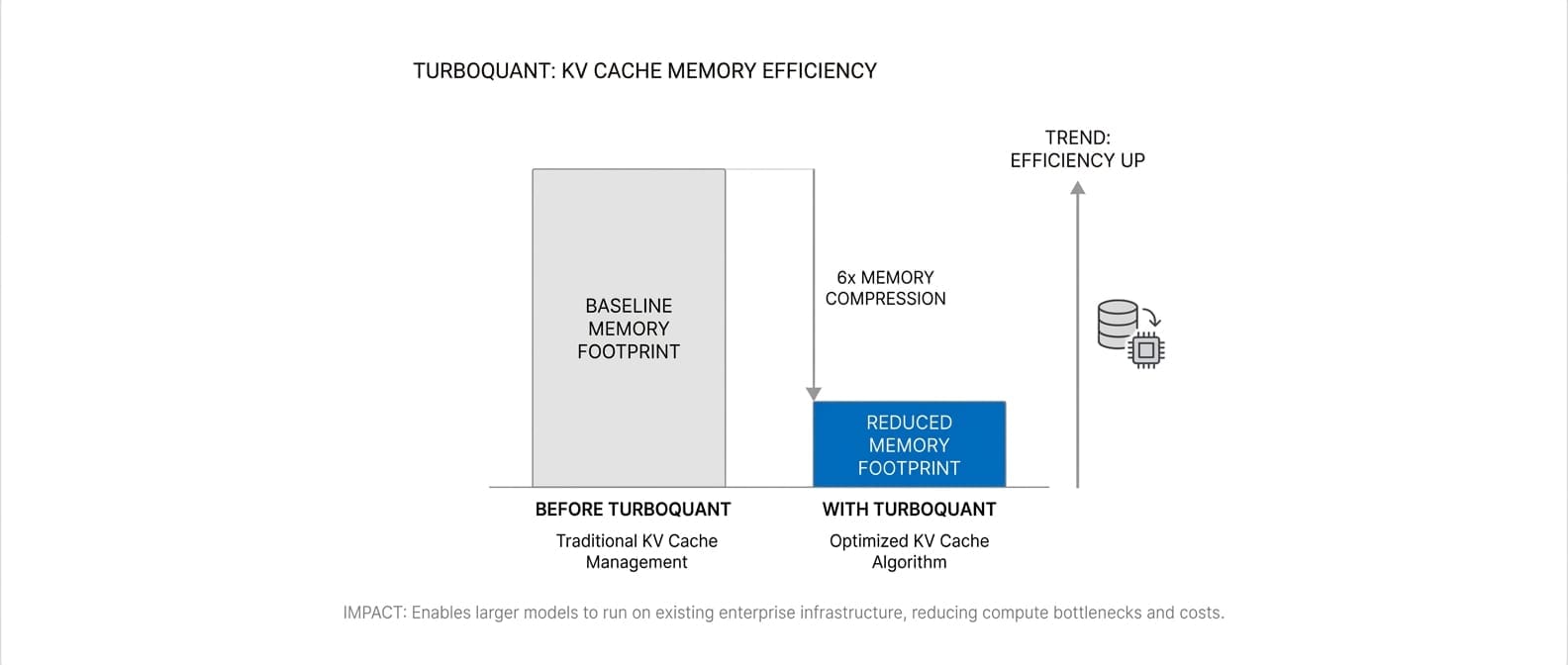
Google's TurboQuant Achieves 6x Memory Compression for Large Models
OpenAI: Microsoft and OpenAI amend their deal to let OpenAI serve all its products across any cloud provider; Microsoft will no longer pay a revenue share to OpenAI - Amended agreement provides long-term stability for both companies while enabling broader market access for OpenAI's technology.
Google's research team unveiled TurboQuant at ICLR 2026, an algorithm that significantly reduces the memory overhead caused by the KV cache, one of the biggest bottlenecks in running large language models at scale.
Impact: Major memory efficiency breakthroughs like TurboQuant could enable enterprise deployment of larger AI models on existing infrastructure, reducing the compute costs that currently limit AI adoption.
Enterprise AI Agent Deployments Reach Production Scale
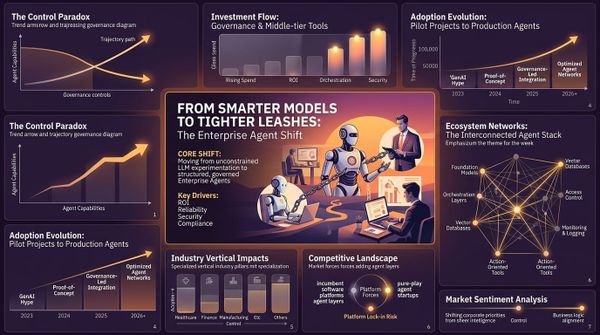
April 2026 marks a decisive turning point for enterprise AI: agentic orchestration has moved from isolated pilots to compliance-ready, production-scale infrastructure in many of the world's largest and most regulated organizations. Leaders such as EY, Salesforce, and JPMorgan are orchestrating trillions of data points across thousands of workflows, accelerating cycle times, and underpinning cross-departmental automation with persistent governance.
The headline: 40% of enterprise apps will have AI agents by year-end 2026, up from just 5% in 2025. But only 10% of organizations have actually scaled AI agents-most are stuck in pilot mode due to governance problems, not technology failures.
Impact: The gap between agent deployment (40% of enterprise apps) and successful scaling (10% of organizations) highlights that governance and integration challenges, not technical capabilities, are the primary barriers to enterprise AI success.
Deloitte Establishes Dedicated Agentic AI Transformation Practice
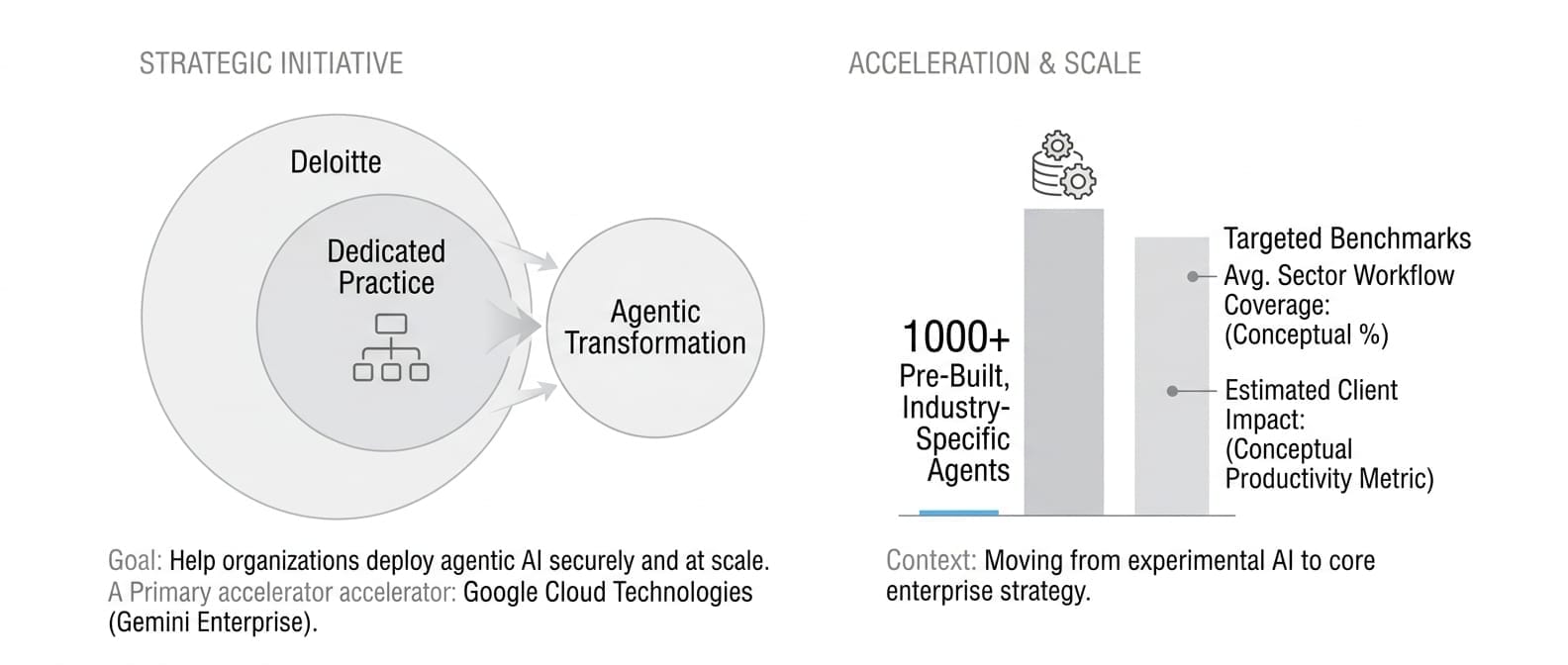
Deloitte announced today a major expansion of its alliance with Google Cloud by establishing a dedicated, end-to-end agentic transformation practice, incorporating market-leading Google Cloud technologies - including Gemini Enterprise - to help power industry and sector transformation. Building on Deloitte's AI experience across Fortune 500 clients and its own business, this expanded collaboration is designed to deliver transformation services for organizations looking to deploy agentic AI securely and at scale.
Deloitte continues to bring Gemini Enterprise into organizations and has developed a growing library of over 1000 pre-built, industry-specific AI agents intended to accelerate AI adoption across heart-of-the-business workflows.
Impact: When a major consulting firm creates a dedicated practice around AI agents and builds 1,000+ pre-built agents, it signals that agentic AI has moved from experimental to core enterprise transformation strategy.
Product Launches
Google's Eighth-Generation TPUs Target Agentic Workloads
Google also announced eighth-generation TPUs with two specialized chips: TPU 8t for training and TPU 8i for inference. Google said both chips are coming soon and are designed for workloads ranging from model training and agent development to large-scale inference.
Infor Velocity Suite Adds Industry-Specific AI Agents
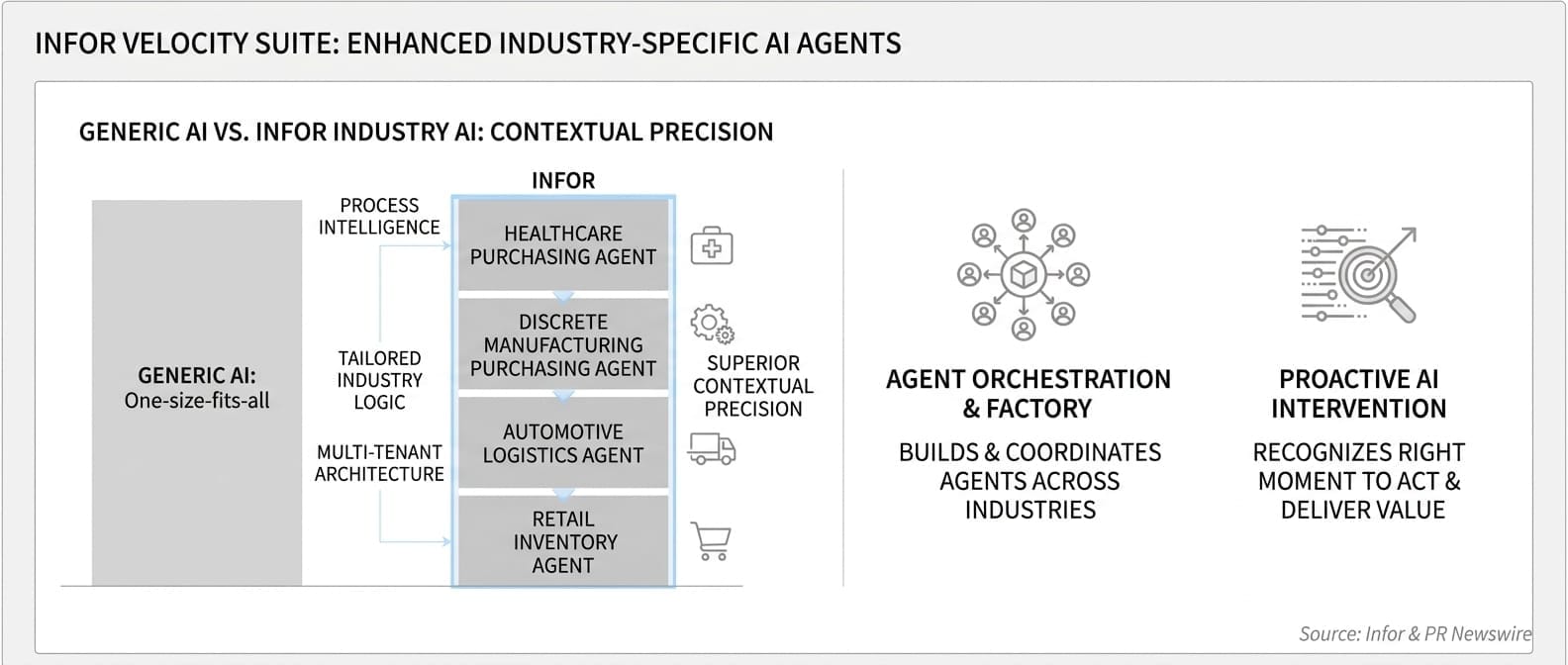
Industry AI Agents: Infor Industry AI Agents, Agent Orchestration, and Agent Factory are now included in Infor Velocity Suite, giving customers access to agents built for their industry that recognize the right moment to act and deliver value.
Our industry-specific platforms, multi-tenant architecture, and deep process intelligence give our agents a level of contextual precision that generic AI simply cannot replicate. A purchasing agent at a healthcare provider and one at a discrete manufacturer aren't the same agent, they shouldn't be," said Kevin Samuelson, CEO, Infor.
Funding & Deals
Era Raises $11M for AI Device Software Platform
While all these devices are experimental, the common thread is Era's platform, which allows hardware makers to create AI agents and orchestrations for AI devices. The company doesn't want to create devices itself, but aims to enable others to do so by providing a software layer that could handle tasks like customized voice creation or adding intelligence to a classic device, such as headphones.
The startup has raised $11 million in funding to date. This includes a $9 million seed round led by Abstract Ventures and BoxGroup, with participation from Collaborative Fund and Mozilla Ventures.
Series Raises $5.1M for AI-Powered Social Networking
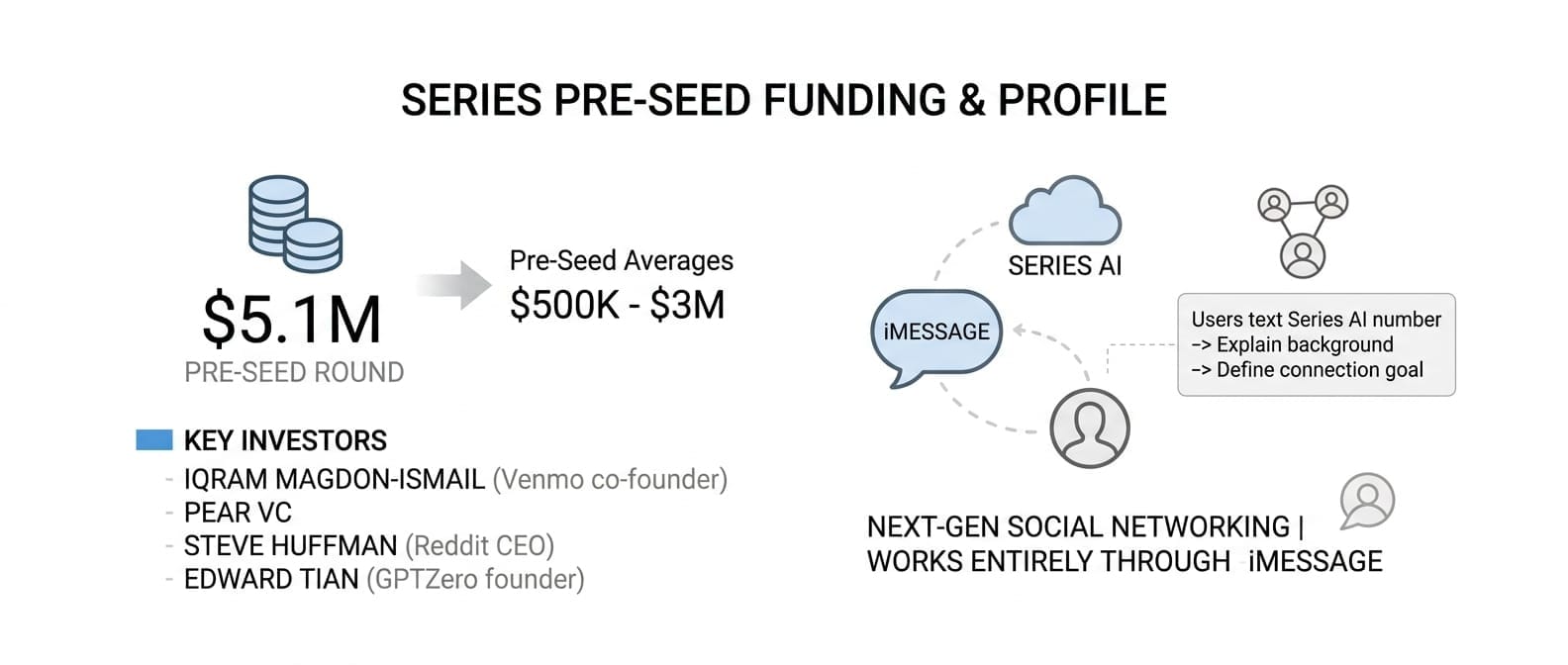
Series, a social networking app, announced that it raised a $5.1 million pre-seed round, with investors including Venmo co-founder Iqram Magdon-Ismail, Pear VC, Reddit CEO Steve Huffman, and GPTZero founder Edward Tian. The company was founded early last year by Yale students Nathaneo Johnson and Sean Hargrow, both still seniors at the university.
Series considers itself to be a next-generation social networking platform, rather than an AI app, and hails itself as one of the first to work entirely through iMessage, Johnson, the CEO, told TechCrunch. Users text a phone number (Series AI) on iMessage, explaining who they are and who they are looking to connect with.
Tomorrow's Watch List
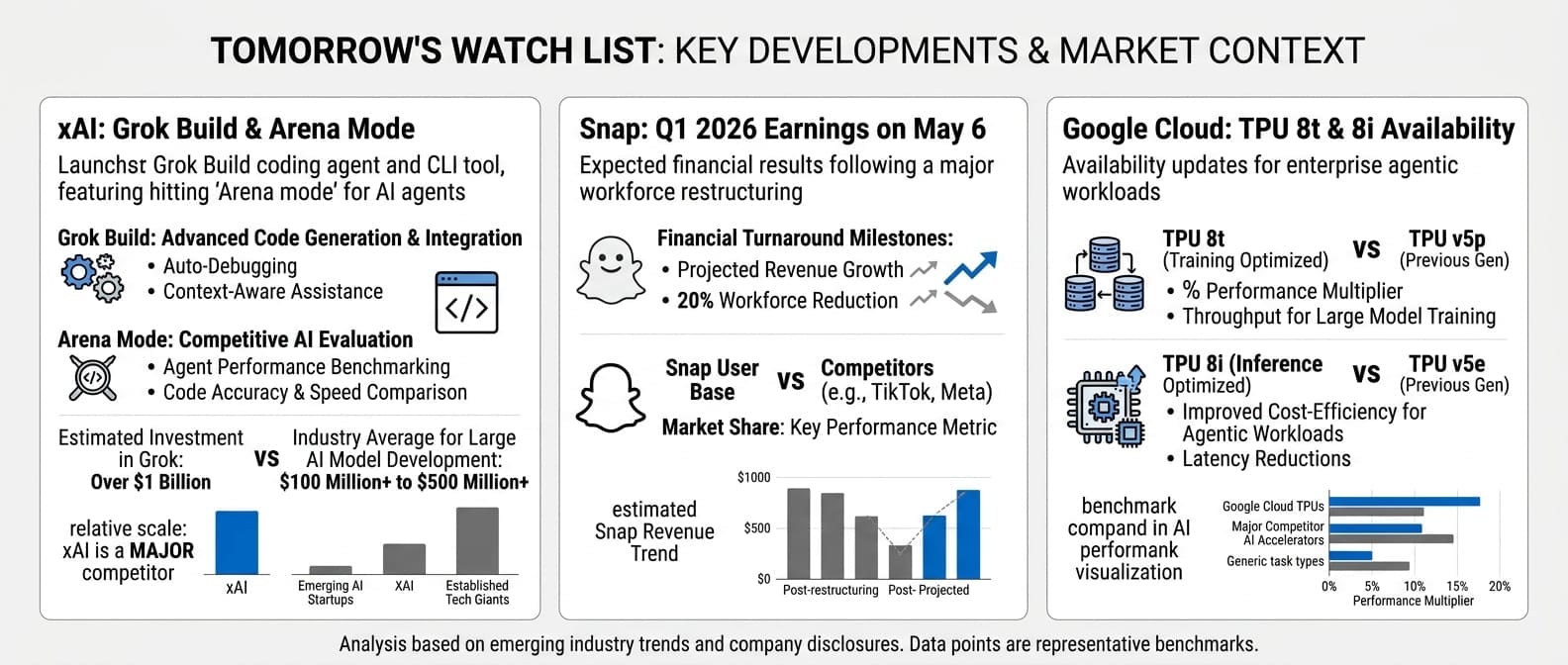
- xAI's Grok Build coding agent and CLI tool launch expected this week, featuring "Arena mode" that pits multiple AI agents against each other
- Snap's Q1 2026 earnings on May 6 will provide first financial results following major workforce restructuring
- Google Cloud's TPU 8t and TPU 8i availability updates for enterprise agentic workloads
*Related reading: Check out this week's [Deep Insights analysis] for strategic context on these developments.