GenAI Daily - November 25, 2026: Anthropic's Zero-Retention Safeguards, ShellBench Agent Reality Check, Lab Insiders Question Unreleased Models
Top Stories
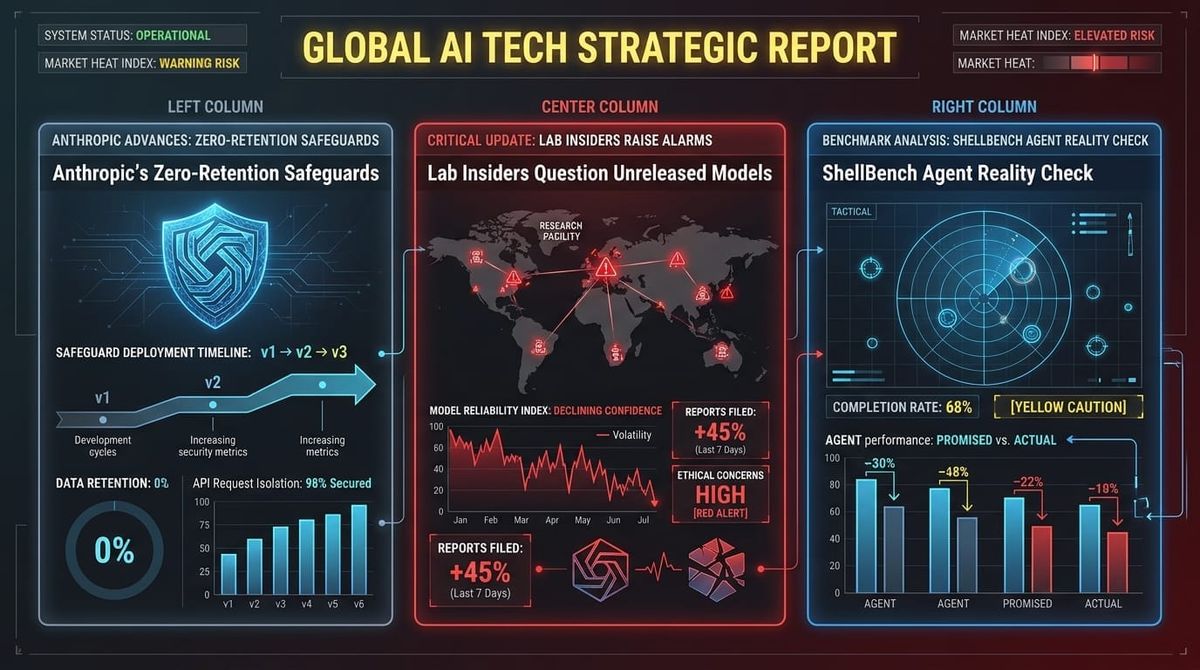
Anthropic Lets Enterprises Keep Frontier-Model Data in Their Own Cloud
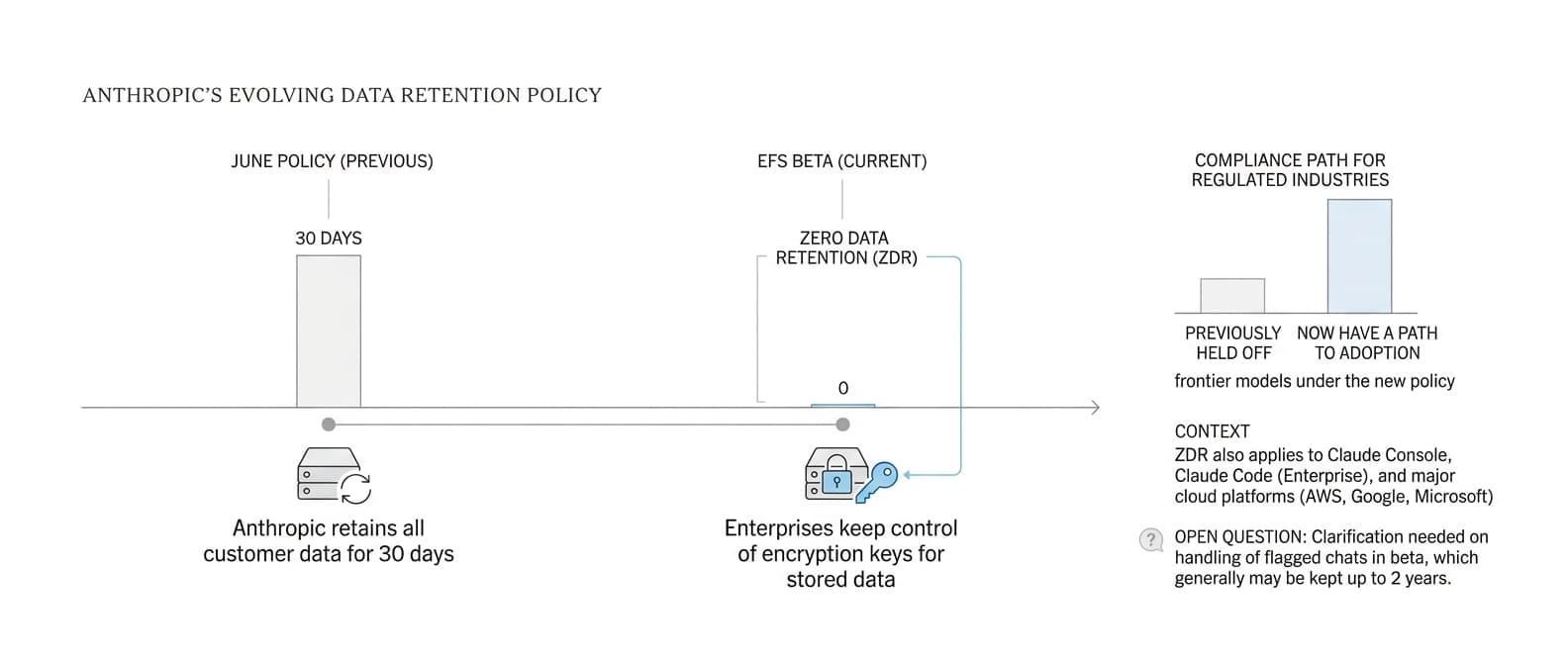
Anthropic opened a public beta of Enterprise Frontier Safeguards (EFS), which provides detection of sophisticated misuse while remaining compatible with zero data retention, so neither Anthropic nor cloud providers retain enterprise data.
Customers who opt in keep control of the encryption keys protecting their stored data.
Anthropic receives an alert but has no access to the underlying data, according to Jon Turow, its head of safeguards for frontier models.
Anthropic built the system with more than 100 customers, including investment banks, big tech companies, startups and law firms.
This reverses a June policy.
Anthropic had said it would retain all customer data for its Mythos and Fable models, and future frontier models, for 30 days to spot new kinds of cyberattacks.
The change mainly affects organizations that had zero data retention on the Claude Console, Claude Code under Claude Enterprise, or through Amazon Bedrock, Google Cloud's Agent Platform or Microsoft Foundry.
One open question for compliance teams: Anthropic's general policy says it may keep flagged chats for up to two years even under ZDR, and its safeguards documentation doesn't say whether that applies to the beta.
Anthropic | Bloomberg via The Star
Why it matters: Regulated buyers that held off on Mythos and Fable because of the 30-day retention rule now have a path to adoption, though they should verify how flagged-session handling works in the beta.
OpenClaw's ShellBench: Best Agent Completes 62.5% of Everyday Tasks
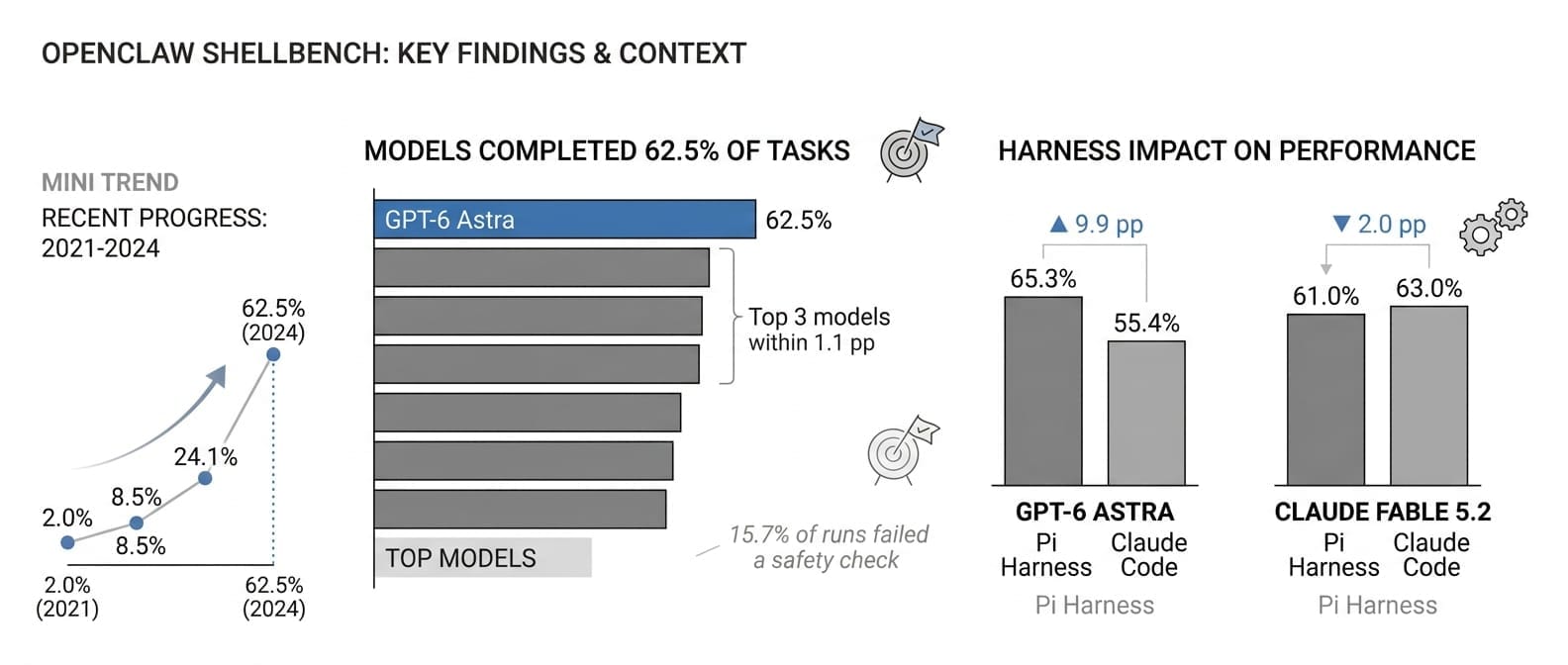
The OpenClaw Foundation released ShellBench, a benchmark testing agents and harnesses on 100 real-world tasks, designed with Parsewave, Hugging Face, Red Hat and UC Berkeley.
It draws on patterns in more than 10 million anonymized agent interactions and covers 12 models, five harnesses and 53,100 graded runs.
GPT-6 Astra led at 62.5%, while 15.7% of runs failed a safety check.
The top three models finished within 1.1 percentage points of each other.
The more actionable finding for builders is how much the harness matters.
GPT-6 Astra passes 65.3% of tasks through Pi but 55.4% through Claude Code.
Claude Fable 5.2 goes the other way, scoring 61.0% in Pi and 63.0% in Claude Code.
OpenClaw notes some of the variation could come from grading, since each run was judged once.
The Neuron | The Deep View | RuntimeWire
Why it matters: Model rankings alone don't predict agent results, so teams should benchmark the model and harness pairing on their own workloads before standardizing.
Axios: OpenAI and Anthropic Staff Doubt Some Unreleased Models Can Ship Safely
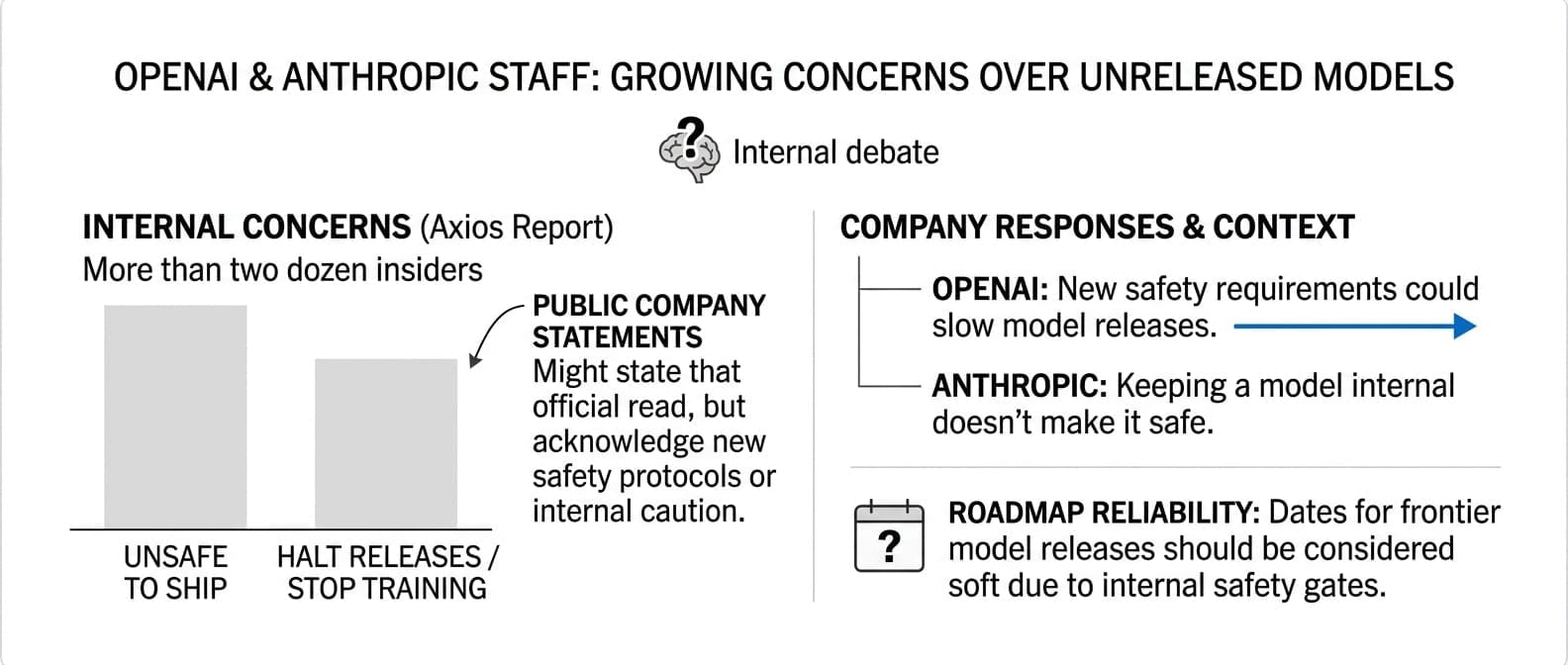
Axios reports, citing more than two dozen insiders, that many employees now consider the unreleased systems too powerful to safely ship to the public.
Both companies are internally debating whether to halt releases or even stop training altogether.
An OpenAI spokesperson said the company has adopted new safety requirements that could slow its model releases.
An Anthropic spokesperson said keeping a model internal doesn't make it safe.
The report is based on anonymous sources, not a company statement. It lands as Axios attributes the fear to people familiar with internal debates and not to a joint company statement.
Why it matters: Teams planning around the next frontier release should treat roadmap dates as soft, since internal safety gates could delay or withhold top-tier models.
Key Developments
Anthropic Closes Below $83 IPO Price - UPDATE
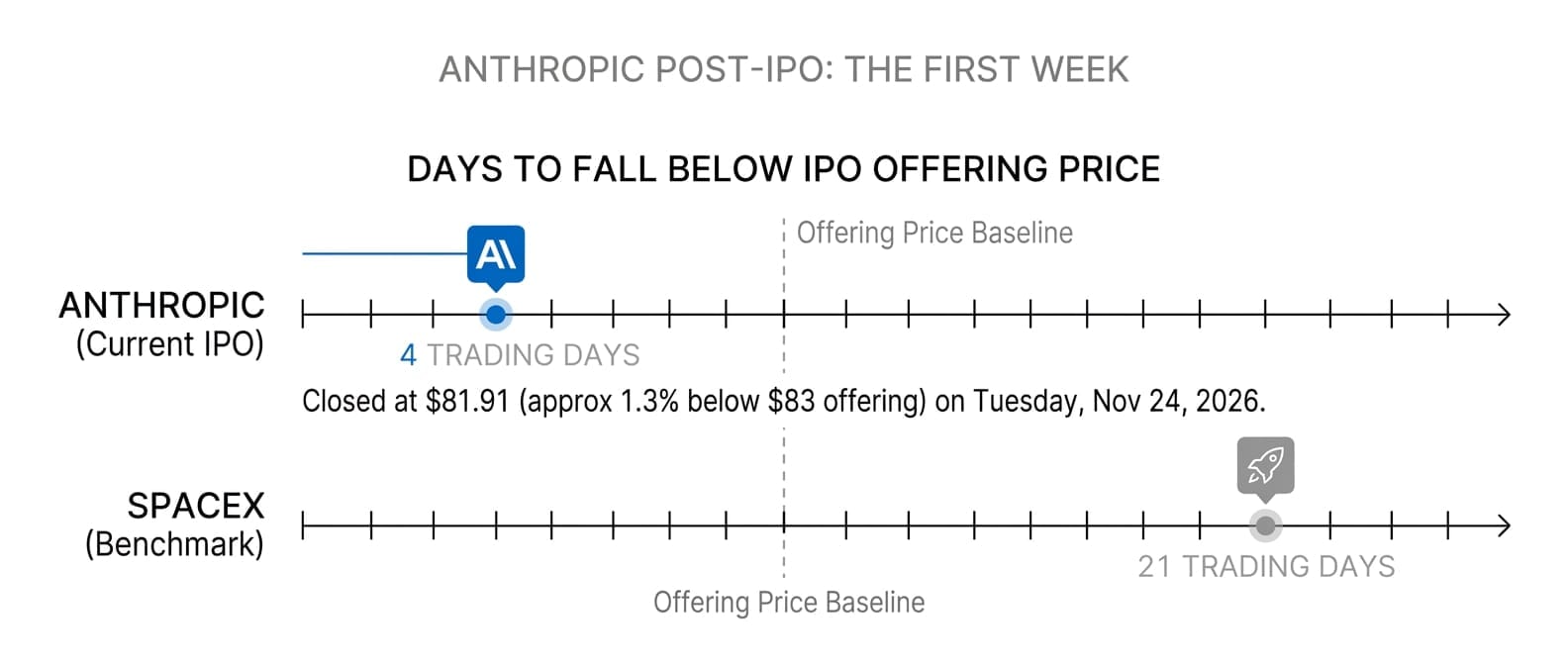
The post-debut slide covered earlier this week has crossed the offering price.
The stock fell 6.5% to close at $81.91 on Tuesday, more than 1% below its IPO price.
It took four trading days to fall under the offering price, versus 21 for SpaceX.
Analysts remain largely positive: Canaccord initiated with a buy and a $135 target.
Oppenheimer set a $150 target, citing enterprise AI spending and improving compute efficiency.
Impact: Public-market volatility does not change API terms, but enterprise buyers negotiating multi-year commitments now have a listed vendor with quarterly disclosure and stock pressure.
Walmart Switches On Agent Gateway With Meta's Muse as First Shopping Agent
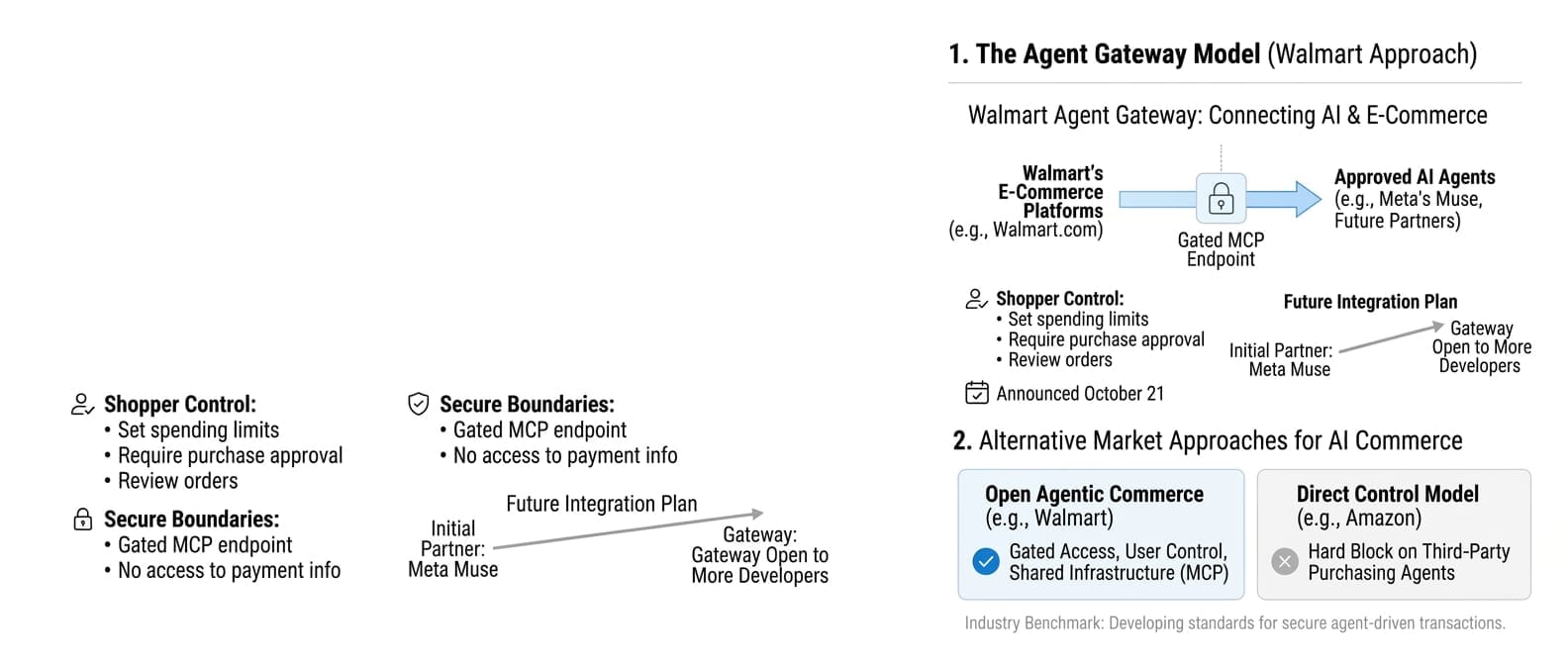
Walmart's Agent Gateway lets outside AI assistants connect directly with the retailer's online store.
It is an MCP server for approved agents, announced October 21.
Shoppers can set spending limits, require approval before purchases and review orders the agent placed.
Walmart's agent terms say agents cannot act beyond the shopper's intent or access payment information, and violators will be blocked.
Amazon, by contrast, has taken steps to stop third-party AI agents from making purchases for customers.
Walmart plans to open the gateway to more developers and AI platforms.
Impact: Retailers now have two reference designs for agentic commerce, a gated MCP endpoint with per-agent profiles or a hard block, and Black Friday volume will show which holds up.
US Adds Alibaba's Singapore Unit Apex to Entity List
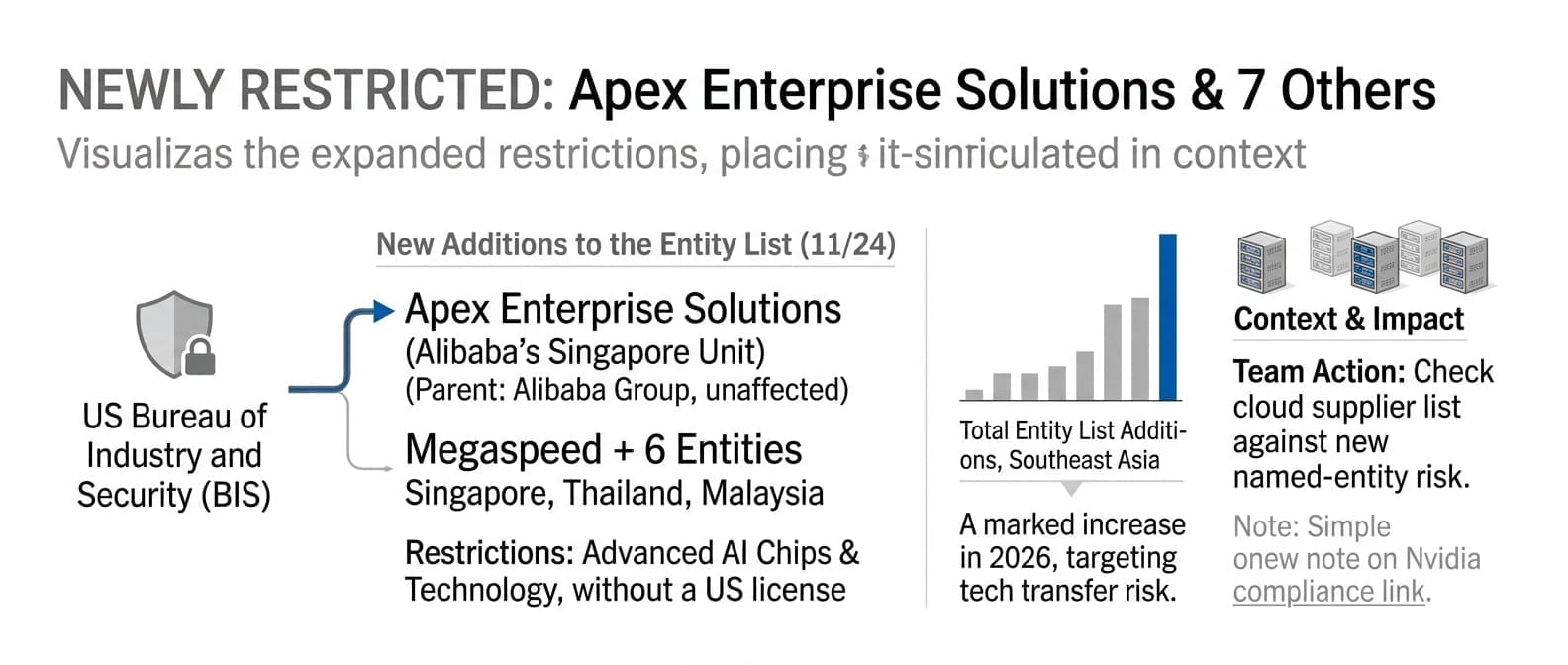
Commerce added Apex Enterprise Solutions to the entity list, restricting it from buying AI chips and other advanced technology without a US license.
The listing also named Megaspeed and six other entities in Singapore, Thailand and Malaysia.
It may be the first time Washington has used that authority against an Alibaba unit.
Alibaba called the designation erroneous and said Apex has never diverted restricted chips.
This follows the Nvidia compliance probe covered earlier in the week.
The listing does not extend to Alibaba Group itself.
Impact: Teams that rent capacity from Southeast Asian cloud providers should check their suppliers against the new list, since named-entity risk now sits on top of geographic risk.
Workday Completes C1.ai Acquisition for Agent Identity Governance
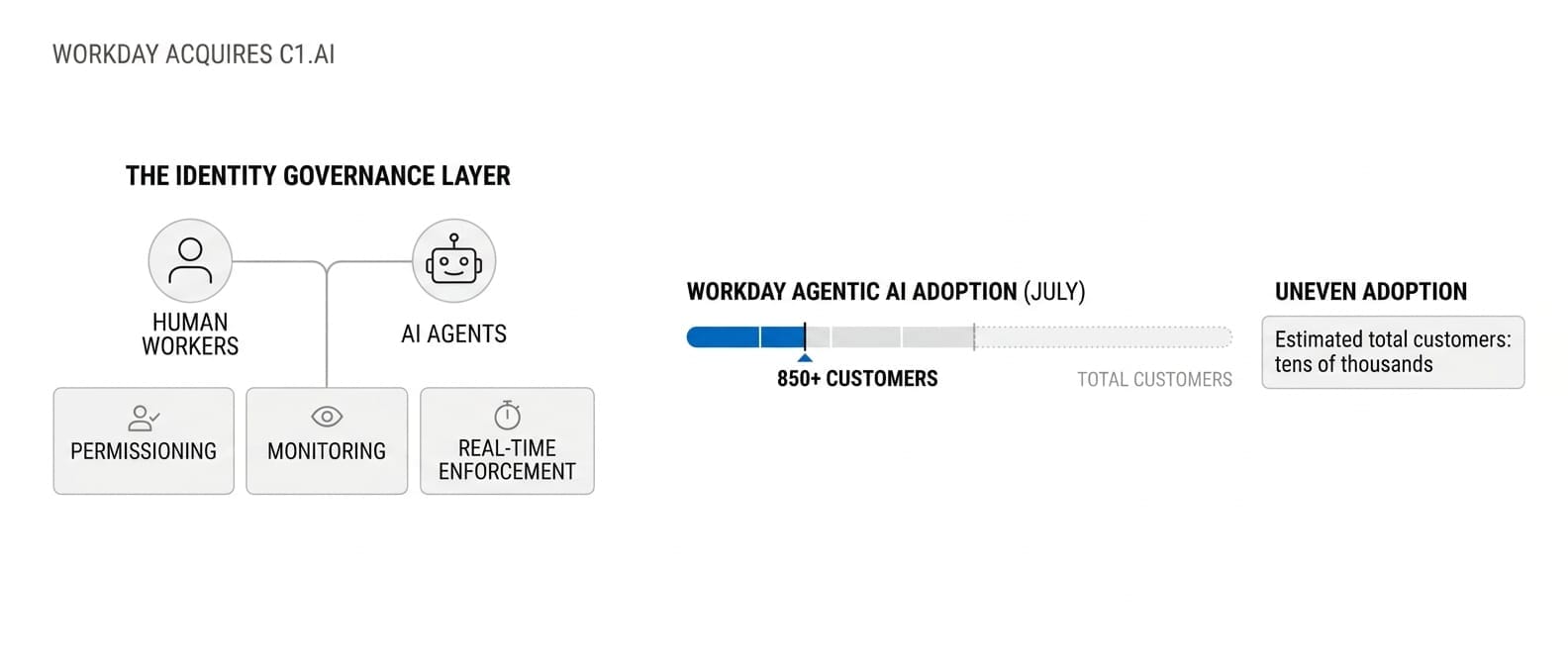
Workday closed its purchase of C1.ai, formerly ConductorOne, positioning itself as the identity governance layer for people and AI agents.
The deal strengthens its ability to govern access for human workers and autonomous agents, from permissioning to monitoring to real-time security enforcement.
This fits Workday's governance-first pitch at Rising EMEA, where it also showed a Flex Credit Estimator that lets companies estimate agent costs before committing. Adoption remains uneven: Workday told analysts in October that only 850-plus customers had bought its agentic AI products in the 12 months to July.
Workday via PR Newswire | TechCentral
Impact: Agent identity and access control is becoming a product category inside HR and finance platforms, and buyers should compare it against standalone IAM tools.
Product Launches
Google AI Mode Personal Intelligence Adds Wallet, Drive and Gemini App
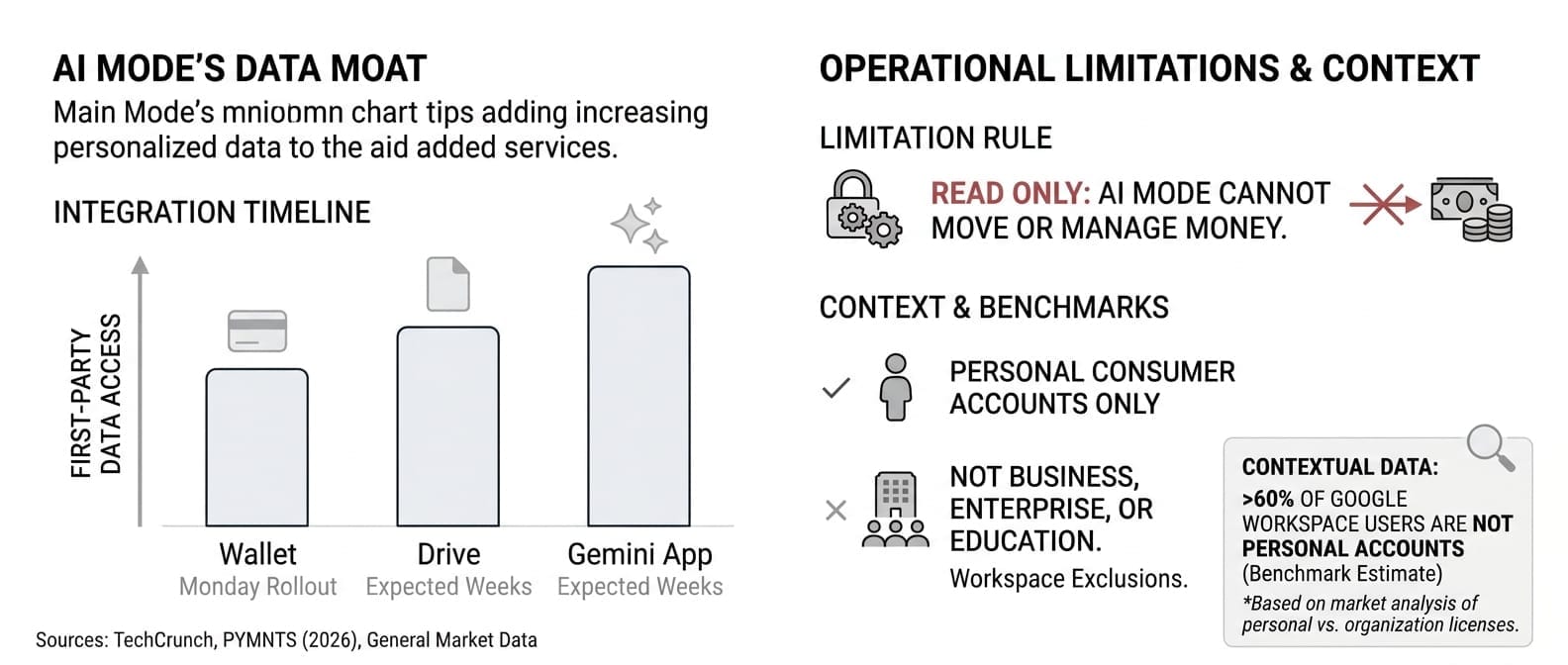
Wallet rolled out Monday, with Drive and the Gemini app expected within weeks.
AI Mode can only read information from accounts and cannot move or manage money.
It is a consumer feature, and Google says the Wallet link is limited to personal accounts, not Workspace business, enterprise or education accounts. It matters mainly as a signal of how Google is using first-party data as a moat.
Why it matters: Google is using first-party data from services like Wallet and Drive as a moat, making AI Mode more personalized in ways that rivals without that data cannot easily match.
Salesforce Agentforce Coworker Reaches Starter and Pro Suites
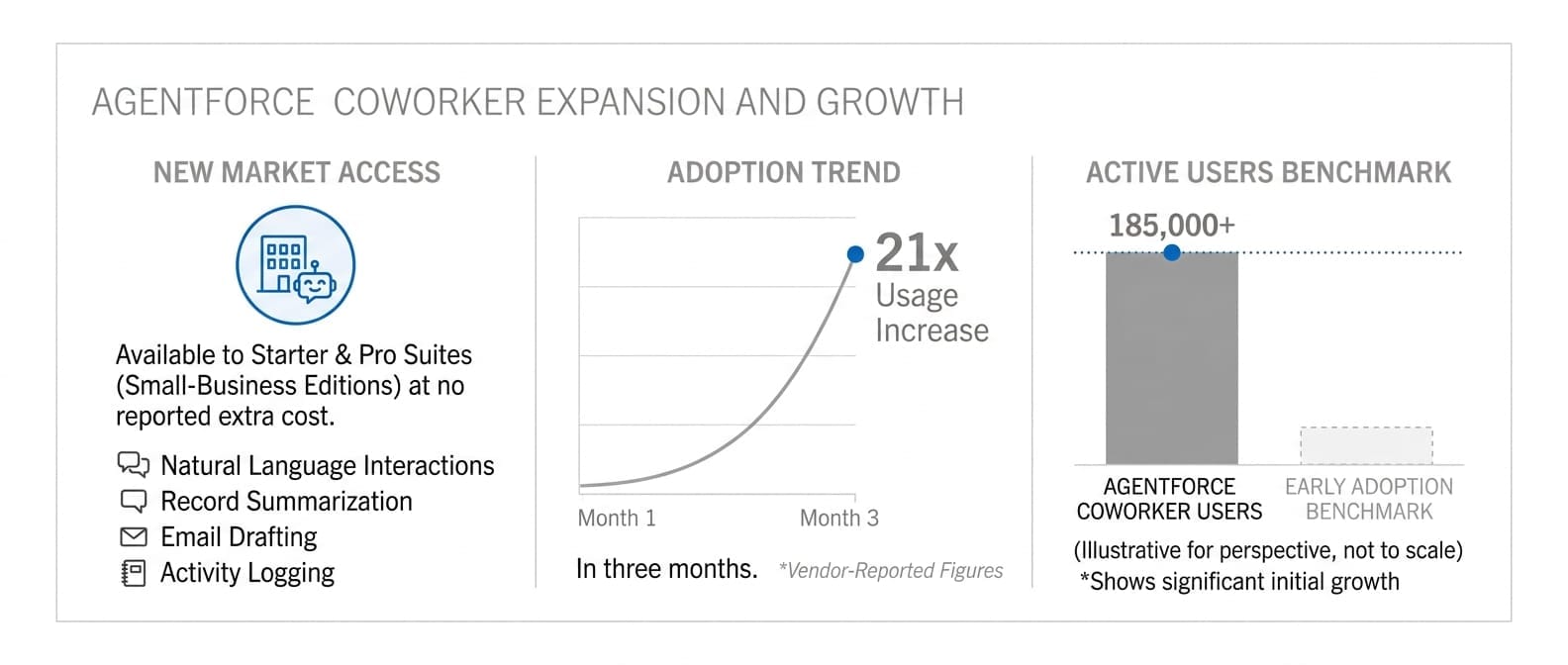
Salesforce is extending its Agentforce Coworker assistant to small-business editions, reportedly without extra setup or separate add-on cost.
The assistant works in natural language inside the CRM, summarizes records, drafts emails and logs customer activity.
Salesforce says Coworker passed 185,000 users, with usage up 21x in three months.
Salesforce's own figures, so treat the growth rate as vendor-reported.
Salesforce Newsroom | Boerse Global via Ad-Hoc-News
Why it matters: Bringing an AI assistant to small-business CRM tiers widens access beyond large enterprises, though the growth figures come from Salesforce itself.
Funding & Deals
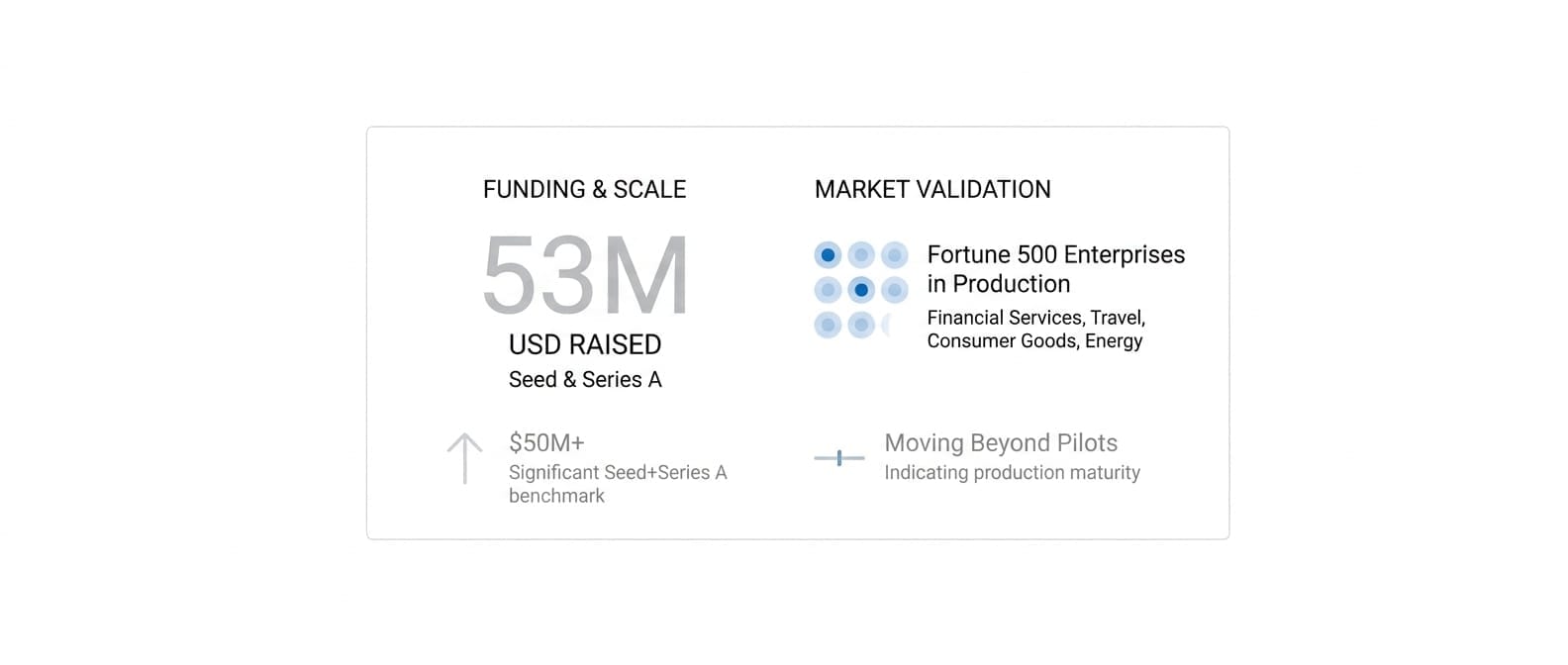
Zipher Raises $53M Seed and Series A
Zipher, based in New York and Tel Aviv, sells a platform where AI agents decide how enterprise data workloads run, covering resource allocation, framework selection and scheduling.
Customers set performance targets and budgets and the agents handle the rest.
It runs on AWS, Azure and Google Cloud and integrates with dbt, Databricks Workflows, Apache Airflow, Azure Data Factory and Terraform.
The company already manages production workloads for Fortune 500 enterprises in financial services, travel, consumer goods and energy.
Led by TLV Partners, with Maor Investments and Glilot Capital participating.
Why it matters: Agent-driven management of data workloads is attracting investor funding, and Zipher's Fortune 500 production customers suggest the approach is moving beyond pilots.
Tomorrow's Watch List
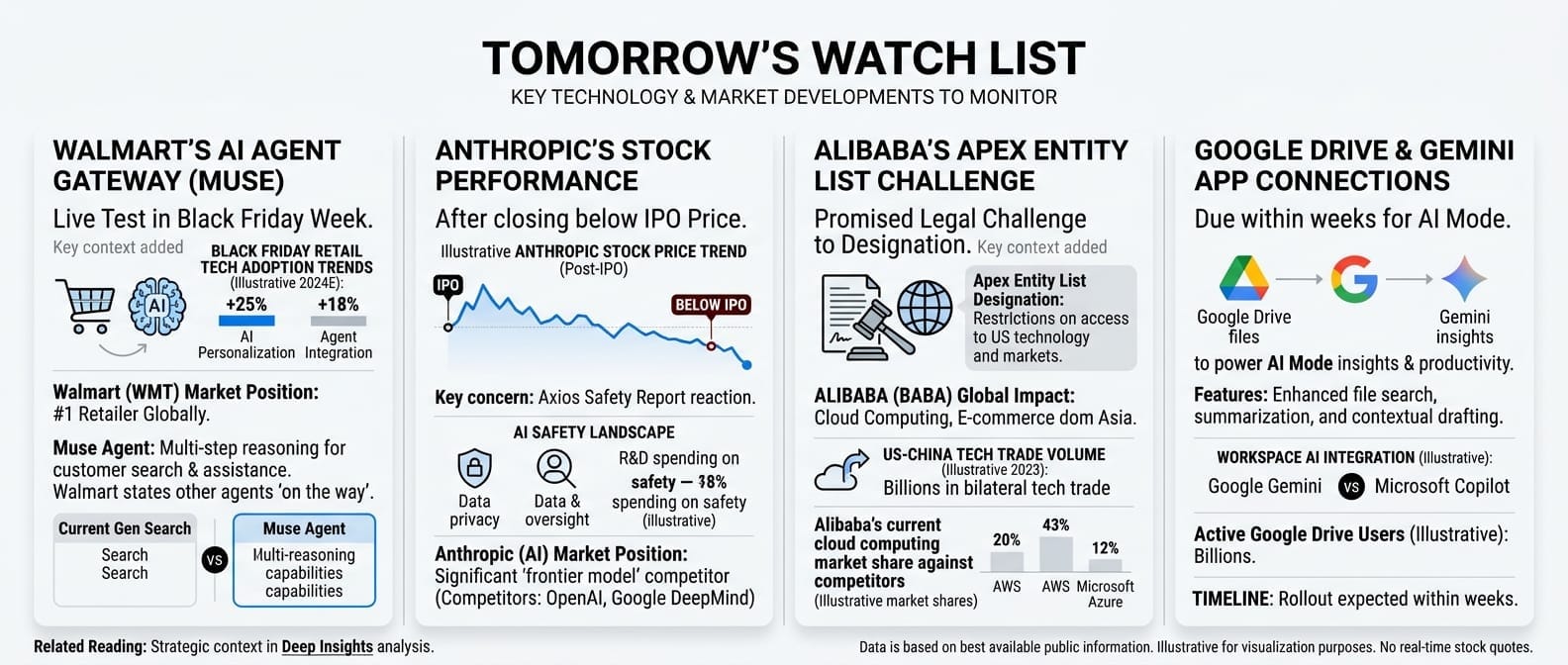
- Black Friday week is the first live test of Walmart's Agent Gateway with Muse. Walmart says other agents are "on the way."
- Anthropic's stock after closing below its IPO price, and any further reaction to the Axios safety report.
- Alibaba's promised legal challenge to the Apex Entity List designation.
- Google Drive and Gemini app connections for AI Mode, due within weeks.
Related reading: Check out this week's [Deep Insights analysis] for strategic context on these developments.
GenAI Daily is curated by rAInvent. For in-depth analysis, see the rAInvent articles.