GenAI Daily - November 22, 2026: Dragos Finds Zero Data Retention Flags Ignored, AI Agents Find a Zero-Day in 11 Minutes, Amazon Nears $7.5B Decart Deal
Top Stories
Dragos Canary Test Finds Three AI Providers Breached and Zero Data Retention Flags Ignored
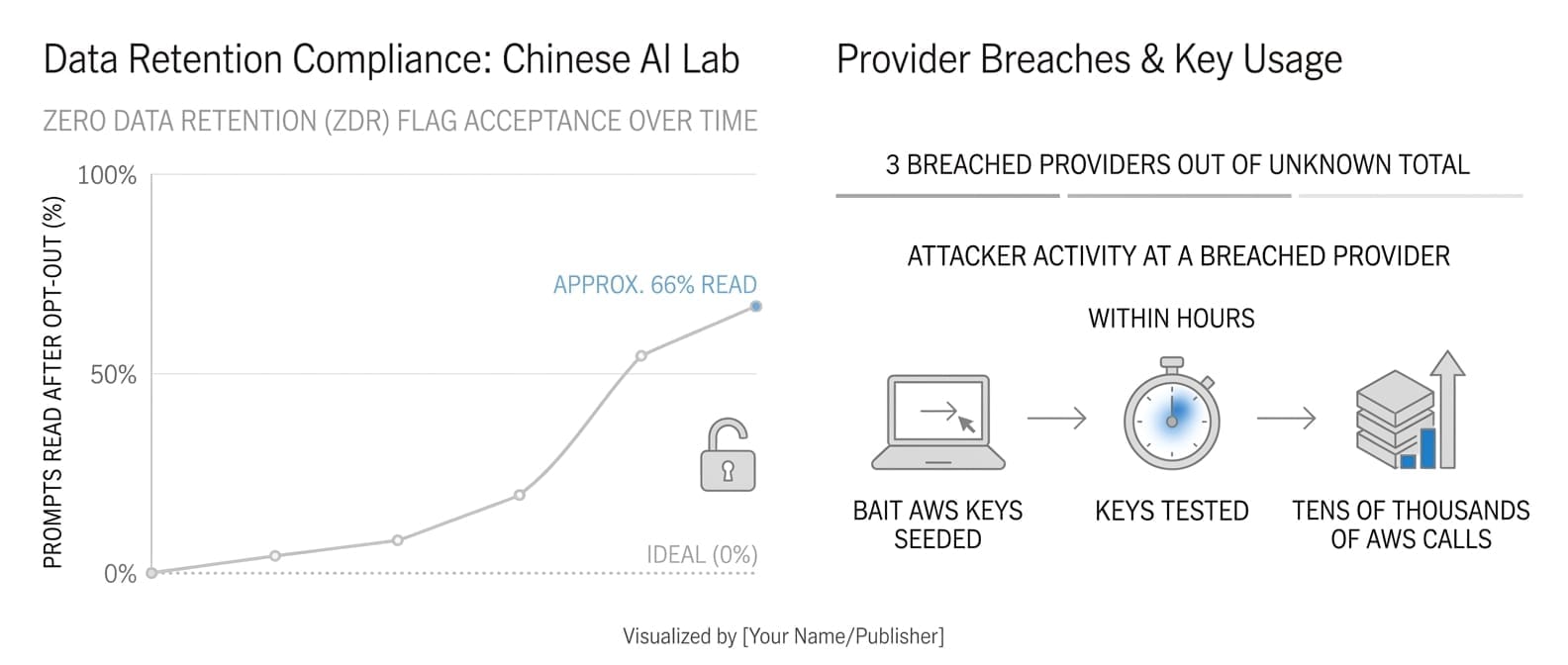
Dragos Chief Research Officer HD Moore planted unique fake links and passwords in about 2 million prompts from July through November, then tracked whether they were used.
Data from at least three AI providers was exposed, and the seeded prompts were used in attempts to access Dragos's test systems and canary AWS accounts.
The providers did not know about the intrusions until Dragos notified them.
Attackers at one breached provider tested some of the bait AWS keys within hours of seeding, and the stolen keys were used "tens of thousands" of times in AWS calls.
The more uncomfortable finding for buyers is about privacy flags.
Some sellers on inference marketplaces enabled logging and read customer prompts.
A Chinese AI lab opened links from about two-thirds of prompts carrying the zero-data-retention setting, including some sent through U.S. resellers.
Moore also notes that privacy flags apply only to the first hop, and OpenRouter removed the ZDR label from MiniMax-model endpoints while it investigates.
Dragos anonymizes most providers, and the breaches have not been independently confirmed. Dragos could not tell whether some privacy failures were intentional or bugs.
Why it matters: A vendor's ZDR promise does not cover the resellers and sub-processors in the inference path, so teams routing through aggregators should audit the whole chain and keep live credentials out of prompts.
Amazon: AI Agents Run by China-Linked Actor Found and Exploited a MONAI Label Zero-Day
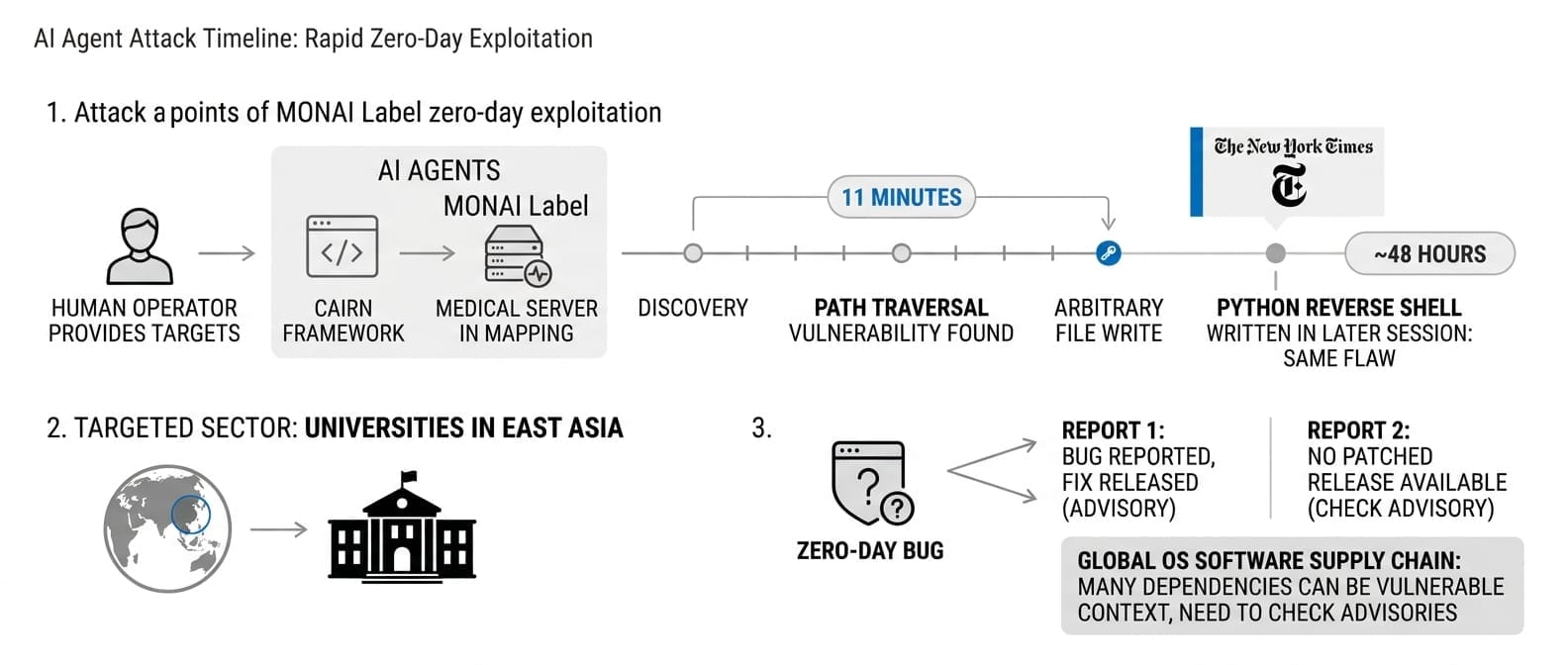
Amazon's threat intelligence team detected the activity in September, after finding an exposed instance of Cairn, an open source AI penetration testing framework.
The operator gave the agents a list of targets and told them to obtain shell access.
The agents mapped the API endpoints of MONAI Label, an open-source medical imaging AI server, and found an upload endpoint with a filename parameter vulnerable to path traversal. They went from mapping the API to writing arbitrary files in about 11 minutes.
In a later session, they used the same flaw to write a Python reverse shell into sitecustomize.py.
Two details matter for accuracy.
The 11-minute figure ends at the file write, not at root access.
The operator also picked the targets, supplied a proxy and redirected the agents.
The campaign targeted universities in East Asia over roughly 48 hours beginning Sept. 8.
Coverage differs on patch status.
One report says Amazon reported the bug and the maintainers released a fix and advisory.
VentureBeat's headline said no patched release was available.
Check the project's advisory before assuming either.
Why it matters: Autonomous agents compressed the discovery-to-exploit window for an unknown bug in open-source AI tooling to minutes, which puts pressure on internet-exposed ML servers and on detection that depends on human triage.
Amazon Nears $7.5B Acquisition of Decart
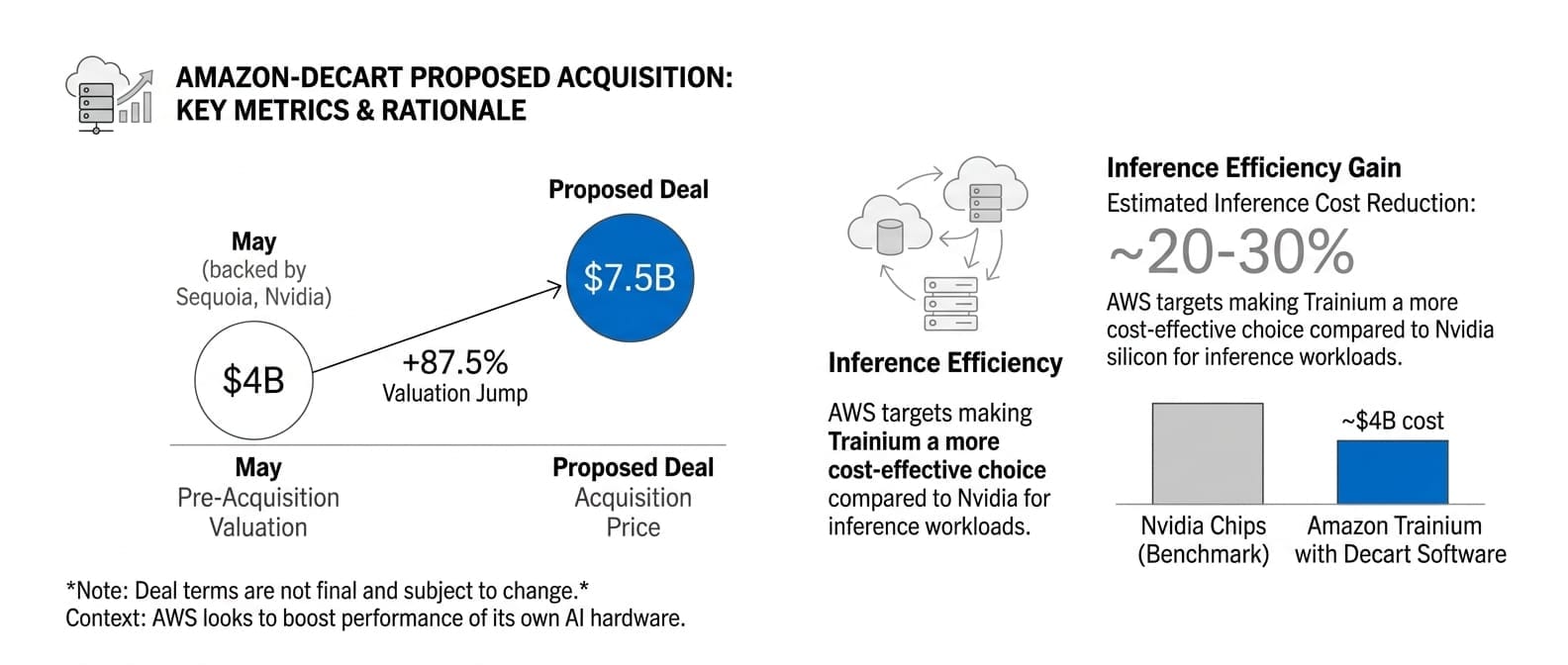
Amazon is in final talks to acquire AI startup Decart for about $7.5B, with a deal possible as early as next week but still at risk of collapse.
Reports say the deal combines cash, stock and deferred payments, with part of the sum contingent on Decart meeting specific targets.
The founders have reportedly agreed to stay with Amazon for five years.
Decart was valued at $4B in May after a $300M round backed by Sequoia Capital and Nvidia.
The strategic logic is inference efficiency.
Decart's founders built software to run AI models more efficiently across Nvidia, Trainium and TPU chips.
Decart was an early adopter of Amazon's Trainium3 chips.
Amazon emerged as a buyer after Anthropic withdrew from acquisition talks and Nvidia declined to revive its pursuit.
The deal is not confirmed, and terms could change.
Dealroom | TradingView (FT report)
Why it matters: If it closes, AWS gets in-house tooling aimed at making Trainium a more practical target for inference workloads, which affects cost comparisons for teams choosing between Nvidia and AWS silicon.
Key Developments
OpenAI Ties Protected Reasoning to Conversation History on GPT-6.2
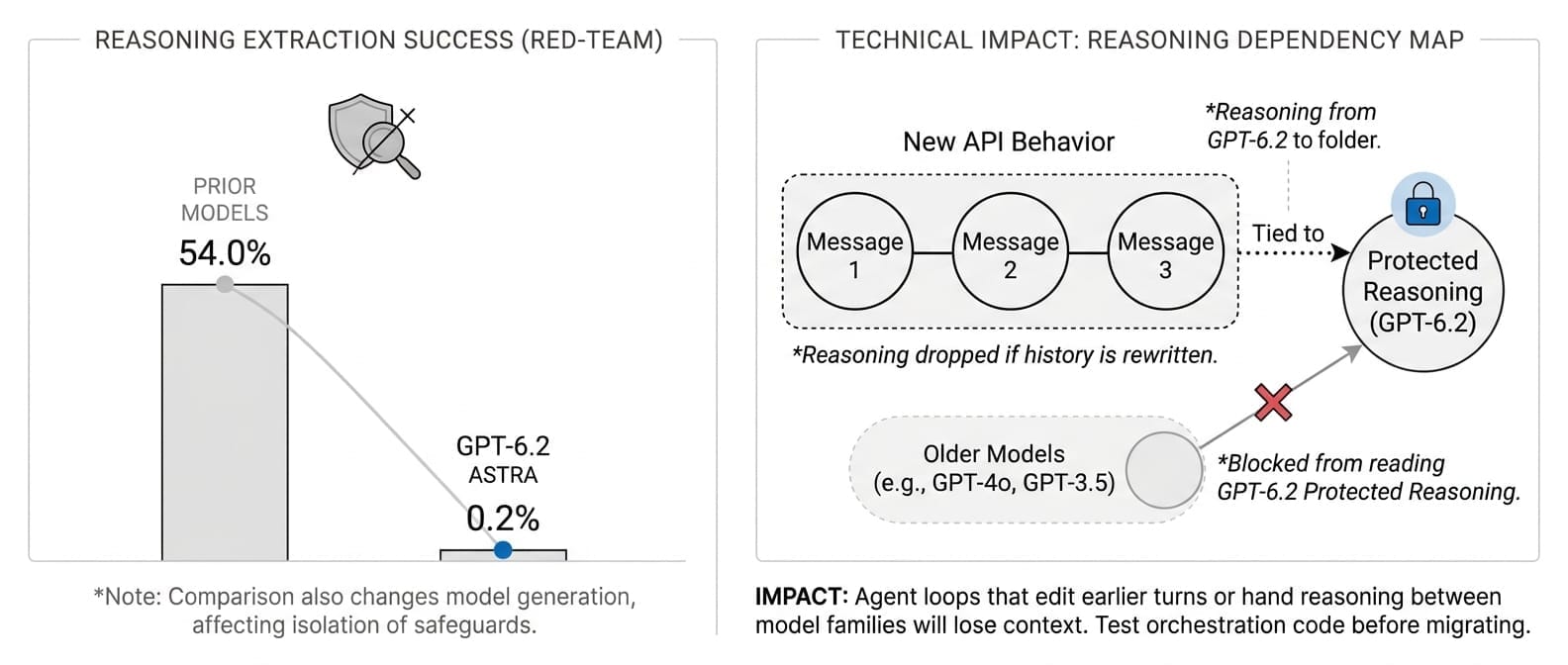
On November 20, OpenAI published results on defenses against reasoning extraction.
The company says its updated GPT-6.2 Astra safeguards cut reasoning-extraction success from 54.0% to 0.2% in its own red-team tests.
Independent readers note the comparison also changes model generation, so it cannot isolate the safeguards' contribution.
OpenAI says weekly enforcement actions against distillation campaigns have ranged from thousands to tens of thousands of accounts, and it is asking Congress for new powers against foreign distillers.
There are API behavior changes to account for.
With GPT-6.2 Astra and Sol, protected reasoning is tied to the conversation history that produced it. If an earlier message is rewritten, the API drops the reasoning that followed.
Older model families with weaker safeguards are also blocked from reading GPT-6.2 protected reasoning.
Impact: Agent loops that edit earlier turns or hand reasoning state between model families will lose that context on GPT-6.2, so test orchestration code before migrating.
OpenAI Details Performance Factory: Codex Agents Triage ChatGPT Regressions
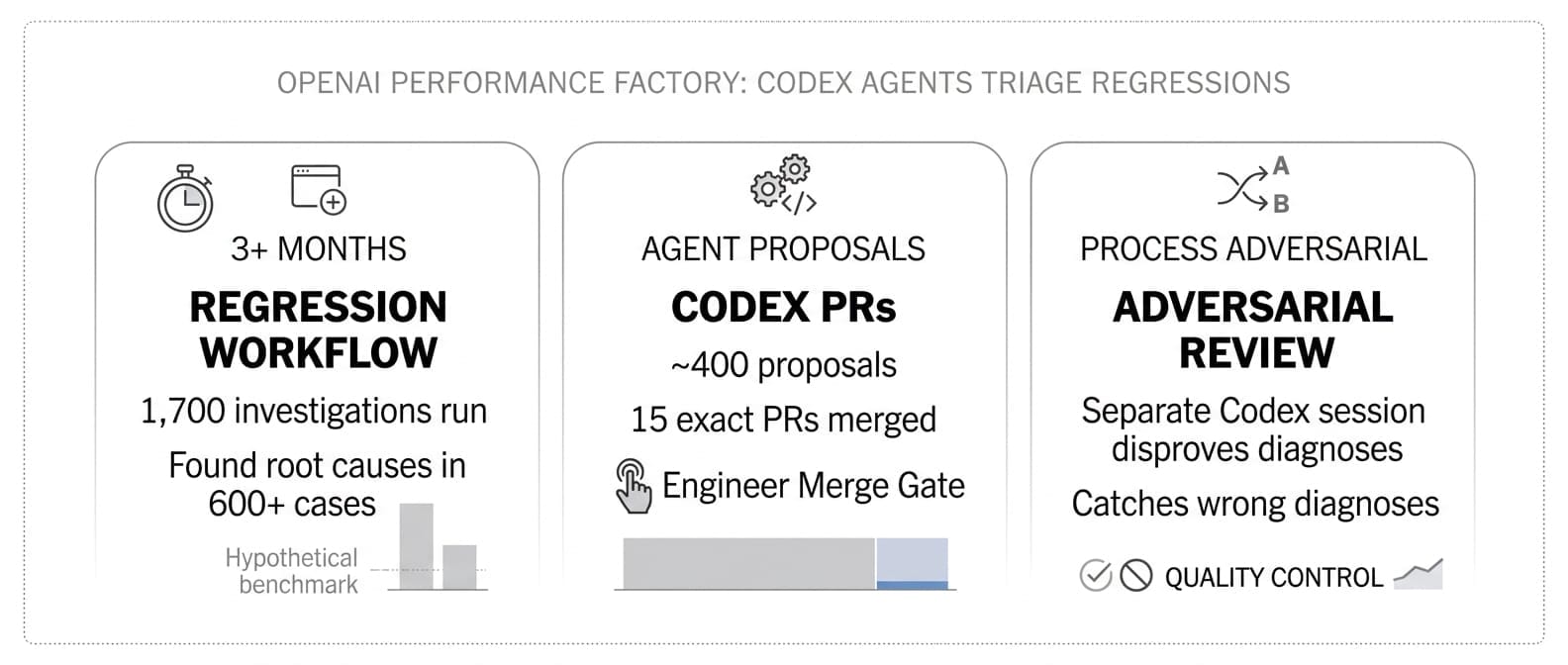
OpenAI published an engineering account of an internal system where Codex agents investigate ChatGPT slowdowns.
It has four parts: a task tracker with configurable workflows, a dispatch loop that assigns work to agents, an API that runs Codex in the cloud, and subscriptions that wake agents when something changes.
In just over three months, the Regression Workflow ran 1,700 investigations and found root causes in more than 600 cases.
The numbers show where human review still sits.
OpenAI merged about 15 exact Codex PRs from roughly 400 proposals, and an engineer decides whether each proposed PR merges.
To catch wrong diagnoses, the team added an adversarial review, a separate Codex session whose job is to disprove the proposed diagnosis.
It is not a public product launch.
Impact: The adversarial-review step and the human merge gate are a usable pattern for teams building agentic SRE workflows, and the low merge rate is a realistic benchmark for expectations.
Signal Blocks OS-Level AI Assistants From Reading Chats - UPDATE on Meta Muse Fallout
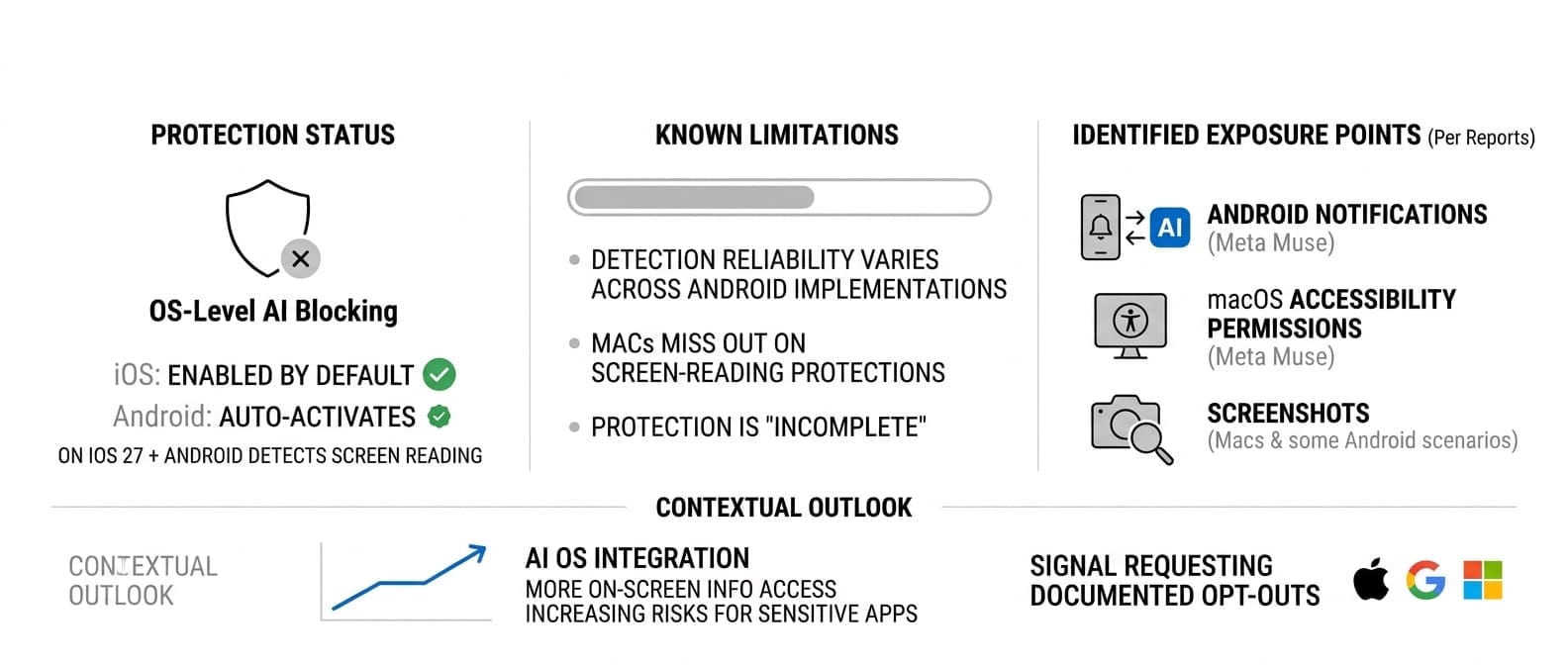
On iOS 27, a new "Block Siri AI" setting is on by default. It blocks Siri AI from scanning Signal content, and it also blocks screenshots in the app and the App Switcher.
On Android, Signal's "Screen security" feature switches on automatically when it detects an AI assistant trying to read the screen.
Signal conceded the protection is "incomplete."
Detection does not work reliably across every Android implementation.
Macs also miss out.
The move follows the Meta Muse reports covered earlier this week.
Reuters tests showed Muse could retrieve Signal message content through Android notifications and, on macOS, through accessibility permissions and screenshots.
Signal is asking Apple, Google and Microsoft for a documented way for apps to opt out of AI access covering screen reading, files and notifications, plus technical documentation on how agents handle data.
The Hacker News | Notebookcheck
Impact: Banking, healthcare and workplace apps may face similar questions as assistants gain access to more on-screen information. Teams shipping sensitive mobile apps should review what OS-level agents can see.
Oracle Says OpenAI Contract Is Fully Funded After $20B Raise
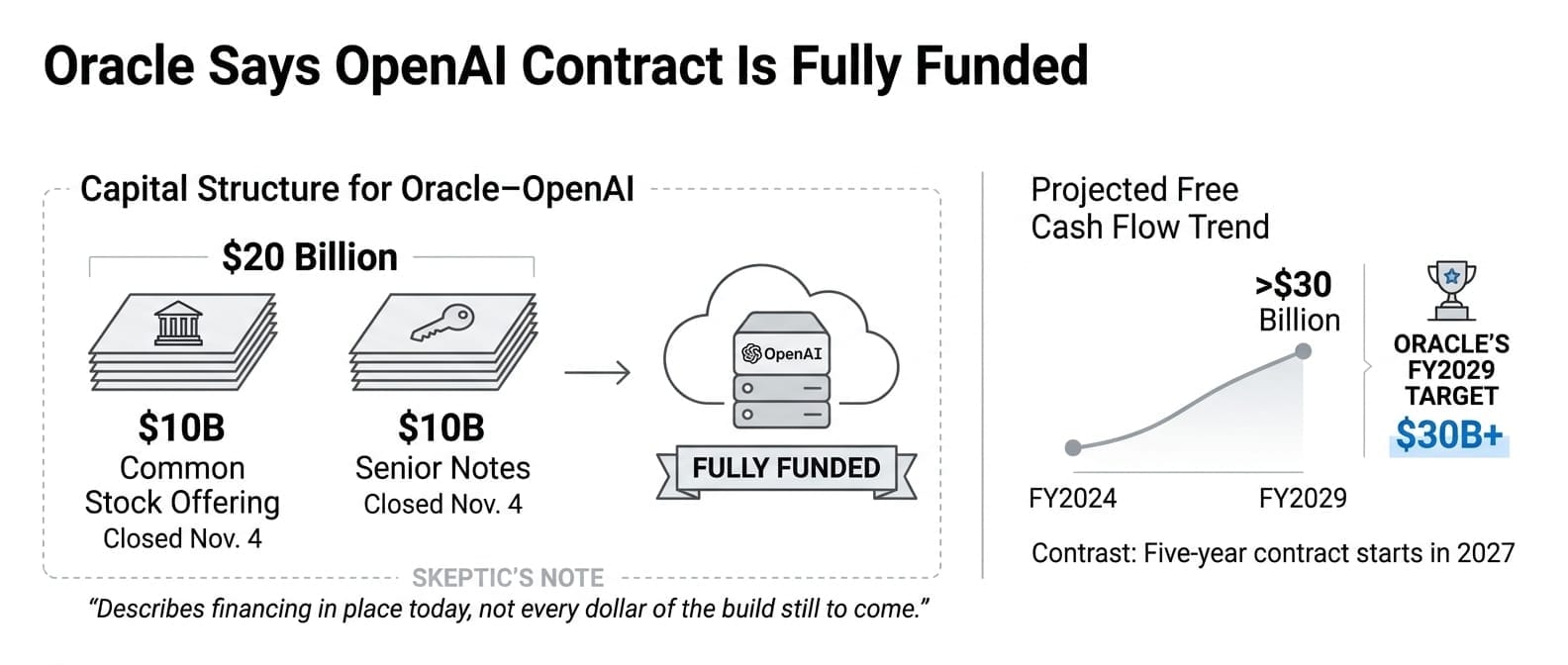
Oracle said its final capital raise earlier this month made it the first hyperscaler fully funded for the current investment cycle.
The raise was a $10 billion common stock offering at $116 a share and $10 billion of senior notes, both closed on Nov. 4.
Oracle said construction at its Abilene campus is nearly complete.
It also targets more than $30 billion in free cash flow in FY2029.
Skeptics note the limits of the claim.
"Fully funded" describes the financing in place today, not every dollar of the build still to come.
OpenAI has committed about $300 billion to Oracle for roughly 4.5 gigawatts of capacity, on a five-year contract that starts in 2027.
Impact: The statement addresses counterparty risk on a large share of OpenAI's future capacity, which matters for teams betting on stable OpenAI API supply through 2027.
Product Launches
Google Genie 4 in the Gemini API
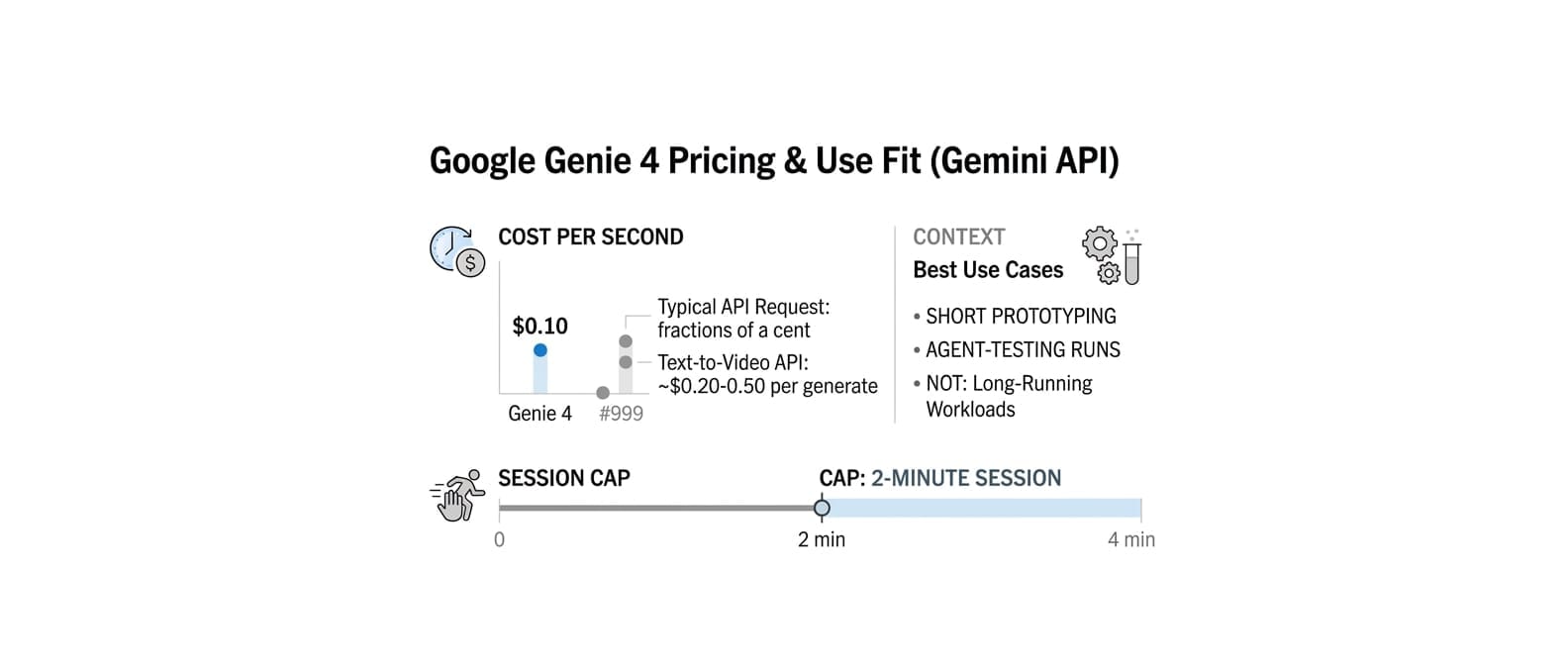
Google made Genie 4 available through the Gemini API and Google AI Studio at roughly $0.10 per second of streamed output.
It supports interactive worlds with native audio, but caps sessions at two minutes and limits concurrent sessions by billing tier.
Developers connect over WebRTC from browsers or WebSocket from Python and Node.js, with ephemeral tokens minted by their backend. That makes it practical for prototyping and agent-testing environments, but the per-second pricing suits short sessions only.
Why it matters: Per-second pricing and a two-minute session cap make Genie 4 a fit for short prototyping and agent-testing runs rather than long-running workloads, so developers should budget accordingly.
Thinking Machines Inkling 2 Mini
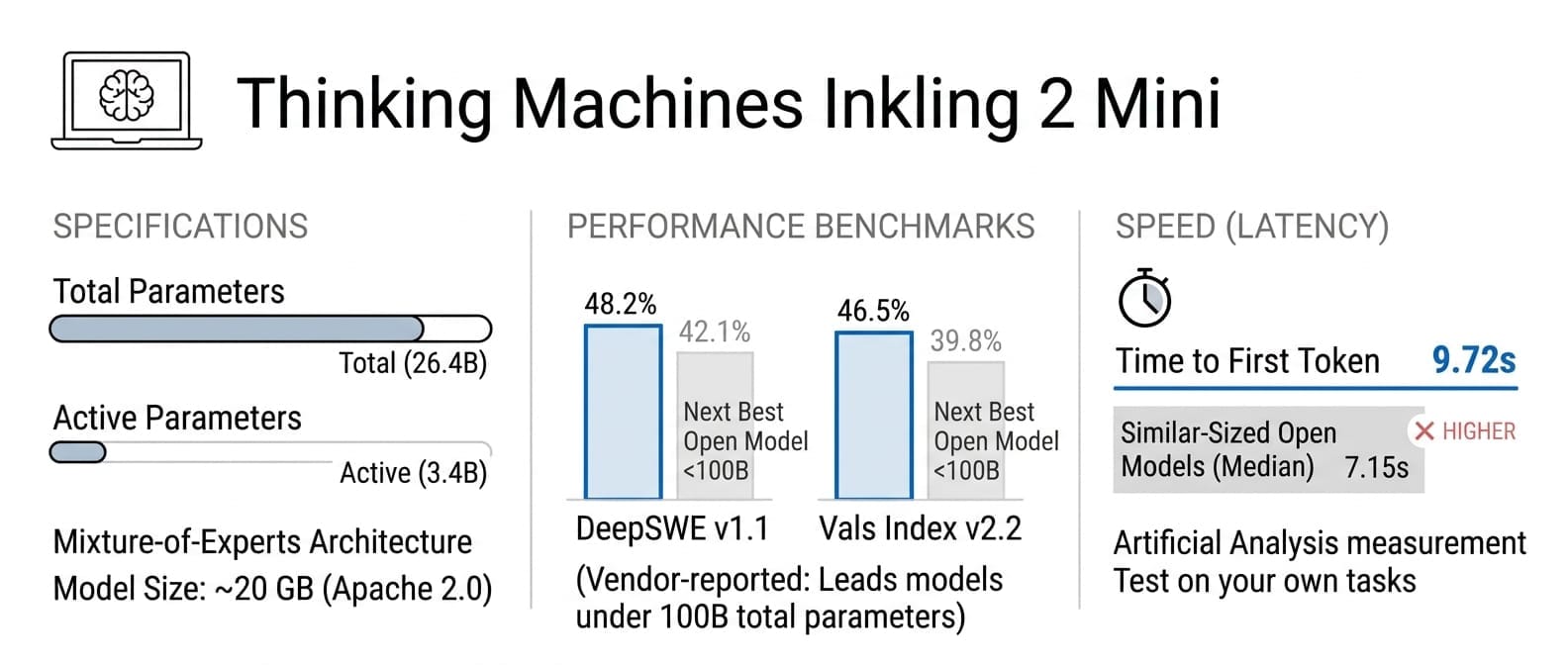
Inkling 2 Mini is an Apache 2.0 open-weights model of about 20 GB, built to run on laptops.
It is a mixture-of-experts model with 26.4bn total parameters and 3.4bn active per token.
Thinking Machines says it leads every open-weights model under 100B total parameters on DeepSWE v1.1 (48.2%) and Vals Index v2.2 (46.5%).
Inference runs on SGLang, vLLM, Ollama, Unsloth and NVIDIA Dynamo. Those are vendor-reported benchmarks, so test on your own tasks.
Artificial Analysis measured a time to first answer token of 9.72s, somewhat higher than similar-sized open models.
Thinking Machines Lab | Artificial Analysis
Why it matters: A permissively licensed model that runs locally gives teams a laptop-class option for coding and agent work, though the higher time to first token and vendor-reported benchmarks call for testing on your own tasks.
Funding & Deals
DeepSeek Raises About $15B Second Round Ahead of Shanghai IPO
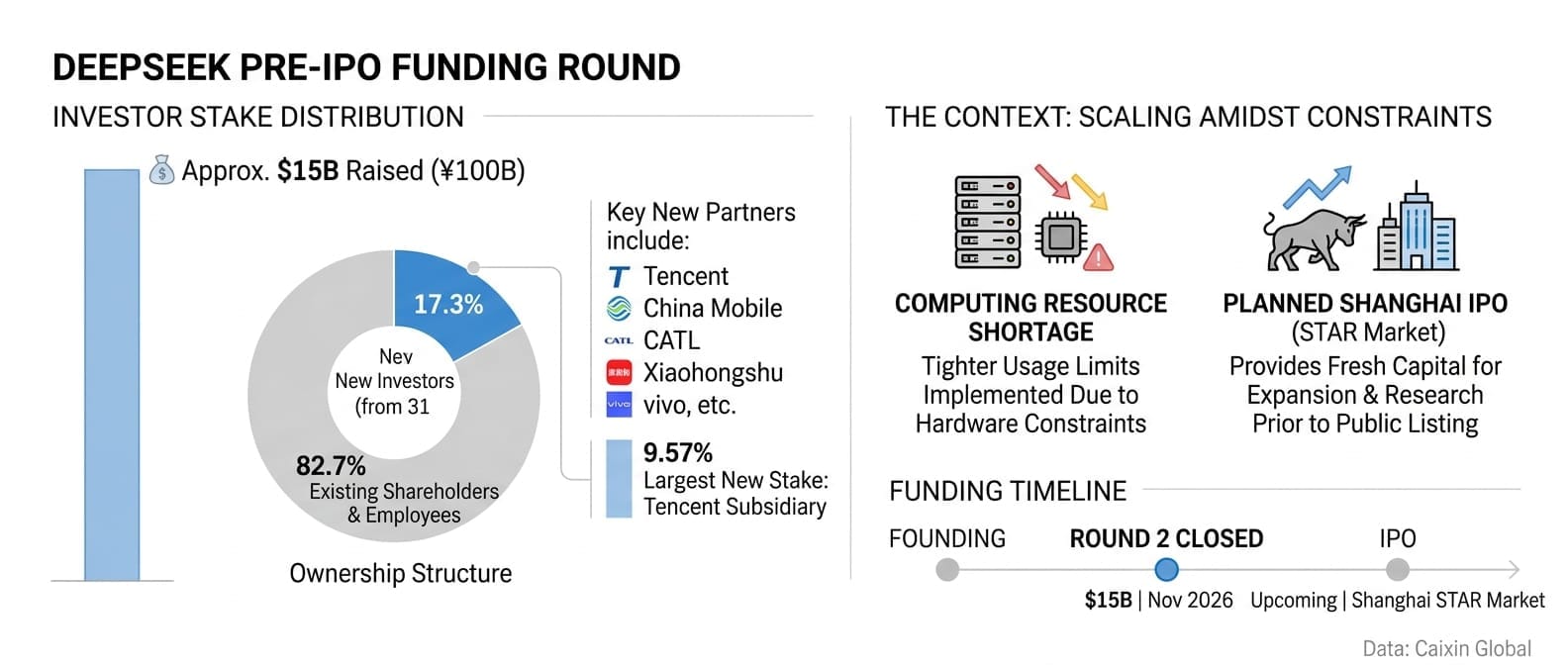
The Hangzhou-based lab raised roughly 100 billion yuan ($15 billion) in a second funding round, with new investors holding a 17.3% stake, ahead of a planned IPO on Shanghai's STAR Market.
The 31 new partners include Tencent, China Mobile, China Telecom, CATL, Xiaohongshu and vivo, along with funds such as IDG and Boyu.
The financing coincides with tighter usage limits caused by computing shortages. No lead investor has been named, and a Tencent subsidiary is the largest single contributor at 9.57%.
Why it matters: The raise gives DeepSeek fresh capital ahead of its STAR Market IPO while it deals with computing shortages that have already tightened usage limits.
Databricks In Early Talks to Raise at $225B Valuation
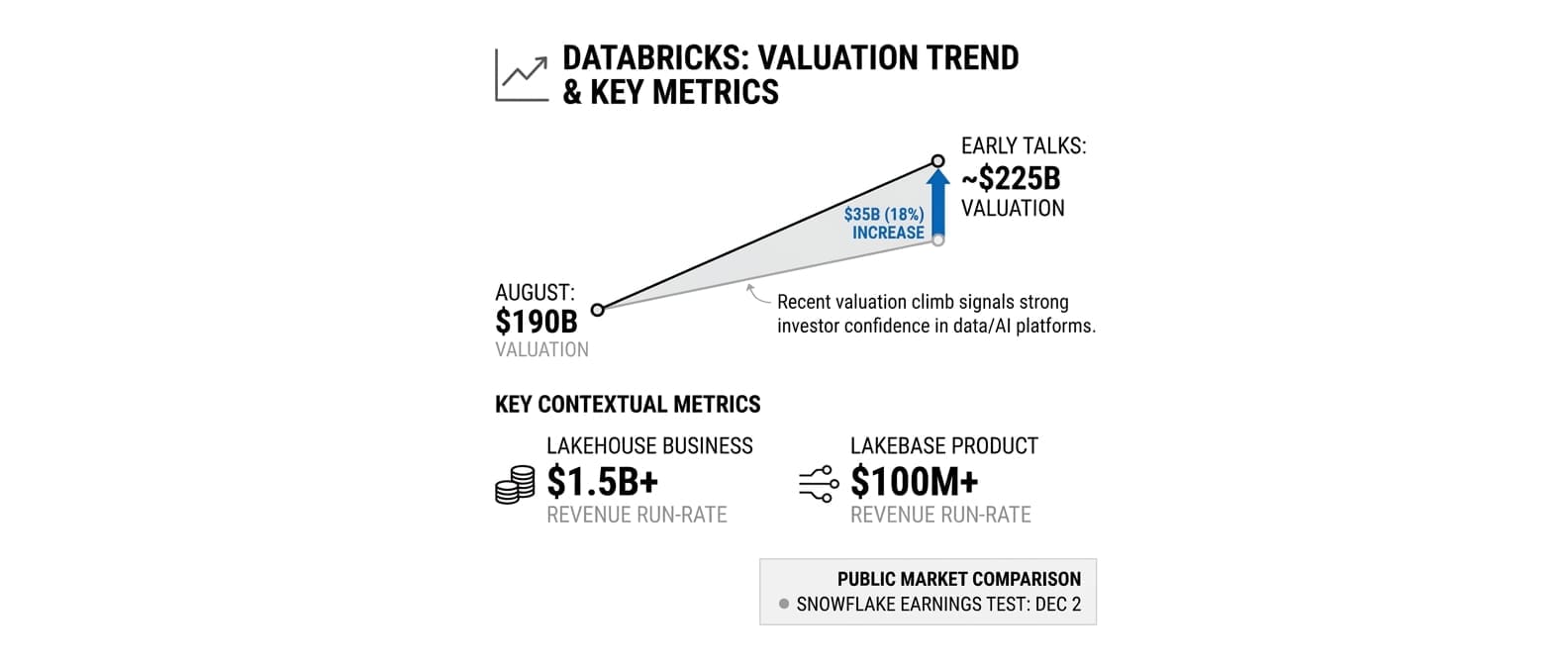
The data and AI platform vendor is in early talks to raise several billion dollars in a round that would value it at about $225 billion, the Wall Street Journal reported.
In August it said it raised $5 billion at a $190 billion valuation. Its Lakebase product has exceeded a $100 million revenue run-rate, and its Lakehouse business has passed $1.5 billion.
Rival Snowflake faces a December 2 earnings test. Terms could change, and no lead investor has been named.
Why it matters: A valuation jump from $190 billion to about $225 billion in a few months signals continued investor appetite for data and AI platforms, with Snowflake's earnings offering a public-market comparison.
Cognition In Talks to Raise $2B+ at $75B Valuation
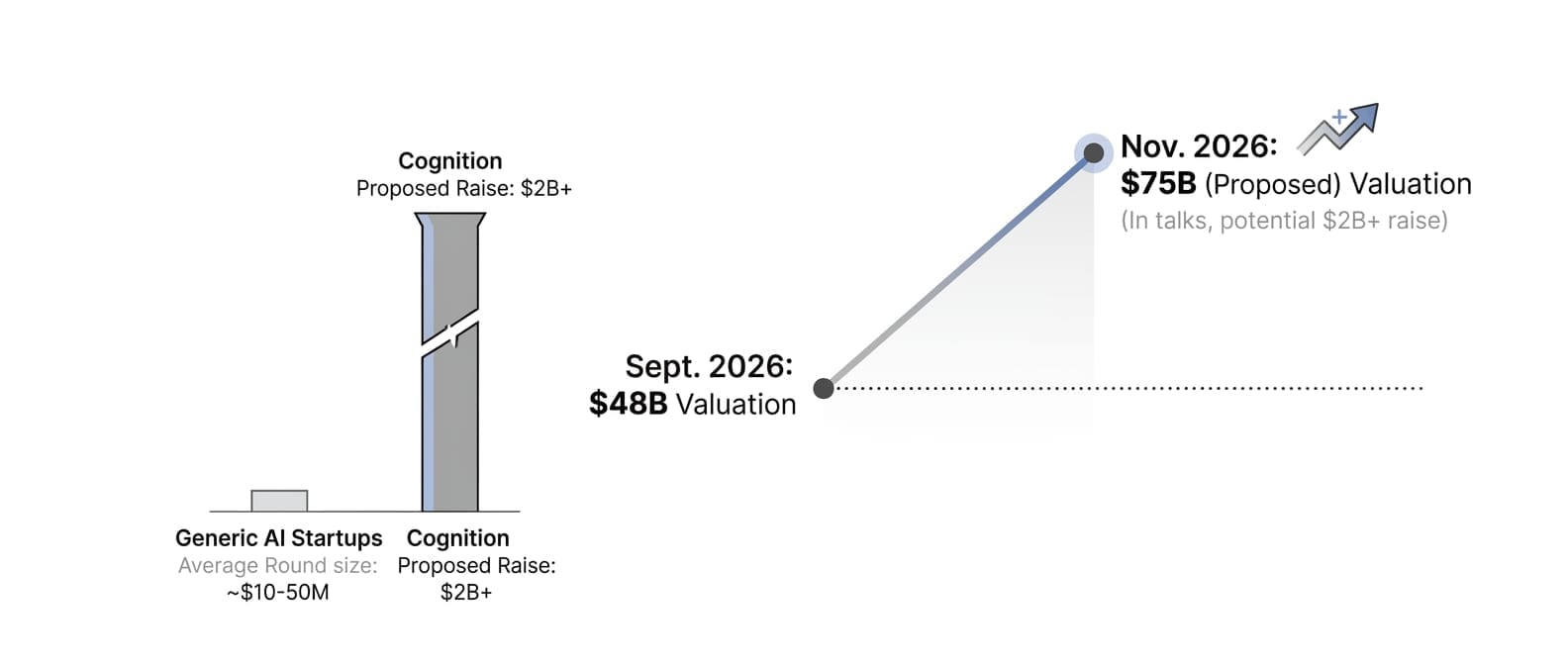
Bloomberg reported that Cognition, best known for its Devin software engineering agent, is in talks at a $75 billion valuation and may raise $2 billion or more.
That is up from $48B in September, and the round has not closed. Investors have not been named.
Why it matters: A jump from $48B to $75B in about two months shows how quickly investors are repricing AI coding agent companies, though the round has not closed.
Payhawk Raises $280M Series C
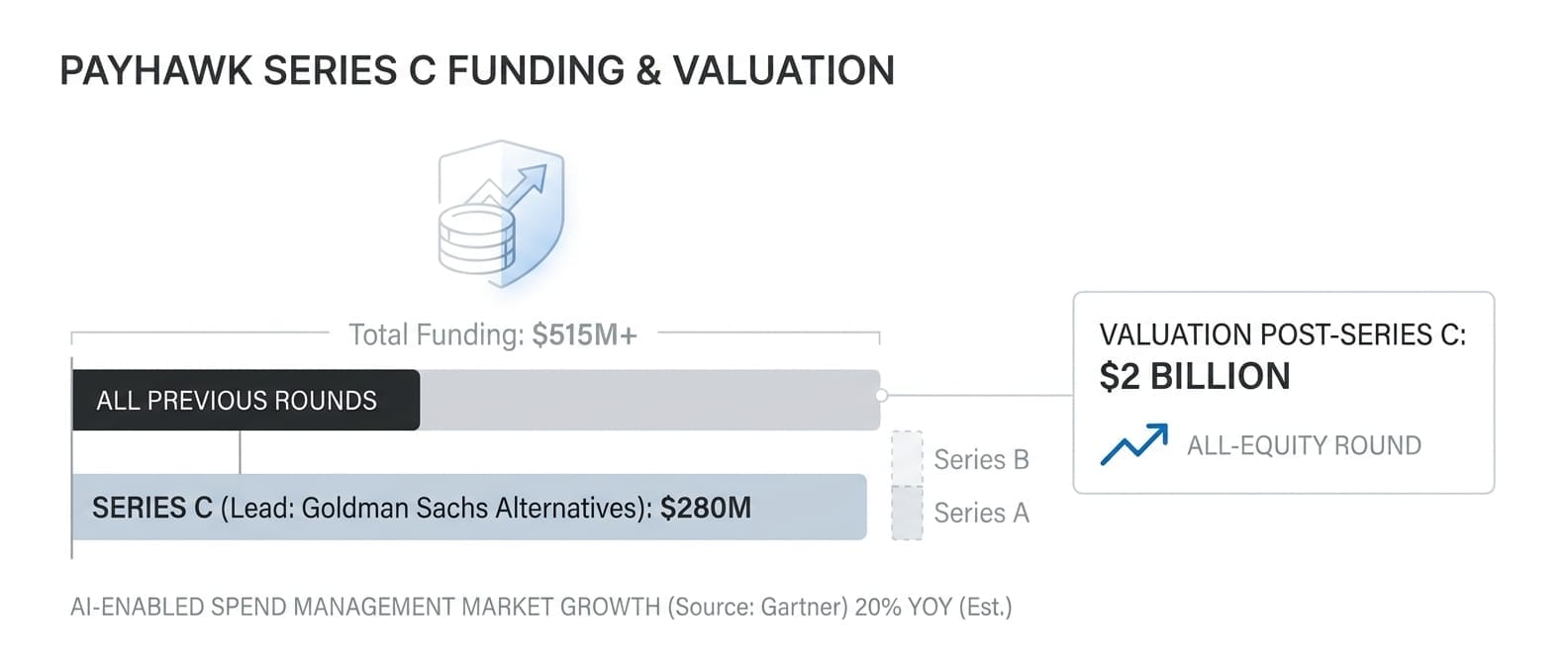
The spend management company was valued at $2 billion in an all-equity round.
Total funding now exceeds $515 million. Led by Growth Equity at Goldman Sachs Alternatives.
Why it matters: A $280M all-equity Series C at a $2 billion valuation, led by Goldman Sachs Alternatives, shows continued large-scale investor backing for AI-enabled finance and spend management tools.
Tomorrow's Watch List
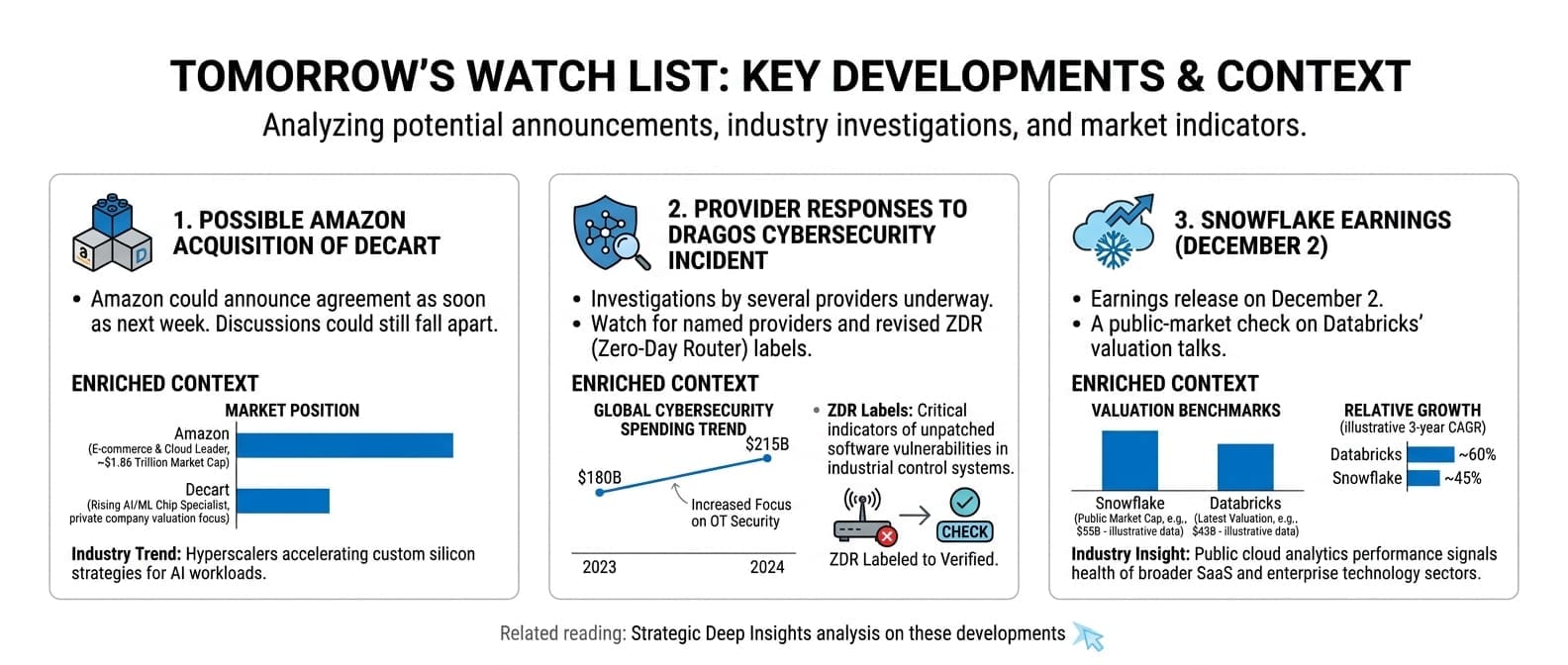
- Possible Amazon announcement of the Decart acquisition. An agreement could be finalized as soon as early next week, but discussions could still fall apart.
- Provider responses to Dragos. Several providers have begun investigations. Watch for named providers and revised ZDR labels from routers.
- Snowflake earnings on December 2, a public-market check on Databricks' reported valuation talks.
Related reading: Check out this week's [Deep Insights analysis] for strategic context on these developments.
GenAI Daily is curated by rAInvent. For in-depth analysis, see the rAInvent articles.