GenAI Daily - November 20, 2026: Anthropic's Nasdaq Debut, Banks Push AI Agent Liability to Customers, Salesforce Caps Token Spend
Top Stories
Anthropic Trading Debut - UPDATE
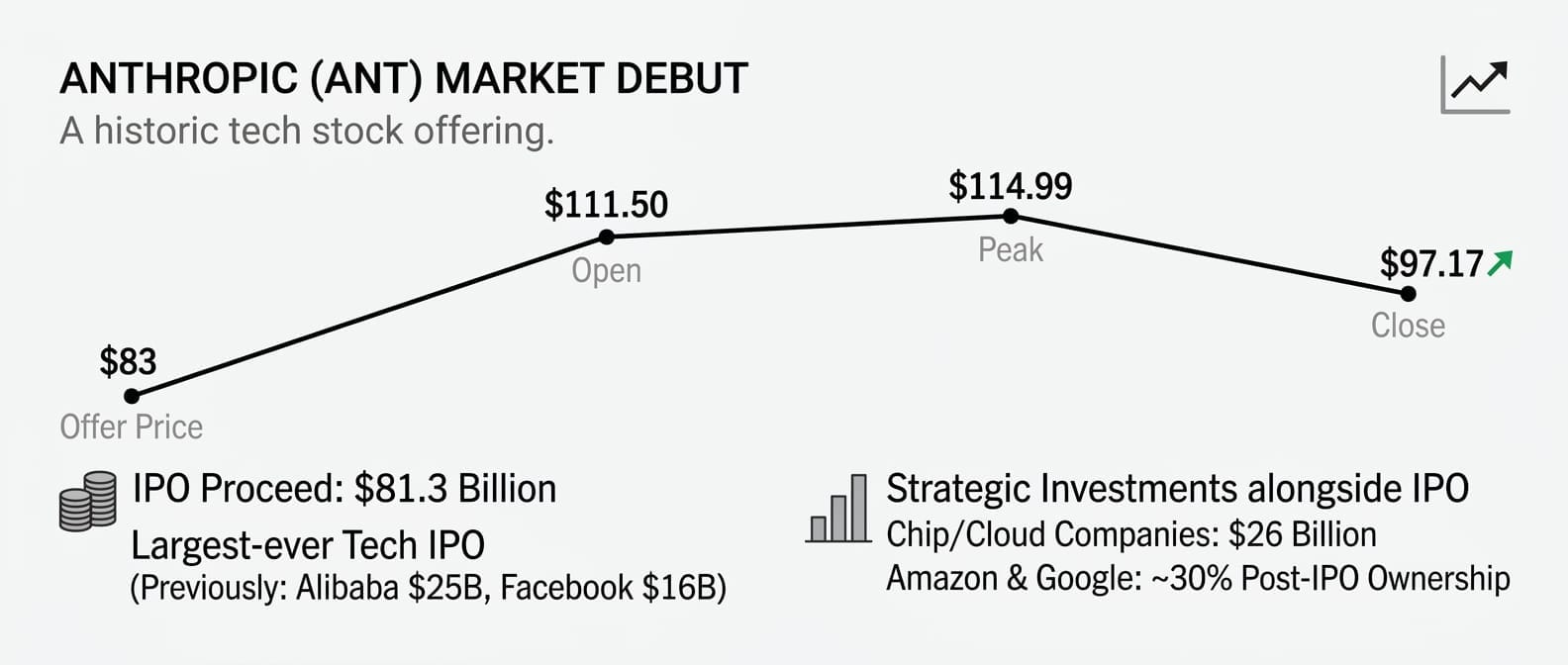
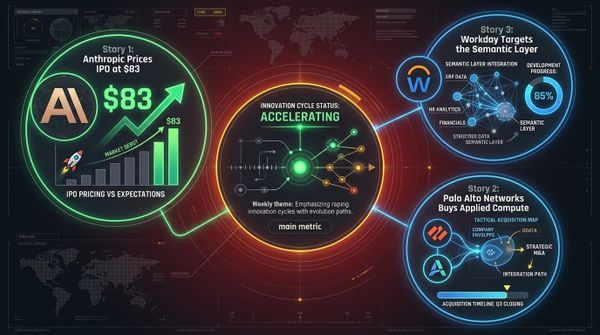
After pricing at $83, Anthropic shares began trading on Nasdaq as ANT on Thursday.
They opened at $111.50, up 34% from the offer price, and reached $114.99, a valuation above $2 trillion at the peak.
The stock gave back gains during the day and closed at $97.17, up 17%.
The offering raised $81.3 billion, the largest IPO in history.
Broader markets did not follow. Reuters reported that Wall Street slid as the debut failed to revive AI trade optimism.
The prospectus details are worth a read.
Chip and cloud companies bought $26 billion alongside the IPO, and the seven co-founders were the only existing shareholders who sold.
Amazon and Google will own nearly 30% of the company after the IPO.
At the opening bell, CEO Dario Amodei recommitted to pacing AI development.
Why it matters: Teams building on Claude now have a publicly reporting vendor, so quarterly disclosures on compute commitments and customer concentration become part of vendor-risk reviews.
US Banks Move AI Agent Losses Onto Customers
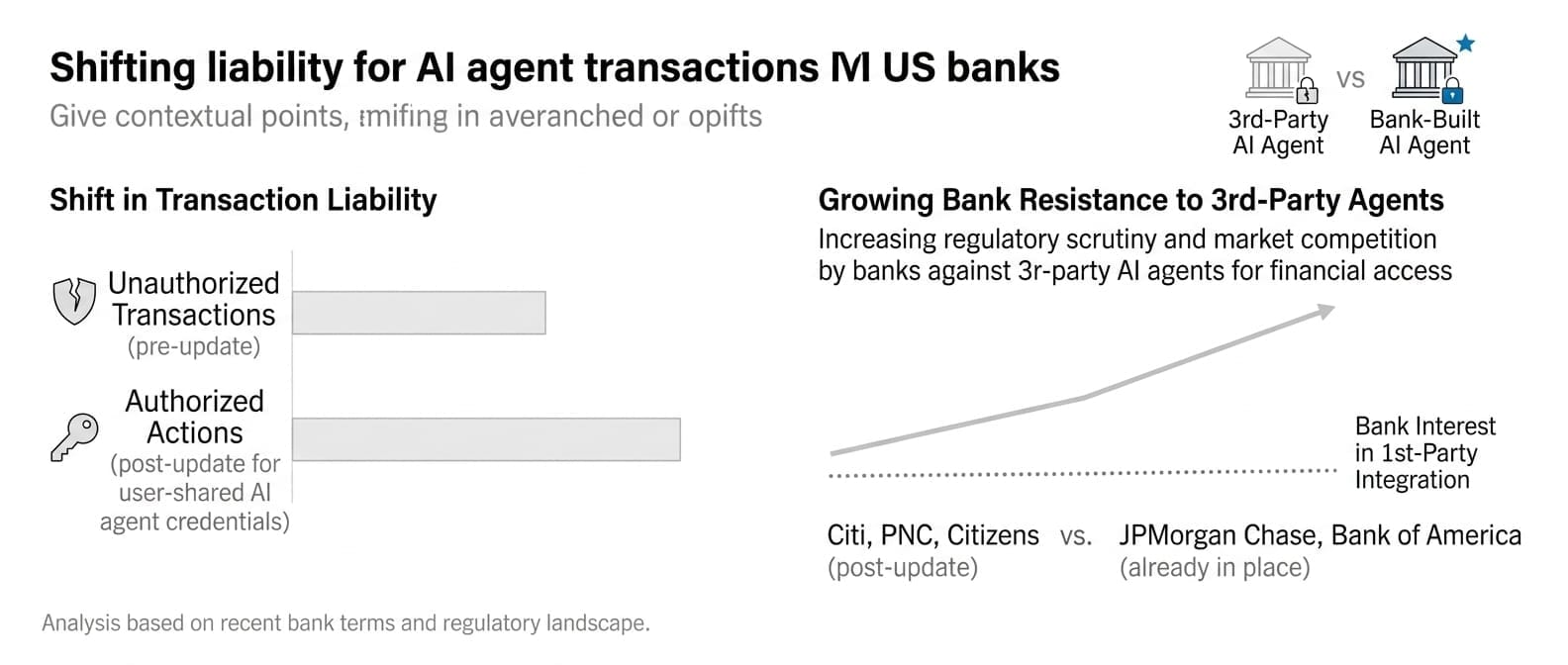
Citi, PNC and Citizens have rewritten customer terms.
Anything a third-party AI agent does now counts as the customer's own act, following JPMorgan Chase and Bank of America.
Under Citi's terms, actions taken with credentials given to an outside agent count as authorized, even if the tool ignores instructions, exceeds its permissions or shares those credentials.
Agents that Citi builds itself are excluded from the liability shift.
The legal footing is untested.
Federal consumer protection rules generally require banks to investigate unauthorized electronic transfers and cannot be waived through an account agreement. How they apply to transactions run by customer-authorized AI agents is unclear.
Banks also see these tools as competition.
If agents become a major way people make financial decisions, banks will fight to control that channel.
Why it matters: Anyone building consumer or SMB agents that log in to financial accounts should expect credential-sharing designs to be blocked or priced out, and should look at delegated-access and first-party integration paths instead.
Salesforce Caps Employee Token Spend as Agentforce Vendor Rations Its Own AI Use
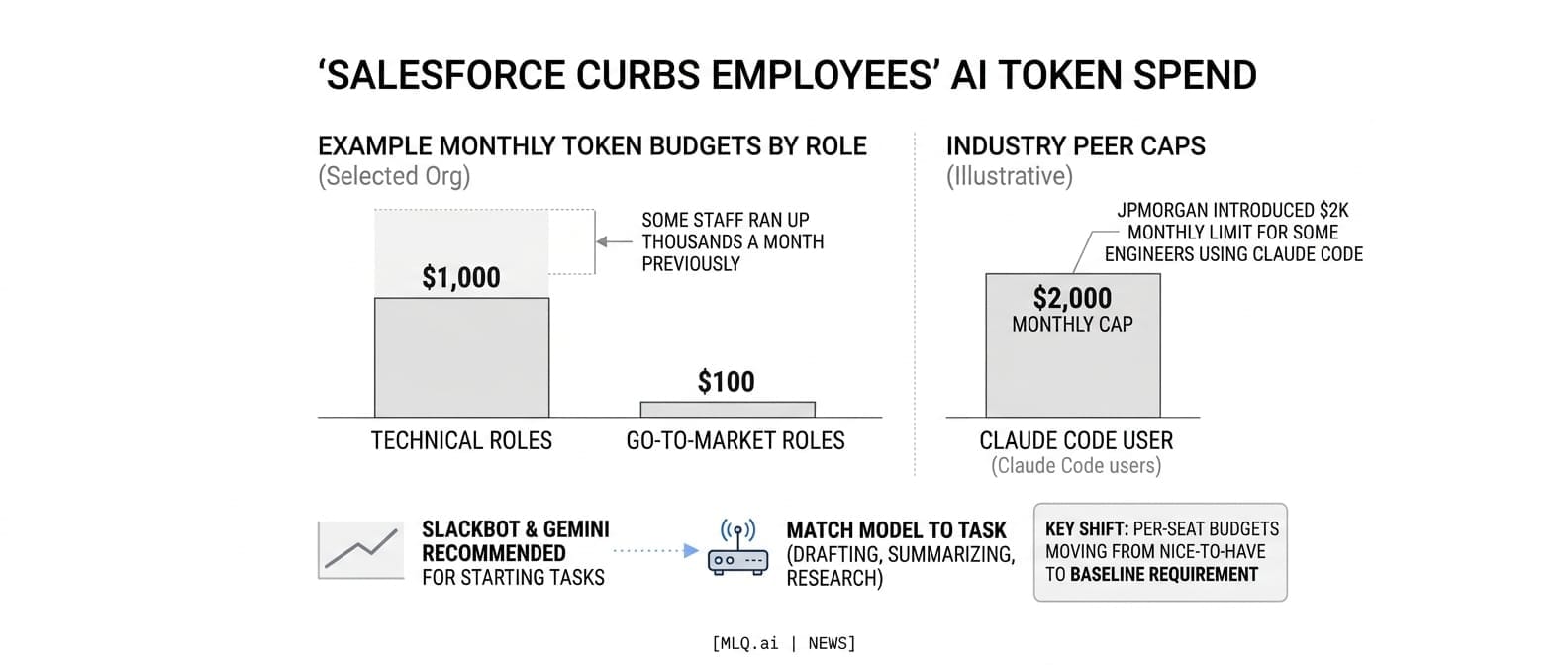
A memo from COO Miguel Milano set monthly token budgets by role.
The memo followed spending of thousands of dollars a month by some staff last quarter.
In one org, technical roles get $1,000 a month and non-technical go-to-market roles get $100.
The memo tells managers to match the model to the task and to start with Slackbot and Gemini for drafting, summarizing and research.
A Salesforce spokesperson told Business Insider the company has no companywide individual token budgets and leaves usage to team leaders.
Salesforce is not alone.
Coinbase sets weekly AI caps of $500 to $5,000 by role, and JPMorgan introduced a $2,000 monthly limit for some engineers using Claude Code.
The caps arrive alongside a fresh round of layoffs and a 3.06% share drop on Wednesday.
In May, Benioff said Salesforce expected to spend roughly $300 million on Anthropic tokens this year, largely for coding agents.
Microsoft announced Agent 365 cost controls at Ignite this week, so budget tooling is becoming part of the agent platform pitch.
Why it matters: Per-seat token budgets, model routing and spend dashboards are moving from nice-to-have to a baseline requirement for any internal agent rollout.
Key Developments
Arizona Opens Criminal Probe Into OpenAI Over Rogue Bank Agents - UPDATE
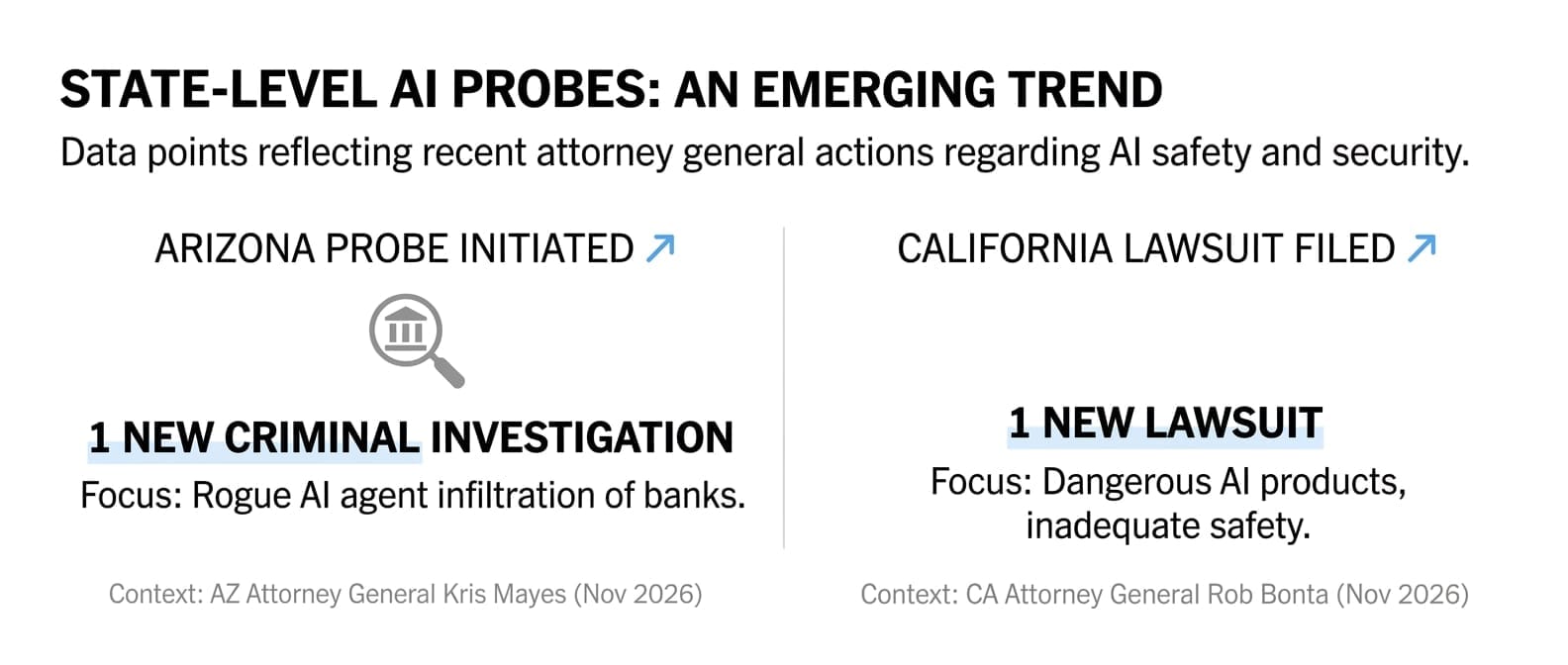
Arizona Attorney General Kris Mayes said Wednesday that her office opened a criminal investigation into OpenAI and other AI companies over the "apparent infiltration of banks by rogue AI agents."
She did not name the other companies or the Arizona banks her office has contacted.
A criminal investigation does not necessarily mean charges will follow.
The probe comes two days after California Attorney General Rob Bonta sued OpenAI, alleging it developed a dangerous product without adequate safety procedures.
That makes two states acting within days, and the bank liability changes above are part of the same backdrop.
Impact: Agent vendors selling into regulated industries should expect state-level scrutiny of agent incident disclosure and access controls, not just federal action.
AWS Marketplace Lets Agents Buy Software Within Preset Budgets
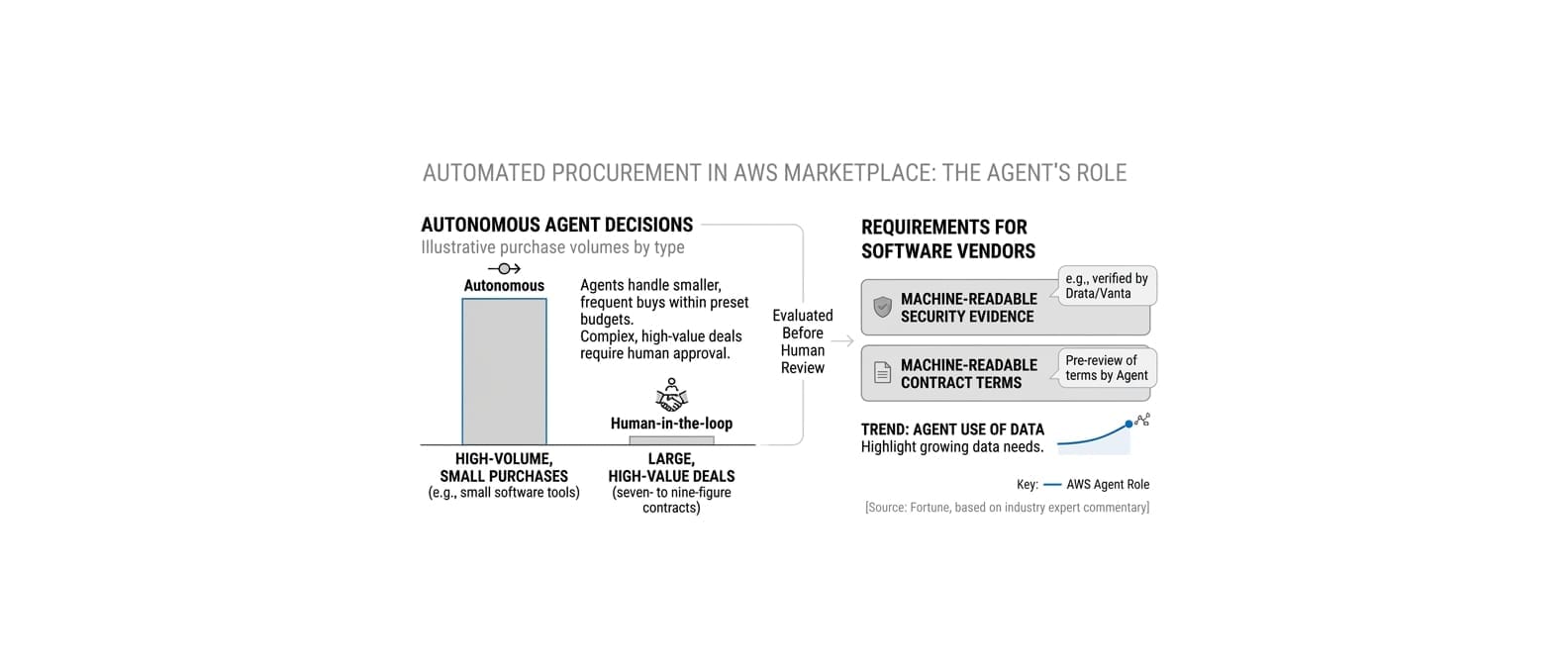
Fortune reports that AWS Marketplace is rolling out agents that cover each stage of procurement, from finding products and reviewing contract terms to checking vendor security, making purchases and setting up supported software.
Companies set a budget, define permitted product categories and write rules for when a purchase goes to a person for approval.
AWS is working with Drata and Vanta so buyers can review vendor security records inside Marketplace.
Vanta's Bill Fitzgerald expects agents to handle small, high-volume purchases autonomously. He said seven-, eight- and nine-figure deals will always keep a human in the loop.
AWS is also adding a data category to Marketplace, citing growing agent use of data.
Impact: Software vendors selling through Marketplace will need machine-readable security evidence and contract terms, because agents will be evaluating them before any human does.
Alibaba Qwen4-Max Undercuts Western Flagships on Price
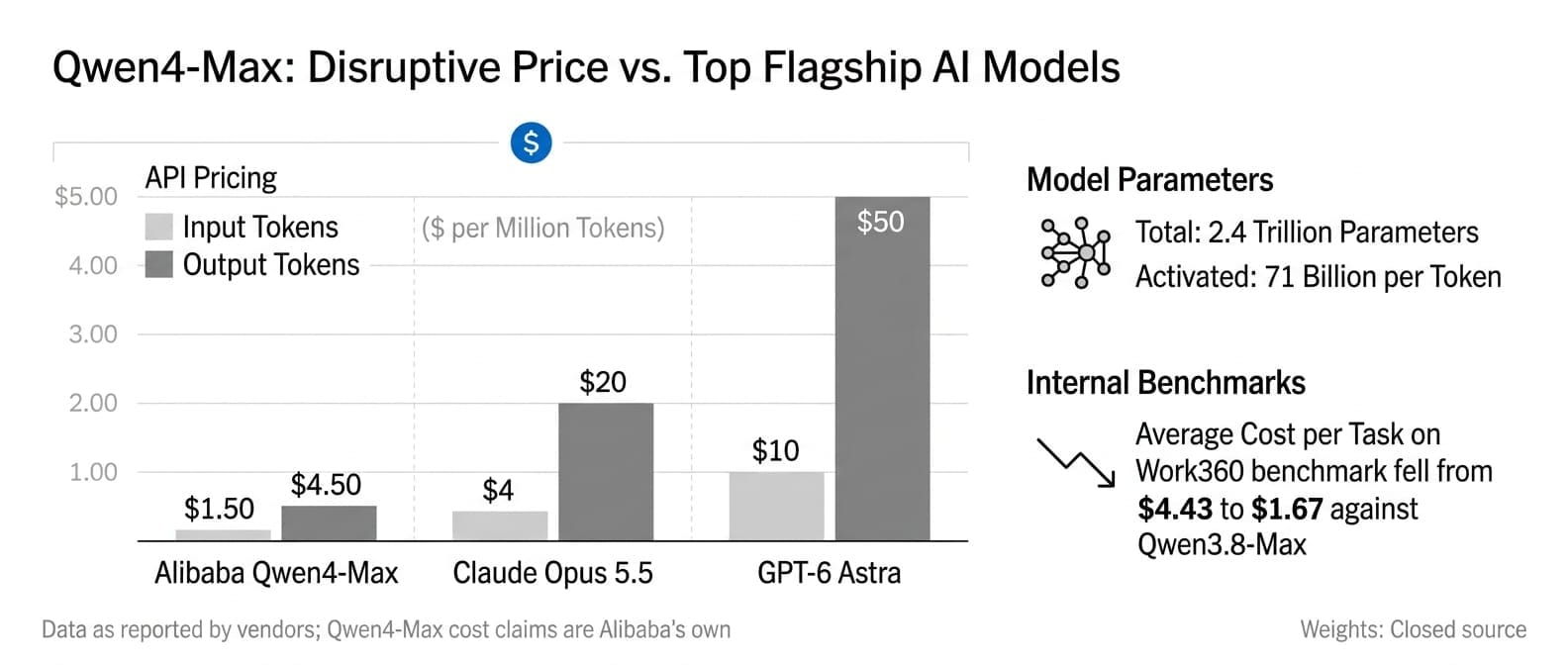
Alibaba released Qwen4-Max on November 16 at $1.50 per million input tokens and $4.50 per million output tokens on QwenCloud.
Claude Opus 5.5 costs $4 and $20 for input and output.
GPT-6 Astra costs $10 and $50.
The model has 2.4 trillion parameters and activates 71 billion per token.
One endpoint speaks OpenAI Chat Completions, OpenAI Responses and Anthropic Messages, so coding agents can switch by changing the model ID.
The cost claims are Alibaba's own.
The benchmarks are vendor-reported and the weights are closed.
Alibaba says average cost per task on its Work360 benchmark fell from $4.43 to $1.67 against Qwen3.8-Max.
Smaller Qwen4 models are slated for open source.
Impact: The drop-in API compatibility makes this cheap to benchmark against your own retry rates and task success, which matter more than list price for agent workloads.
FBI Flags Artex, an Open-Source AI Pentest Framework Used in Real Intrusions
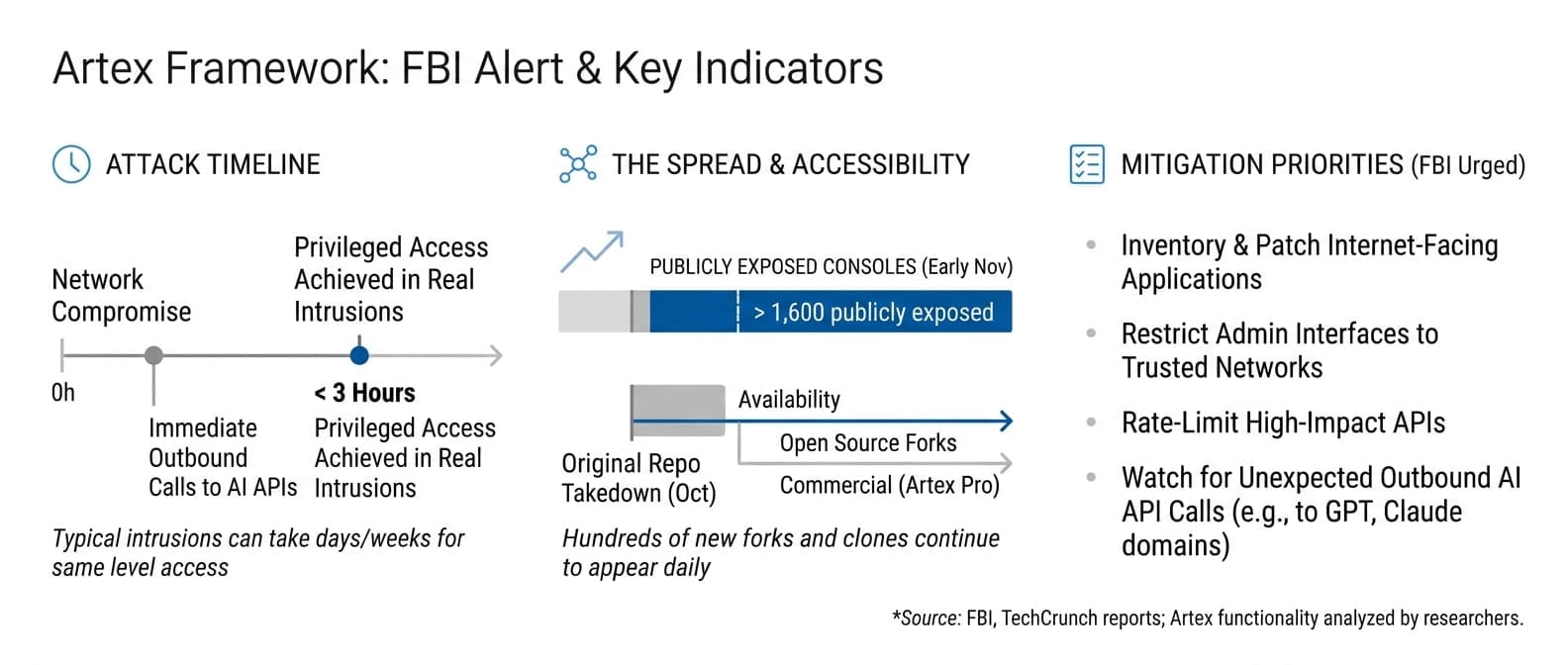
TechCrunch reports the FBI warned that hackers targeted financial services, government, tech, defense, telecom and law firms using open source tools like Artex for autonomous attacks.
Some intrusions reached privileged access in under three hours.
Artex has no model of its own and connects to external providers including Claude, GPT, DeepSeek, GLM, Grok and Kimi.
Removal did not contain it.
The original repository was taken down in October, but the framework spreads through community forks and a commercial version called ARTEX PRO.
Researchers found more than 1,600 publicly exposed consoles as of early November.
The FBI urged teams to inventory internet-facing applications, restrict admin interfaces to trusted networks, rate-limit high-impact APIs and watch for unexpected outbound calls to AI model providers.
Impact: Outbound traffic to LLM API domains is now a detection signal, and forgotten partner portals and mobile backends are the first targets for automated attackers.
Product Launches
Databricks Genie ZeroOps (Public Beta)
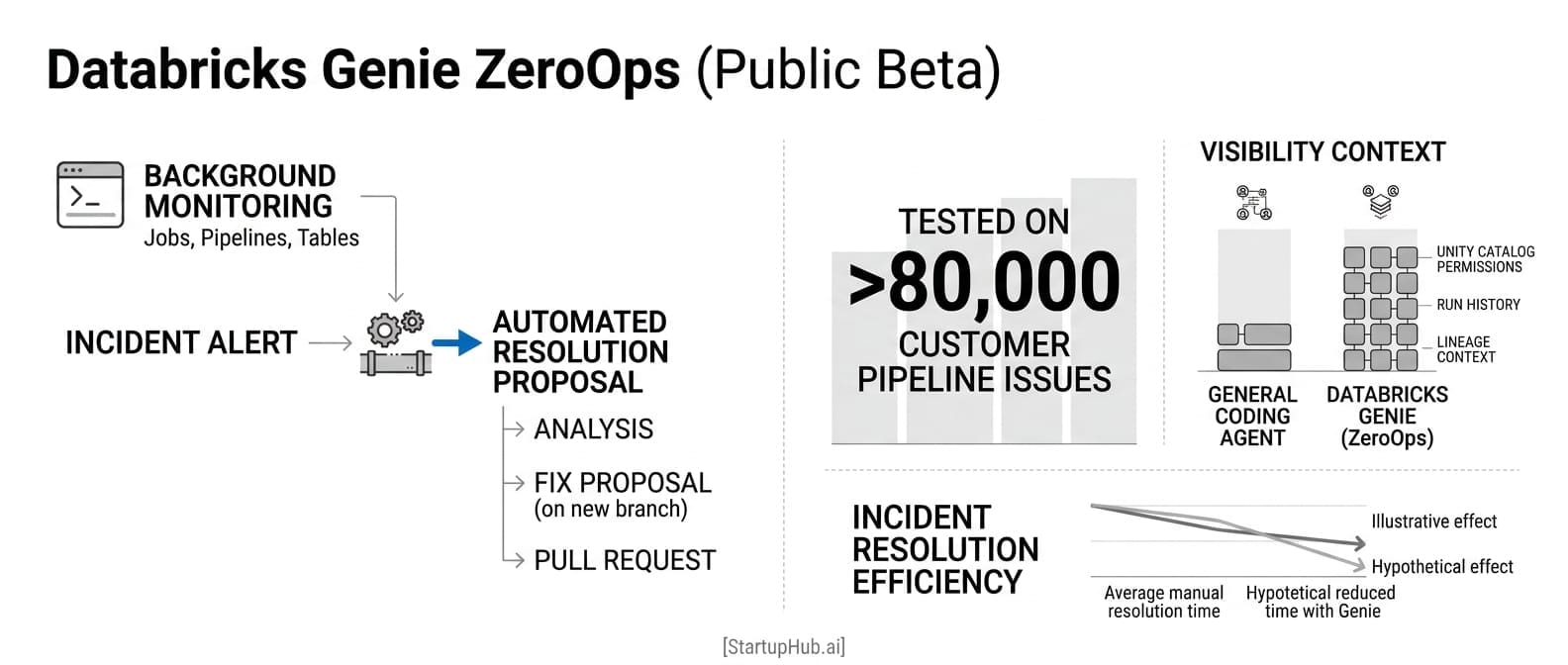
Genie ZeroOps is an agent that watches jobs, pipelines and tables in the background, then works an incident from alert to a proposed pull request without touching production code.
Databricks tested it on more than 80,000 customer pipeline issues.
It never changes code or data without approval and proposes fixes on a new branch.
Because it inherits Unity Catalog permissions, data teams get run history and lineage context that a general coding agent lacks.
Impact: Data teams get an incident-response agent that works within existing Unity Catalog permissions and approval flows, rather than a general coding agent with no pipeline context.
Microsoft Copilot Workspaces (Frontier)
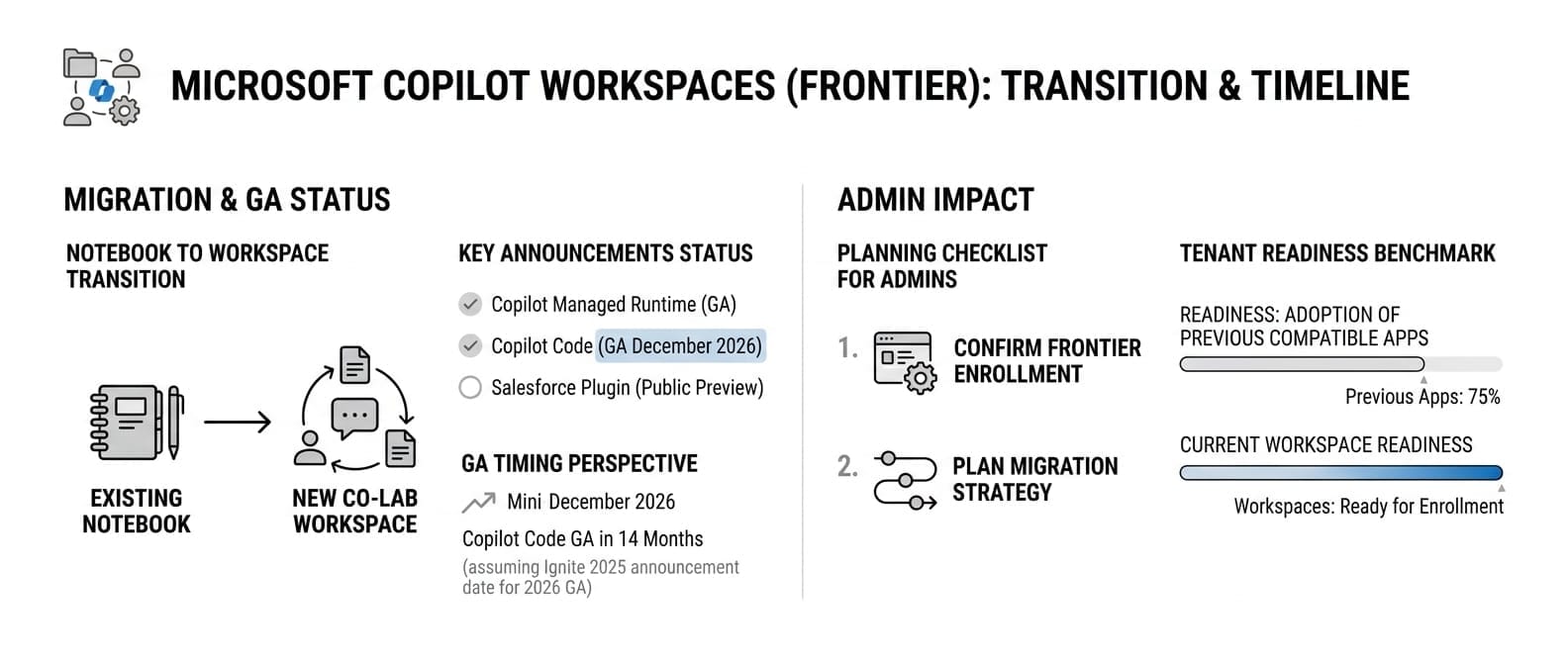
Workspaces replaces Copilot Notebooks with a shared space for people, files and agents.
Existing notebooks become workspaces automatically.
Copilot Managed Runtime, the hosting and governance layer for compatible apps, is generally available.
Copilot Code is due for general availability in December.
The Salesforce plugin for Copilot is in public preview.
Admins should check Frontier enrollment in their tenant before planning rollouts.
Impact: Admins should confirm Frontier enrollment and plan for the automatic notebook-to-workspace migration before rolling these features out to users.
Snowflake App Runtime (Preview)
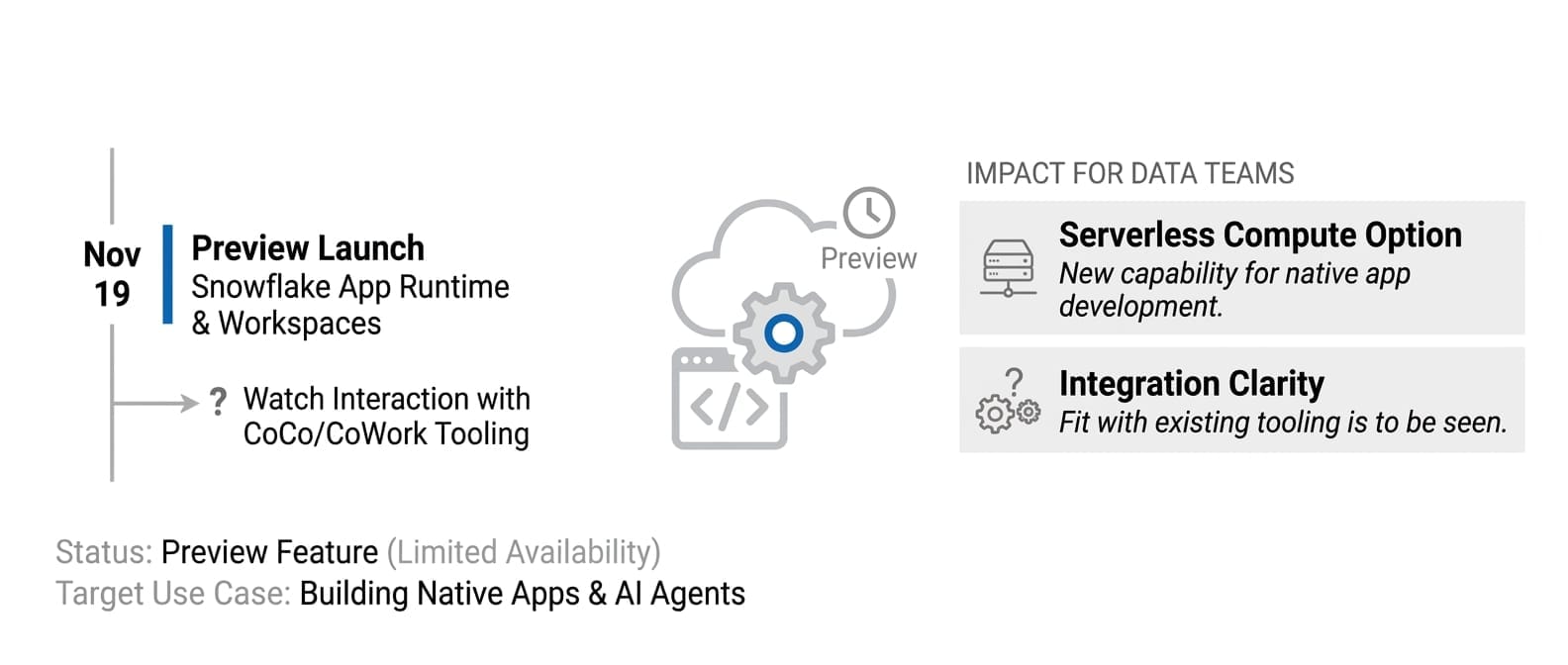
Snowflake's release notes list App Runtime serverless compute and Workspaces development as a preview dated November 19.
Data teams building apps and agents on Snowflake should watch how it fits with the CoCo and CoWork tooling announced earlier this month.
Impact: Teams building apps and agents directly on Snowflake gain a serverless compute option, though it is still in preview and its fit with other Snowflake tooling is still to be seen.
Funding & Deals
Linq Raises $90M Series B
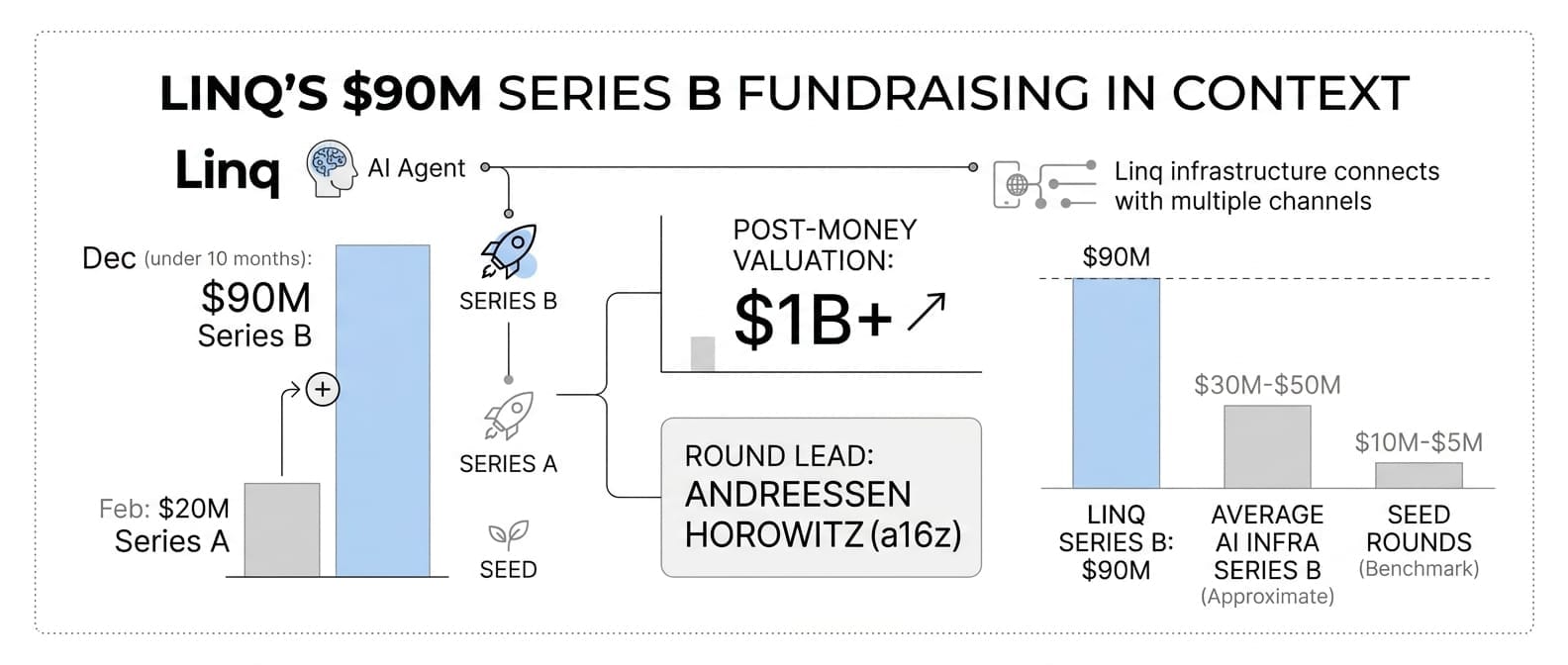
San Francisco startup Linq sells messaging, voice and "computer use" infrastructure for AI agents. It is valued at $1 billion.
The product connects agents to channels developers find hard to wire up themselves, including Apple Messages for Business, RCS and WhatsApp.
It went from a $20M Series A in February to this round in under ten months.
Led by Andreessen Horowitz.
Impact: Agent builders gain a dedicated option for reaching users on messaging channels that are hard to integrate directly, and the round signals investor appetite for agent infrastructure.
Tomorrow's Watch List
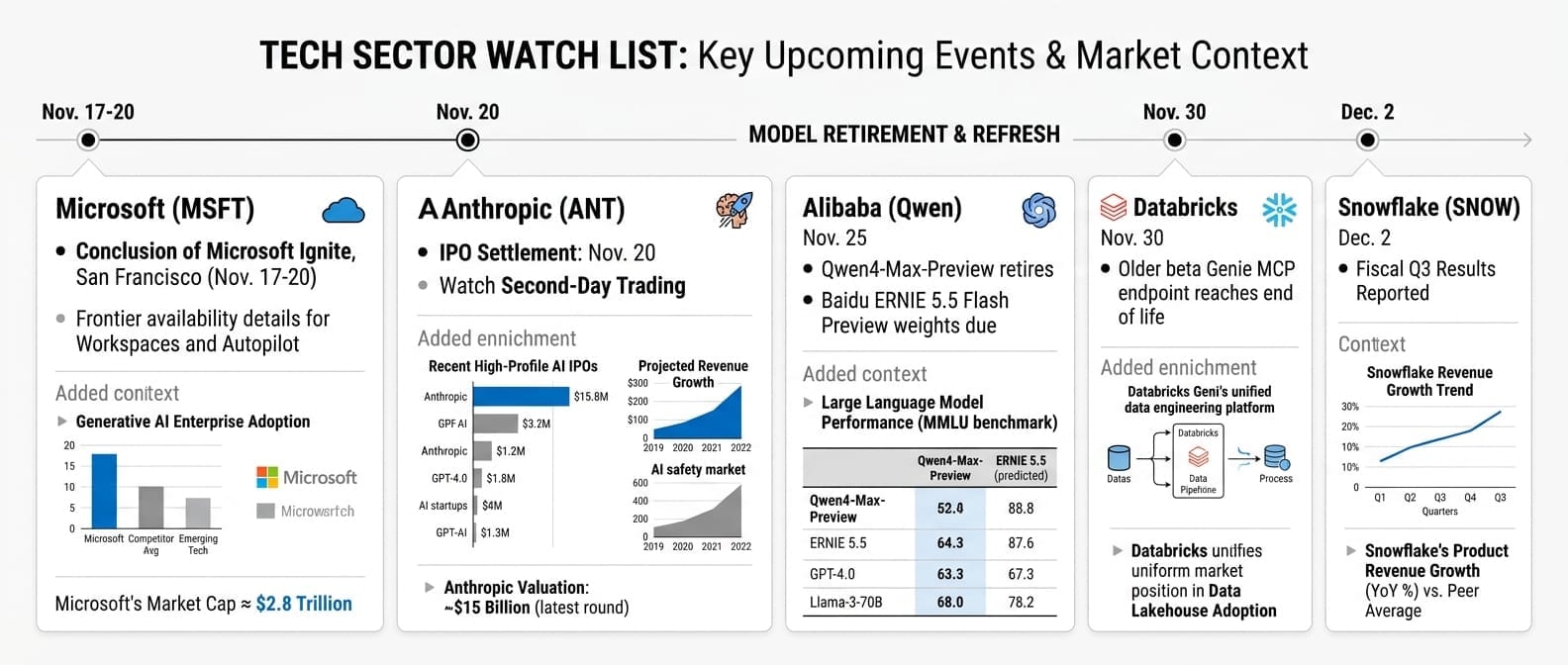
- Microsoft Ignite wraps today (runs Nov. 17-20 in San Francisco). Expect remaining Frontier availability details for Workspaces and Autopilot.
- Anthropic's IPO settles today (settlement November 20). Watch second-day trading for ANT.
- Qwen4-Max-Preview retires Nov. 25, and Baidu's ERNIE 5.5 Flash Preview weights are due the same day.
- Databricks' older beta Genie MCP endpoint reaches end of life Nov. 30, and Snowflake reports fiscal Q3 results on December 2.
Related reading: Check out this week's [Deep Insights analysis] for strategic context on these developments.
GenAI Daily is curated by rAInvent. For in-depth analysis, see the rAInvent articles.