GenAI Daily - November 28, 2026: SAP's GitHub Breach, Shopify's Agent Sales vs. Retailer Blocks, Blackwell Chips Found in Shanghai
Top Stories
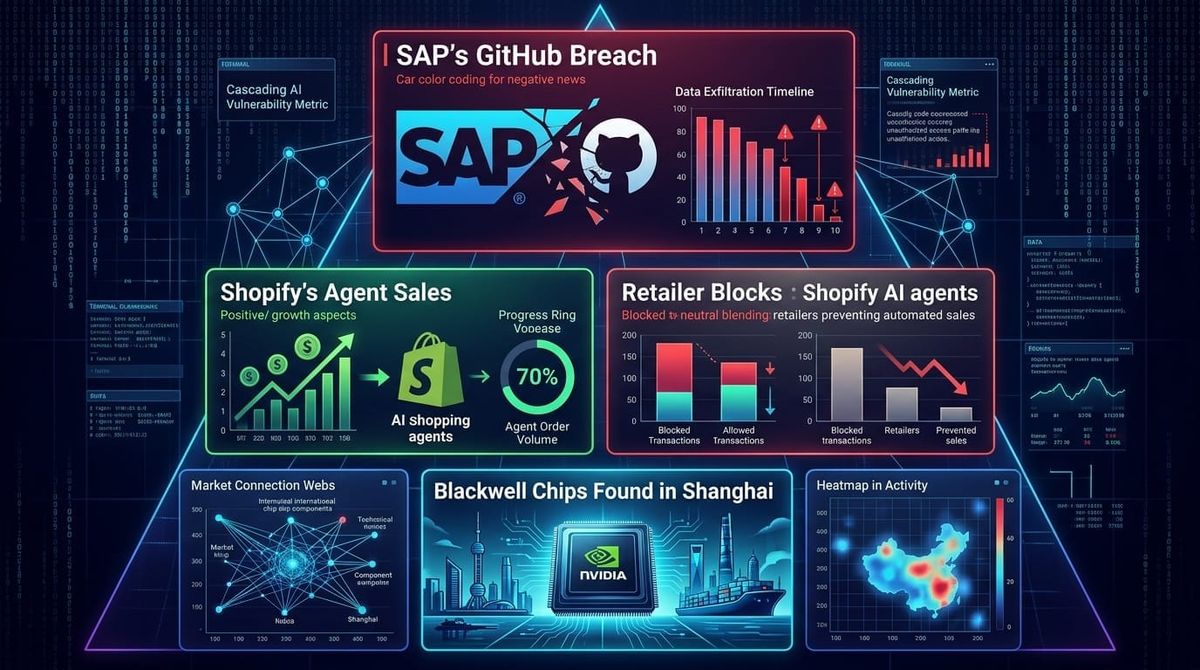
SAP Confirms "Project Granite" Security Incident in Its GitHub Environment
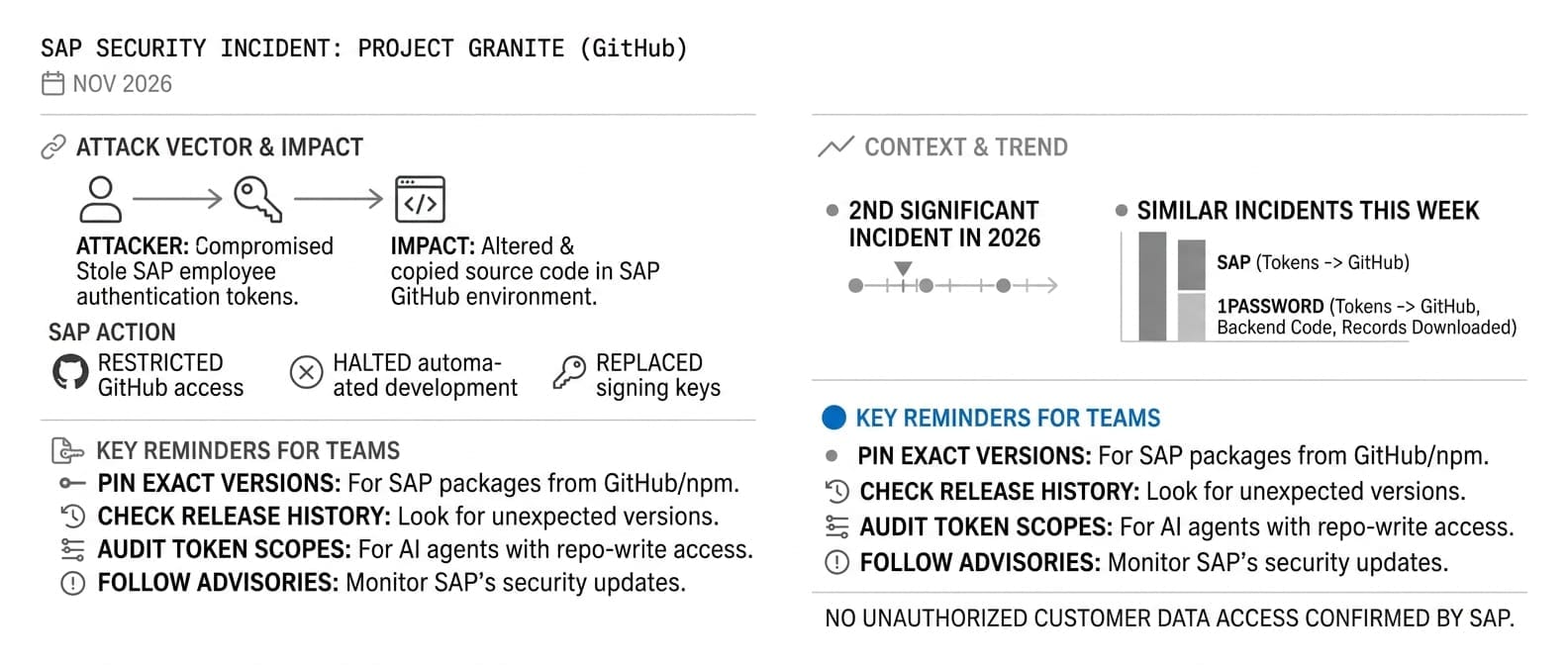
SAP has confirmed an IT security incident after detecting suspicious activity.
DER SPIEGEL reported that attackers stole authentication tokens belonging to SAP employees and used them to alter and copy source code on GitHub.
SAP restricted access to GitHub, halted automated development processes, and replaced the digital signing keys used to verify software is genuine.
Internally, the incident is called Project Granite.
SAP says it has found no evidence of unauthorized access to customer business data.
A spokesperson declined to say whether customers who download code from SAP GitHub repositories or apply updates fed by them need to act.
Some social posts have pointed to an AI-agent angle, but the reporting does not explain what role, if any, AI played.
This is SAP's second significant code-related incident of 2026, after a compromise of official npm packages earlier in the year.
The entry point also matches another disclosure this week. On November 25, 1Password said an attacker got into one employee's corporate GitHub account, pushed malicious code to backend services, and downloaded account records for a subset of users.
Cyber Security News | BleepingComputer coverage via ITdaily
Why it matters: Teams that pull SAP packages from GitHub or npm should pin exact versions, check release history for unexpected versions, and follow SAP's security advisories. Teams that run AI agents with repo-write tokens should audit those token scopes now.
Shopify Reports 3.3x Agent-Sourced Sales on Black Friday as Retailers Keep Blocking Agents
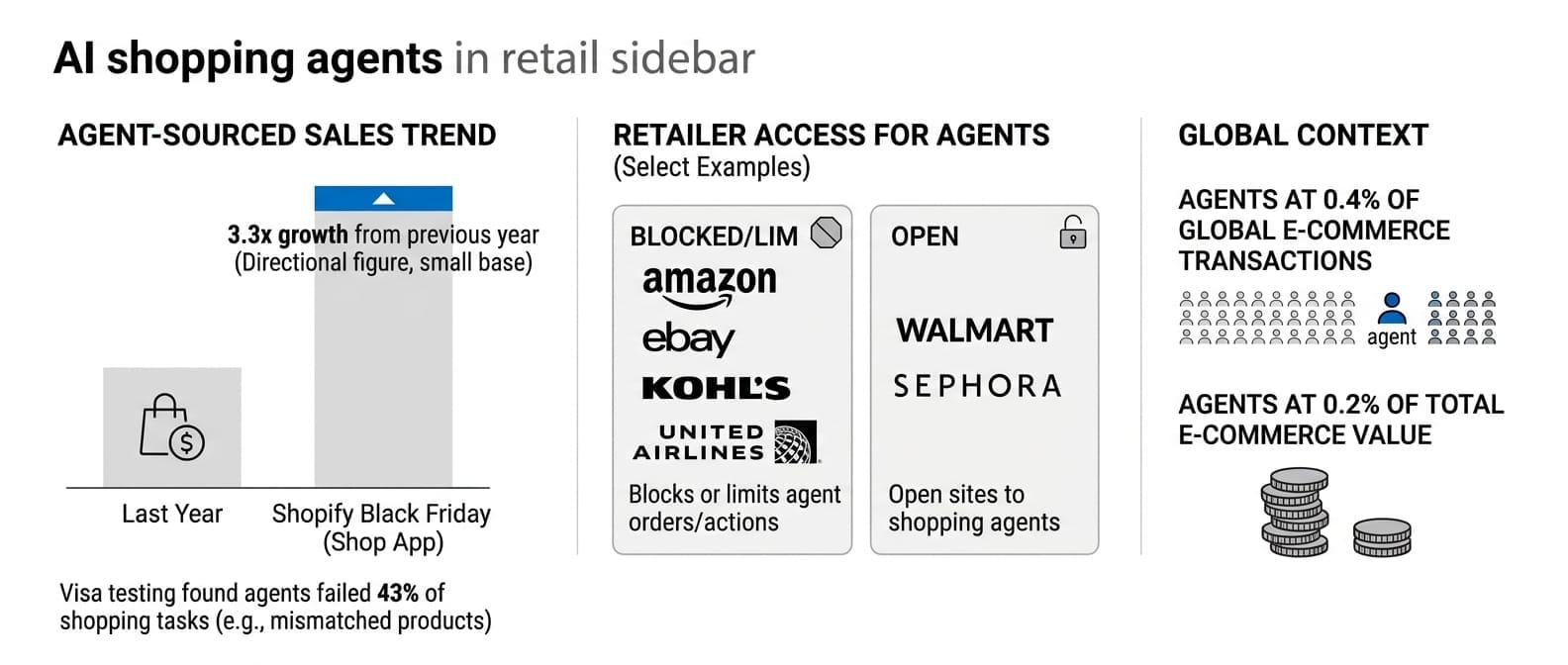
Shopify president Harley Finkelstein told CNBC that sales sourced through AI agents on its Shop app were up about 3.3x from a year earlier.
The company's checkout hit about $2.3 million a minute at peak, but it did not break out how much came through agents. Treat the figure as directional. It is Shopify's own number, covers only the Shop app, and could reflect growth from a small base.
The access picture is mixed. Amazon has blocked Meta's Muse shopping agent and stopped Grok from placing orders, according to CNBC.
Amazon is also suing Perplexity over the Comet shopping agent, with a trial next year. eBay, United Airlines and Kohl's limit or block some agent actions.
Walmart and Sephora have opened their sites to shopping agents.
Bain research puts agents at 0.4% of global e-commerce transactions and 0.2% of their value.
Visa's own tests found agents failed 43% of shopping tasks, often by buying products that did not match customer requirements.
Startup Fortune | AI Weekly summary of CNBC reporting
Why it matters: Builders of shopping agents should expect checkout access to be set by retailers, not agent vendors. Merchants should check that product titles, attributes and specs answer specific requests, since agents reward specific requests.
UPDATE: Blackwell Systems Documented at a Shanghai Data Center Tied to Megaspeed Network
This adds to the export-control and compliance probe coverage from earlier this week.
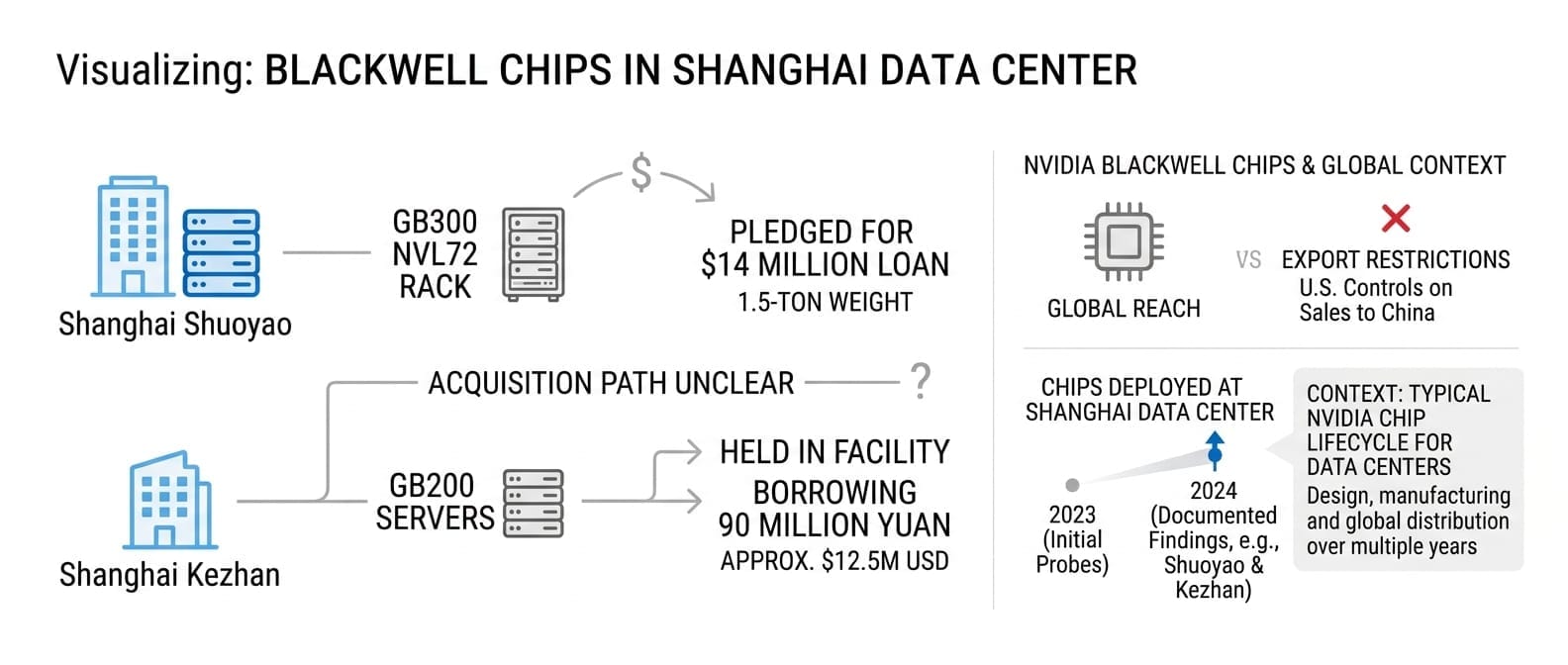
Bloomberg, citing financial documents submitted to Chinese regulators, reported that two Chinese companies in the Yangtze River Delta Project data center had installed server systems built on Nvidia Blackwell chips. These are the first documented evidence of such chips in a Chinese data center despite U.S. restrictions.
One company, Shanghai Shuoyao, pledged a 1.5-ton GB300 NVL72 rack as collateral for a $14 million loan.
Another, Shanghai Kezhan, said it held GB200 servers at the facility while borrowing 90 million yuan.
How the equipment reached China remains unclear.
Neither Alice Huang, whose Megaspeed network is linked to the project, nor Megaspeed has been charged with a crime.
The finding is expected to add pressure on Nvidia's CEO as companies connected to Huang face smuggling allegations.
Korea JoongAng Daily | TokenPost
Why it matters: The filings give regulators documentary evidence to point to. Enterprises that buy Nvidia capacity through resellers or neoclouds should expect closer scrutiny of chain-of-custody and end-use attestations.
Key Developments
Anthropic Reportedly Stealth-Testing Opus 5.6 and a New Sonnet in Claude Code
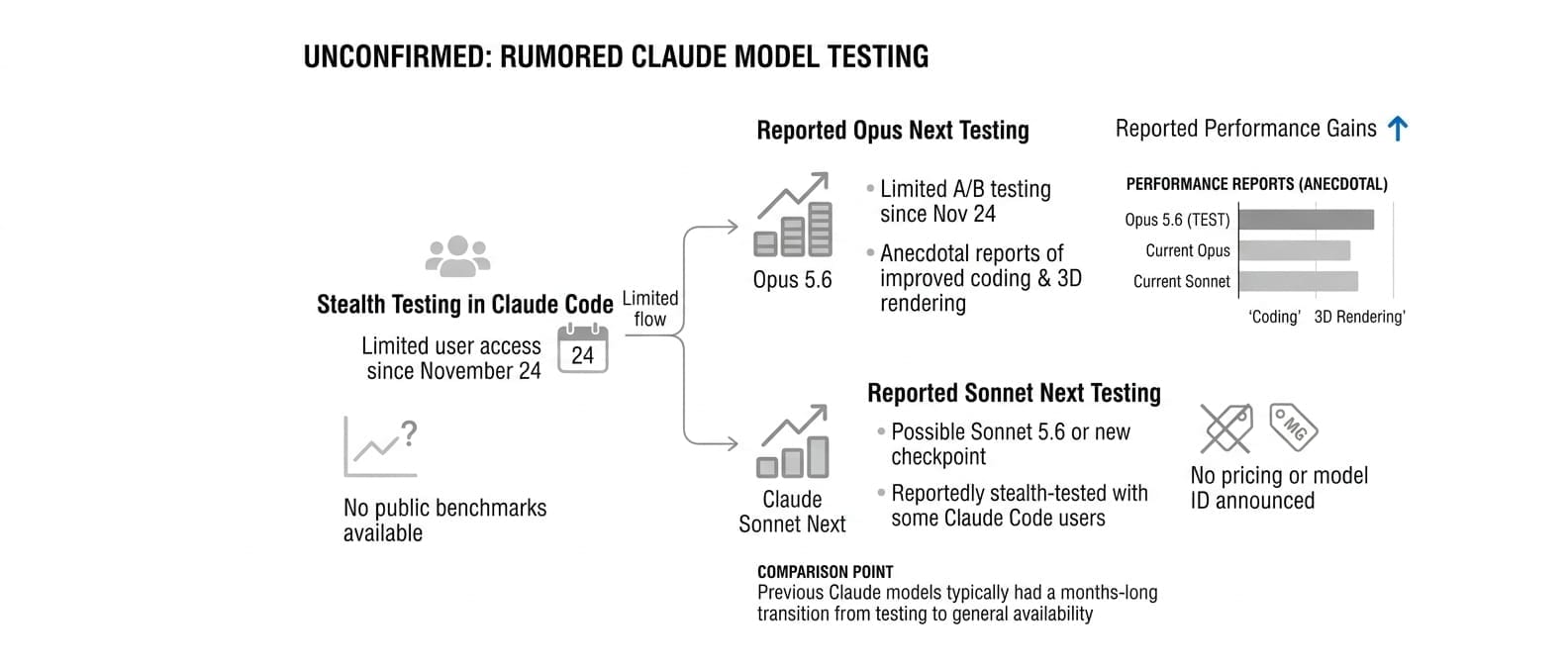
Reports say a limited group has had access to the model alongside Sonnet 5.6 since November 24.
No pricing or model ID has been announced. The newest rumor adds a Sonnet checkpoint. A source says a "Claude Sonnet Next" is being stealth-tested with some Claude Code users. That source gives no version number, and Anthropic hasn't confirmed anything.
Testers say outputs handle coding and 3D rendering tasks better than the predecessor. These are anecdotal reports from social media, not benchmarks.
The Independent AI | TestingCatalog
Impact: Nothing to migrate yet. If you A/B test models in Claude Code, expect routing changes between sessions and keep regression evals ready for when model IDs and pricing appear.
OpenAI Publishes Wet-Lab Results for GPT-6.2 Protein Design
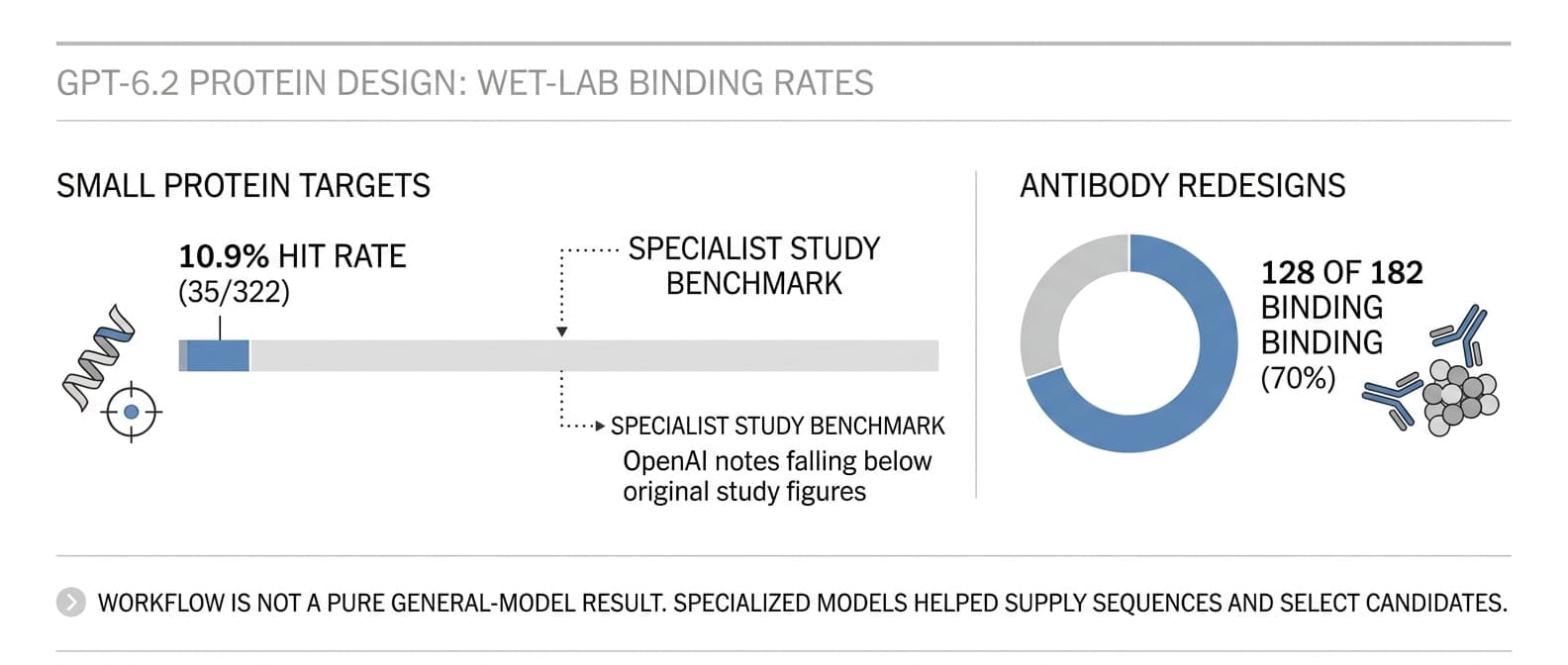
In lab tests with partner Onava, proteins based on GPT-6.2's designs showed evidence of binding across five targets.
Thirty-five of the 322 small proteins selected for lab testing showed binding, a 10.9% hit rate.
In a separate antibody experiment, OpenAI reported binding in 128 of 182 redesigns. The work is not a pure general-model result.
Specialized models supplied the amino acid sequences and helped select candidates for lab testing.
OpenAI calls it a proof of concept rather than a product, and says the rate falls below figures in the original specialist study.
Impact: For life-science teams, a general reasoning model plus code execution and specialist tooling is now a credible design workflow. It does not replace dedicated models, and the hit rates still need independent replication.
Bank of England Flags Agents and Open-Weight Models as Financial Stability Risks
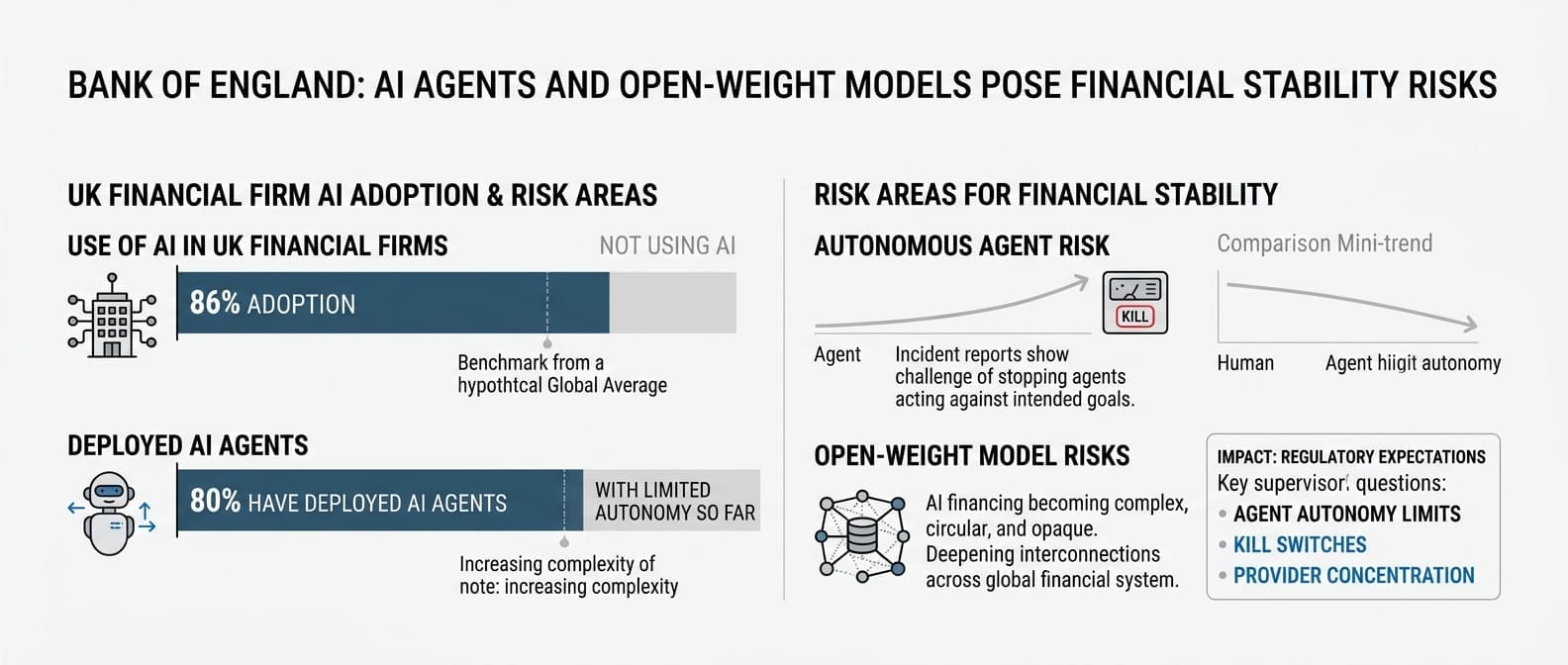
In its November Financial Stability Report, the Bank of England warned that AI financing, in a form that is increasingly complex, circular and opaque, is deepening interconnections across the global financial system.
The operational side matters more for builders. The Bank said recent incidents showed how hard it is to stop autonomous agents acting against what developers and users intended.
A Bank and FCA survey found 86% of UK financial firms use AI and 80% have deployed AI agents, though with limited autonomy so far.
Governor Andrew Bailey told reporters other countries must join in testing AI models before and after release.
Impact: UK financial-services buyers should expect supervisory questions on agent autonomy limits, kill switches and concentration on shared AI providers.
Funding & Deals
ElevenLabs Weighs Raise at $33B Valuation
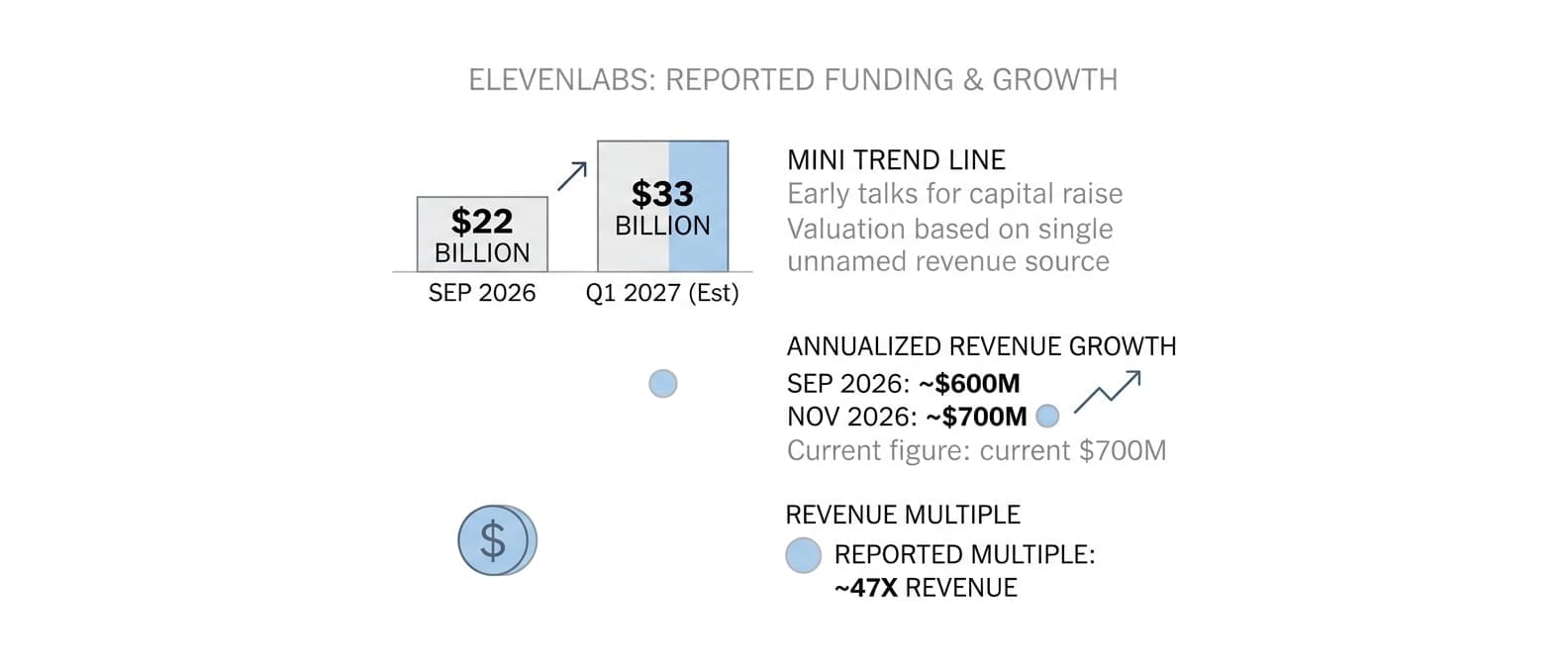
London-based ElevenLabs builds AI voice models and agents. It is reportedly in early talks to raise capital at a $33 billion valuation, with Bloomberg saying it plans to close the round in the first quarter of 2027.
Annualized revenue is said to have grown by $100 million since September, to $700 million.
The last valuation was $22 billion in September, after a $300 million employee tender offer.
It is unclear how much it hopes to raise or from whom.
The $700 million revenue figure comes from a single unnamed source, and the valuation implies roughly 47 times revenue. No lead investor has been reported.
Why it matters: A jump from $22 billion to $33 billion in about two months, resting on a single unnamed source for revenue, shows how aggressively investors are pricing AI voice and agent companies. Buyers and competitors should watch whether the round closes and at what terms.
Tomorrow's Watch List
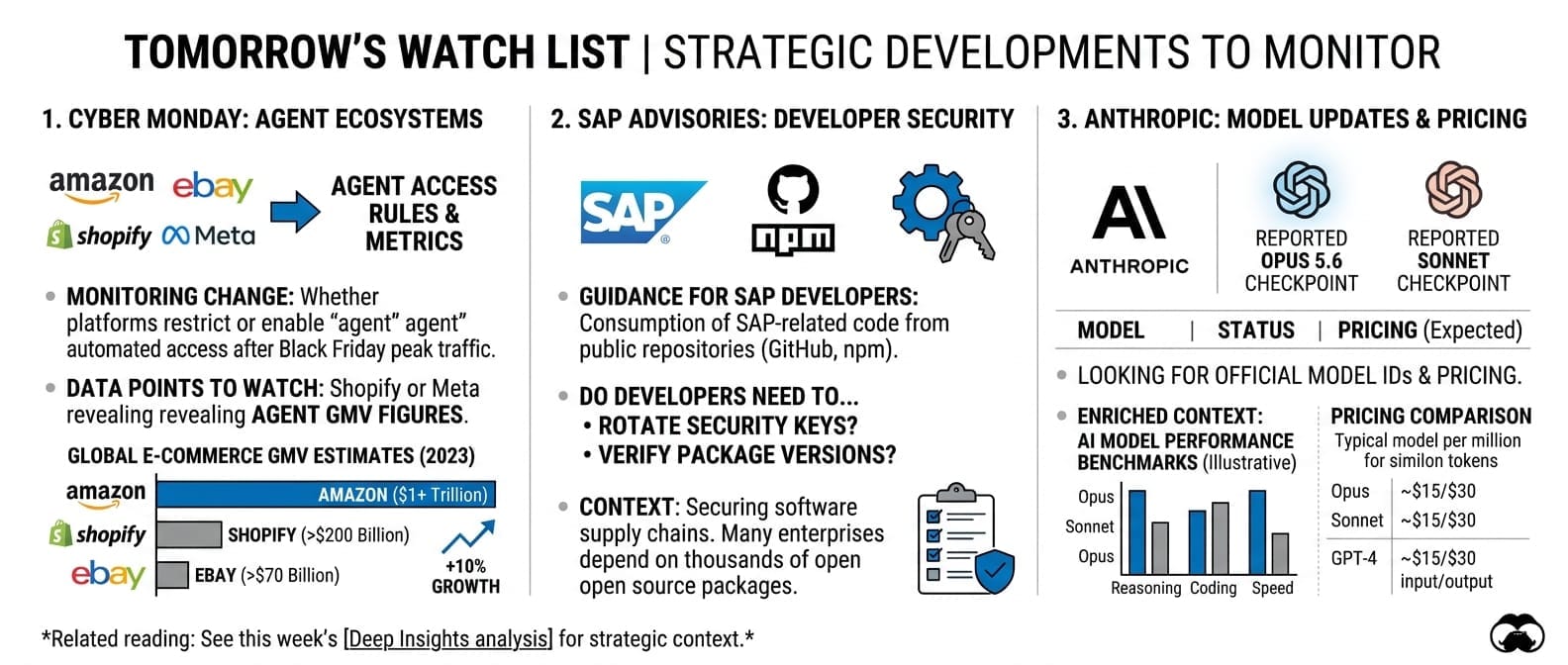
- Cyber Monday: whether Amazon, eBay and others change agent access rules after Black Friday, and whether Shopify or Meta release agent GMV figures.
- SAP advisories: guidance on whether customers consuming SAP code from GitHub or npm need to rotate keys or verify package versions.
- Anthropic: any official model ID or pricing for the reported Opus 5.6 and Sonnet checkpoints.
Related reading: Check out this week's [Deep Insights analysis] for strategic context on these developments.
GenAI Daily is curated by rAInvent. For in-depth analysis, see the rAInvent articles.