The 65% Rule: Software Engineering Teams Are About to Shrink by Half
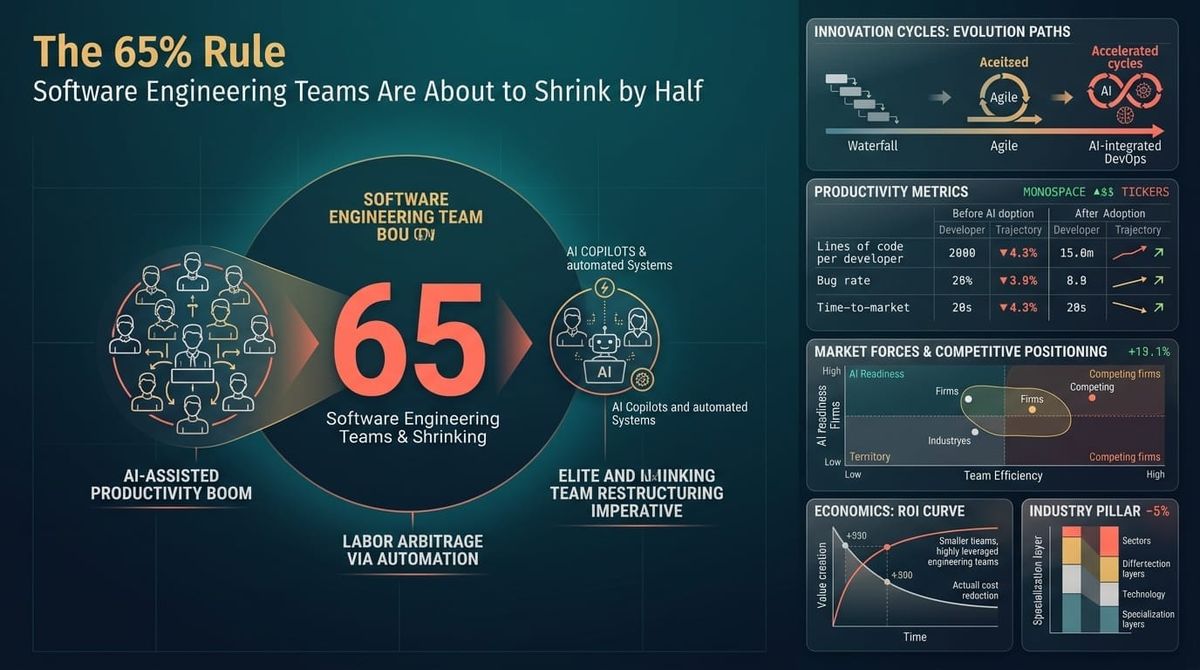
Snap just crossed the line everyone was afraid to acknowledge. When CEO Evan Spiegel announced 1,000 layoffs because "AI now generates more than 65% of Snap's new code," he didn't just cut jobs — he published the playbook every tech company will follow in 2026. Google quietly confirmed they've hit 75% AI-generated code. Cursor's $50 billion valuation makes sense when you realize it's not selling software tools; it's selling workforce reduction at scale.
The 65% threshold isn't arbitrary. It's the productivity inflection point where AI coding transitions from helpful assistant to operational dependency. Above 65%, human engineers become bottlenecks. Below 65%, they're force multipliers. Every company will discover their own magic number this year, and most will realize they need half the developers they currently employ.
This isn't the gradual automation curve we expected. It's a step function, and we just hit the first step.
The Story
The Setup
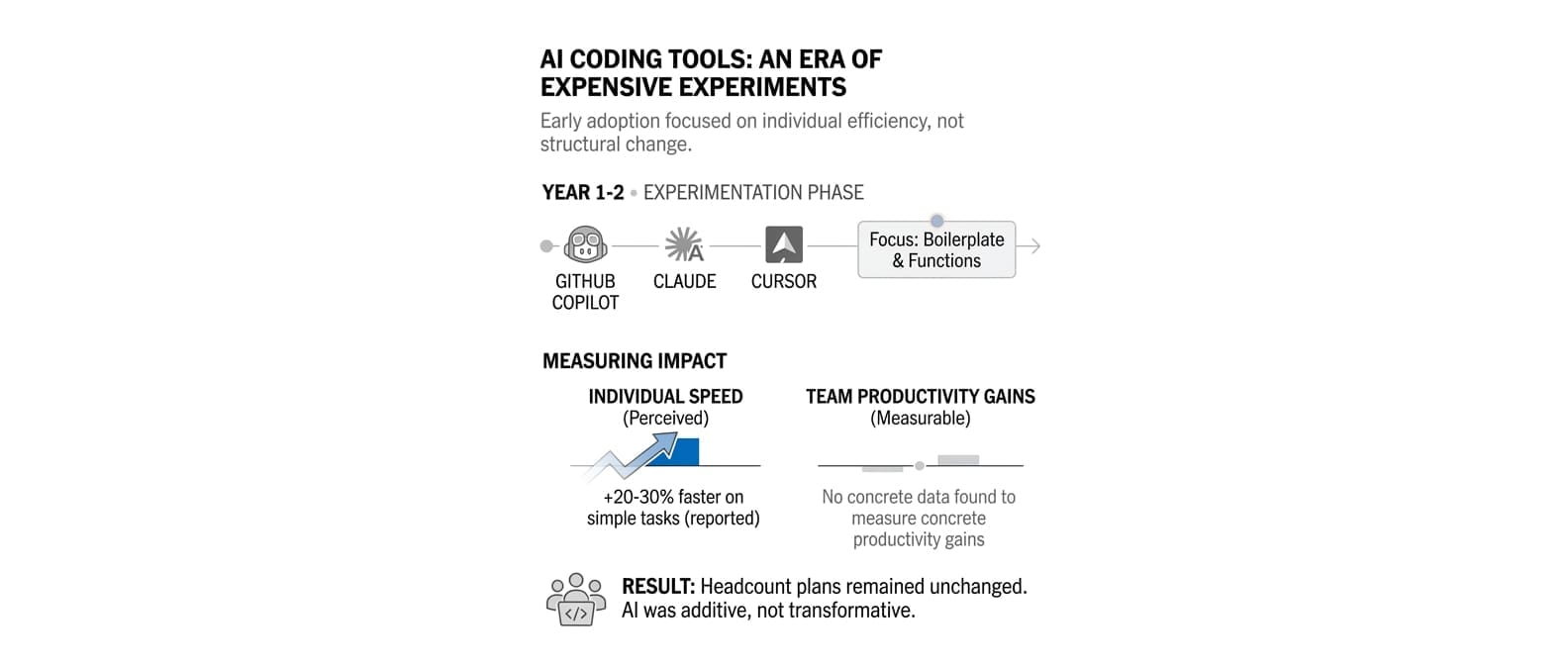
For two years, enterprises treated AI coding tools as expensive experiments. GitHub Copilot helped with boilerplate code. Claude wrote decent functions. Cursor impressed demo audiences. But teams stayed the same size because nobody could measure concrete productivity gains. AI was additive, not transformative.
Engineering leaders deployed AI tools cautiously, adding them to existing workflows without changing headcount plans. "AI will make us faster, not smaller," became the party line. Companies feared talent competition too much to suggest otherwise.
The Shift
April 2026 shattered the narrative with hard numbers. Snap's 65% metric wasn't a prediction — it was a benchmark. Google's 75% wasn't an aspiration — it was operational reality. Within days, Atlassian cut 1,600 employees "to redirect resources toward AI." The pattern crystallized: companies that hit the productivity threshold start restructuring immediately.
The economics finally work because the technology crossed three barriers simultaneously. AI coding agents now handle complex multi-file changes, maintain context across repositories, and deploy directly to production with minimal review. What took teams of five now requires teams of two.
The Pattern
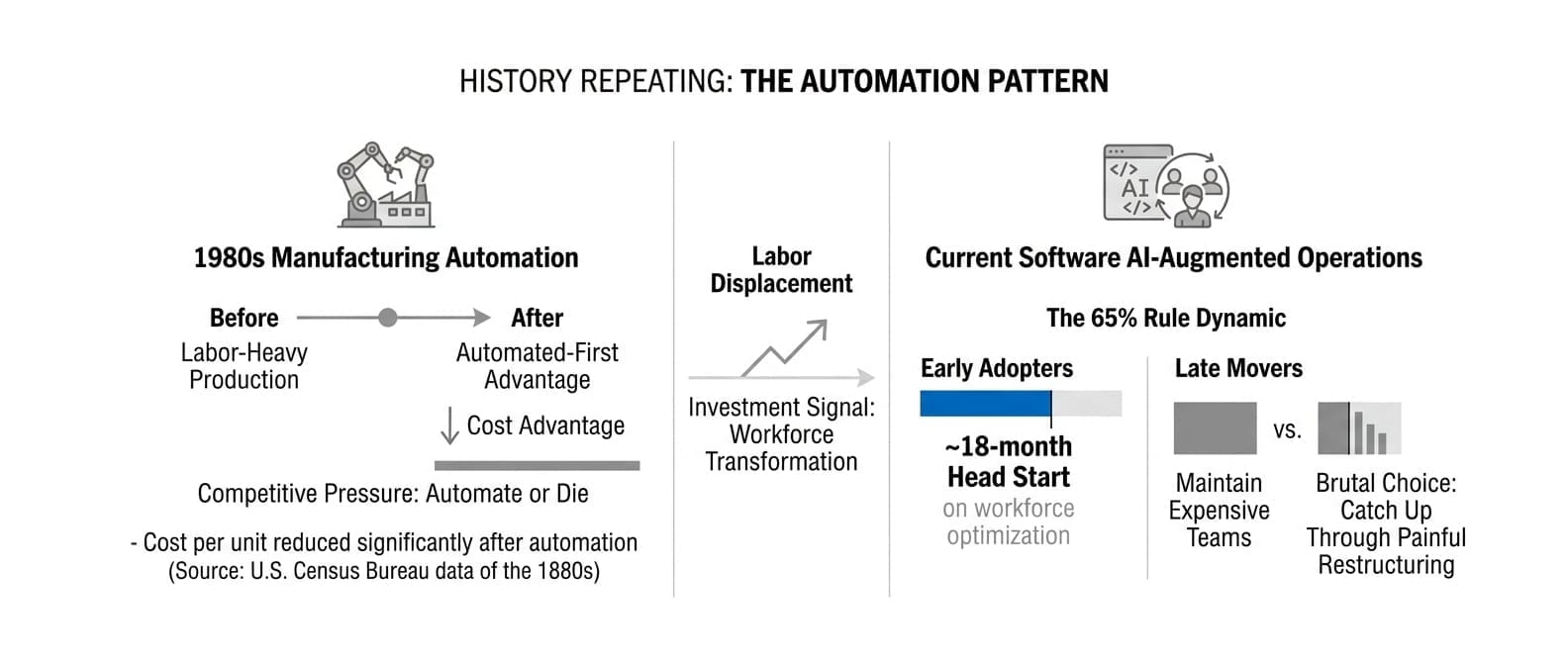
This mirrors exactly what happened with manufacturing automation in the 1980s. Companies that automated first gained cost advantages so significant that competitors had two choices: automate or die. The 65% rule creates the same dynamic in software.
Early adopters like Google and Snap get 18-month head starts on workforce optimization. Late movers face a brutal choice: maintain expensive human-heavy teams against competitors running lean AI-augmented operations, or catch up through painful restructuring.
The massive funding rounds — Cursor's $50B, AMI Labs' $1B seed — reflect investor recognition that workforce transformation is inevitable. These aren't tool companies anymore. They're labor displacement platforms.
The Stakes
If your team hasn't hit 50% AI-generated code by Q3 2026, you're falling behind the automation curve. By Q1 2027, companies will start evaluating engineering leaders based on their AI productivity metrics, not just delivery timelines.
The window for "gradual adoption" is closing. Snap proved you can cut 16% of workforce while maintaining output. That becomes competitive pressure on every company in their market segment. The choice isn't whether to restructure — it's whether to restructure proactively or reactively.
What This Means For You
For CTOs
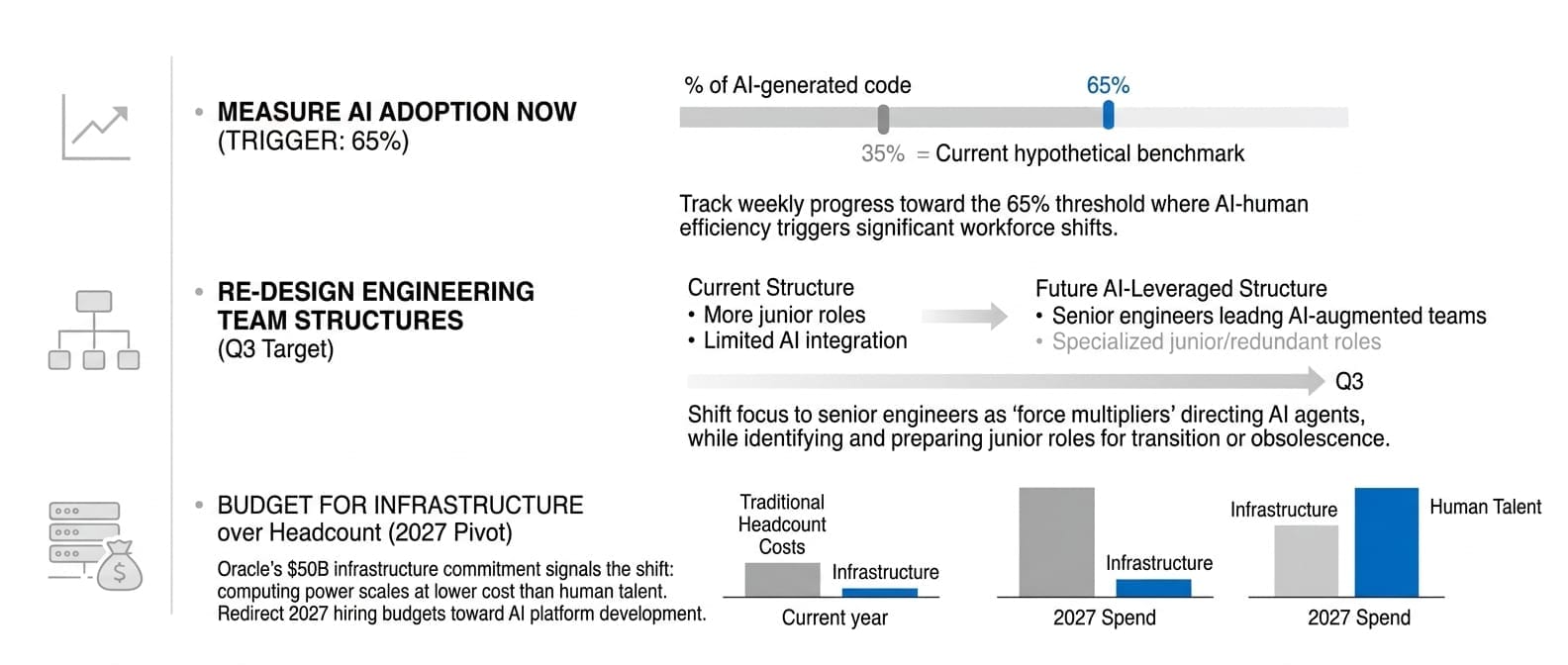
Measure AI code generation percentage now. Track weekly metrics across teams. The 65% threshold triggers workforce decisions, so know where you stand before making headcount commitments.
Plan two-tier engineering structures by Q3. Senior engineers who can direct AI agents become force multipliers. Junior engineers who can't transition to AI-assisted workflows become redundant. Design roles accordingly.
Budget for AI infrastructure, not additional headcount. Oracle's $50B infrastructure investment shows the math: computing power scales cheaper than human talent. Redirect 2027 hiring budgets toward AI platform capabilities.
For AI Product Leaders
Enterprise AI infrastructure becomes the battleground. ServiceNow making AI native across all products signals platform convergence. Choose vendors based on AI-native architectures, not legacy feature sets.
Workforce automation creates new market categories. Companies need transition management tools, AI productivity analytics, and restructuring frameworks. Build for the transformation, not the status quo.
Self-hosted AI demand accelerates rapidly. Mozilla's Thunderbolt addresses enterprise concerns about sending proprietary code to external APIs. Data sovereignty becomes a competitive differentiator.
For Engineering Leaders
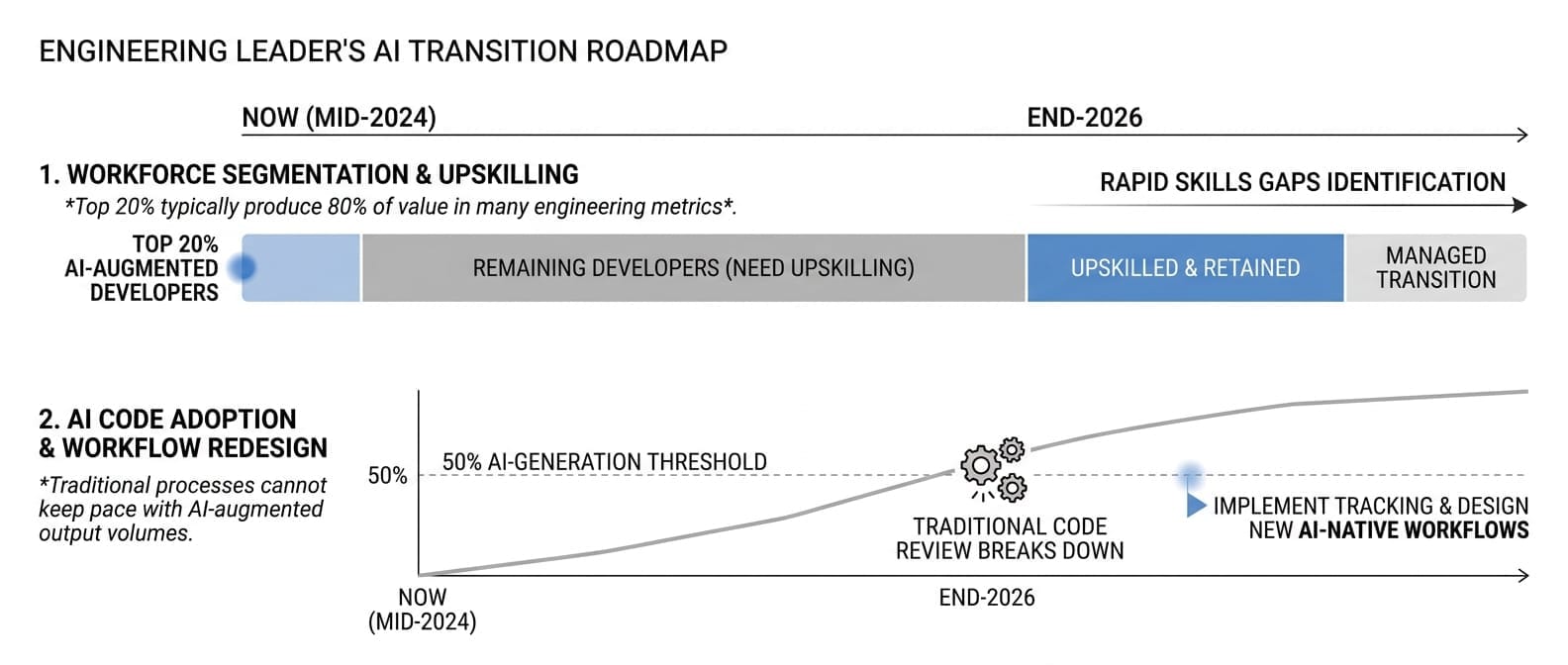
Identify your top 20% AI-augmented developers immediately. These become your core team. Everyone else needs rapid upskilling or managed transition by end-2026.
Implement AI code generation tracking across all projects. Use the data to redesign team structures around AI-native workflows. Traditional code review processes break down above 50% AI generation.
Partner with HR on transition planning now. The companies handling workforce changes best will attract top talent from companies handling them poorly. Plan for dignity and opportunity, not just efficiency.
What We're Watching
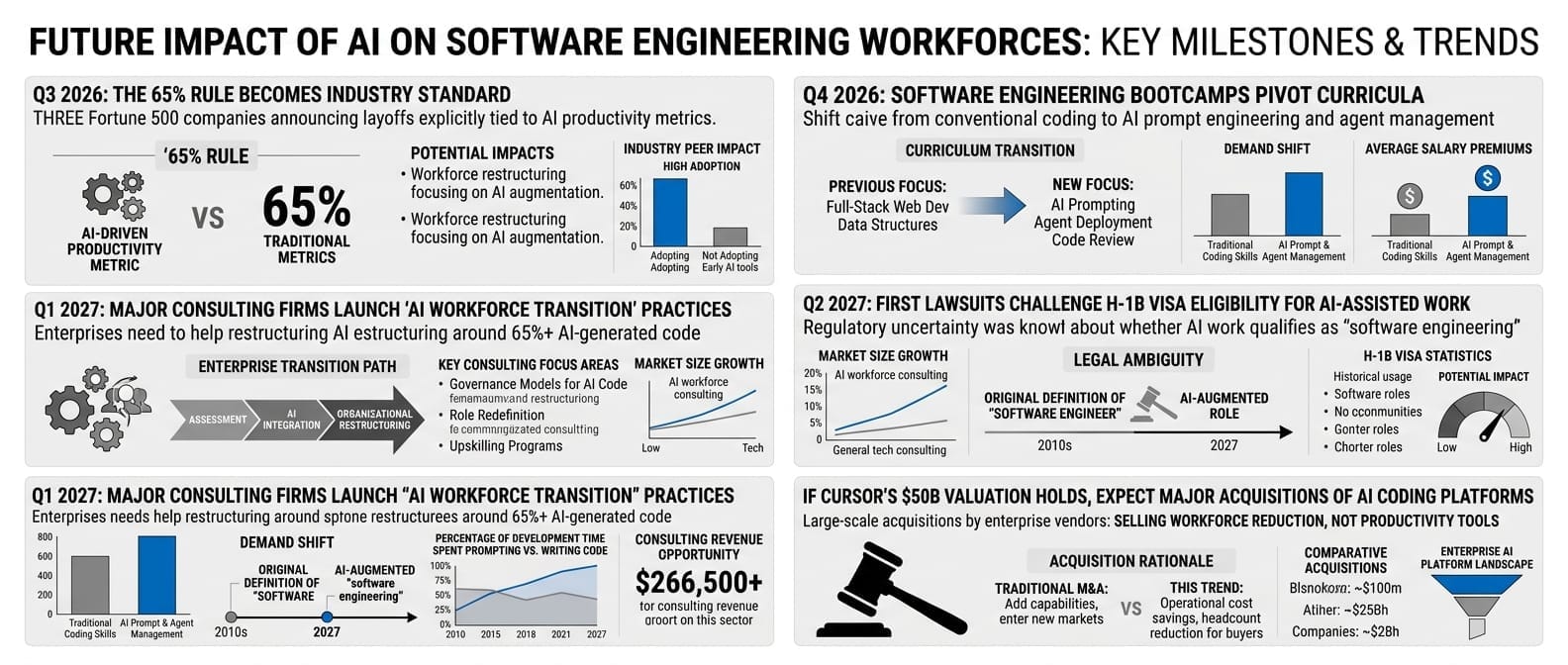
By Q3 2026: Three more Fortune 500 companies announce layoffs explicitly tied to AI productivity metrics, establishing the 65% rule as industry standard.
By Q4 2026: Traditional software engineering bootcamps pivot to AI prompt engineering and agent management curricula as demand for conventional coding skills collapses.
By Q1 2027: Major consulting firms launch "AI workforce transition" practices as enterprises need help restructuring development organizations around 65%+ AI-generated code.
By Q2 2027: First lawsuits emerge challenging whether AI-assisted work qualifies as "software engineering" for H-1B visa purposes, creating regulatory uncertainty.
If Cursor's $50B valuation holds through public markets: Expect three major acquisitions of AI coding platforms by enterprise software vendors who recognize they're selling workforce reduction, not productivity tools.
The Bottom Line
Snap just published the enterprise AI playbook: measure AI productivity, find your threshold, restructure accordingly. The 65% rule isn't coming — it's here. Engineering leaders who treat this as a productivity story instead of a workforce transformation story will get blindsided by the restructuring timeline. The question isn't whether your team will shrink by half. The question is whether you'll manage that transition strategically or let market pressure force emergency cuts. Choose wisely.