GenAI Daily - May 8, 2026: OpenAI Enterprise Insights, EU AI Rules Streamlined, Microsoft Global Adoption Report
Top Stories
OpenAI Introduces B2B Signals Dashboard
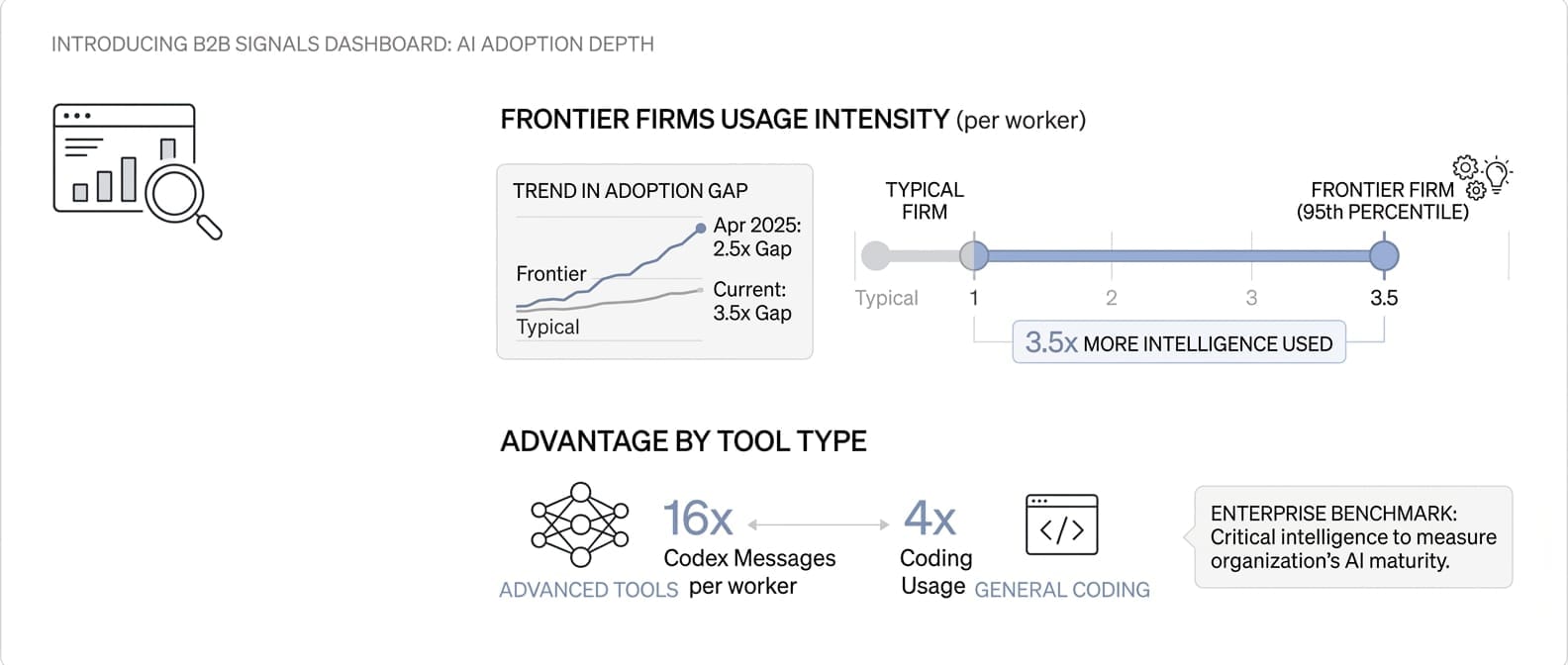
OpenAI launched B2B Signals, a business extension of OpenAI Signals that measures how AI is diffusing across organizations. The clearest signal is depth - frontier firms now use 3.5x as much intelligence per worker as typical firms, up from 2x in April 2025, with frontier firms at the 95th percentile showing dramatically deeper AI adoption than typical enterprises.
The largest advantage shows up in advanced tools, with frontier firms sending 16x as many Codex messages per worker as typical firms, while coding shows a 4x gap between frontier and typical enterprise usage.
Why it matters: This data provides the first enterprise-wide measurement of AI adoption depth, revealing that the gap between leading and typical companies is accelerating - critical intelligence for development teams to benchmark their organization's AI maturity.
EU Streamlines AI Act Implementation Timeline
The Council presidency and European Parliament negotiators reached a provisional agreement on a proposal to streamline certain rules regarding artificial intelligence as part of the EU's 'Omnibus VII' legislative package. The Commission had proposed to adjust the timeline for applying rules on high-risk AI systems by up to 16 months, and given that provisions on high-risk AI systems are due to enter into force on 2 August 2026, the co-legislators have treated the proposal with utmost priority.
The provisional agreement postpones the deadline for the establishment of AI regulatory sandboxes by competent authorities at national level until 2 August 2027 and reduces the grace period for providers to implement transparency solutions for artificially generated content from 6 months to 3 months.
Why it matters: The extended timeline gives enterprises more breathing room for compliance while accelerating transparency requirements - teams deploying AI systems in Europe need to prioritize content labeling solutions by December 2026.
Microsoft Reports Global AI Adoption Surge
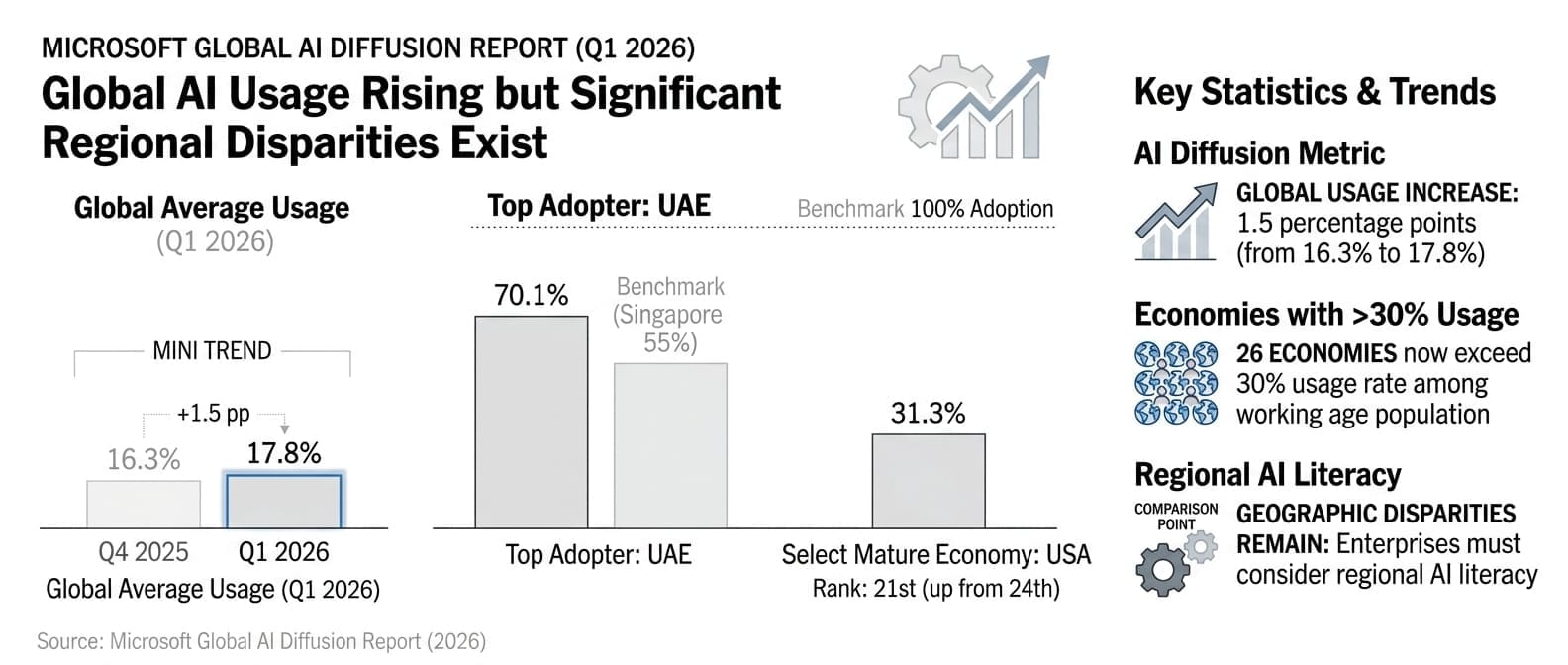
Microsoft published its latest Global AI Diffusion Report showing global adoption of artificial intelligence continued to rise in the first quarter of 2026, with AI usage increasing by 1.5 percentage points from 16.3% to 17.8% of the world's working age population, and 26 economies now exceeding 30% of the working age population using AI.
The UAE continued to lead global AI diffusion at 70.1%, while the United States finally started to move up the national rankings, albeit only from 24th to 21st based on a 31.3% usage rate.
Why it matters: These adoption metrics show AI is becoming mainstream globally, but significant geographic disparities remain - enterprises need to consider regional AI literacy when designing global deployment strategies.
Key Developments
Enterprise AI Infrastructure Trends Accelerate
Major enterprise software partners including Adobe, Atlassian, Salesforce, SAP, ServiceNow, and Siemens are integrating NVIDIA's Agent Toolkit into their agentic platforms, while the AI-Q hybrid architecture uses frontier models for orchestration and open Nemotron models for research, cutting query costs by over 50%.
Cisco uses Codex to speed up complex software work across a large enterprise engineering organization, with production workflows helping reduce build times by about 20%, save 1,500+ engineering hours per month, and increase defect-resolution throughput by 10-15x.
Impact: Enterprise software vendors are rapidly building agentic capabilities into core platforms, making AI agents a standard feature rather than add-on - development teams should expect agent integration across their existing tool stack.
Seagate Surges on AI Data Storage Demand
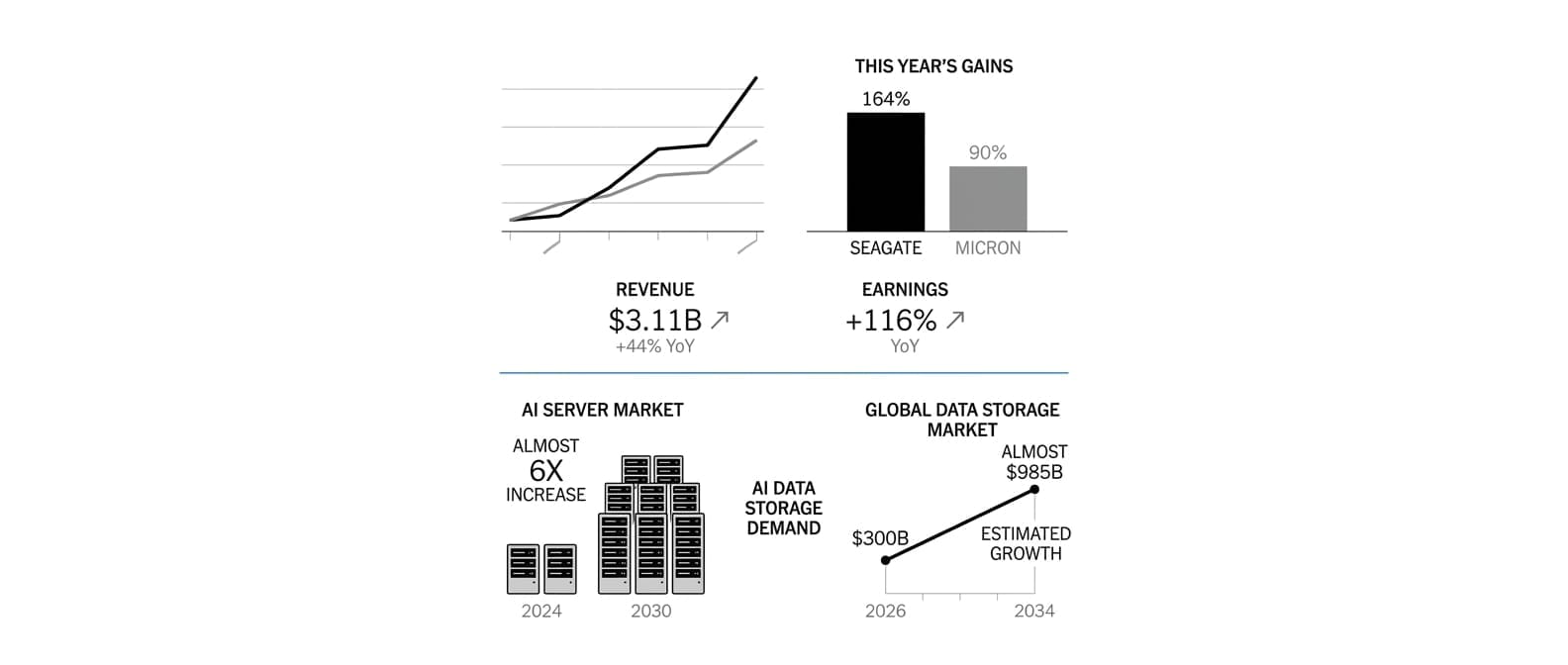
Seagate Technology posted outstanding gains of 164% this year, overshadowing Micron's 90% rally. Seagate released its fiscal 2026 third-quarter results showing revenue jumped 44% year over year to $3.11 billion, while earnings shot up by 116% year over year, driven by a huge improvement in its operating margin.
The size of the AI server market could increase by almost sixfold between 2024 and 2030, and Fortune Business Insights estimates that the global data storage market could grow from $300 billion in 2026 to almost $985 billion in 2034.
Impact: Explosive growth in AI infrastructure is creating storage bottlenecks and premium pricing - teams planning large-scale deployments need to secure storage capacity early and budget for significantly higher data costs.
Open Source Chinese Models Challenge Western Leadership
Four Chinese labs released open-weights coding models inside a 12-day window: Z.ai's GLM-5.1, MiniMax M2.7, Moonshot's Kimi K2.6, and DeepSeek V4 all landed at roughly the same capability ceiling on agentic engineering at meaningfully lower inference cost than the Western frontier. None costs more than a third of Claude Opus 4.7.
The "China is six to nine months behind" framing no longer works for agentic coding, as Kimi K2.6, MiniMax M2.7, and Z.ai GLM-5.1 landed within 12 days of each other, all scoring 56-59 on SWE-Bench Pro, all open-weights.
Impact: Cost-competitive open-source alternatives are now matching frontier model performance in coding tasks - development teams can significantly reduce inference costs by evaluating these models for production workloads.
Product Launches
OpenAI Advanced Account Security
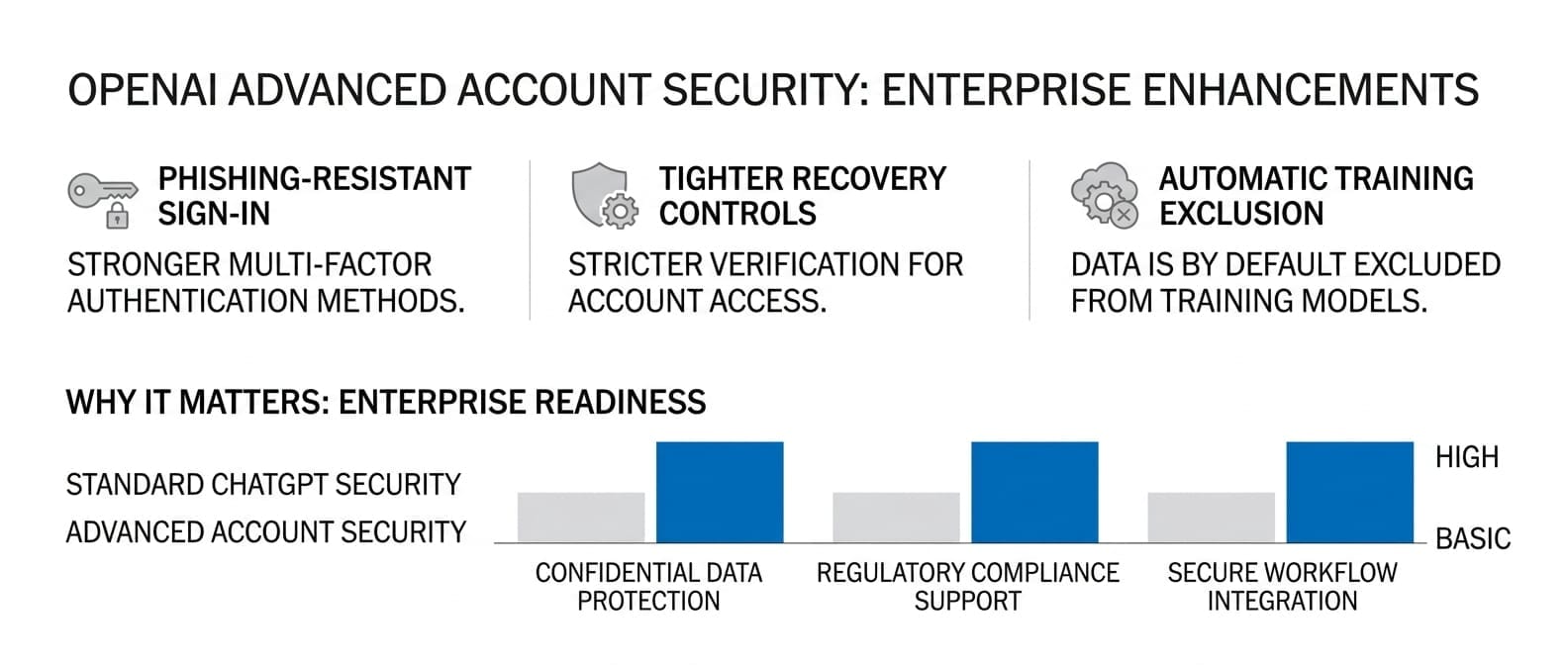
OpenAI introduced Advanced Account Security for ChatGPT, adding stronger phishing-resistant sign-in, tighter recovery controls, shorter sessions, login alerts, and automatic training exclusion. The new opt-in setting is designed for people at increased risk of digital attacks, bringing together a set of heightened security measures that help safeguard against account takeover. This enterprise-focused feature addresses growing concerns about AI platform security as organizations integrate ChatGPT into sensitive workflows.
Why it matters: Enhanced security controls signal OpenAI's commitment to enterprise readiness, addressing a key barrier to corporate ChatGPT adoption for teams handling confidential data or operating in regulated industries.
ChatGPT Futures: Class of 2026
OpenAI announced "Introducing ChatGPT Futures: Class of 2026" and is testing ads in ChatGPT, marking the platform's move toward monetization beyond subscriptions. The initiative represents OpenAI's exploration of advertising revenue models as the company seeks to diversify its income streams while maintaining user experience quality. Early tests will focus on relevant, contextual advertisements that align with user queries and conversations.
Why it matters: Advertisement integration could fundamentally change ChatGPT's economics and user experience, potentially offering free tiers supported by ads while raising questions about data usage and content personalization in AI interactions.
Funding & Deals
Sierra Raises $950M Series E
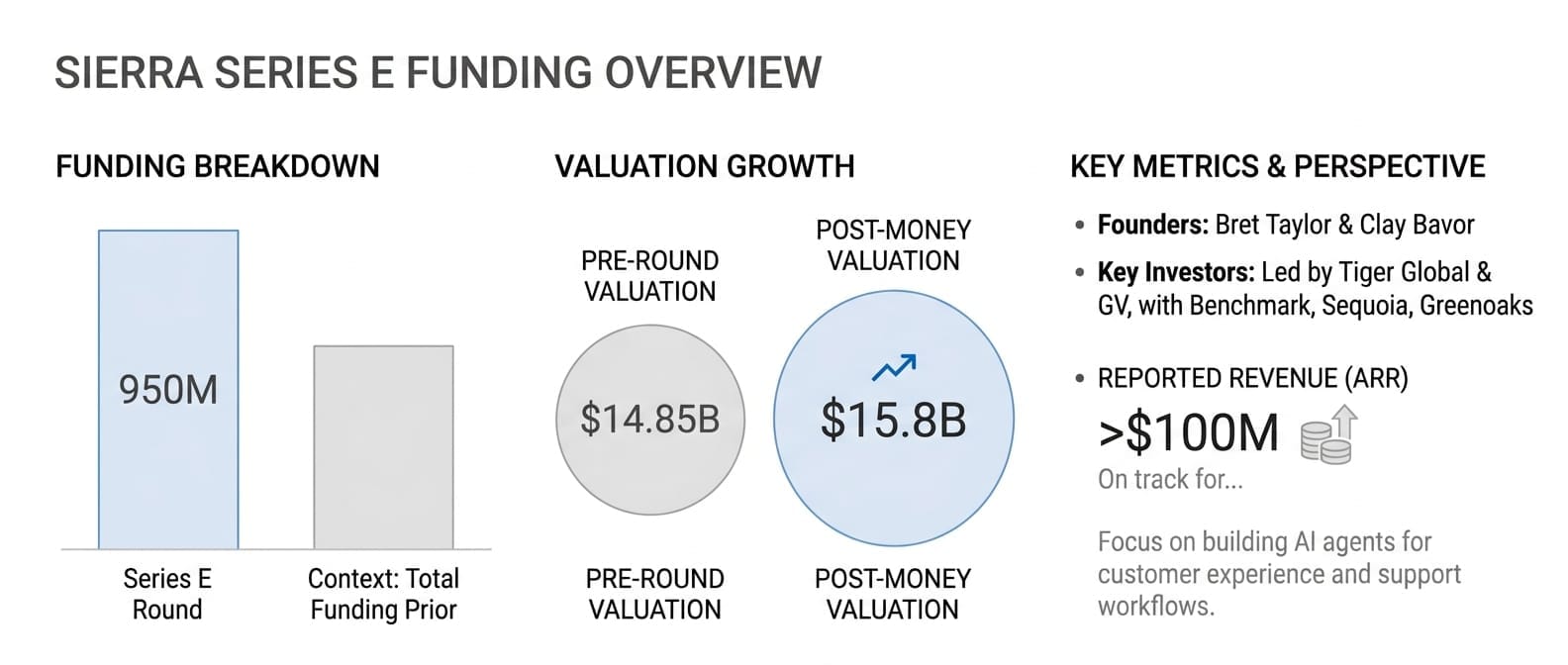
Sierra announced its $950 million Series E Monday, led by Tiger Global and Google's GV, with participation from Benchmark, Sequoia, Greenoaks and others. The San Francisco-based company brought in $950 million in fresh capital at a $15.8 billion post-money valuation.
Sierra, founded by Bret Taylor and Clay Bavor, is building AI agents for customer experience and support workflows, with over $15 billion valuation after the round and reportedly on track for more than $100 million in ARR.
Standard Intelligence Raises $75M Series A
San Francisco-based AI research startup Standard Intelligence raised a $75 million Series A led by Spark Capital and Sequoia Capital. The raise comes at a $425 million pre-money valuation, positioning the company as another next-generation foundation model startup.
Ineffable Intelligence Secures Historic $1.1B Seed
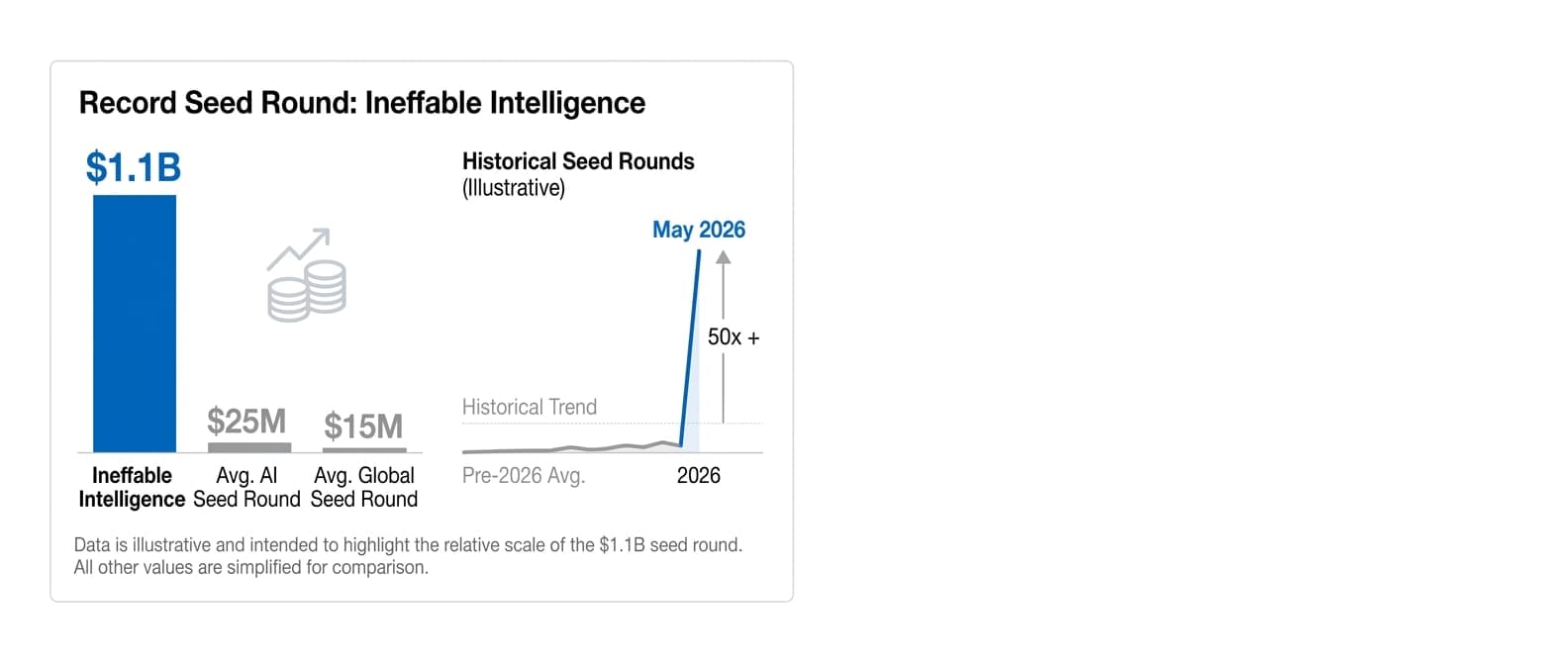
The standout standalone European raise was Ineffable Intelligence, which closed $1.1B at $5.1B in a single seed round co-led by Sequoia and Lightspeed with Nvidia, DST Global, Index, Google, and the UK Sovereign AI Fund (the largest seed in European history), to build a "superlearner" via RL self-play with no human-generated training data.
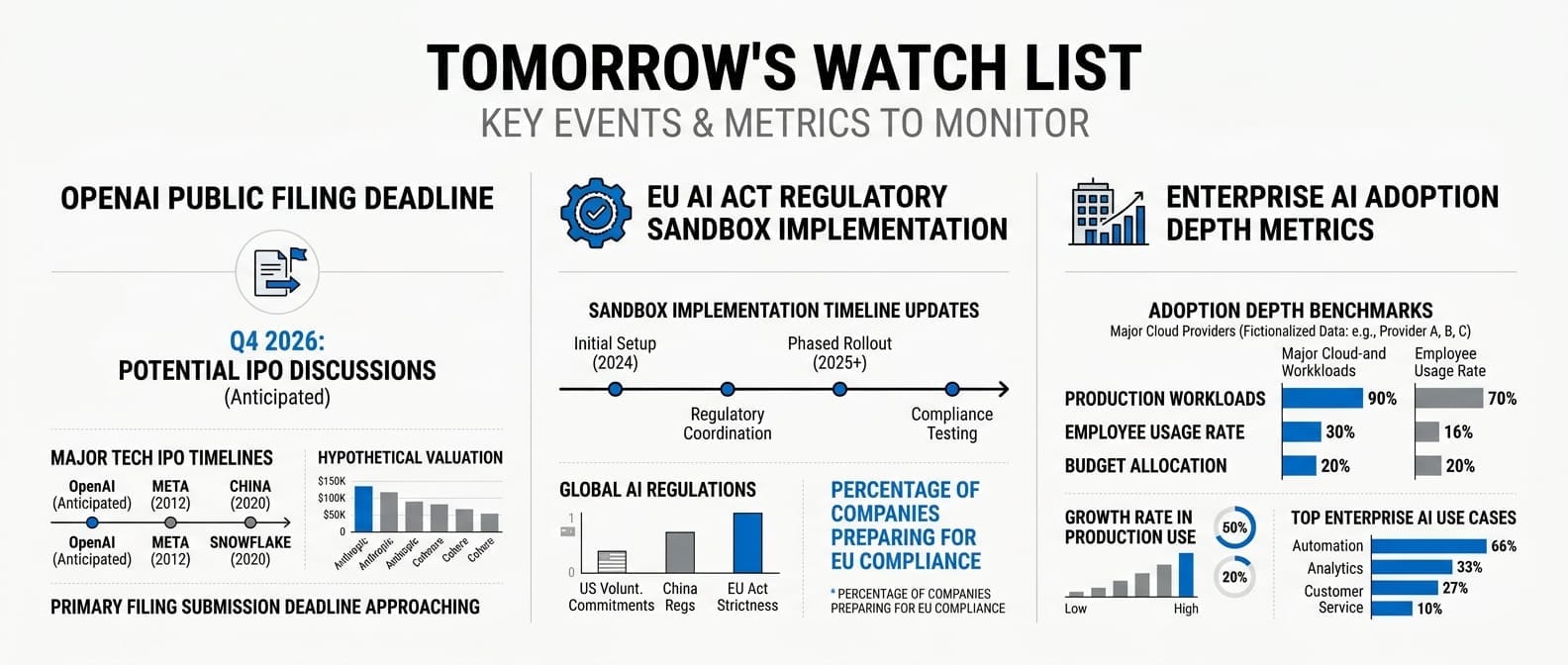
Tomorrow's Watch List
- OpenAI's public filing deadline approaching for potential Q4 2026 IPO discussions
- EU AI Act regulatory sandbox implementation timeline updates
- Enterprise AI adoption depth metrics from other major cloud providers
*Related reading: Check out this week's enterprise AI adoption patterns and B2B Signals methodology for strategic context on AI diffusion measurements.