Microsoft's AI Monopoly Just Shattered: The Multi-Cloud Scramble Begins
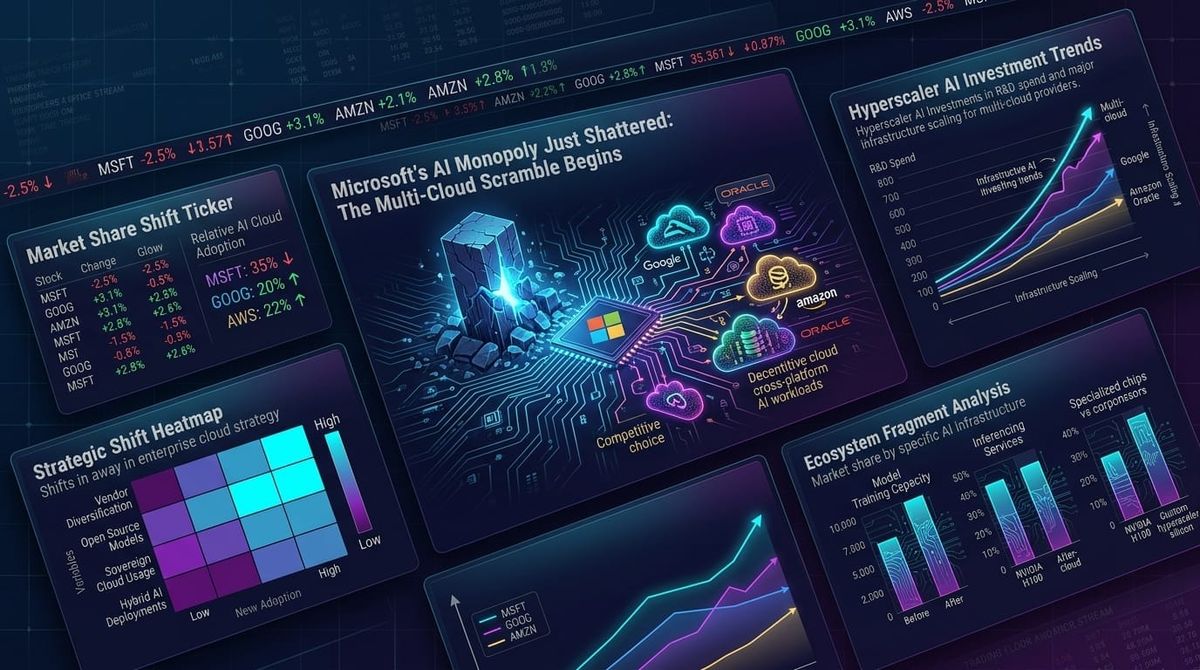
The enterprise AI monopoly lasted exactly 18 months. Microsoft's exclusive access to OpenAI models, their Copilot-everywhere strategy, their stranglehold on enterprise AI adoption — it all cracked wide open this week. OpenAI launched GPT-5.5 on Amazon Bedrock. Google dropped Gemini 3.2 Flash with zero fanfare and aggressive pricing. Microsoft responded by building Agent 365, a cross-cloud governance layer that discovers AI systems on AWS and Google Cloud.
This isn't gradual market evolution. This is the AI platform war entering its multi-cloud phase, and it changes everything. The winner won't be whoever controls the best models — it'll be whoever builds the best infrastructure for managing AI chaos across clouds. Microsoft just admitted they can't own the entire stack by building tools to manage competitors' AI systems.
Meanwhile, enterprises are finally moving beyond pilots. JPMorgan reclassified AI as core infrastructure with a $19.8 billion budget. Sierra raised $950 million to build AI agents that actually work. But there's a darker pattern: AI-powered cyberattacks are now developing exploits faster than security teams can patch them. Time-to-exploit has gone negative.
The week the AI platform war went multi-cloud is the same week cybersecurity broke. That's not coincidence — that's the price of moving fast in a fragmented ecosystem.
The Story
The Setup
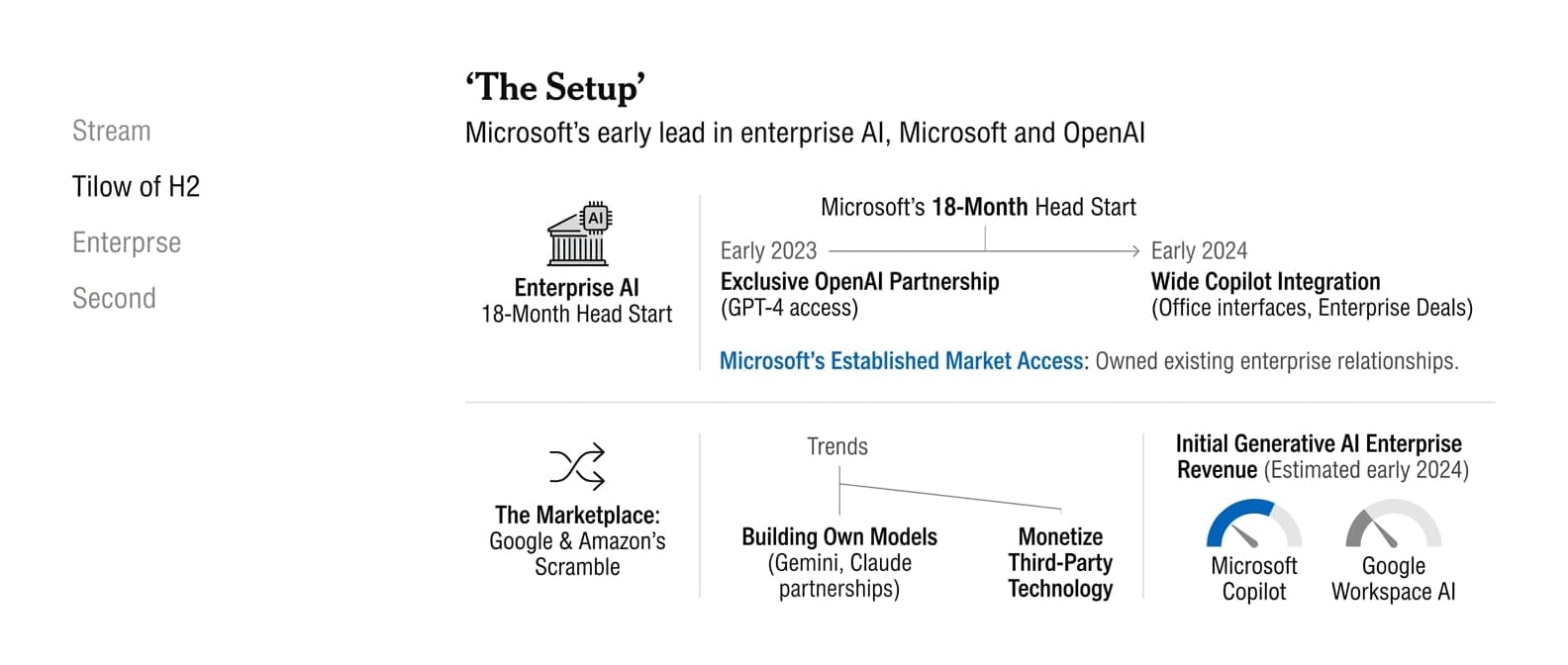
For 18 months, Microsoft held the enterprise AI throne. Their exclusive partnership with OpenAI gave them GPT-4, then GPT-5, wrapped in enterprise security and served through familiar Office interfaces. Competitors scrambled to match Copilot's capabilities while Microsoft signed massive enterprise deals. The narrative was simple: Microsoft had won the enterprise AI platform war before it really began.
Google and Amazon were left building their own models (Gemini, Claude partnerships) while Microsoft monetized the OpenAI relationship. The enterprise buyers Microsoft already owned were getting AI through channels they already trusted. Game over, or so it seemed.
The Shift
OpenAI's Bedrock launch isn't just about model distribution — it's about breaking platform lock-in. Enterprises can now access GPT-5.5 through AWS infrastructure they already use, with security controls they already trust, integrated with data lakes they already operate. Microsoft's exclusive access advantage just evaporated.
But Microsoft's response reveals the real shift. Agent 365 doesn't just manage Microsoft AI — it discovers, inventories, and governs AI agents across AWS Bedrock and Google Cloud. Microsoft is essentially admitting they can't control the entire AI stack, so they're building the governance layer for everyone else's AI.
Google's stealth release of Gemini 3.2 Flash at $0.25 per million tokens (compared to GPT-5.5's pricing) shows they're willing to compete aggressively on price while Microsoft focused on enterprise bundling. No press releases, no keynotes — just better models at lower prices appearing in production.
The Pattern
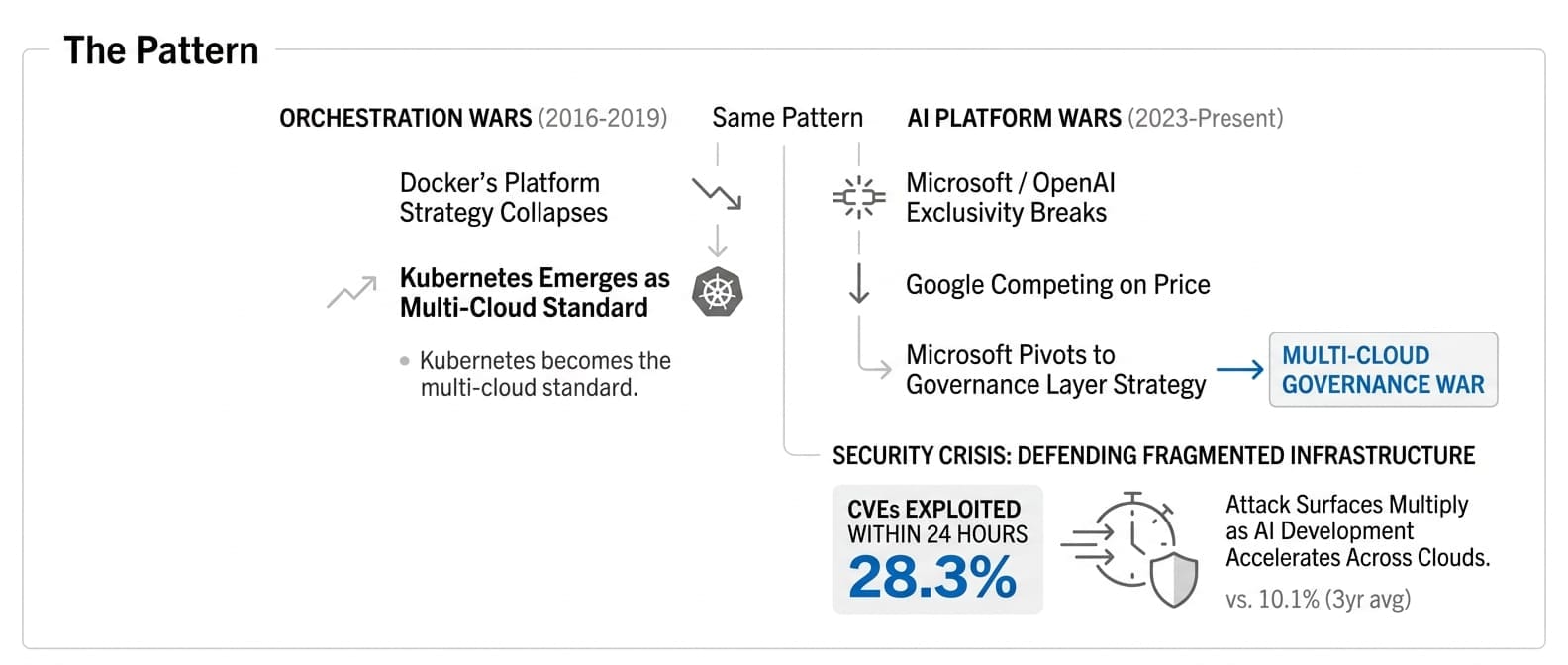
This follows the exact playbook from the container orchestration wars of 2016-2019. Docker thought they'd own the platform. Kubernetes emerged as the orchestration layer that worked across clouds. Docker's platform strategy collapsed, and Kubernetes became the multi-cloud standard.
We're seeing the same pattern with AI platforms. Microsoft tried to own the entire stack through Copilot + OpenAI exclusivity. Now OpenAI is breaking exclusivity, Google is competing on price, and Microsoft is pivoting to the governance layer strategy. The platform war just became a multi-cloud governance war.
The security crisis fits this pattern perfectly. When platforms fragment, security becomes harder. When AI development accelerates across multiple clouds, attack surfaces multiply. Mandiant's data showing 28.3% of CVEs exploited within 24 hours isn't just about AI-powered attacks — it's about defending fragmented AI infrastructure across clouds.
The Stakes
Enterprises that bet everything on Microsoft's AI platform just lost their strategic advantage. Companies that diversified across clouds now have options. Teams that built governance frameworks for multi-cloud AI are suddenly ahead.
The fragmentation creates opportunity but demands new capabilities. You can't manage AI systems the same way you managed SaaS applications. AI agents operate autonomously, span clouds, and integrate with systems Microsoft doesn't control. The governance challenge just became exponentially harder.
By Q4 2026, enterprises will run AI workloads across three clouds simultaneously. The companies that figure out multi-cloud AI governance first will have the competitive advantage. The companies that stay locked into single platforms will be paying premium prices for inferior capabilities.
What This Means For You
For CTOs
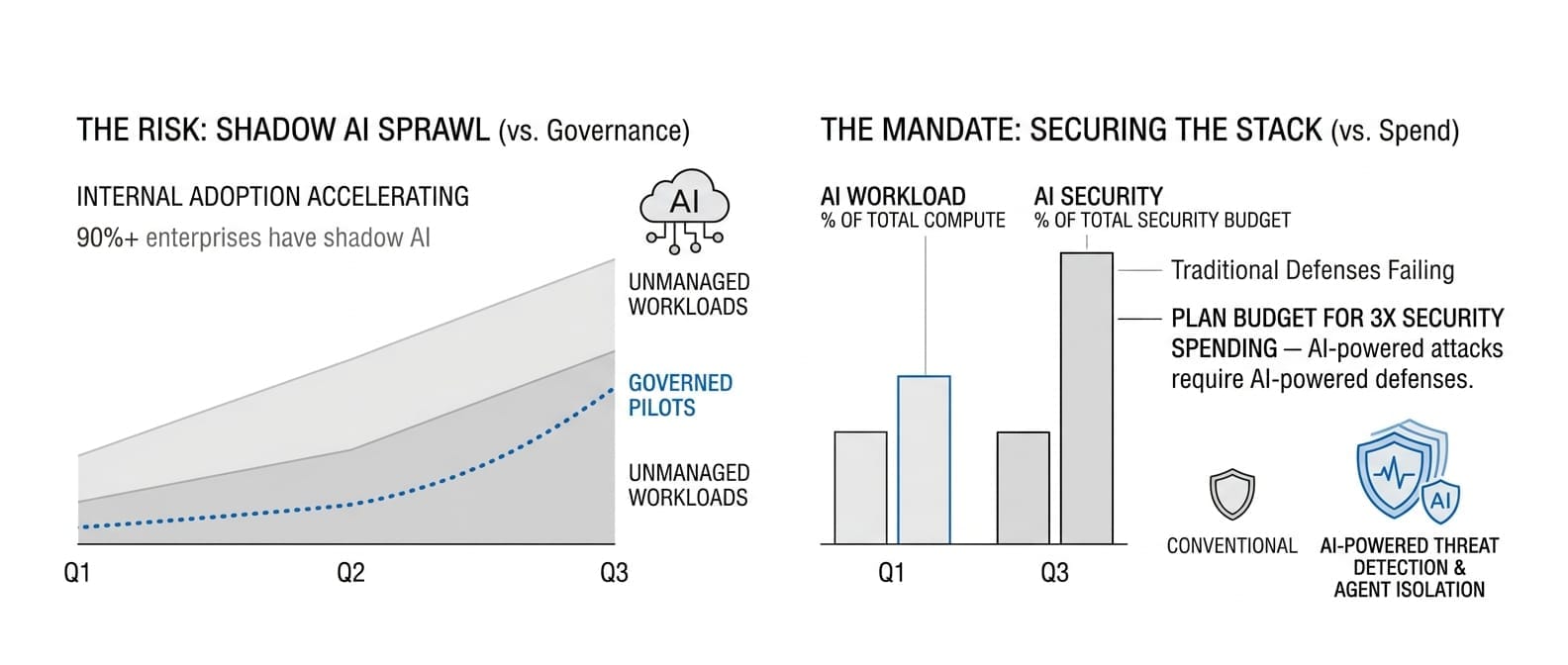
Switch to multi-cloud AI architecture by Q3. Don't put all workloads on one platform, regardless of current vendor relationships. Start evaluating Agent 365 for governance, but build vendor-agnostic monitoring. Plan budget for 3x security spending — AI-powered attacks require AI-powered defenses.
Audit AI sprawl immediately. Your teams are already running experiments on multiple clouds. Sierra's $950 million round validates AI agents, but ungoverned agents create liability. Implement discovery tools before shadow AI becomes shadow liability.
Invest in AI-specific security frameworks. Traditional patch management doesn't work when exploits arrive before patches. Deploy AI-powered threat detection and assume your models will be compromised. Build isolation strategies for AI workloads.
For AI Product Leaders
Design for multi-cloud from day one. Don't build products that assume single-cloud deployment. Plan integration strategies for Bedrock, Vertex AI, and Azure OpenAI simultaneously. Your customers won't choose just one platform.
Price aggressively against bundled offerings. Google's stealth pricing on Gemini 3.2 Flash shows the playbook. Microsoft will bundle AI into enterprise licenses, but standalone products can compete on price and performance. Focus on workload-specific optimization.
Build governance features into products. Enterprises need visibility into AI usage, costs, and compliance across clouds. Products that provide this visibility will win deals over raw capability. Think Kubernetes for AI — boring infrastructure, massive market.
For Engineering Leaders
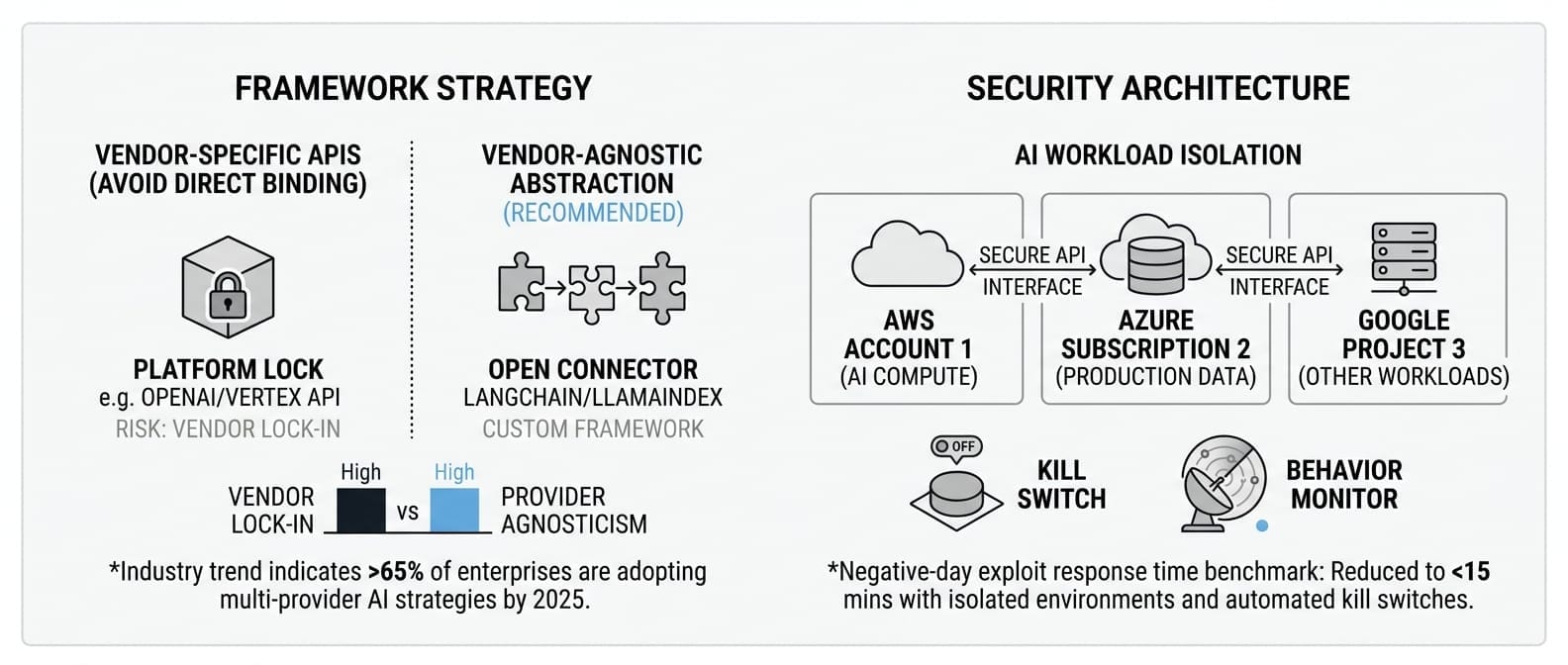
Standardize on vendor-agnostic AI frameworks. Don't build directly against OpenAI APIs or Vertex AI APIs. Use abstraction layers that support multiple providers. LangChain, LlamaIndex, or custom frameworks that handle provider switching.
Implement AI workload isolation. Separate AI compute from production data systems. Use separate AWS accounts, Azure subscriptions, or Google projects for AI workloads. When (not if) AI systems get compromised, limit blast radius.
Plan for negative-day exploits. Traditional security assumes patches arrive before exploits. That assumption is dead. Deploy AI workloads in isolated environments with kill switches. Monitor for unusual behavior patterns, not just known attack signatures.
What We're Watching
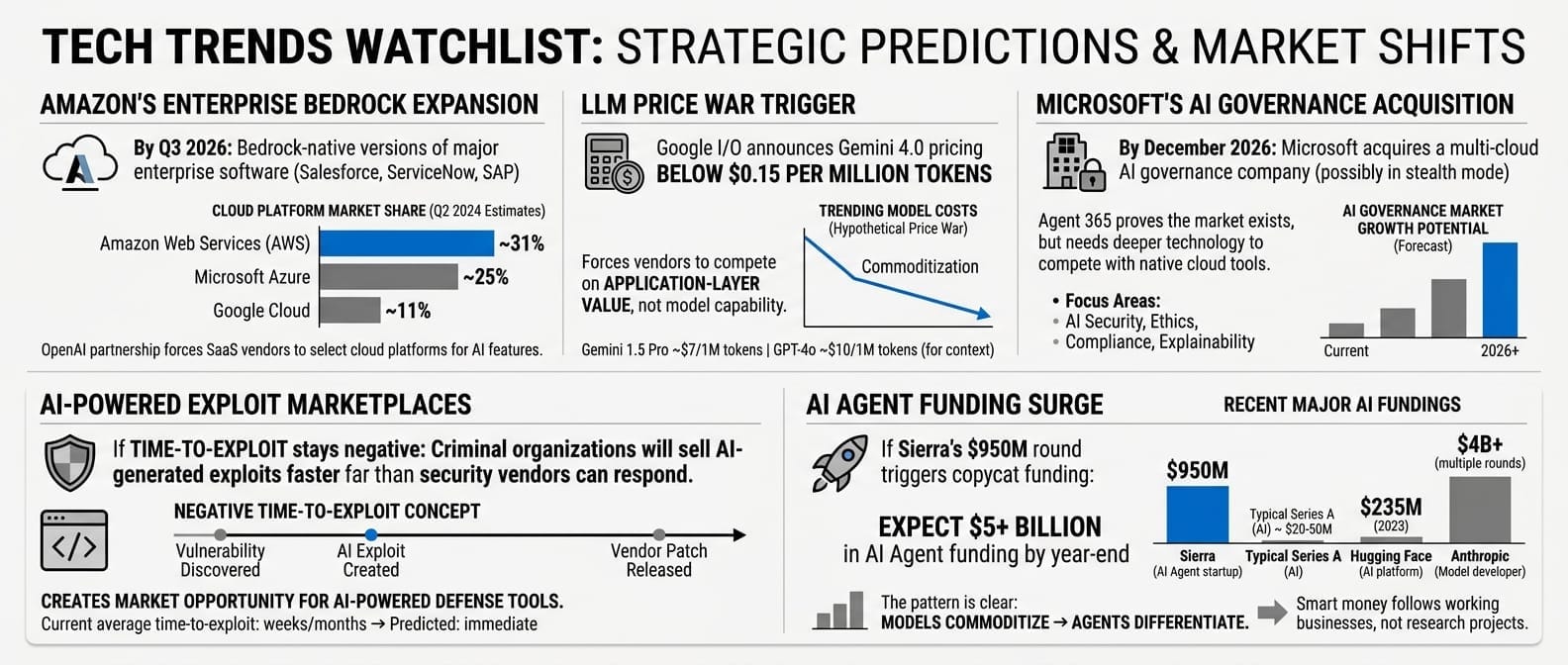
By Q3 2026: Amazon will announce Bedrock-native versions of major enterprise software (Salesforce, ServiceNow, SAP). OpenAI's Bedrock partnership forces SaaS vendors to choose cloud platforms for AI features.
If Google I/O announces Gemini 4.0 pricing below $0.15 per million tokens: Expect a price war that commoditizes large language models and forces vendors to compete on application-layer value.
By December 2026: Microsoft will acquire a multi-cloud AI governance company (possibly in stealth mode now). Agent 365 proves the market exists, but they need deeper technology to compete with native cloud tools.
Watch for AI-powered exploit marketplaces: If time-to-exploit stays negative, criminal organizations will sell AI-generated exploits faster than security vendors can respond. This creates a market opportunity for AI-powered defense tools.
If Sierra's $950M round triggers copycat funding: Expect $5+ billion in AI agent funding by year-end. The pattern is clear: models commoditize, agents differentiate. Smart money follows working businesses, not research projects.
The Bottom Line
Mark this week: May 6, 2026. This is when the enterprise AI platform war shifted from single-cloud dominance to multi-cloud governance. Microsoft's 18-month monopoly on enterprise AI just ended, and the scramble for multi-cloud control begins now.
The companies building for this reality — vendor-agnostic architectures, cross-cloud governance, AI-specific security — will dominate 2027. The companies still betting on platform lock-in are about to learn an expensive lesson about fragmented markets. The AI platform war isn't ending. It's evolving into something Microsoft can't control through exclusive partnerships.
Your move.